
Guest House for the Green Tree
Building, structure
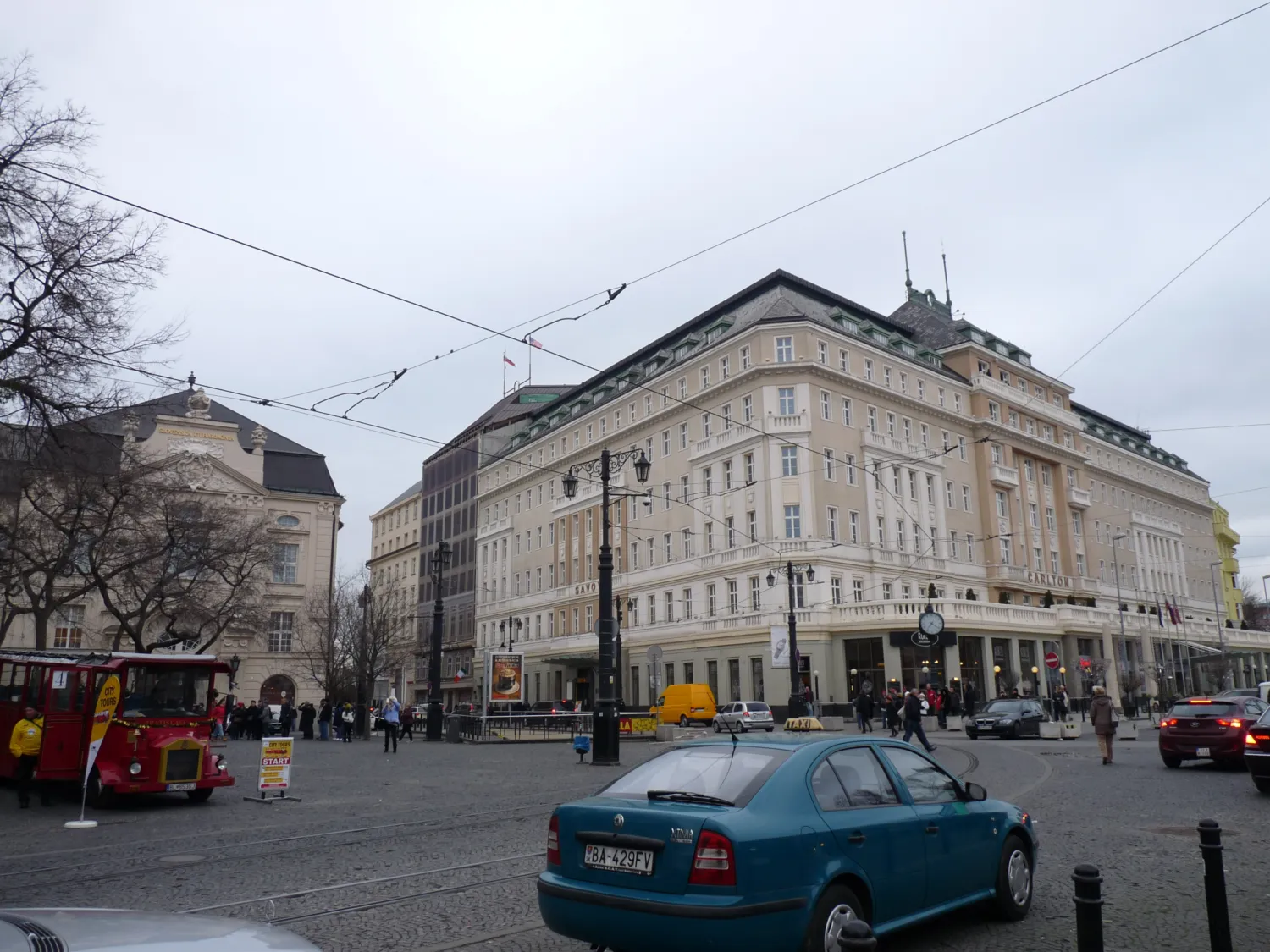
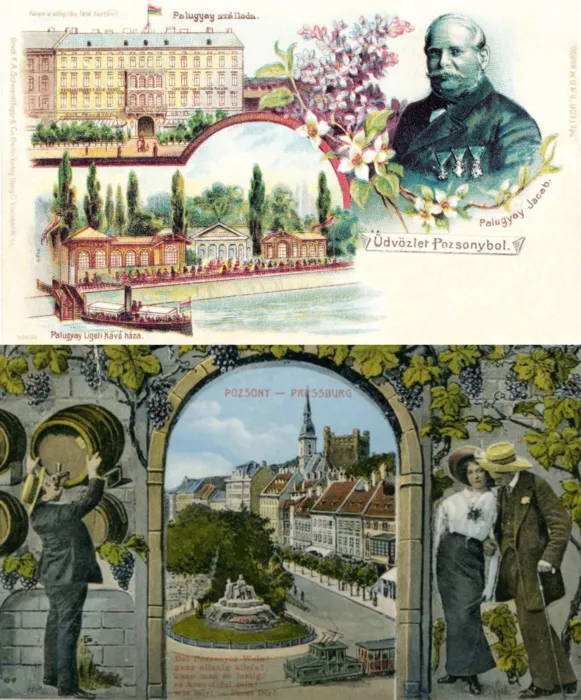
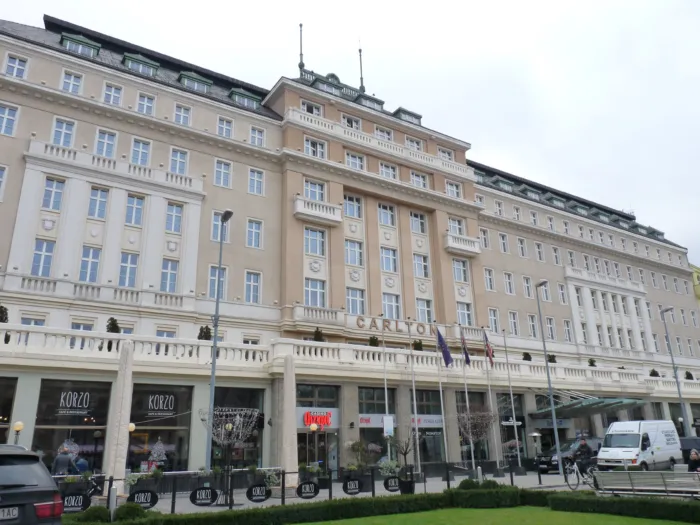
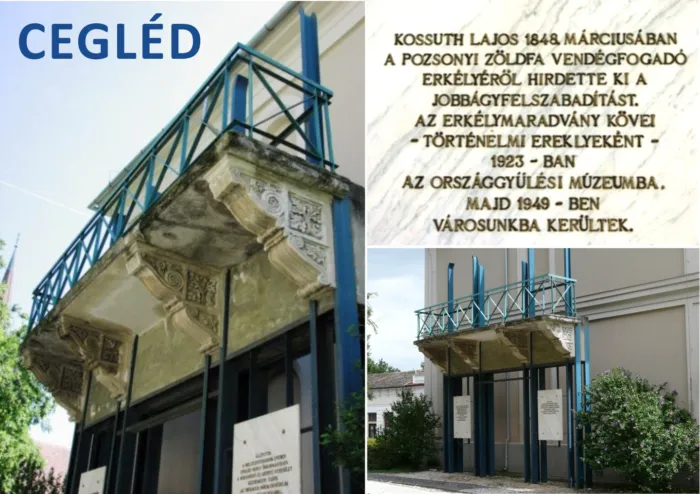
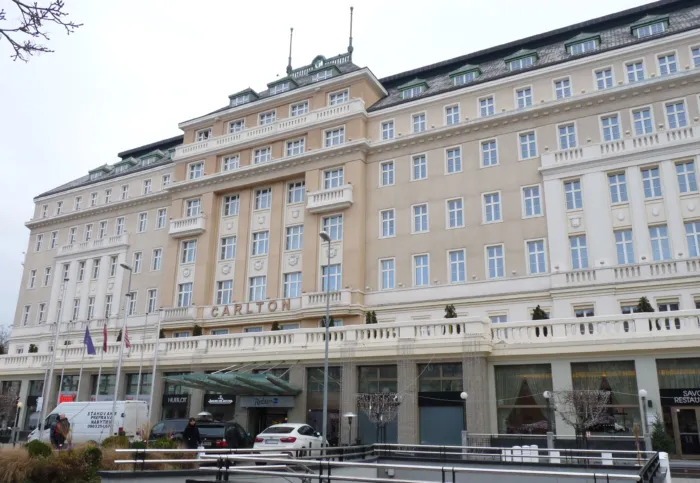
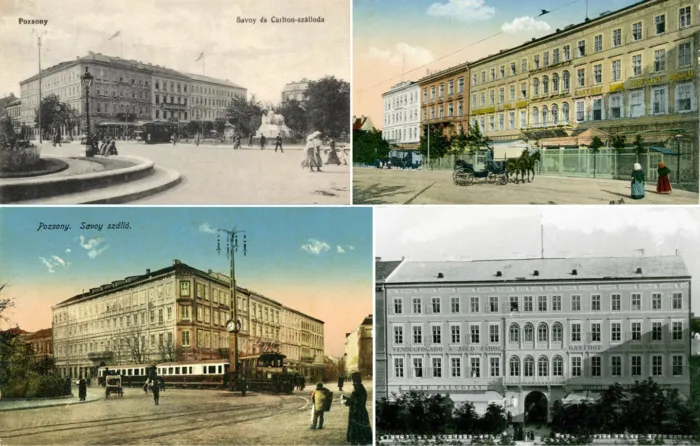
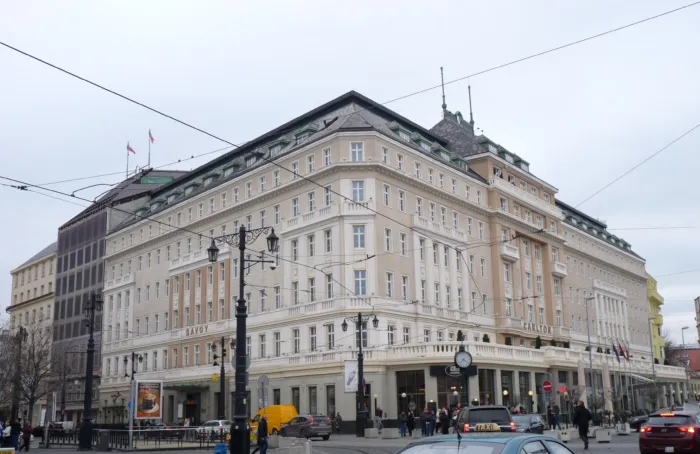
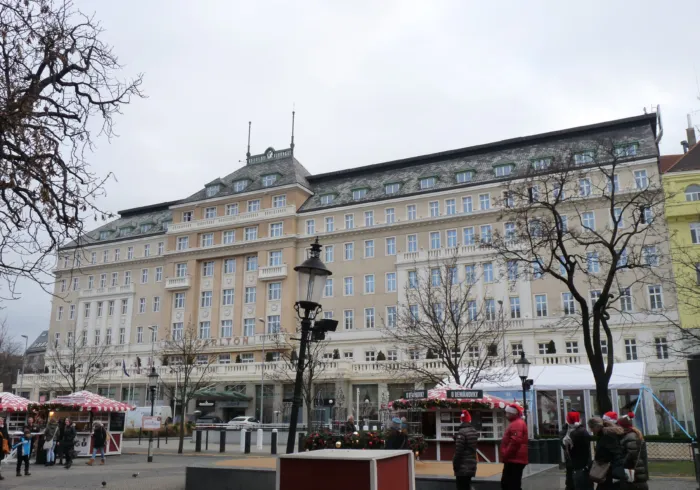
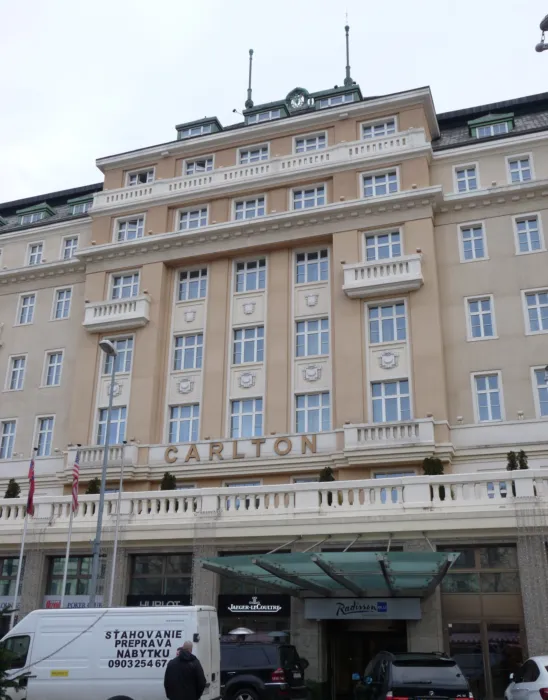
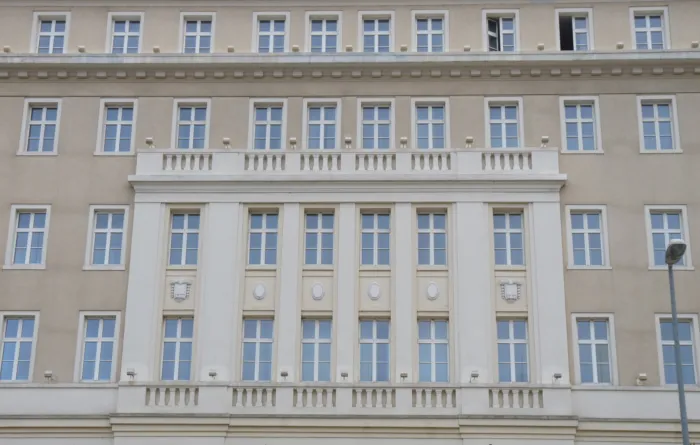
At the eastern end of the former Bratislava Promenade, near the theatre and the Redout, where today's very high-class four-star hotel stands, there was already an inn called A hattyúhoz in the 13th century. From 1760, a tavern called A három zöld fához operated here. The building was purchased in 1838 by Johann Lőwy, the director of the horse-drawn railway connecting Bratislava with Nagyszombathely, the first in Hungary. (Initially, the horse-drawn railway's final stop in Bratislava was also here, near the hotel, on the former Koronázó tér, close to the banks of the Danube.) In 1844-46, based on plans by Ignác Feigler, he added a floor to the building and renamed the art institution "A zöld fához". The previously single-storey house was thoroughly transformed: it became three-storey, it was given courtyard wings, and its facade was designed uniformly in the spirit of classicism. In this modern hotel, the first motion picture theatre and cinema in Bratislava, but also in the territory of present-day Slovakia, was opened in 1905 under the name Elektrobioscop. ; From the mid-19th century onwards, the Hotel Zöld Fáhóz was faced with serious competition from neighbouring, similar art institutions, hotels and cafés, especially the Savoy, which was directly adjacent to it, with an almost identical offer. This competition ended in 1913, when, following the unification (integration) of three neighbouring buildings and the creation of the current common façade, the old-new luxury hotel Carlton was opened in the place of the Savoy and the Zöld Fá, under the management of Károly Palugyay and his wife Antónia. It acquired its current architectural appearance following the transformation according to the plans of the Slovak architect M. M. Harminc, in 1925-29. ; The huge institution continued to operate even after its nationalisation following World War II until the 1980s, when it was closed. After a demanding reconstruction, it reopened its doors in 2001 as a luxury hotel. ; The guest list of the 250-year-old institution includes many prominent personalities, representatives of politics, science, and royal houses. ; Jakab Palugyay was the best-known restaurateur during the reform parliaments in Bratislava, and the deputies often visited him. Palugyay also took over the management of the Zöldfa hotel in 1848. According to the chronicle, Kossuth also came here often, and enjoyed eating croissants filled with almond cream or walnut cream. He supposedly liked the almond croissant a little better. ; ; The Zöldfa Hotel would forever enter its name into Hungarian history when, on March 17, 1848, Lajos Kossuth proclaimed the rebirth of Hungary from its balcony, after King Ferdinand V had commissioned Count Lajos Batthyány to form the first independent Hungarian ministry the previous day. The balcony still exists today, in Cegléd, in the garden of the Reformed Great Church, where the local Kossuth Museum had it placed on scaffolding in 1996. ; Tradition preserves another memorable deed of Jakab Palugyai: when, after the suppression of the War of Independence, Russian soldiers invaded the city and wanted to cut down the trees of Séta tér for firewood, the famous innkeeper saved them by making his own supply of firewood available to the Russians.