
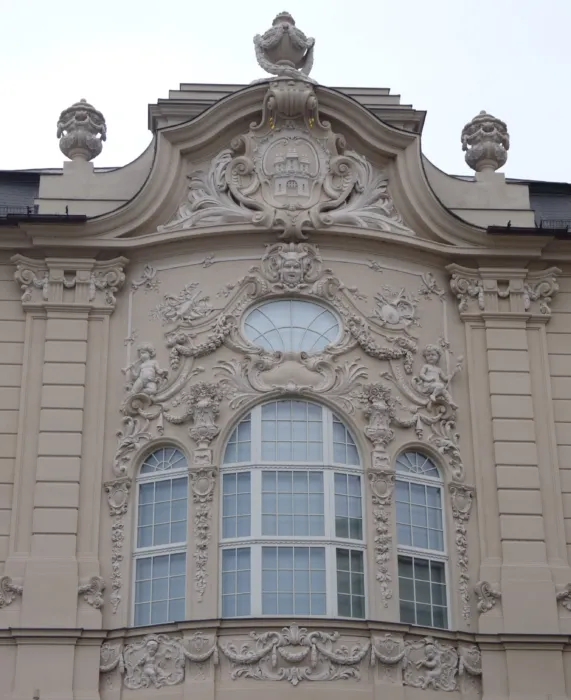
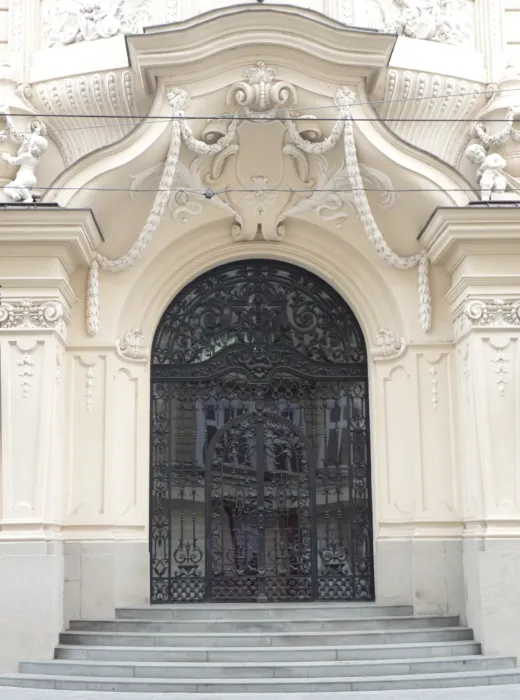
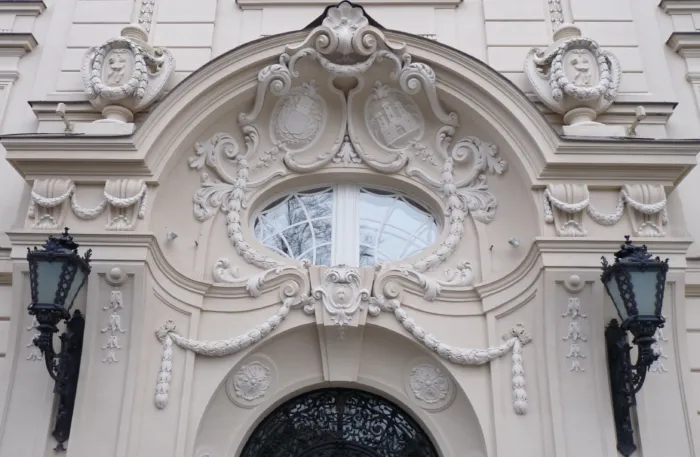
City entertainment and music palace
Building, structure
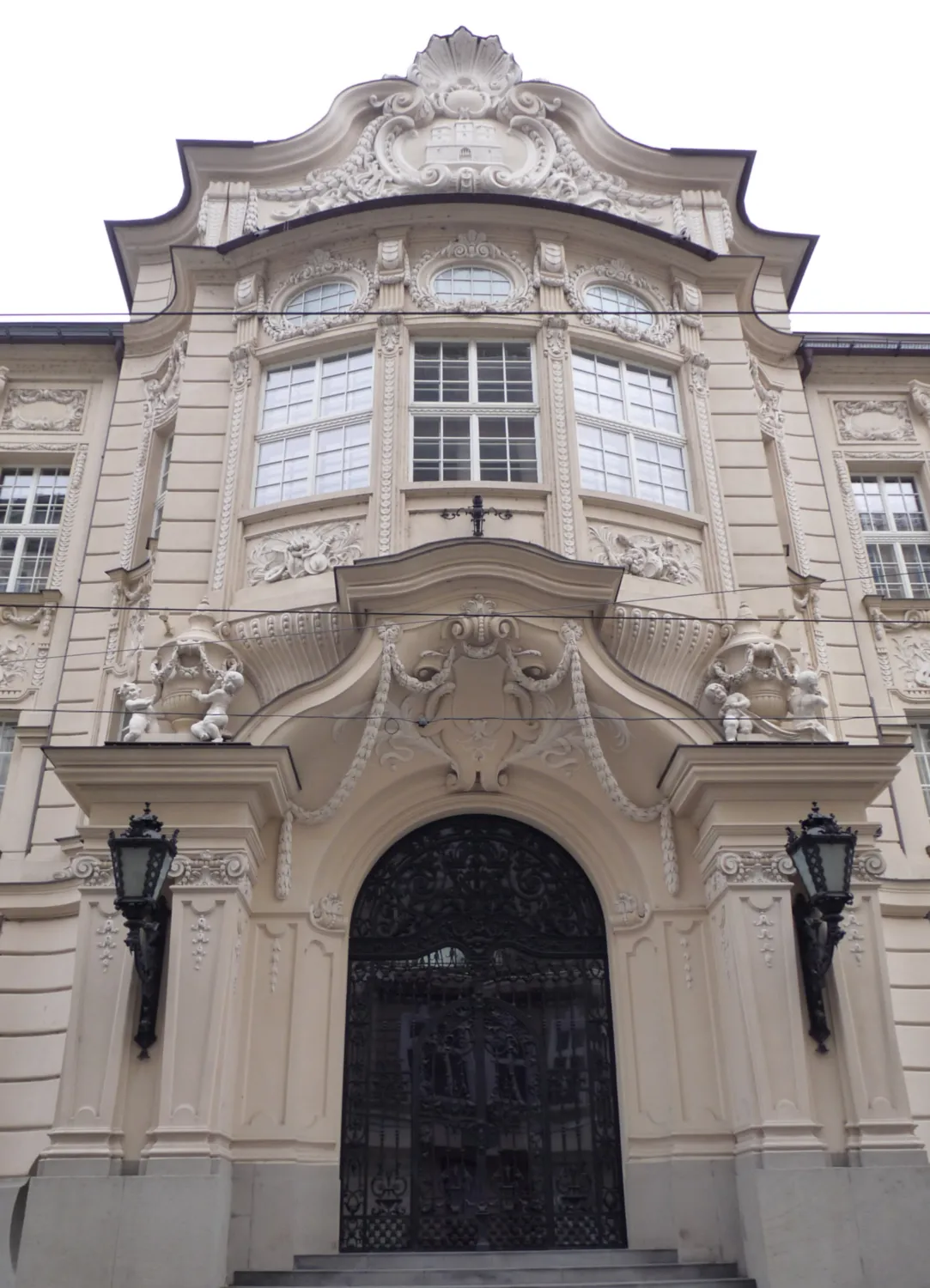
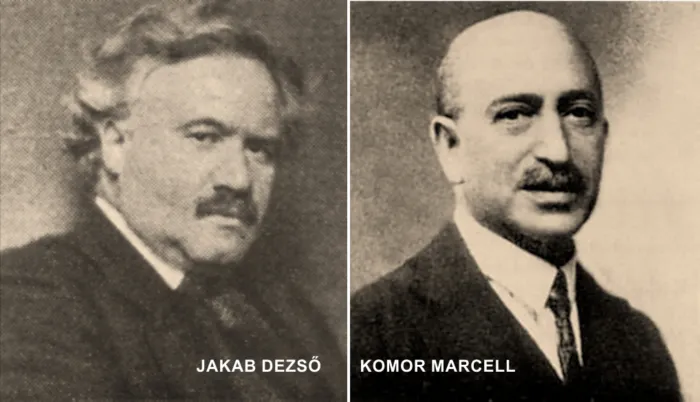
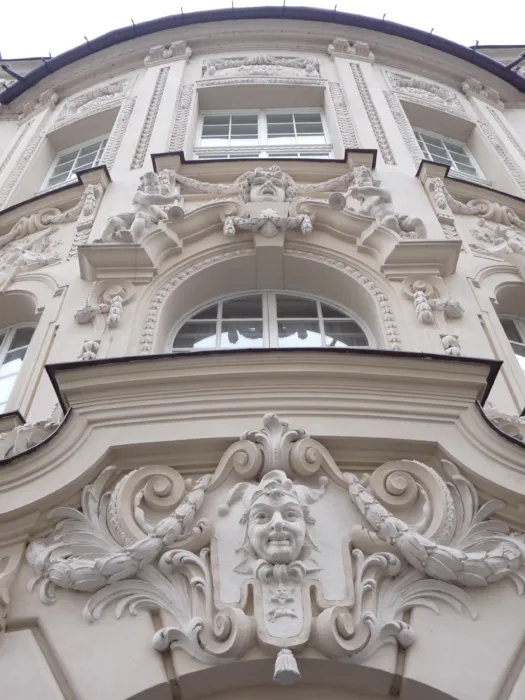
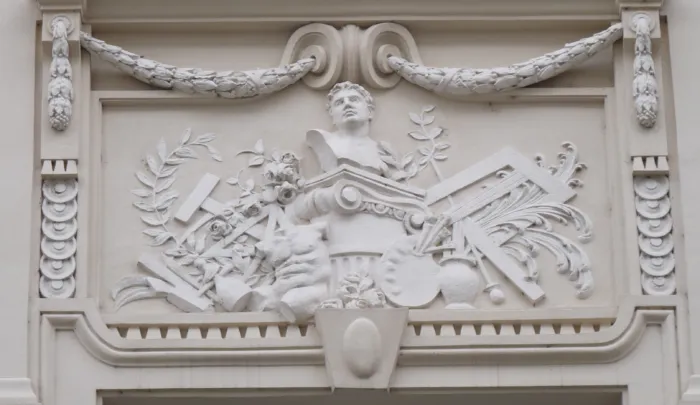
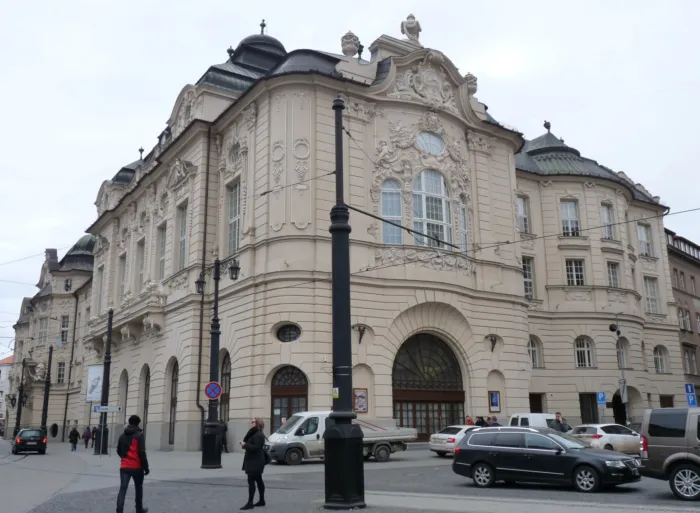
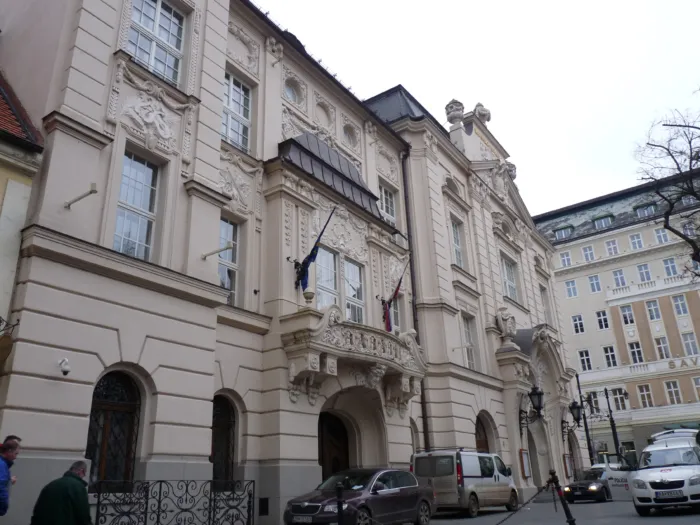
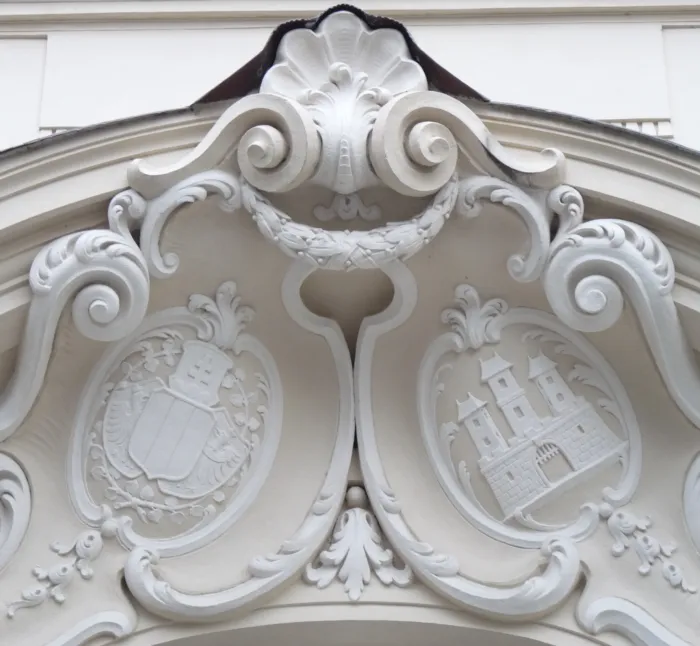
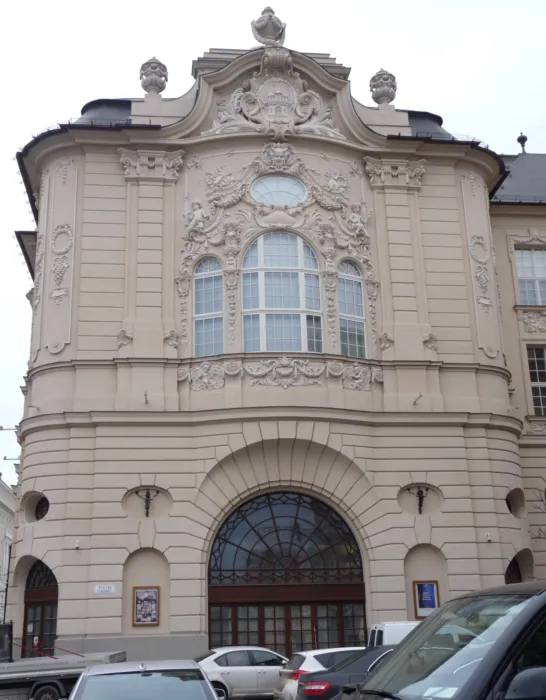
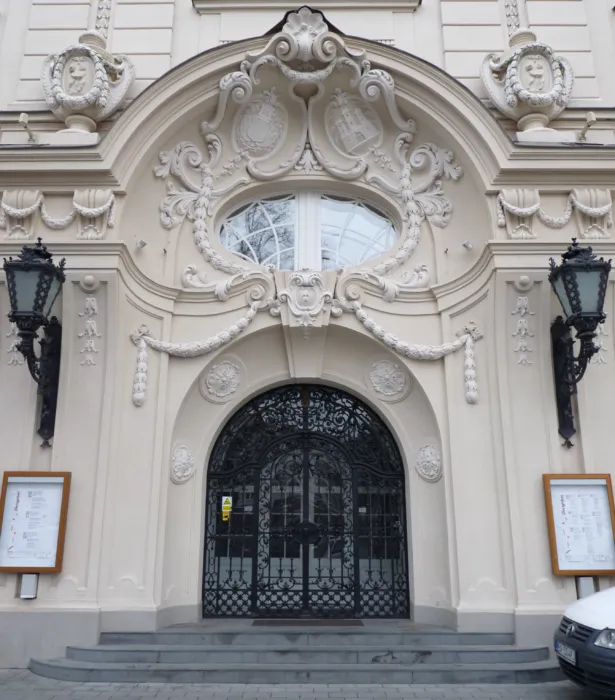
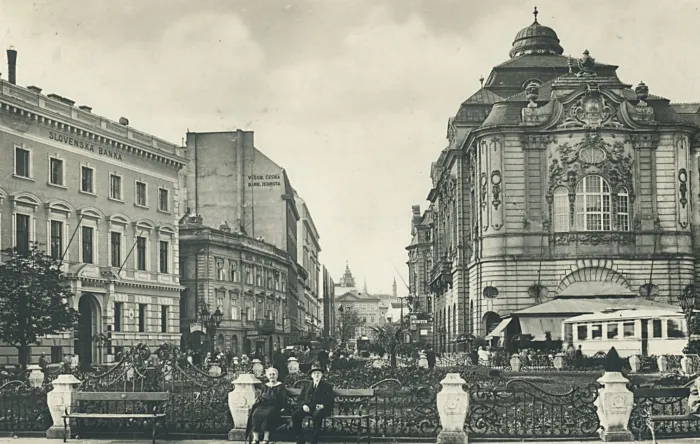
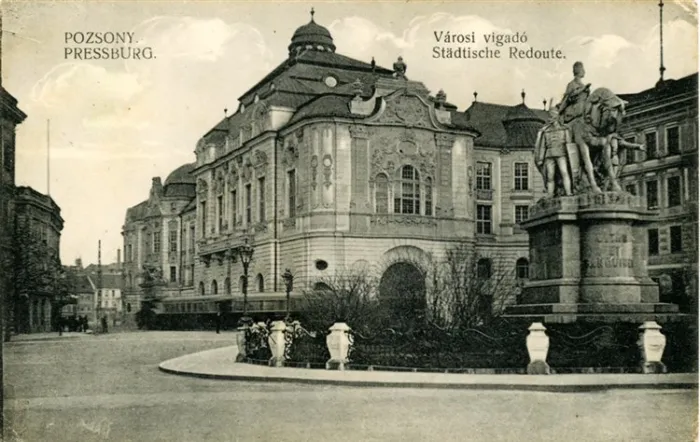
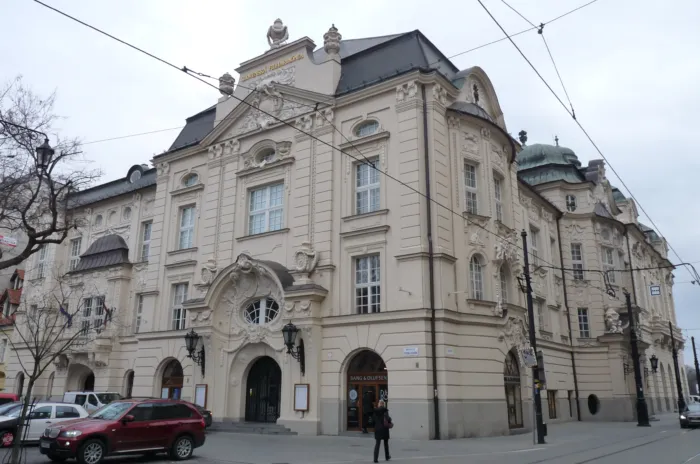
In 1906, the city announced a competition for the plans for the Vigadó building, which was won by the work of Budapest architects Dezső Jakab and Marcell Komor. The construction took place between 1911 and 1915, but some decorative work could only be completed in 1919 due to the war. This is one of the earliest buildings in Bratislava to be built from modern reinforced concrete structures. Initially, the building was the scene of numerous social and cultural events, it also operated a cinema and was home to several organizations. After World War II, the building was nationalized and was taken over by the Slovak Philharmonic. Many excellent domestic and foreign musical ensembles, soloists and luminaries of classical music have performed in its concert hall. The highlight of the concert season is the autumn Bratislava Music Festival. ; Marcell Komor (1868-1944) and Dezső Jakab (1864-1932) are the most influential and – in both social and geographical terms – the most widespread representatives of the Lechnerian national style. They designed for the Paris World Exhibition and for Niš, the former Serbian capital. Their best-known works live beyond today's borders, and for those traveling to the South or Transylvania, the Subotica Palace, a unique and impressive creation of Hungarian art, is probably one of the greatest experiences. The Komor-Jakab buildings have become symbols of the cities across the border that carry and preserve Hungarian national culture, while the local majority also proudly acknowledges them as values of their own heritage. Their interiors have survived in exceptional integrity. Subotica and Târgu Mureș thus preserve the most complete examples of the creative power and artistic standard of Hungarian turn-of-the-century architecture. In their joint oeuvre – from the synagogue in Subotica to the Palace of Culture in Târgu Mureș – behind the surface of the buildings, often dressed in profuse, rich folk ornamentation, the first decade and a half of the twentieth century saw an extremely rapid technical and emphatic transformation typical of the era, from a historicizing nature to the need to express structural-functional thinking.