
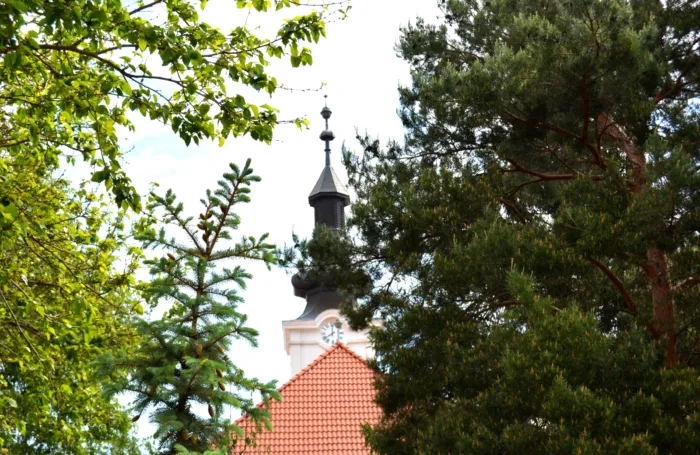
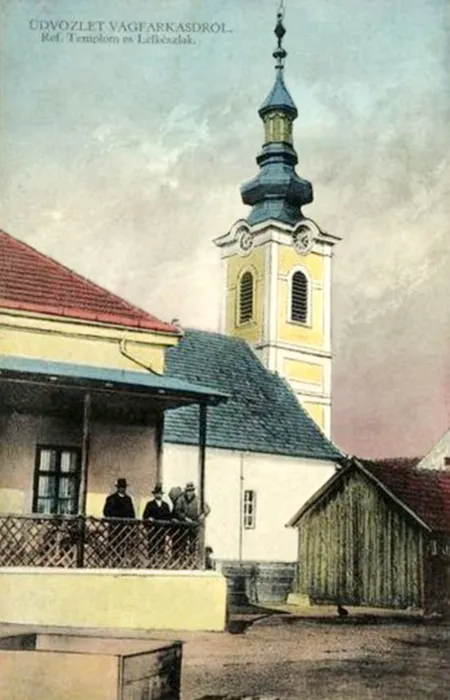
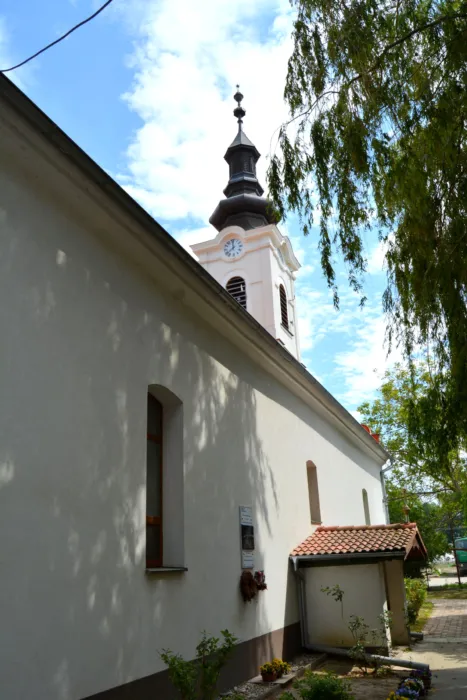
Vágfarkasd Reformed Church
Building, structure
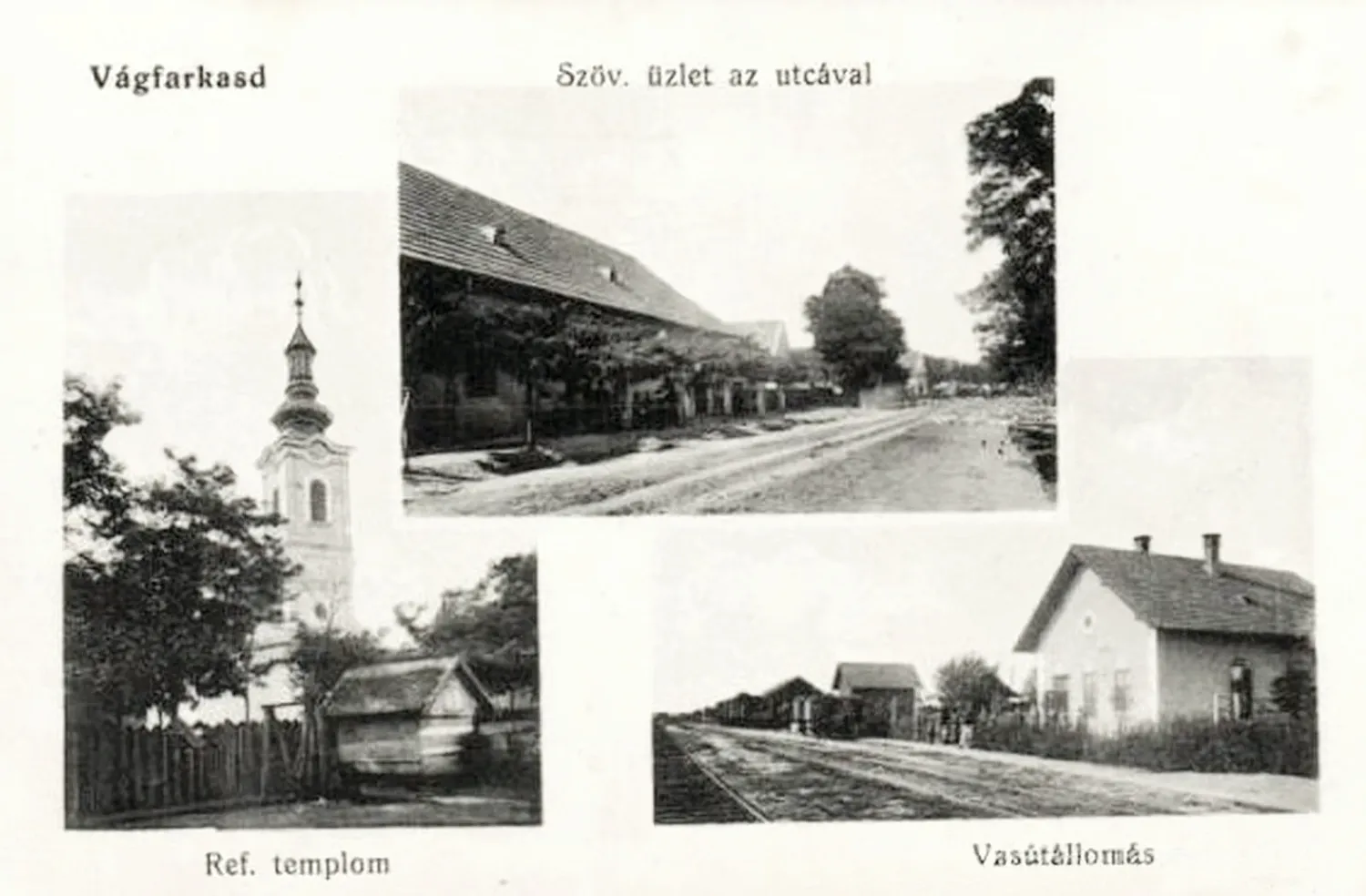
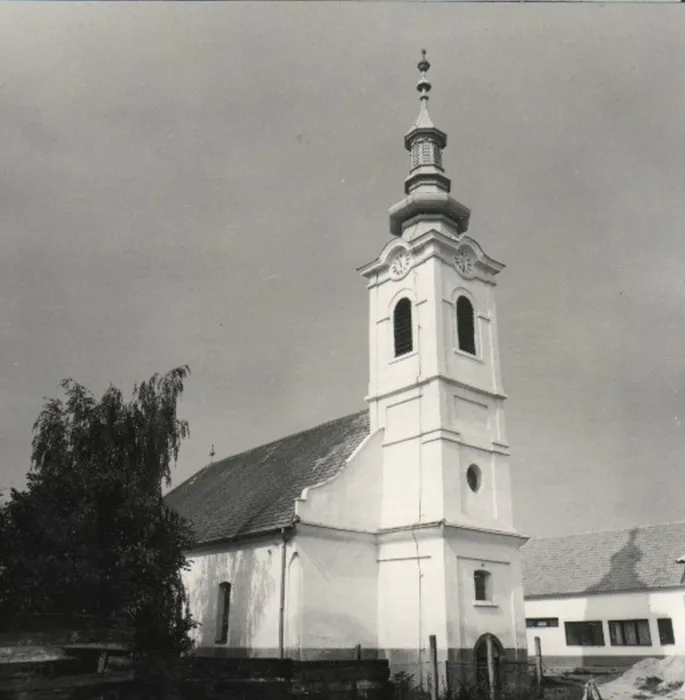
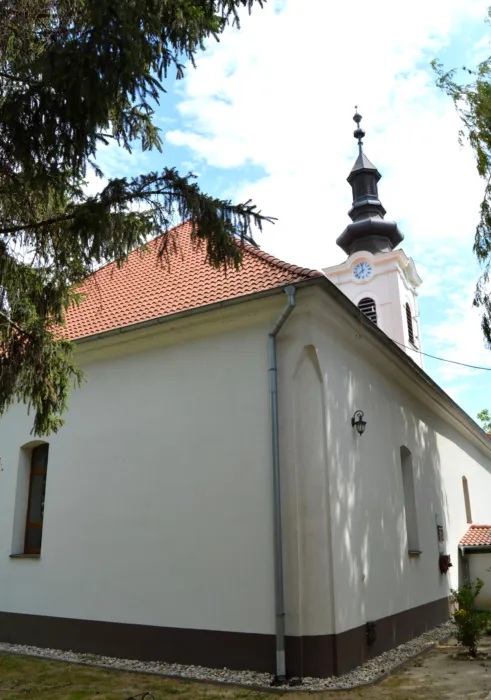
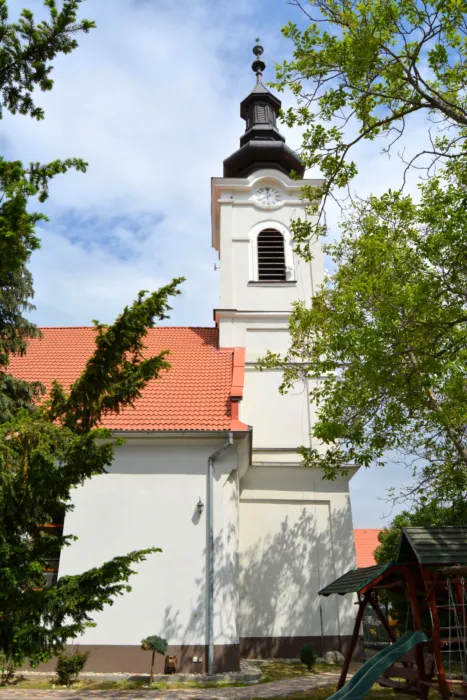
The large village of Vágfarkasd is located southeast of Galánta on the right bank of the Vág River, in a flat area. It is an old settlement, already mentioned in the early 12th century as Farkas (Forcos). The village probably got its name from the fact that the Vág valley used to be a swampy area, covered with forest, reeds and willows, and was apparently a favorite homestead for wolves. ; In the first centuries of the village's existence, it belonged to the bishopric of Nitra. It accepted the Reformation in the 16th century. In one of its writings, Péter Bornemissza notes that the Farkasdians broke with the Roman Church in 1577. The Gospel found favorable ground here, at that time superstition and various beliefs were rampant, there was no organized Roman Catholic parish or parish priest here, but they belonged to the neighboring Szímö. The Reformed teaching spread very quickly among the population, it was organized into a large, independent parish, which significantly changed the image of the village. The first thatched-roof, hipped-walled school and church were built on the banks of the Váh. The healthy development of the congregation is indicated by the fact that in his letter dated 12 IX. 1652, the alespere of Nagyszombat, M. Kanizsai, convened the Reformed Synod of the Upper Danube in Farkasd. Archbishop Nyikos of Kujvár was elected at the Synod of Farkasd and then, in a circular letter, he convened the Synod "at the usual place in Farkasd" for a 2-3 day meeting several times until 1663. That was the "last" according to a minute book entry. Then, u. i. The wave of the Counter-Reformation was so strong that the promise to remedy grievances included in the 18th act of the 1655 Diet could not help either. The zeal of the Jesuits reached Farkasd and in the sixties Szelepcsényi occupied the Reformed church, school and rectory, expelled the pastor and then imprisoned him. It can be concluded from a letter from 1721 that the word resounded in our church again, because in 1718 the parish priest Hajdinovicz of Simö banned the preacher, only the schoolmaster could hold prayers, but in 1721 he also banned that, had the church closed and forbade the ringing of the bells. In 1724 the great flood destroyed the first church and even swept away its site. A manuscript from 1774 has survived, which informs that the old church was destroyed, the schoolhouse is owned by the parish priest, they go to Kamocsa for divine services, the ceremonies are performed by the parish priest, and they are obliged to pay for it, although in Farkasd "the wealth of the Reformed people is 1348, the wealth of the Papists is 345". The manuscript states that the people have the talent to build a new church, but this could only happen after the toleration decree. ; Sixty years had to be waited and on June 6, 1783, the congregation gathered together for worship with its own pastor, freely and at home. The construction of the second church from stone and brick began and it was consecrated on the first Sunday of Advent in 1785. For 180 years now, this church has been calling weary people to the world, so that through the preaching of the divine word there may be more peace and joy, love, mercy and goodness. The church has grown, suffered great hardships and losses, but has risen again, built and created. In 1781, the congregation cast a 4-meter-high bell, in 1808 the church tower was built, in 1812 the tower was struck by lightning and had to be rebuilt, in 1829 the large gallery was built, in 1833 the thatched parsonage was rebuilt, in 1836 another bell was cast, in 1837 a new school was built and the church got a new roof, in 1855 the tower cap was covered with tin, in 1858 the idea of a two-story school was born, in 1894 the current parsonage was built, in 1901 3 new classrooms were built and in the same year the Mile family gifted the church with an organ. In 1903, the church was covered with tiles and a marble altar and baptismal font were built for the women. In the twenties of the century, the congregation already had three and a half thousand souls, and the idea of a two-story school arose again, but the church did not have a suitable place to build. A 3 m deep lake was purchased from the village, earth was filled in and the impressive, six-classroom two-story school was built on it at a cost of half a million crowns in 1931. Due to the population change after World War II, the congregation was reduced by nearly 1,000 souls, but it did not break - it looks to its future with hope. It has also found its place in the new society, it builds and creates, works and trusts in the Lord God, who has helped it in past centuries and will continue to help it in the future. M. J.