
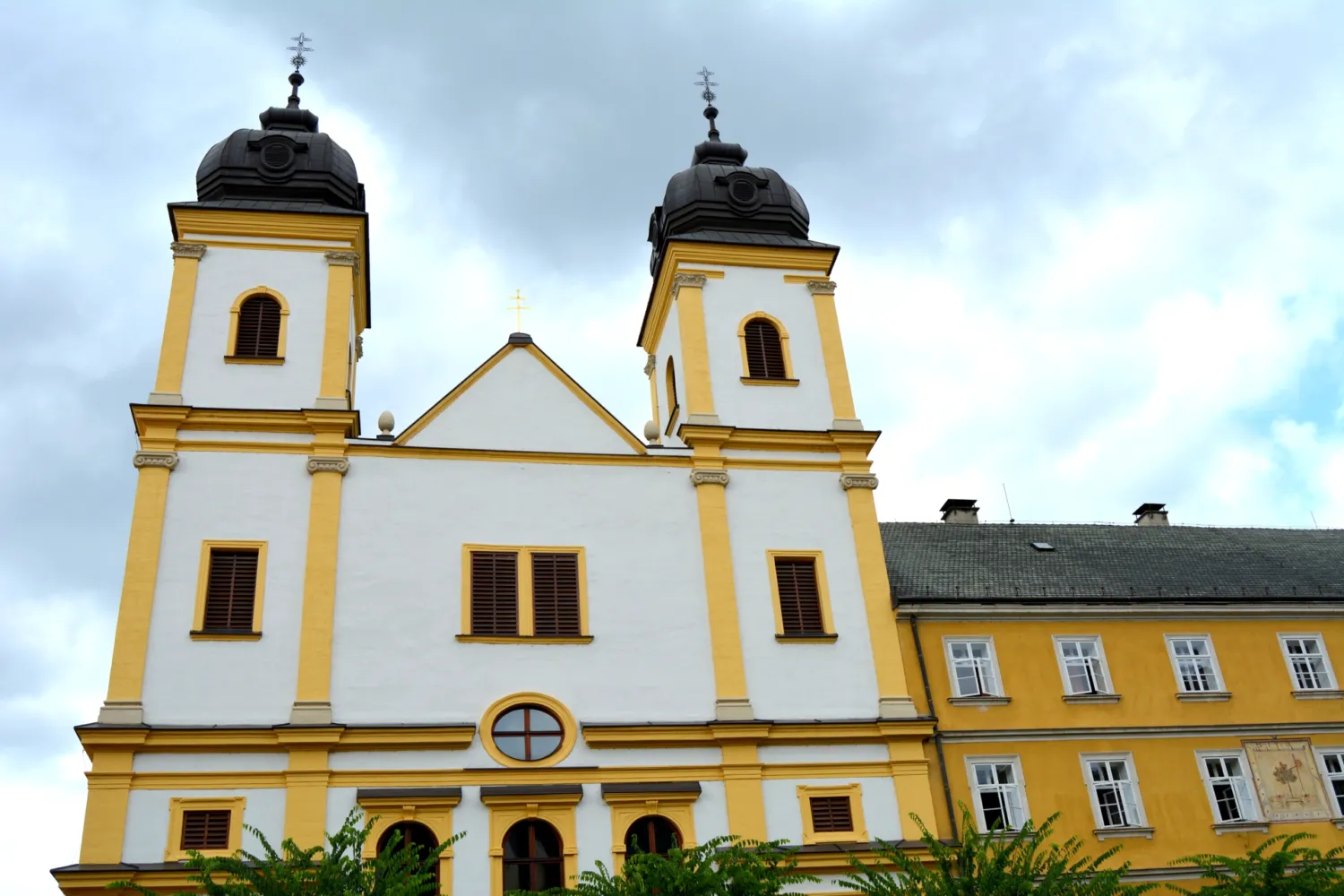
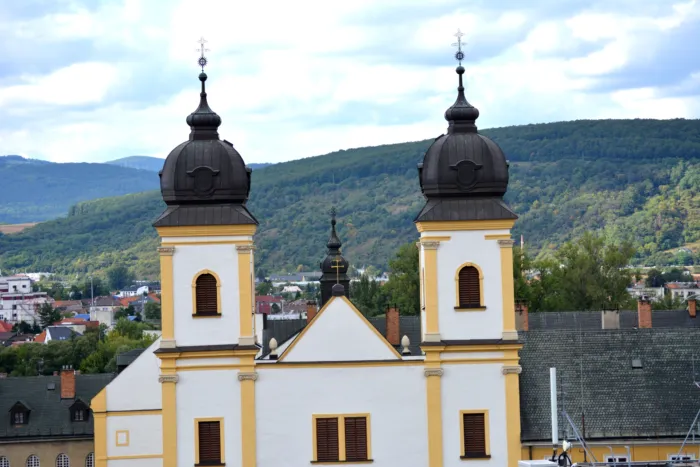
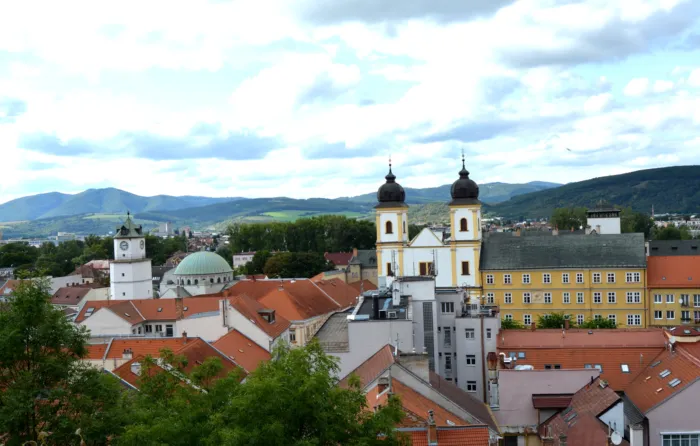
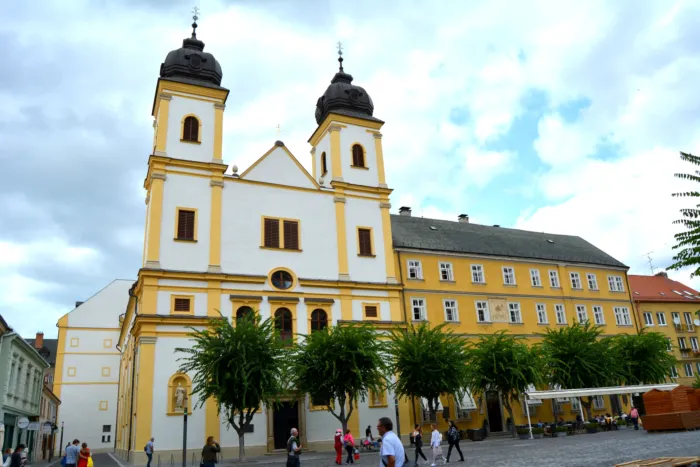
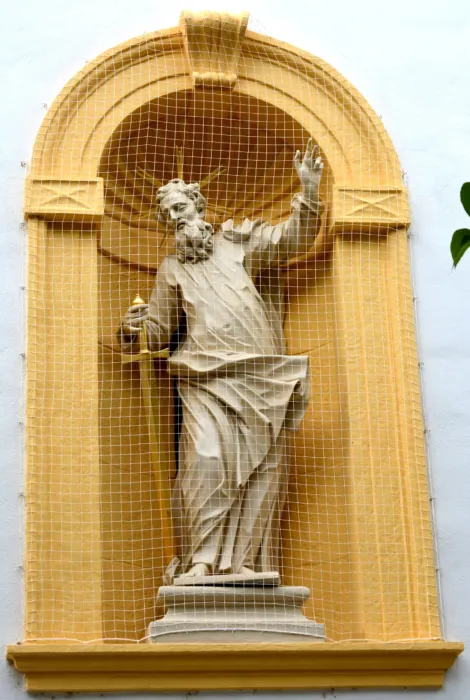
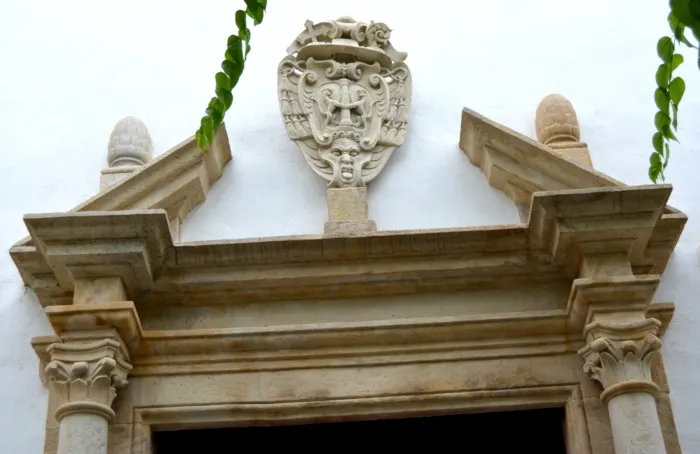
Church and monastery of St. Francis Xavier in Trenčín
Building, structure
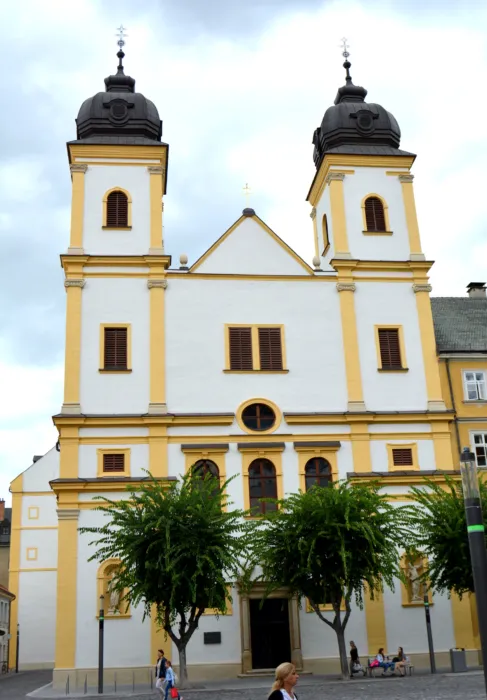
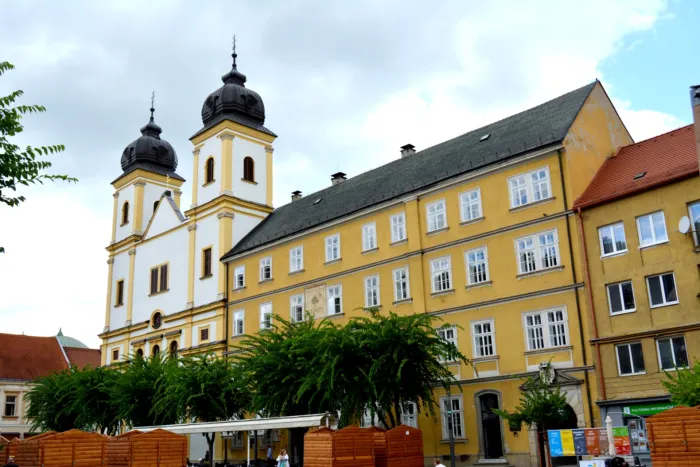
The Jesuit (formerly Jesuit) church in Trenčín is one of the gems of Hungarian Baroque art, which has gained great recognition far beyond the borders. ; The Jesuits were first settled in the neighboring Szkalka Abbey by the Bishop of Nyíregyháza János Püsky in 1645, so that they could build a long-planned Hungarian Jesuit novitiate, but since they saw a more favorable opportunity in the settlement in Trenčín, they moved to the neighboring city in 1646. ; The city, which was almost purely Lutheran in faith, did not welcome the Jesuits, and their settlement was prevented for years. In 1632, Zsófia Bosnyák left her own town house to the Jesuits in her will so that they could open a convent there. Zsófia Bosnyák, an old, tried-and-tested admirer and follower of the Jesuits, the saint of Sztrecsény Castle, the martyr of marital fidelity, the woman of charity, Ferencné Wesselényi. Her husband was the besieger of Murány Castle, known from literature, and the courtier of Mária Széchy (1610-1679). Her father was Tamás Bosnyák, the famous captain of Fülek Castle, and her mother was Mária Kenderes. She was given in marriage at the age of seventeen, but she was soon widowed, and then moved back home to her parents. Her mother and brother then died. When her father fought against the Turks in Fülek, Zsófia was at home, supporting orphans, widows, and the elderly. At the age of twenty, through the mediation of Péter Pázmány (1570-1637), she remarried her father to Ferenc Wesselényi, a heroic border knight. They settled in the castle of Sztrecsény on the Wesselényi estate. Their marriage was initially happy, and two sons were born. In the meantime, cholera broke out, and then Zsófia's father died. Then her husband became unfaithful and fell in love with Mária Széchy, the beautiful mistress of the castle of Murány. At that time, at night, she went to pray in the chapel next to the castle, where the Blessed Virgin appeared to her, encouraging her: 'Trust and pray!' Unfortunately, she fell ill in her grief for her husband and died at the age of thirty-five. She was laid to rest in the crypt of the castle of Sztrecsény, but when the castle later fell into foreign hands, the new owner had the ashes of the Wesselényis removed from the crypt. However, Zsófia's body was found intact in the coffin after forty-five years of slumber, so she was not disturbed. Later, she was transferred from the crypt to the village church, in Vágtapolca (now Teplika nad Váhom). Zsófia was ‘canonized’ by the people, and her intact body is kept in the Loreto Chapel in Vágtapolca. The inscription on her coffin reads: Nigra sum, sed formosa (I am black, but beautiful). ; The first Jesuits arrived only on December 6, 1646, in the inherited house, where they wanted to open a school. However, the city council resisted and protested for a long time, and Count Pál Serényi, who represented the Jesuits, was reprimanded several times, but on October 30, 1647, the Jesuits were able to move into a house on the main square that better suited their needs, which they were able to purchase in 1655. In the meantime, the dispute was not resolved, and finally the issue came before the king, and the III. By order of King Ferdinand, the royal chamberlain György Rakoviczky, on May 6, 1648, handed over a royal decree to the magistrate that if they continued to hinder the settlement of the Jesuits, the king would deprive the city of the privileges of royal cities. The royal chamberlain read out the royal decree and then solemnly declared that the Jesuits would settle in the city. At that time, three Jesuits began their work in the city: P. János Lippay SJ (1606-1666), the archbishop's brother, P. Ferenc Paczoth SJ (1598-1649) and P. István Viszocháni SJ (1611-1662). ; At that time, the patient proselytizing work of the Jesuits began, and year after year more and more citizens returned to the Catholic faith. Count György Illésházy (1625-1689) helped their work in every way. In 1649, the gymnasium was opened, and between 1650 and 1652, the students played several school checkers under the open sky every year, in front of distinguished guests, including the benefactor Count Illésházy and the city's bourgeoisie. The dramas performed were about Patriarch Joseph, the story of Esther, Mordecai and Haman. In 1650, Archbishop György Lippay of Esztergom confirmed 260 Catholic believers, including several over 70 years of age. On this occasion, the archbishop donated 30,000 gold for the construction of a new Jesuit church and convent. After some minor struggles, the land was purchased with the help of Illésházy, and the foundation stone of the church was blessed by the archbishop in 1653. After the ceremony, the students of the high school performed a school drama in the Slovak language, which retold the story of Abraham and Isaac, with great success in the main square of the city. ; The Jesuit church built in honor of Saint Francis Xavier was consecrated on July 1, 1657, in the presence of György Lippay (1600-1666), Archbishop of Esztergom, Ferenc Wesselényi (1605-1667), Palatine, several bishops and many priests. The archbishop's certificate of consecration was placed on the main altar: 'I, György Lippay, Archbishop of Esztergom, consecrated this church and this altar on July 1, 1657, in honor of Saint Francis Xavier, the apostle of India, and I placed the relics of Saint Francis Xavier and the holy martyrs: Aniceta, Dezidera, Juliana, Crescenta, Quarta, Amarantha, Saint Eugenia, widows and martyrs, and I grant a 40-day indulgence to all believers in Christ, according to the customs of the Church, who visit this church until the one-year anniversary of the day of consecration.' In the evening, the Jesuit students performed the school drama 'The Zeal of Saint Francis Xavier' with great success, again in the main square of the city. ; The Jesuits experienced two major crises during their operation in Trenčín: in 1663, the Turkish army invaded, when the Jesuit buildings in Szkalka were looted and burned by the Turks, Trenčín fell on October 2, the Turks killed more than 300 citizens and took many into captivity. However, the Jesuits survived the disastrous days fortunately, as the gymnasium was closed in August due to the invasion of the Tatar hordes that preceded the Turkish troops and they fled to protected places. During the Rákóczi Uprising, the Kuruc troops kept the city and the German defenders of the castle under siege between 1704 and 1708. In 1708, after the Battle of Trenčín, the city was liberated, and 3,500 Kuruc corpses were found on the battlefield. ; In the first period of the Society, it provided a home for the Hungarian novitiate of the Austrian province in Trenčín. The Jesuit novitiate began its operation in 1655, temporarily in the convent. The novitiate home was built between 1656 and 1661, which by 1773 had initiated many hundreds of Hungarian Jesuits into the monastic path. The last 14 novices entered the novitiate on 17 October 1773, but the order was officially dissolved four days later. ; The papal bull dissolving the Jesuit order was read out in the convent in Trenčín on 21 October 1773. The school year ended on 1 December, after which many ex-Jesuit teachers taught for years in the gymnasium, which was taken over by the Piarists in 1876. The settlement of the Piarists was due to the request of the urban bourgeoisie, who were completely puzzled by the dissolution of the Jesuits, who had brought so much development to the cities. Religious life was renewed, culture and social life flourished, so on December 15, 1773, they turned to the king with their request that the Jesuits at least continue to run the gymnasium and the boarding school. However, since there was no legal opportunity for the Jesuits to operate, the other teaching order with a long history, the Piarists, took over the school on November 1, 1776. On this day, the then director, the former Jesuit Jónás Tajnay (after 1730-1773), handed over the school to György Vietoris, who represented the Piarists. The arriving Piarists welcomed the former Jesuit teachers of the school with great love and asked them to work together further, P. József Csákányi (after 1741-1773), P. István Saly, P. József Hrabeczky (1730-1783), P. Máté Szenyi (after 1734-1773), P. György Olsavszky (1710-1780), P. Péter Fein (after 1738-1773). The high school library had 1904 books and another 2071 written documents that helped with learning. ; After the dissolution, the church was served by ex-Jesuit monks who had been taken over by the Nitra diocese, and later by simple diocesan priests. On June 11, 1790, in a fire that swept through the city, almost the entire city burned down, but thanks to Divine Providence, the church, the former Jesuit college and seven other town houses were saved. ; The Jesuit church dedicated to Saint Francis Xavier in Trenčín, modeled after the main Jesuit church in Rome and the Saint Francis Xavier church in Vienna, was built under the leadership of the renowned Italian architect brothers Pietro and Bernardo Spazzo, in the early Baroque style, with side chapels opening into the interior of the single-nave church. Saint Francis Xavier (Francisco de Jassu y Yavier, 1506-1552), due to his missionary activities in Southeast Asia and the Far East, was chosen after his death as the general patron saint of the missions. He was beatified in 1619 and canonized together with Saint Ignatius of Loyola in 1622. His veneration was spread throughout Europe by the Jesuit order at that time, especially in Rome, in the church of Il Gesú, where one of his relics is kept, in southern Germany and Austria. He appeared in Hungary through Austrian mediation, the church in Trenčín was the first church dedicated to Saint Ignatius Xavier in Hungary. This church burned down completely in the devastating great fire on May 14, 1708. In July 1708, the Jesuit artist Andrea Pozzo (1642-1709) was called from Vienna to Trenčín, who developed the plan for the interior renovation of the church, but died on August 31, 1709. Therefore, P. Gábor Hevenesi (1656-1715), Jesuit provincial, commissioned the Austrian friar, architect and painter Christoph Tausch (1673-1731), with the work, so the church was completely renovated between 1709-1713. ; The Tyrolean-born architect and painter entered the Society of Jesus in 1698, and after completing the novitiate, he worked as an assistant brother. As a student and follower of the famous Jesuit architect and painter Andrea Pozzo, he became one of the most significant artists of late Baroque illusionist wall painting and building sculpture in Central Europe. Between 1703 and 1709, he studied under Pozzo in Vienna, a period of study that proved to be decisive for his later career. His work in Hungary fell between 1711 and 1719. The most outstanding work of his entire oeuvre is the high altar and ceiling paintings of the Jesuit church in Trenčín from 1712-1715. Andrea Pozzo was the first to apply the pseudo-architecture of Italian theatrical sets to the interior design of Catholic churches, and the murals he painted in the St. Ignatius Church in Rome and the St. Francis Xavier Church in Vienna served as models for Tausch. Pozzo's ceiling painting in the St. Ignatius Church in Rome, with its perspectival appearance architecture that increases the real space, and its vision of the heavenly congregation swirling high, showed the way and was followed by numerous churches of the Jesuit order in Italy, Germany, Austria and other Central European countries. The ideas of the epoch-making artist were recorded in his famous theoretical work, Perspectiva pictorum et architectorum (Perspective Painting and Architecture), which was published in several editions, in writing and in engravings. The Austrian's students assisted primarily with the huge allegorical ceiling painting of the Liechtenstein Palace in Vienna: the Triumph of Hercules, and with the painting of the St. Francis Xavier Church in Vienna. ; The artistic program of the church's ceiling painting is entirely related to the life of St. Francis Xavier, the patron saint of the church and the city. The illusionistically painted dome above the nave is one of the pinnacles of Baroque art. The painting above the sanctuary depicts the apotheosis of St. Francis Xavier, appearing as a missionary, kneeling on a cloud, in Jesuit garb and with a traveling cloak on his shoulders, the Holy Trinity surrounded by angels, calling him to heavenly glory. The secco above the choir, facing the viewer, facing south, depicts Saint Francis Xavier, the missionary, as a priest and preacher giving a blessing, with a stole around his neck, a book in his hand and a radiant halo around his head, surrounded by angels playing on a cloud. On the edge of the cornice, some sick and lame people sit. In the lower right corner, the personification of the four continents symbolizes the world mission of the Society of Jesus: the lady with flowers is Europe, the lady with a camel is Asia, the black lady with the cornucopia is Africa and the lady with a palm branch is America. ; Tausch covered the burnt-out church interior with marble stucco, designed new, late Baroque altars and painted wall paintings. The main altarpiece depicts the miracle of Saint Francis Xavier, and on the ceiling, the sermon and apotheosis of Saint Francis Xavier and the glorification of Saint Ignatius of Loyola are shown. In the murals, created in the spirit of effective illusion, the painted perspective architectural details framing the narrative scenes merge with the real architecture. In these frescoes, which immortalize the legend of Saint Francis Xavier with deceptive realism, the architectural sections painted in an illusory way rise above the real architecture, beyond them the heavens open up, and celestial and earthly beings mingle. The sharp boundary between reality and imagination, architecture and painting, is blurred. The interior of the building captivates the faithful entering the church with its increasing flow towards the altar and its dramatized picturesque decoration. In the illusionistic ceiling fresco, the master applies a similar solution, as he learned in Vienna, combining two sections of the vault and tuning the emphasis to a monumentality with the help of a large painted, shortening false dome. He divided the vault into three units. The first one has a painted architecture reminiscent of the ceiling of the nave of the Roman church of St. Ignatius, the second one has the dome, and finally the first section is repeated above the sanctuary, depicting the Ascension of St. Francis Xavier. Tauscht's contemporaries - primarily because of his works in Trenčín - awarded him the title of 'Jesuit Appellation'. ; The church's main altarpiece, the huge picture of St. Francis Xavier, was painted by the Trenčín painter György Grimberg. In Tausch's original painting, St. Francis Xavier baptizes Queen Neachilla, and this picture is not only thematically similar to the similar altarpiece painted by Pozzo, which he painted for the altar of St. Francis Xavier in the Matthias Church in Buda Castle at the request of the citizens of Buda. The gilded chalice contains a silver statue of the Virgin Mary, made by the Viennese goldsmith Ignaz Anton Tober. The decoration of the side part of the sacristy is actually a pedestal reliquary, on which are gilded wooden statues of Jesuit saints: on the left, Saint Alajos Gonzaga with a cross in his right hand, and on the right, Saint Saniszlo Kostka with a child on his lap, according to tradition, the Infant Jesus. The architecture of the main altar follows Viennese models, the University Church carries the broken cornice on free-standing supports that adhere to the wall. ; The six side chapels were designed in the spirit of Catholic renewal, emphasizing the theoretical themes of theology, such as the Holy Trinity, the role of martyrs (Saint George), the personalities of the Jesuit order (Saint Ignatius of Loyola) supplemented with the Jesuit creed and Catholic dogmas (the Immaculate Conception of the Virgin Mary, the role of Saint Joseph, the Passion of Christ), these were depicted with modern artistic means. The theological content of the painting, the characteristic Jesuit features are highlighted by the mass of angel statues, who reinforce the central motifs dedicated to the altars. ; The church's statues and side altars were made by Bernát Baumgartner (after 1704-1773) between 1723 and 1735. The church's furnishings were made by monks and sculptors of the local Jesuit woodcarving and carpentry workshop, such as FF. Ferenc Roblák SJ (1641-1691), György Simkó SJ, János Diller SJ (1682-?), József Cordelli, Mátyás Miller SJ (after 1718-1773) and Jakab Pescher SJ (after 1722-1773). Later, most of their works were included in the collection of the National Museum in Budapest. The organ in Körmöcbánya was built between 1712 and 1719.