
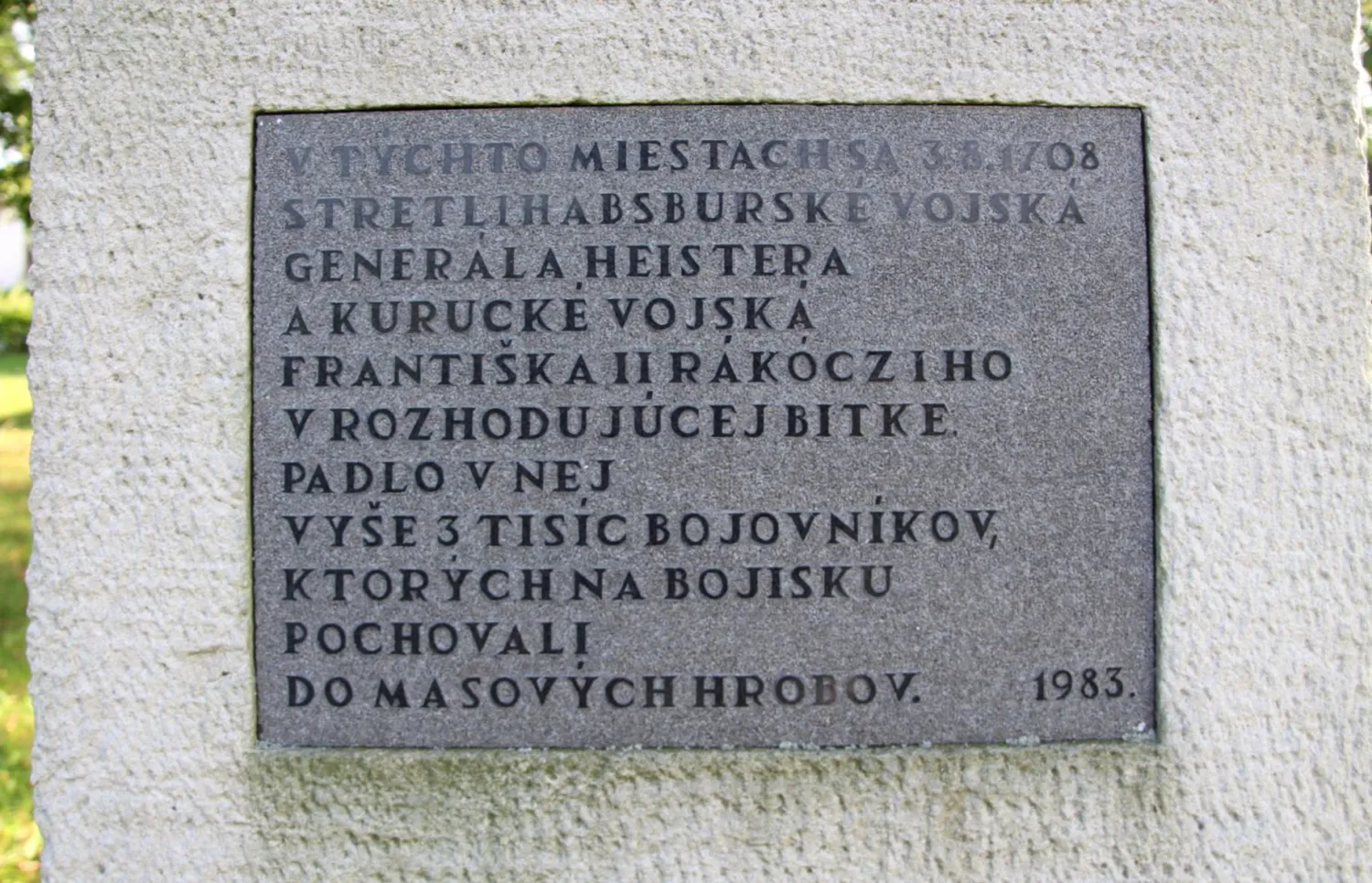
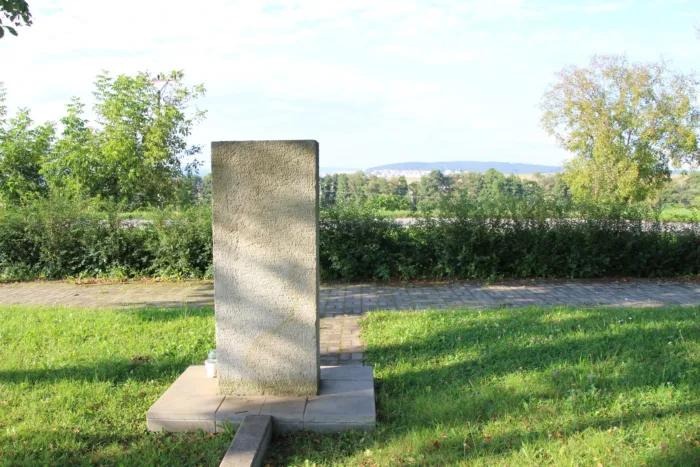
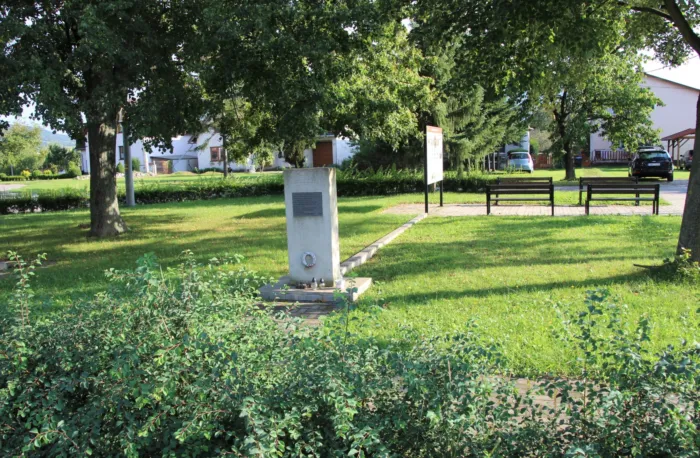
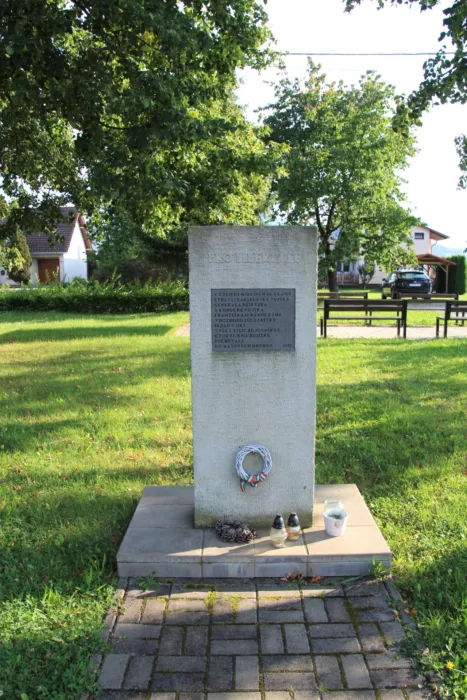
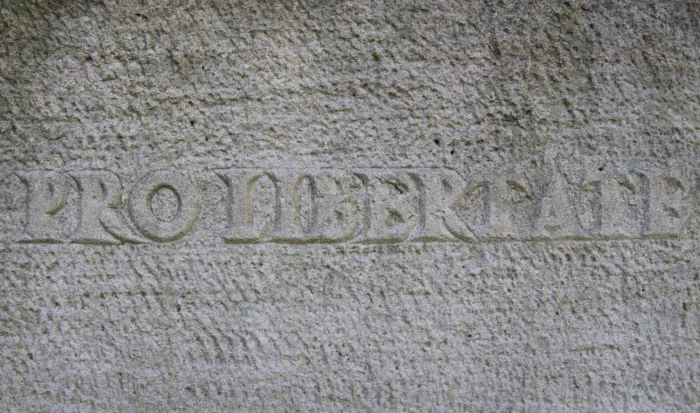
Memorial plaque of the Battle of Trenčín
Statue, monument, memorial plaque
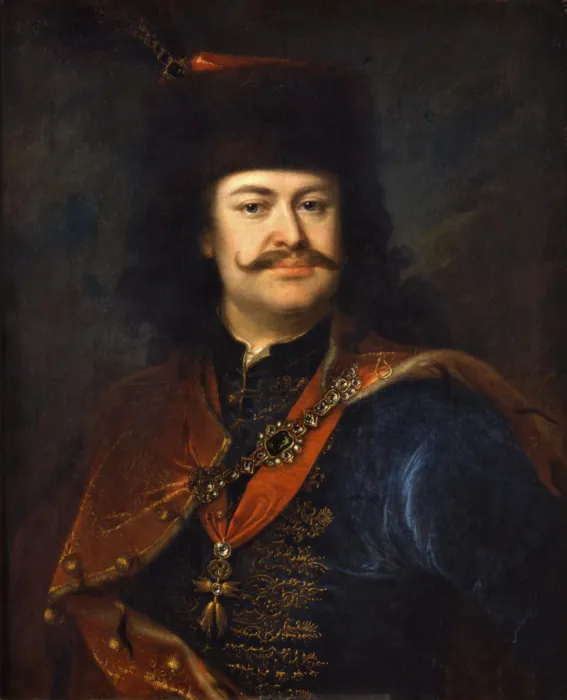
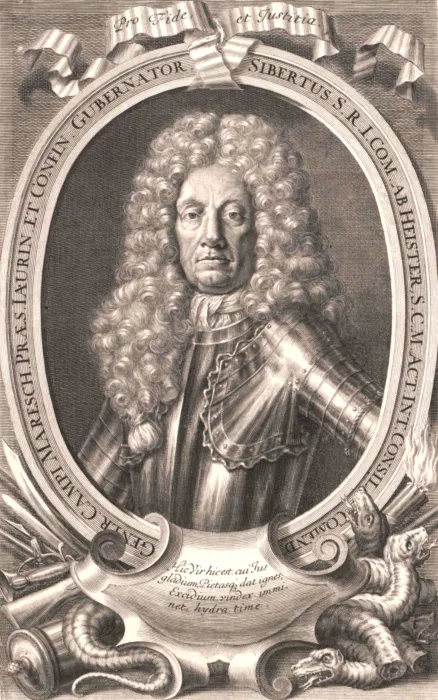
In accordance with the strategic idea of Prince Ferenc II Rákóczi, in 1708 he wanted to establish direct cooperation with the Silesian orders, who were dissatisfied with the policy of the Habsburg government. With the military operation to be carried out in the direction of Silesia, he wanted to relieve the Hungarian territories, which were already heavily exhausted as a theater of war, on the one hand, and to open a corridor for the Prussian heir to the throne, who, after the dethronement of Ónod the previous year, did not hesitate to nominate himself for the vacant Hungarian throne. ; The first phase of the military operation, the march to the Váh Valley with the selected troops gathered in the Eger region, proved to be an easy task. The newly appointed commander-in-chief of the imperial-royal forces deployed in the Hungarian theater of war, Field Marshal Count Siegbert Heister, gathered his forces at Győr, as he wanted to operate in the Balaton Uplands region. He was still in the Rába region with only 4 infantry and 1 dragoon regiment when he received news that the prince had appeared on the other side of the Danube at the head of a strong army. He did not move for the time being, as the Imperial-Royal Lieutenant General Baron Peter Joseph de Viard was camped along the Moravian border with 4 regiments of armour and 4 thousand irregular light cavalry. ; Rákóczi kept his real war objective a secret even from the higher military leadership. He was aware that with his approximately 15,000 warriors he was superior to both Viard's 6,000-strong grouping and Heister's 7,000-strong force, but he still did not wish to engage in battle on Hungarian territory. However, at the war council held in the Verbó camp near the Váh, the vast majority of the Kuruc military leaders voted against the prince and in favor of taking action. ; Thus, on July 25, the Count sent around 7,000 selected cavalry under Field Marshal Lőrinc Pekry to surround Prince Viard's forces gathered in a fortified camp in the area between Szakolca and Sztrazsnica. He made it dependent on the successful execution of the military movement that he himself would follow Pekry's grouping with the infantry and other retained forces. Heister, who arrived in Bratislava with his units on July 26, having learned about the Kuruc march, marched to Szakolca the next day in order to provide support to Viard's forces if necessary. ; On the morning of July 28, Pekry marched with his troops in battle formation against the imperial-royal camp, but did not attack. The enemy also took a waiting position. When Pekry, who had finally given up on the idea of battle, ordered a retreat in the late afternoon, Viard, who had also kept his troops ready for an attack throughout, immediately ordered his soldiers to attack. Sacrificing his rearguard, Pekry continued the retreat, so as not to suffer defeat and significant losses with his troops, and thereby endanger Rákóczi's further plans. ; Rákóczi then turned south and wanted to march with his infantry against Lipótvár, which seemed relatively easy to capture. However, his commanders received information about the final exhaustion of the imperial-royal guard trapped in the castle of Trenčín, located just a little further north from the camp. Therefore, with the exception of General Ádám Vay, the only one who supported Rákóczi's plan, the court marshal, all accepted the argument of the court master György Ottlyk, according to which it was necessary to set out to capture the castle of Trenčín before the significant supplies, especially the food supplies, which were reportedly already on their way, could reach there. The prince again gave in. ; General János Bottyán was ordered to remain with his troops along the Váh at the previous height. Captain László Ocskay was to occupy an observation position with his cavalry beyond the Little Carpathians, and later he was to ensure the connection between the mass of troops retreating towards Trenčín and the remaining Bottyán group. The French brigadier La Mothe, who was fighting in the ranks of the Kuruc army, was tasked with fortifying the Trenčín ford with the infantry placed under his command, burning the bridge, and scouting out a suitable camp. He ultimately failed to fulfill these very clear tasks, citing various reasons. ; On July 30, the bulk of the infantry crossed the bridge at Bánka to the left bank of the Váh and marched to Luka. The cavalry only crossed the Csejte ford the next day. For safety reasons, Rákóczi sent the train column via a detour, via Ólehotá, Bajná, and Nagytapolcsány, to Trenčín. On July 31, the infantry also continued its march and reached Beckó. On August 1, the prince ordered a day of rest for the entire army. ; While Rákóczi was marching with his armies to Trenčín on August 2, and at around 9 pm he set up camp on both sides of the Bárátlehota highway, an event occurred with the enemy that meant the failure of his entire enterprise: the 300-cart food supply sent by Viard from Magyarbród the previous morning arrived in Trenčín by a detour. ; Also on August 2, Heister marched from Szakolca to Vágújhely, as he had received false information that Rákóczi's cavalry was marching north. After learning about the real situation at Vágújhely, he sent the cavalry general Count János Pálffy (later the famous imperial-royal field marshal) to reconnoiter the enemy. On the night of August 3, Heister himself crossed with the bulk of his group and followed Pálffy's troops. The Hungarian commander in the service of Vienna ran into the observation detachment of Captain Orbán Czelder in the Vöröshegy gorge, which retreated from the superior force all the way to the Kuruc camp and reported the enemy's approach. It was then 7 o'clock in the morning. ; The Kuruc prince immediately ordered an alarm to his army and took measures to immediately stand in battle formation. Facing north. He arranged his troops in a long line on the hillside above Túrna, Hamri and Szoblakó. After almost all of his previously separated forces had already arrived in the camp, nearly 15,000 men were in arms, half infantry, half cavalry, and 14 cannons. The formation of the battle order was difficult, so Count Rákóczi entrusted the arrangement of the right wing in the Hamri and Szoblakó area to General-General Miklós Bercsényi, the princely governor, while he himself tried to have the left wing properly set up in the Túrna and Barátlehota area. ; He had a smaller part of the infantry placed on the slope above Túrna, and behind this he had the foreign cavalry under the command of the French brigadier Charriére stationed. The bulk of the infantry lined up on the country road on flat terrain between Barátlehota and Hamri. Above this, the cannons were placed in firing positions under the cover of the best combat-worthy, regular cavalry regiments. The field cavalry was stationed in the area between Hamri and Szoblakó, also on flat terrain. On the hillside above this, the prince had the Bercsényi Carbine Regiment and his own palace regiment stationed as a reserve. The terrain was heavily ridged everywhere, ditches, ravines and ravines made movement difficult. ; Heister unexpectedly caught sight of the Kuruc Confederation's army lined up in battle formation from the height of Szedlicsna. He was very surprised, because until then he had thought that it was only cavalry advancing. That was why he put together his 5200-man grouping from 8 imperial-royal cavalry regiments. In any case, sensing the enemy's combat readiness, he immediately formed his formations into battle formation and marched them in two lines 300 steps apart. The advance guard commanded by Pálffy was Túrna, while the bulk marched at the height of Hamri, remaining out of range, about 1000-1200 steps from the Kuruc lines. ; Heister assessed the situation as such that Rákóczi's superior forces had taken such a strong position that launching an attack was impossible. At the same time, he also considered a retreat towards Vörös-hegy to be dangerous. Therefore, he decided to continue the deceptive march towards Trenčín. This counter-march seemed safe even for the cavalry in a valley that was relatively easy to pass. ; The counter-march of the imperial-royal cavalry caught the Kuruc leadership by surprise. Rákóczi initially believed that his left wing was in danger of being surrounded, so he sent 3 additional infantry battalions there as reinforcements. ; Instead of attacking, however, Heister's grouping retreated in front of the Kuruc front line to the height of Túrna, and then continued its march towards Trenčín with an unexpected left turn. This was an extremely dangerous maneuver, since the movement in front of the enemy's front line, as well as the unexpected lateral development, offered the enemy an opportunity to attack. The decision of the imperial-royal commander was especially bold due to the inevitable temporary disruption when turning. ; However, Rákóczi missed the favorable moment, only recognizing the opportunity to attack too late. At that time, he believed that the field cavalry of his right wing could flank the advancing enemy with a quarter turn, while the infantry of the left wing descending to Turna could provide adequate support for this attack. Pekry, who commanded the right wing, received the corresponding order from the prince, and immediately moved his cavalry. However, the terrain was marshy, the stream there widened into a lake in two places, and only one embankment led across, and even that was so narrow that the horsemen could only cross it one by one. ; The Kuruc field marshal had just crossed the embankment when his subordinate, Brigadier István Ebeczky, warned him that the prince had given his order without knowledge of the terrain, and that the movement of the cavalry in that place could be extremely dangerous. Pekry then decided, with an unexpected and frivolous decision, to abandon the order he had received, stopped the advance of his cavalry, and sent those who had already crossed the embankment back to their original position, on the slope above the Túrna. ; The uncertain advance and then return of the Kuruc cavalry attracted the attention of Pálffy, who demonstrated exceptional situational awareness, and who continued to advance at the head of the vanguard of the imperial-royal armies. He immediately reported to Heister and at the same time requested permission to carry out a raid. With the permission, he first sent his irregular cavalry against the Ebeczky group, which formed the left wing of Pekry's cavalry, and then sent two dragoon squadrons after them to support them. Pálffy himself, at the head of two other dragoon squadrons, crossed a ditch crossing the highway and struck the right wing of Pekry's field cavalry with such force that it immediately fled without engaging in battle. Then Pálffy threw himself from the right with his dragoons at Ebeczky's group and, in barely a quarter of an hour, routed it as well, causing heavy losses. ; The scattered Kuruc hussars tried to escape in a south-southeasterly direction behind the armies in battle formation from the imperial-royal cavalry, who were pursuing them. First, they chased the fleeing troops to the wooded and hilly area in the direction of Barátlehota, then the imperial-royal dragoons and rács attacked the infantry and artillery in the middle of the battle line between Barátlehota and Hamri. ; At this time, the prince was regrouping his reserves in the Szoblakó area, and he did not think at all that his troops could be attacked by the imperial-royal. When Bercsényi, who had rushed there, warned him of the events that had occurred, he immediately rushed to the center of the mass. By then, the cannons placed there were already firing at the attacking enemy, and the regular hussar regiments serving to protect the artillery successfully repelled the first attack of the imperial-royal dragoon squadrons. ; As the battle widened, Heister also stopped the imperial-royal mass's march towards Trenčín, turned back, and ordered a general attack. The focus of the fighting continued to be on the right wing of the Kuruc line. The superiority of the imperial-royal regular cavalry soon became obvious, and the retreat of the Kuruc field cavalry turned into a mass flight. When Rákóczi saw that the right wing was in a state of complete disintegration, he sent the Bercsényi cavalry carbines in reserve there as reinforcements. However, he soon had to experience that this formation was also retreating. ; In order to prevent a complete disintegration and flight, he himself wanted to stand at the forefront of them, so he rushed there at a gallop. In the meantime, he did not pay attention to the ruggedness of the terrain, but relied entirely on his horse, only watching the fight. His horse had already jumped two ditches, but the third one followed too close, the horse stumbled, fell over and gave up its steam due to the slight momentum. The prince threw himself to the side in time, but was run over by his horse, suffered a severe contusion on his head, and lost consciousness. The ambitious soldiers of a company of the hussar regiment, which had been raised in the imperial-royal army shortly before, and owned by Count József Esterházy, were already within fifty paces of capturing Rákóczi, the Kuruc leader. ; But the warriors surrounding the prince: two noble squire-bearers, Péter Dániel and János Illosvay, as well as three young knights of the Noble Company, Péter Ghillányi, Mihály Simándy, and especially László Bercsényi, the son of the general-in-chief (later Marshal of France), freed him from his dangerous position. After unsuccessful attempts to revive him on the spot, Rákóczi was placed on the horse of the princely stablemaster Ádám Berzeviczy, his face was covered with a hat, and with the support of four Albanian princely bodyguards who had arrived to help him, he was rescued from the whirlwind of battle into the nearby forest. ; At the moment of the prince's fall, a false rumor of his death spread among the Kuruc armies. Instead of preventing the field cavalry from escaping, at around 10 a.m. the infantry, which had been flanked between Túrna and Hamri in the meantime, also broke up, and the battalions, instead of offering further resistance, also began a general flight. However, the attackers did not stop, and the dismounted imperial-royal dragoons continued the pursuit on the difficult terrain, until all resistance in this area ceased. ; The regular hussar regiments, which had shown a strong resistance at the height of Barátlehota, and were of the highest combat value, were also shaken by the general confusion. The court palace regiment, which was in reserve at the forest near Hamri, with Captain János Szentiványi at its head, was the last unit to intervene in the fighting that was raging below. This happened at noon. However, this regiment could not change the situation either, its soldiers were soon slaughtered, scattered or taken prisoner. ; The longest resistance, however, was offered by the Miklós Perényi and Orbán Czelder infantry regiments, and the Sándor Luzsénszky cavalry regiments, making the most of the terrain. At the same time, these units suffered the greatest blood loss. ; The imperial-royal armies continued to pursue the completely scattered Kurucs until 3 o'clock in the afternoon. Aware of the unexpected, certain victory against a significant superior force, Field Marshal Heister ordered his troops to assemble. ; The loss of the Battle of Trenčín meant a heavy loss of blood for the Rákóczi War of Independence. Of the best equipped, selected fighters left on the battlefield, about 3,000 were killed, more than 500 were taken prisoner, approximately another 500 people abandoned the banner of independence and joined the imperial-royal armies, and at least 3,000 people were wounded among the refugees. Those active in the high command did not spare themselves in the fight, while they worked to gather and organize their armies. Major General Miklós Bercsényi, Field Marshal Lőrinc Pekry, and General Ádám Vay were wounded, among others. The material loss was also great. All 14 paraded cannons, 50 flags, 2 pairs of cauldrons and an incalculable mass of personal weapons thrown away during the escape were lost. ; In contrast, the imperial-royal force lost barely 160 dead and slightly more than 800 wounded in manpower, and its material losses were not even worth mentioning. ; Ferenc II Rákóczi gathered the remnants of his defeated army in Nyitraszerdahely in the evening, but some of the escapees arrived with Miklós Bercsényi only on the morning of August 4. From there, the sad retreat continued towards the interior of the country, all the way to Eger. ; In memory of the battle, a Slovak-language memorial plaque placed on a stone pillar was inaugurated in 1983. The Hungarian translation of the text of the information plaque also in Slovak behind the pillar (which mentions the battle as the Battle of Hámori) can be read on the village's website (https://trencianskaturna.sk/hu/a-hamori-csata).