
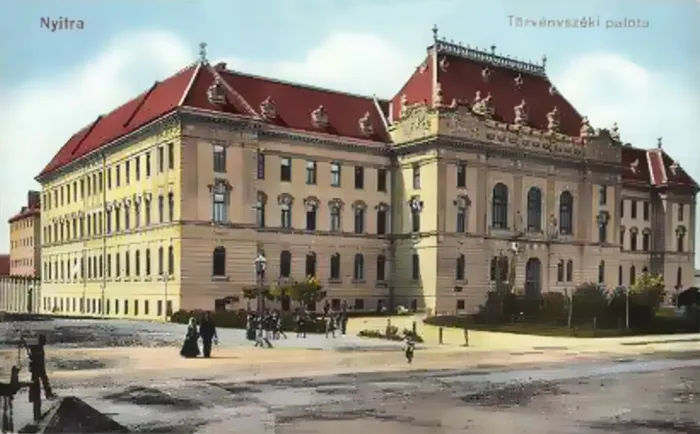
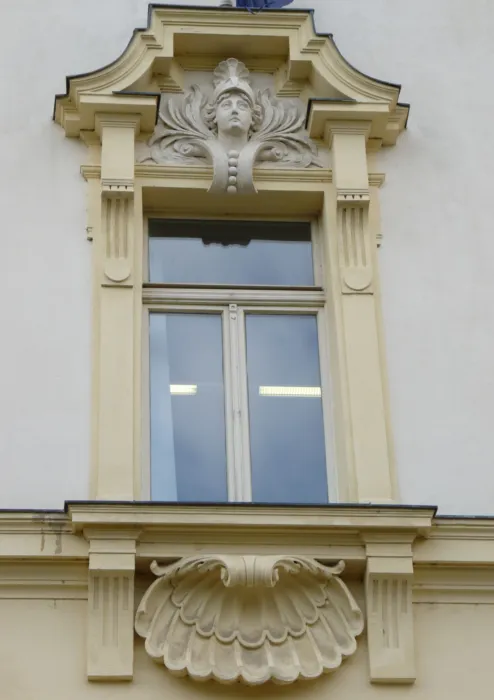
Courthouse
Building, structure
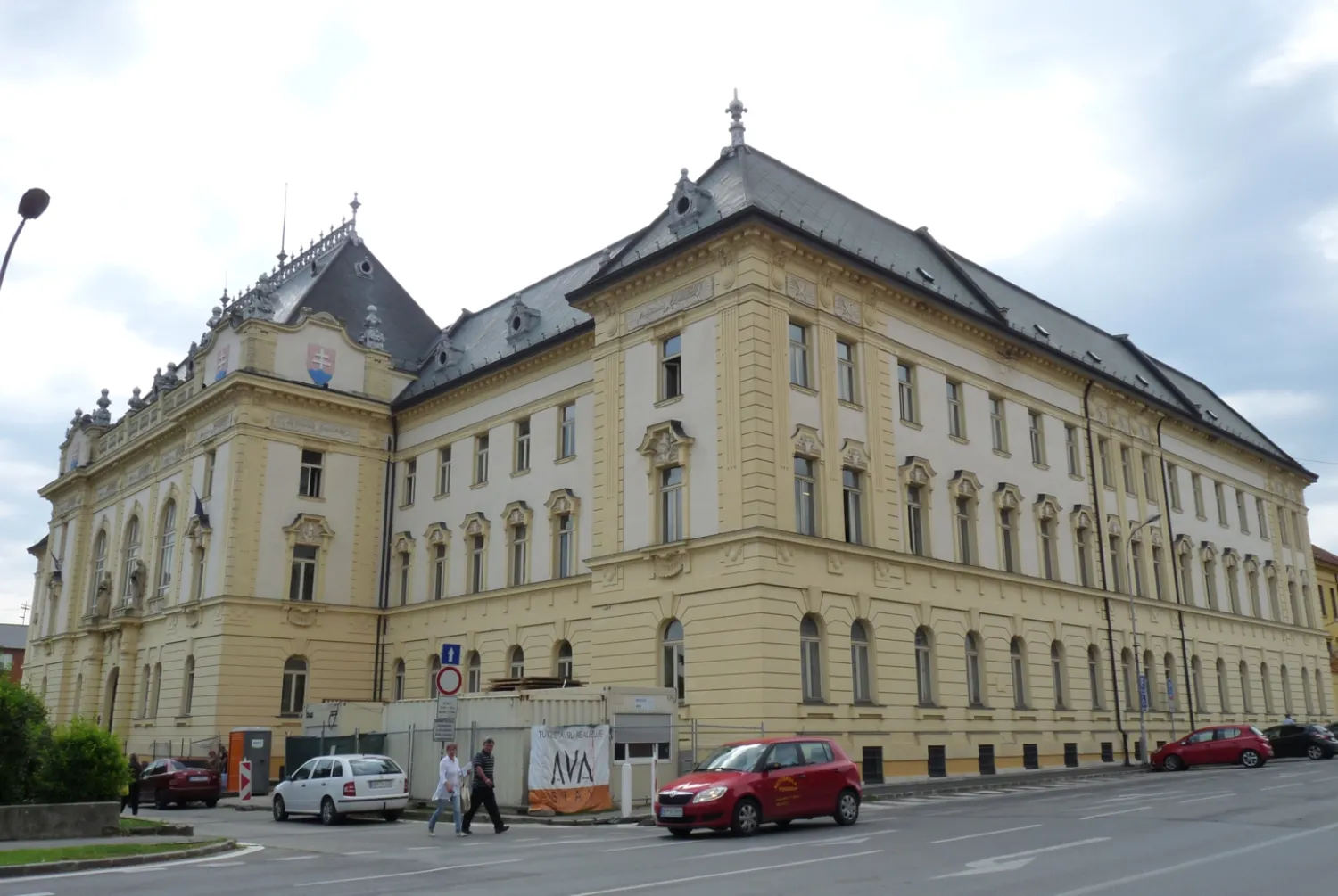
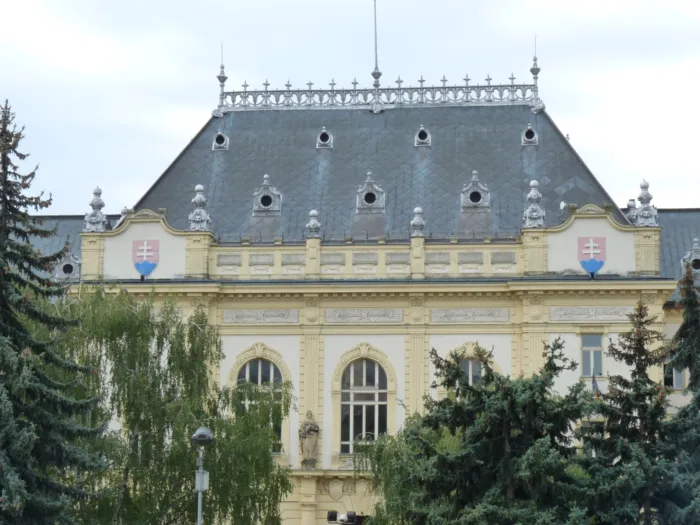
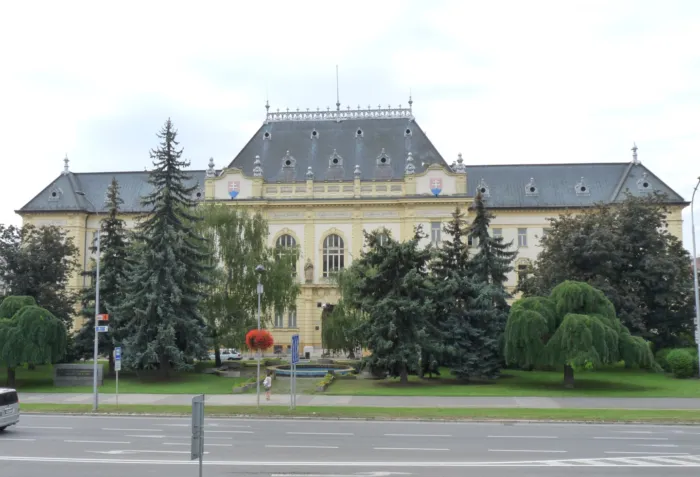
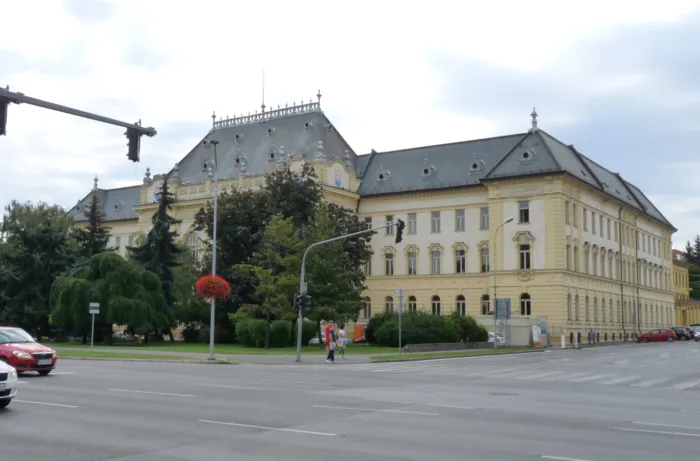
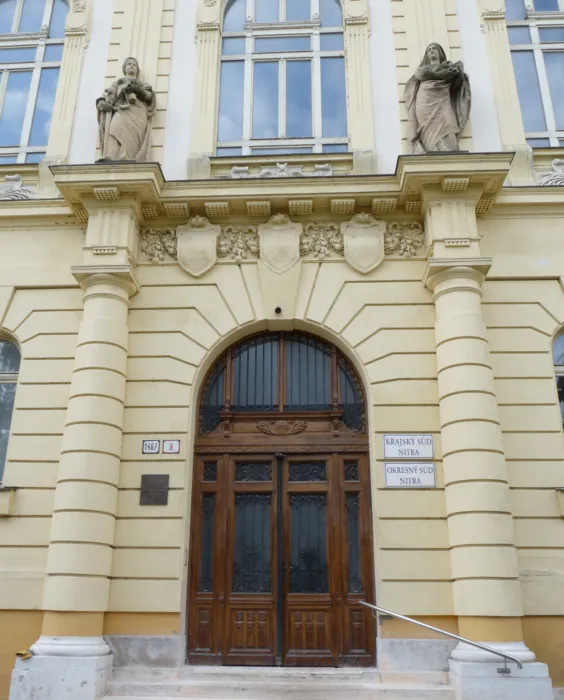
The need for it was raised in 1895 in the then Nitrai Hírlap, and a year later the Hungarian Ministry of Justice approved the construction of a palace of justice in the city. The Art Nouveau-style building was built between 1901 and 1903 by the Tomaschek and Csellágh company based on the plans of István Kiss, and the three-hundred-bed prison was also handed over in 1904. In the first years, there was no full house at all, barely 120-150 people were held here, because those convicted of more serious crimes were still taken to the nearby Lipótvár. Thieves and brawlers were usually imprisoned in Nitra, or rather, they cultivated the garden belonging to the prison and the land rented by the prison, cleaned the yard, and cut wood to have something to heat the cells. Until 1923, they were lit by kerosene lamps and heated by furnaces built into the walls – the prisoners chopped up seventeen wagonloads of wood a year. During World War II, the building was hit by a bomb, but the cells could still be used, so their inhabitants remained, only to be released by the Red Army commanders on March 31, 1945. The Nitra prison operated as a prison camp for a few months, then the State Security Office designated it for political prisoners. After this ill-remembered office ceased its activities in 1960, the state archives moved into the prison building, where they remained until 1970. Since the country's prisons were once again running out of space, the renovation of the old Nitra prison began in 1971, and the building was used again for its original purpose on 1 September 1973. Since then, it has been expanded and remodeled several times, and an office building and a vocational school for the training of prison guards have been added. Currently, 417 convicts, including 13 women, are serving their sentences here.