
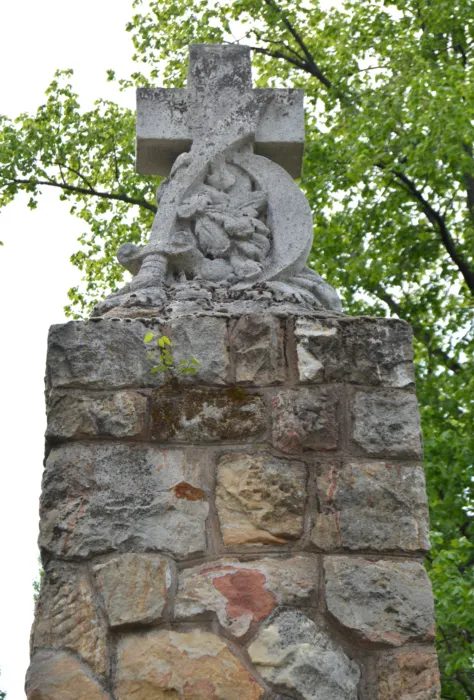
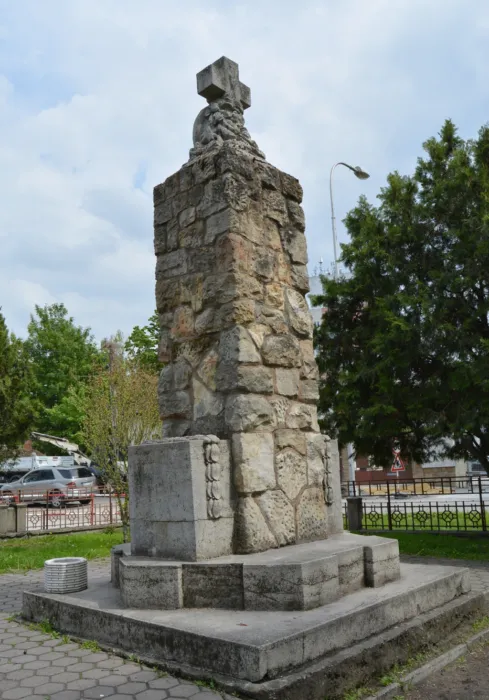
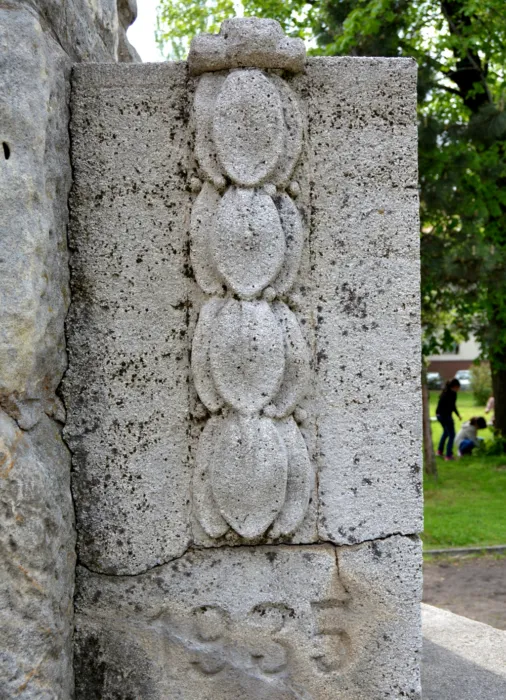
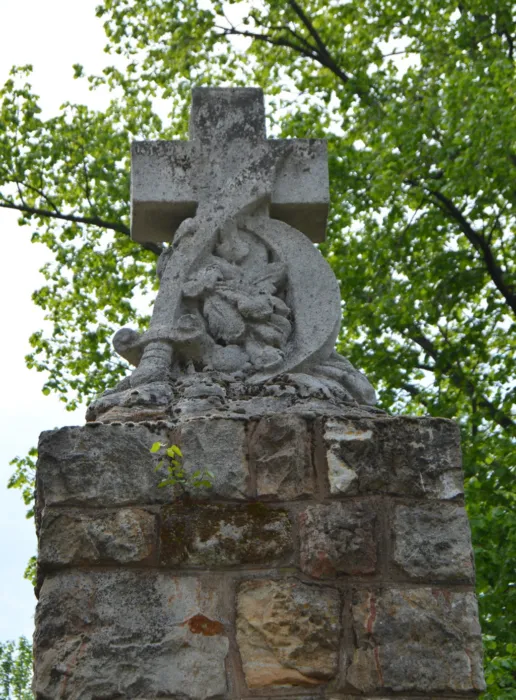
Monument to the Liberation from Turkish Rule
Statue, monument, memorial plaque
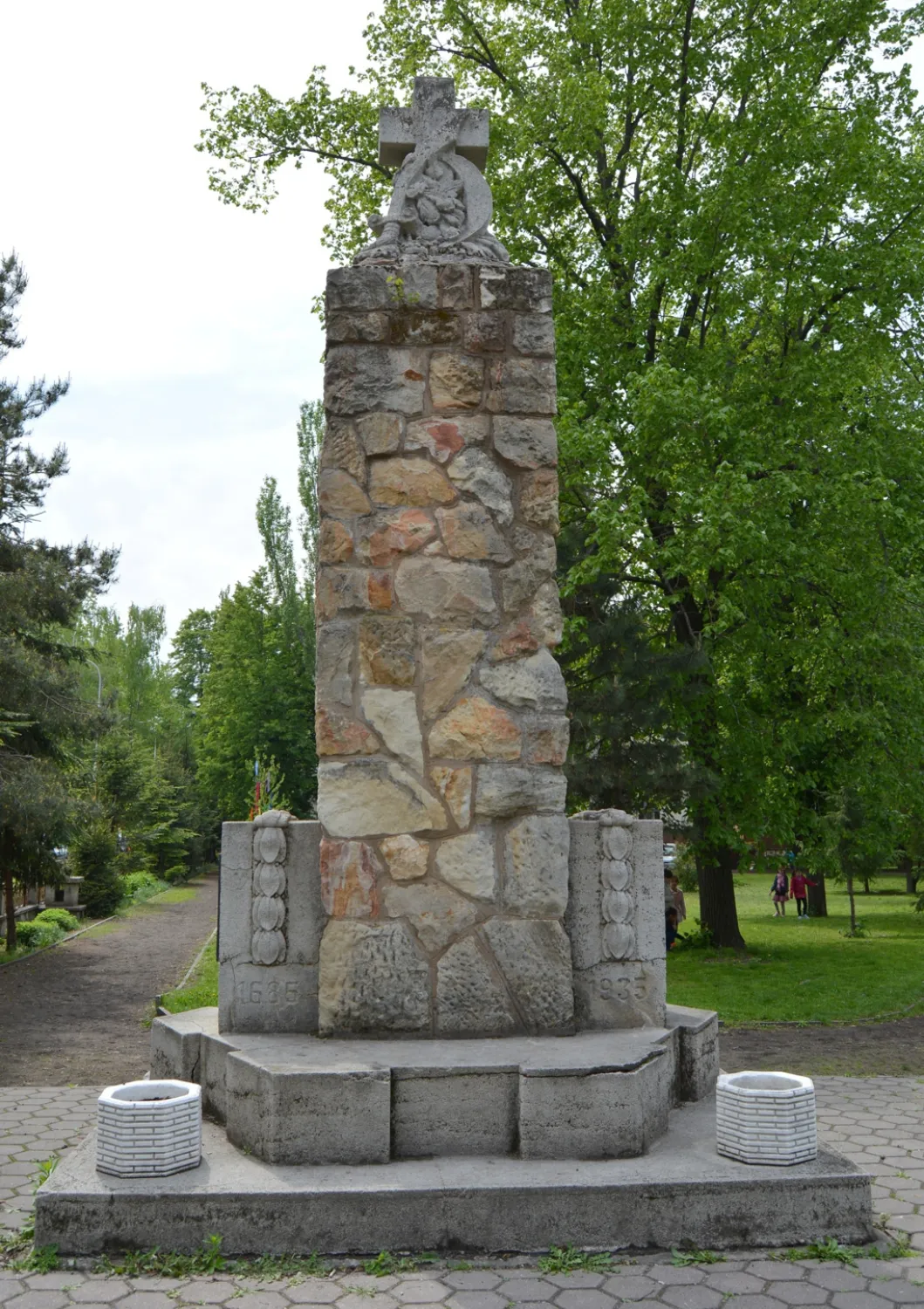
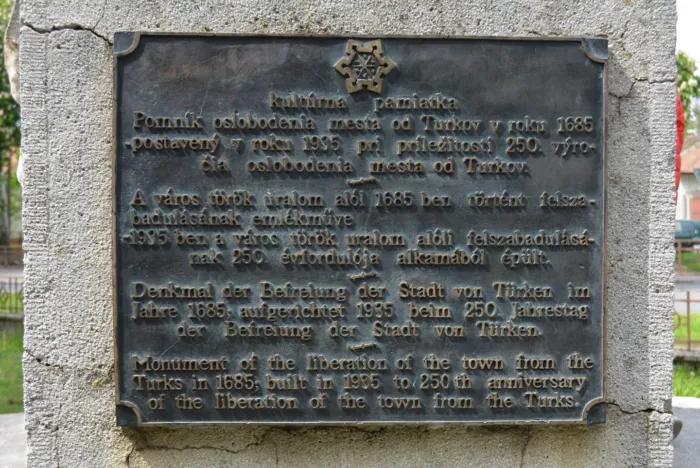
"On August 18, 1935, a celebration was held to mark the 250th anniversary of the great event for the entire Christian world, when the Turkish armies that had been occupying the castle for 22 years were successfully driven out of the famous castle of Érsekújvár. ; The city council and the Hungarian leadership developed grandiose plans, but the Czech official circles prevented the holding of the large-scale program. The Prague Council of Ministers was also concerned with the matter, since the city wanted to invite primarily the Vatican, which at that time, through Pope Inces, provided full moral and financial support for the campaign against the Turks, as well as the governments of all the countries that contributed soldiers or money to the reconquest of Újvár castle. ; On behalf of the city council, Senator Dr. Imre Turchányi went to the Ministry of Foreign Affairs to obtain permission, but unfortunately, the Ministry of Foreign Affairs did not have an official informed the city in a telegram that the Prague government did not consider it desirable to invite foreign governments to the celebration and that it was only permitted to be held in Slovensk. At the same time, in view of this decision of the Council of Ministers, official circles did not recommend that state and public officials and representatives of the authorities participate in the celebrations. ; The large-scale preparations for the anniversary days were carried out by the city secretary and chief organizer Gyula Saskó, in which the Hungarians of southern Slovensk showed an interest beyond imagination and it was certain that Hungarians would make pilgrimages from far away to these historically significant days in order to celebrate this triumph of the Christian world in the most dignified way possible. ; The program of the celebrations — on official instructions — had to be changed and shortened twice. The invitation had to be reprinted with a reduced program, and certain points of the program had to be canceled, nevertheless, the Hungarians, who were left alone and ignored by official circles, and the organizers of the celebration did everything to make this great historical jubilee worthy of the traditions of the Kuruc city. ; Since the existence of Érsekújvár, there has hardly been an example of a celebration of such a large and successful scale being held within these walls. The celebration was characterized by complete order, perfect organization and discipline, as well as a festive atmosphere, - despite the fact that nearly 15,000 people celebrated the jubilee. ; The first event of the two-day celebrations was the ceremonial opening of the historical exhibition organized for these days. Senator Dr. Imre Turchányi - chairman of the city's cultural committee - gave an opening speech and Dr. Kálmán Haiczl, the parish priest of Szögyén, the great historian, warmly welcomed the organizers of the exhibition with his meaningful speech. This exhibition material formed the core of today's museum. This is how the idea was perhaps born in the hearts of some enthusiastic people that the gives the Hungarian people a shield forged from tangible historical evidence as protection against the advancing Czechoslovakianism. ; The exhibition was visited by 8,000 Hungarians in two weeks, despite the Czechoslovak boycott. After the exhibition was closed, the material collected there was organized by Lajos Albrecht, Béla Szőke and Kázmér Saskó, the city adopted the collection as its own and declared the Érsekújvár city museum established. At the same time, a committee was appointed to lead it. János Thain, a high school teacher, was invited to be the chairman of the committee, as the owner of the largest private collection in our city. Lajos Albrecht became the vice-chairman of the committee, who fulfilled this position with the greatest zeal until his retirement and move from Érsekújvár, in 1937. ; On the main day of the celebration, the bishop of Nagyszombat, Jantausch, the historical He said a camp mass in the presence of 4-5000 people on the famous market square. After the high priest's mass, the crowd in closed rows unveiled the successful monument by the sculptor Gyula Berecz from Komárom on Czuczor Square. The pedestal is a miniature replica of the former six-bastion fortress of Újvár, from which the statue rises from the stone remains of the former castle wall, the top of which symbolizes the victory of the cross over the former rule of the Turkish crescent. The ceremonial speech was given by Dr. János Holota, city judge and member of the National Assembly. ; The monument was wreathed with patriotic words by the leaders of the Hungarian community who had gathered here from Slovenia and the delegates of the Hungarian villages. ; The pious people of the Slovak villages also appeared for the celebrations and marched in a procession to the Calvary Bastion in the early afternoon to listen to the litany there. Towards three o'clock and a crowd of 7,000 Hungarian believers set out to pay tribute to the memory of the historic day at the litany organized on Calvary and to listen to the historically meaningful speech of Dr. Géza Porubszky, the parish priest of Kéménd and a member of the National Assembly. ; The two days of the anniversary celebrations in Érsekújvár were very eventful, which ended impressively with the evening candlelight procession, and 15,000 people lined up with Christian devotion, proud Hungarian faith and racial self-esteem, despite the unheard-of obstruction of Czech official circles, enthusiastically showing that they can be enthusiastic about the past and give thanks to those who, if necessary, sacrifice their lives for their Christianity and Hungarianness!