
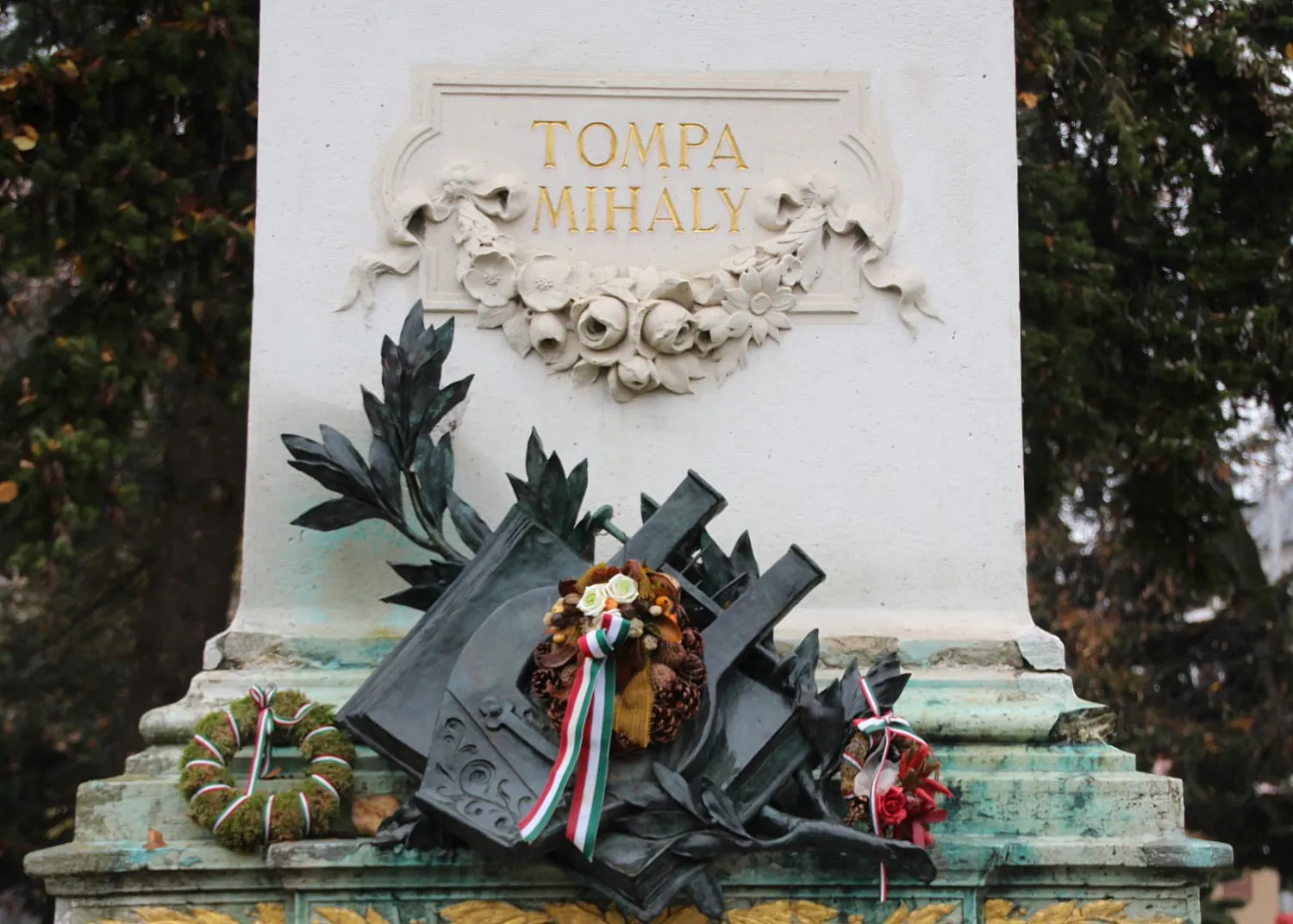
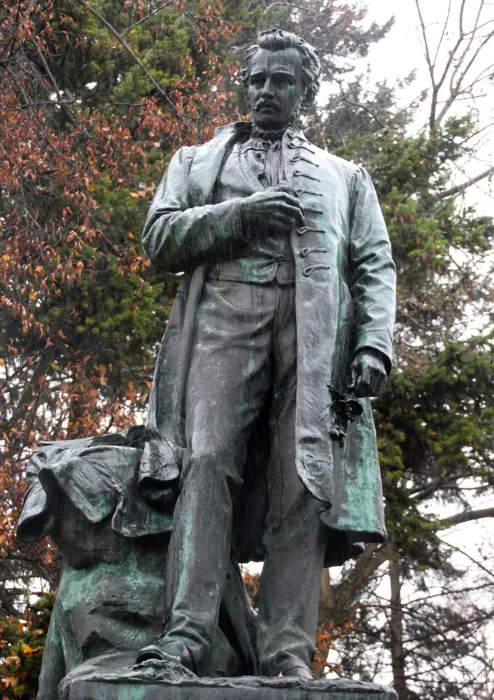
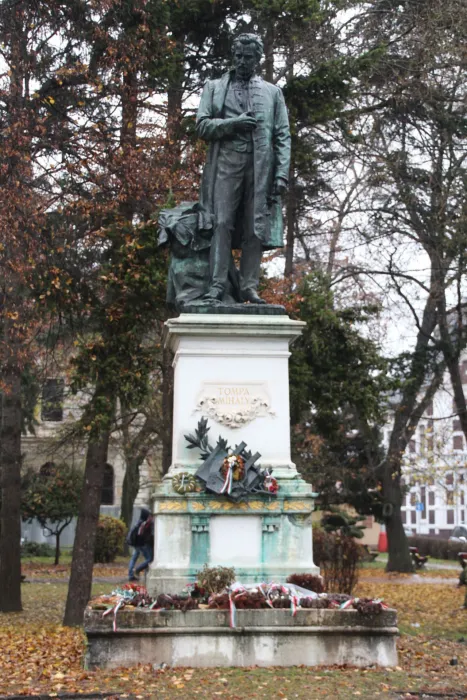
Statue of Michael Tompa
Statue, monument, memorial plaque
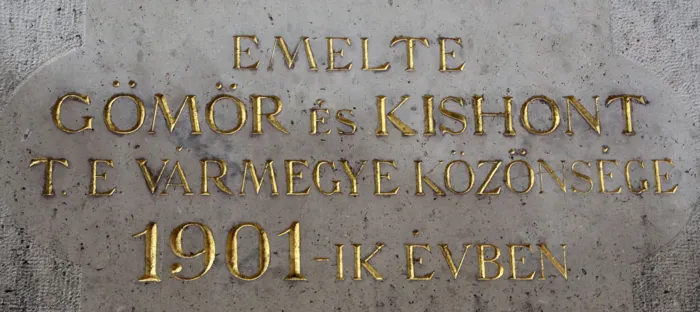
Mihály Tompa is a priest-poet, together with János Arany and Sándor Petőfi, a representative of 19th century folk poetry, the namesake of the Reformed High School in Rimaszombat, and a native of the city. He was a Reformed pastor and served as a camp chaplain in the Hungarian army during the War of Independence of 1848-49. The statue of Mihály Tompa stands in the city park a few meters from the Petőfi statue. ; The statue of Mihály Tompa – a romantic-style work by sculptor Barnabás Holló – was unveiled with great ceremony on June 4, 1902, next to the newly built county hall, in the beautifully designed square of the new city center, which is today called Tompa Mihály Square. The wind of history did not escape the statue, the Czech legionnaires who entered on July 5, 1919, wanted to topple it, just as they had toppled the Kossuth statue in Rozsny on June 18, 1919. At that time, the recently appointed county governor Janko Jesenský intervened, who, being a writer himself, forbade the rioting soldiers from rioting with the words that as long as he was the governor in Gömör, no one could damage the statue of poets. The calm did not last long, after the new changes of empire, in 1946, in Rimaszombat, which belonged to the Czechoslovak Republic, Tompa's statue again became a target during the years of complete deprivation of rights, communist and nationalist terror. Similar to the bust of István Széchényi in the City Garden – whose pieces have not been found since – or the bust of István Ferenczy, the founder of Hungarian national sculpture – whose head was taken off at that time –, hatred has reached every work depicting a prominent Hungarian personality. Tompa's statue was knocked off its pedestal on November 16, 1946, and it was only thanks to a few well-intentioned people that at least some of its pieces survived. In the late 1960s, although not in its original place, the statue of Mihály Tompa was re-erected in the green belt that had become the May 1st Garden from the City Garden. ; ; After much upheaval, Barnabás Holló's work was finally inaugurated on May 5, 1994, close to its original location, on Tompa Square, bordered by the old county hall, the courthouse and the museum building. Since 2004, a statue of his friend, Sándor Petőfi, has also stood next to it, a public artwork modeled after Miklós Izsó.