
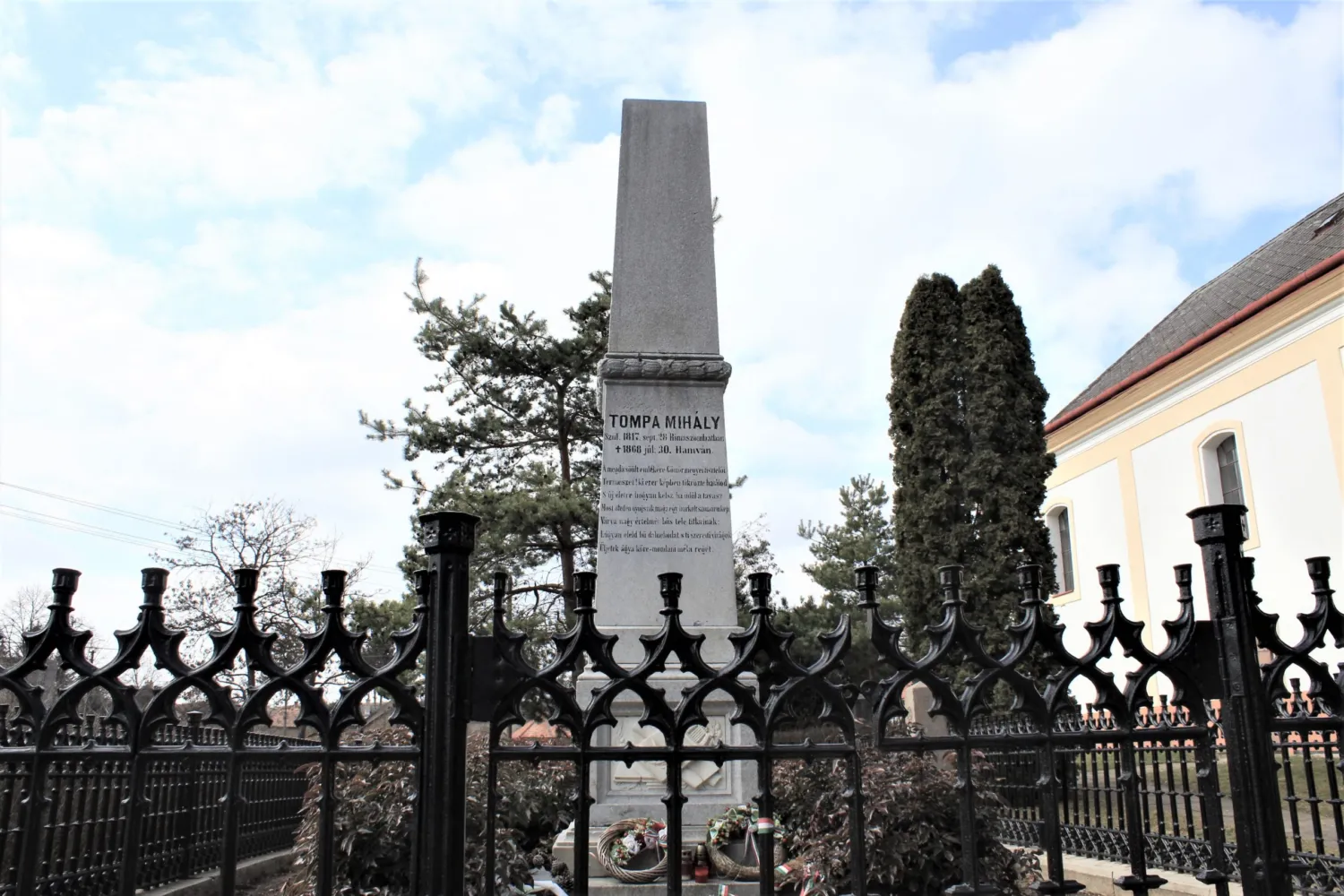
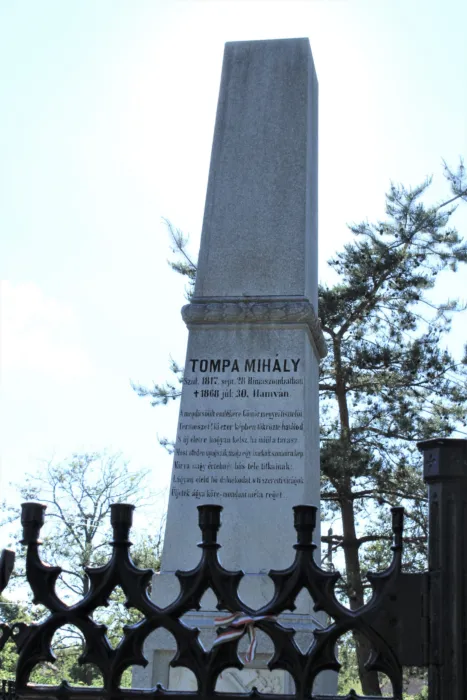
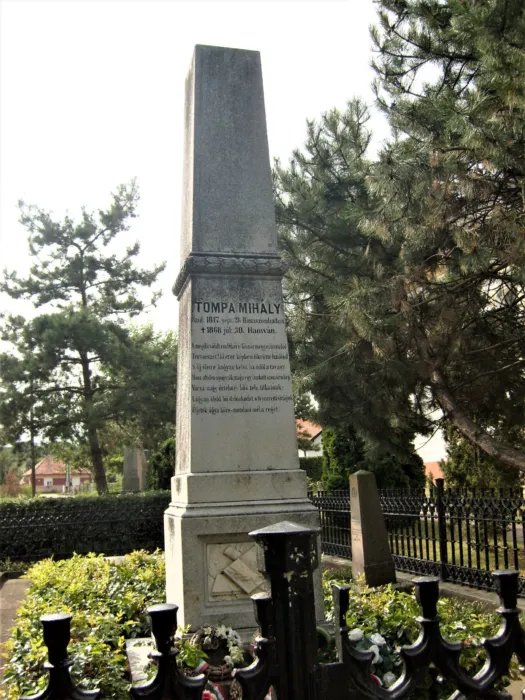
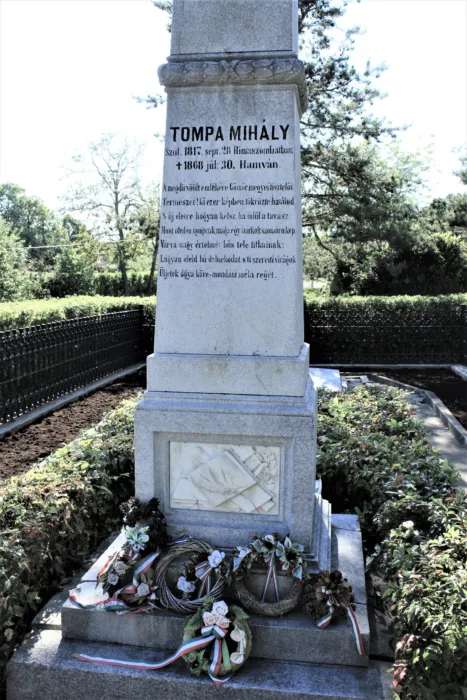
Tomb of Mihály Tompa
Cemeteries, tombstones, graves
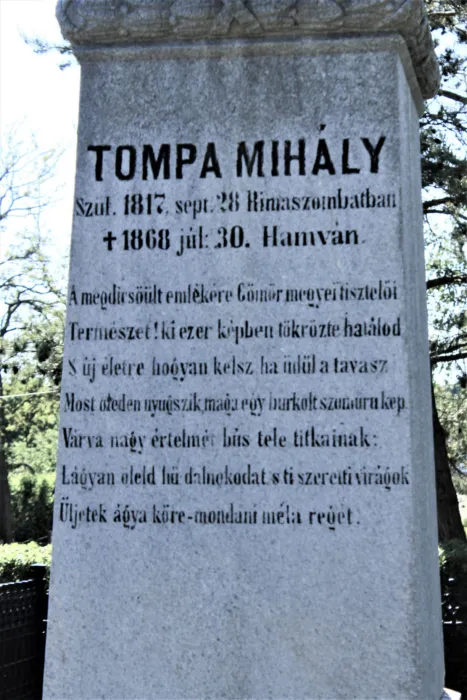
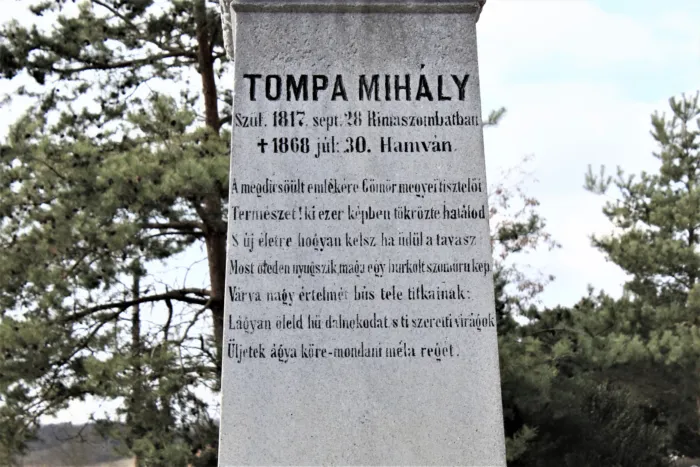
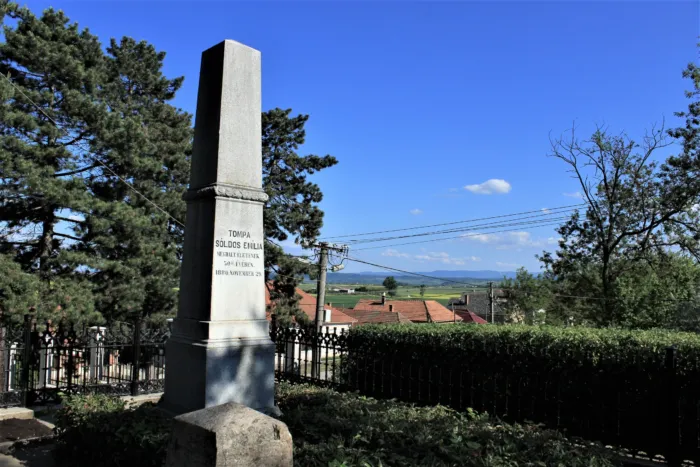
Mihály Tompa was a poet, a Calvinist minister, and a member of the Hungarian Academy of Sciences. He was born in 1817 in nearby Rimaszombat, into an impoverished noble family. After a difficult, half-orphaned childhood, he attended the Pataki College with an iron will and in great poverty, then completed theology, earning a pastoral certificate. His lyrical poems began to appear in the early 1840s, which soon brought Tompa national fame and recognition. He was also a good personal friend of János Arany and Sándor Petőfi, who were mentioned on the same level as him. From 1847, he took up a pastoral position in Bején, Gömör. He participated in the revolution and war of independence of 1848-49 as a popular insurgent, fighting in several battles. The fall and his increasingly serious illnesses plunged the poet into deep apathy. From 1849 he served as a pastor in Kelemér, and finally from 1852, now seriously ill, in the more profitable Hanvá. He was denounced for his poems written for the spiritual support of the downtrodden country (among them the best known: To the Stork), and therefore had to endure many weeks of court-martial harassment in 1852-53. In 1858, the Hungarian Academy of Sciences elected him as a corresponding member. Due to his serious illness, he requested exemption from pastoral service. He died in Hanvá in 1868. He was buried here in the "decorative grave" created near the Reformed church. A carved stone obelisk was erected above the tombstone of the national lyric poet, who set an example both with his life and death. The lower part of this is shaped like a cube, with a plastic book-shaped ornament on it, indicating the literary status of the person who died here. The obelisk is shaped like a truncated cone, with an ornament and inscription symbolizing a laurel wreath on it. Tompa's memory was preserved by many people after his death, but especially after 1867, schools and public areas were named after him in his hometown and other settlements in Hungary, and he was also given numerous public statues, such as in Rimaszombat, Kelemér and on Margaret Island in Budapest. Several works of art near the Hanva grave also commemorate the pastor-poet who died here. ; The tombstone reads the second part of János Arany's poem: Tompa's Tombstone (1868).