
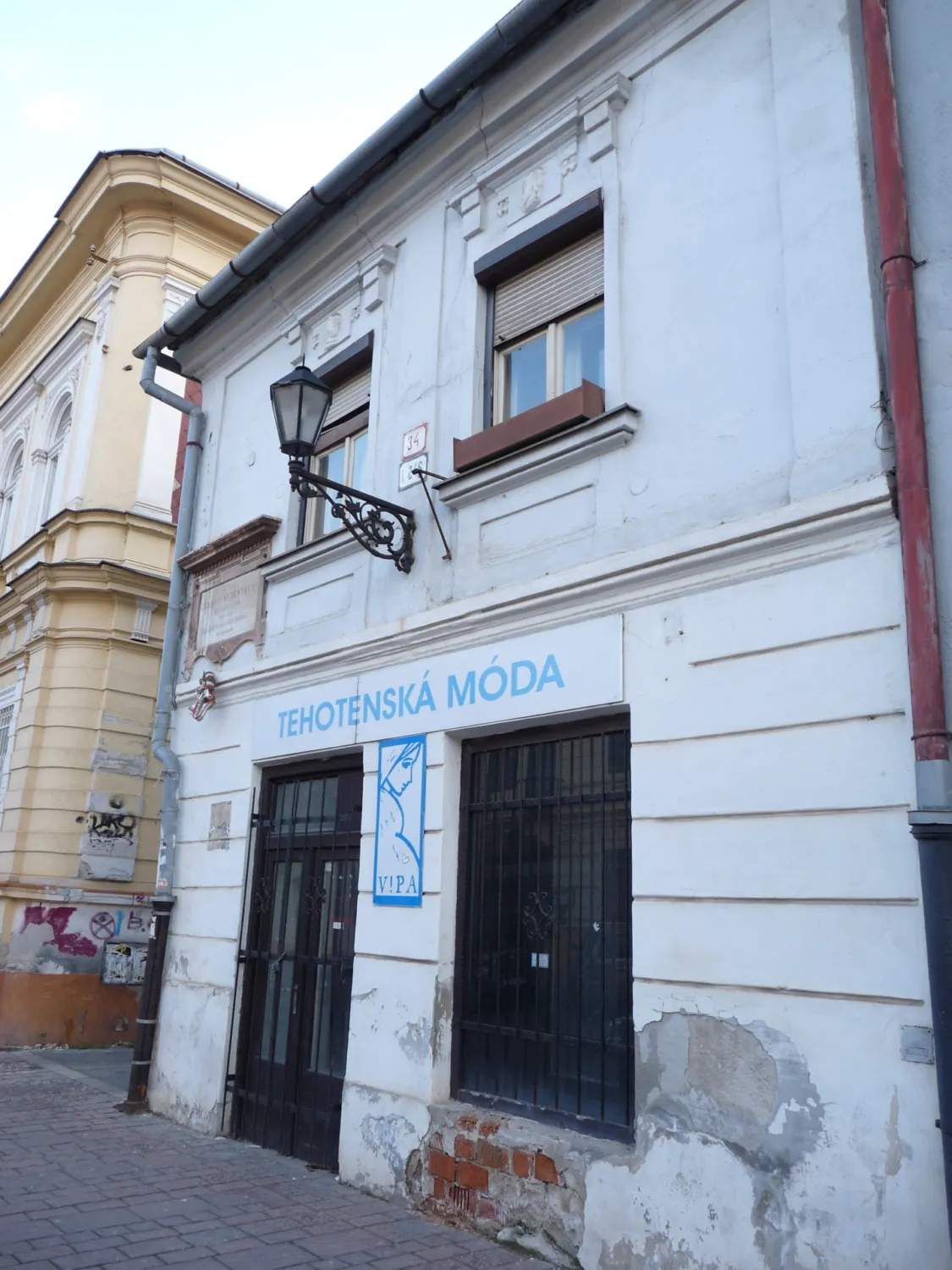
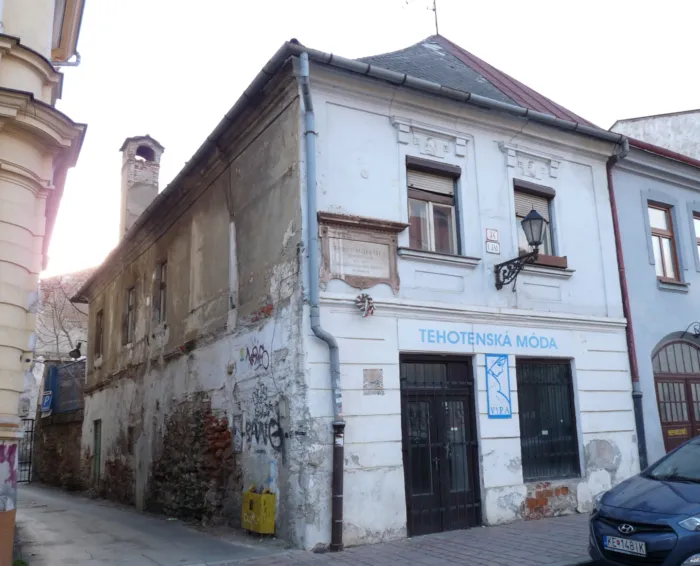
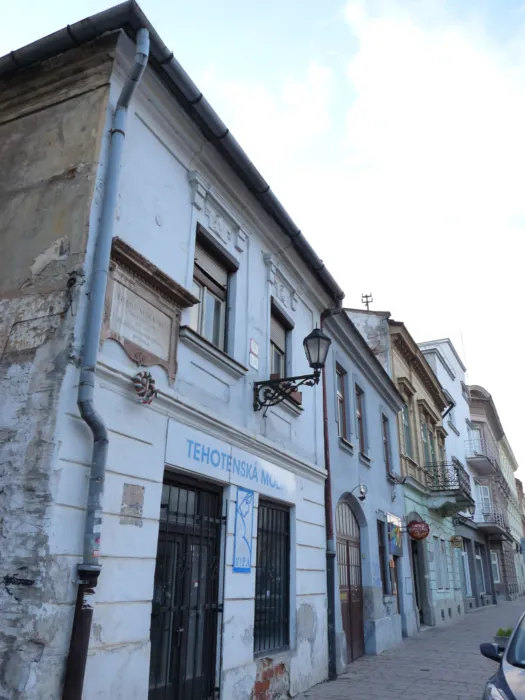
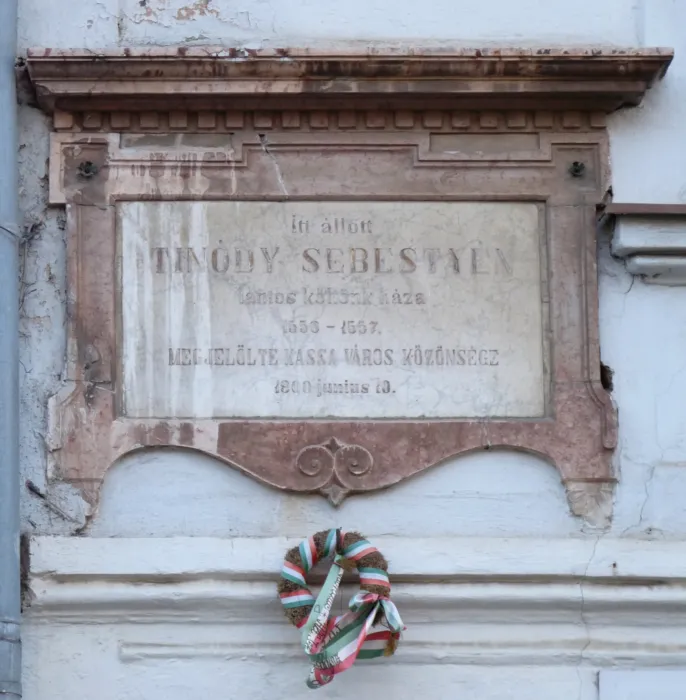
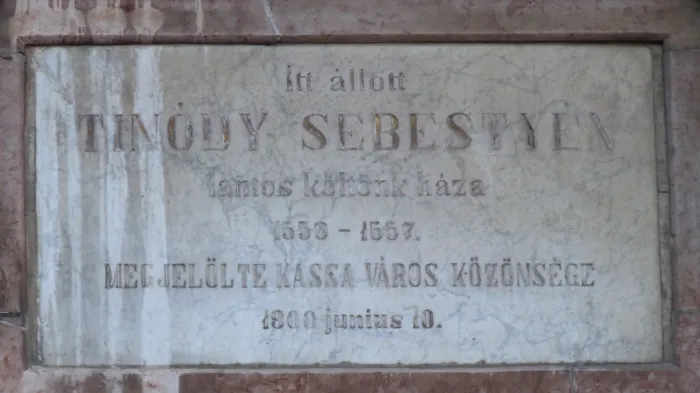
Tinódi Lantos Sebestyén memorial plaque
Statue, monument, memorial plaque
The famous Hungarian poet and historical singer of the 15th century, Tinódi Lantos Sebestyén, injured his left arm in the fight against the Turks and was forced to abandon his career as a knight. First, he became the tutor, writing mentor and court lute player of Bálint Török's children. After his master was captured by the Turks, he stayed at the court of István Verbőczi for a while, then as a singing poet he toured the countryside and the noble courts, where he collected authentic historical data, and put them into verse, set to melody and performed them with lute accompaniment. This is how he ended up in Košice, where he obtained citizenship in 1544. ; “1544. SebastianusCitharida jura civilianconsecutus est feriaseyta ante Andrea apostolicfestum. Sebestyén lute player gained civil rights on the Friday before the feast of the Apostle Andrew in 1544” – it can be read in the minutes of the council of Košice. ; From 1548, Sebestyén Tinódi lute player lived here permanently for five years in his own house, with his family, working diligently on his poetic works. In Košice, he had his volume of poems titled Cronica, published in 1553 in Kolozsvár, with musical notes, published, which he dedicated to King Ferdinand, from whom he received a reward of 50 forints and nobility. He spent the rest of his life at the court of Palatine Tamás Nádasdy, through whose intercession he also received a letter of nobility. Tinódi died in 1556. He was buried in the cemetery next to the church in Sárvár. His grave was discovered in 1934. ; Tinódi Lantos Sebestyén lived as a full citizen in “treasured Košice” from 1548 to 1553. His house no longer stands, but a marble tablet commemorates him in its place, which was “marked by the public of the city of Košice on June 10, 1900.”