
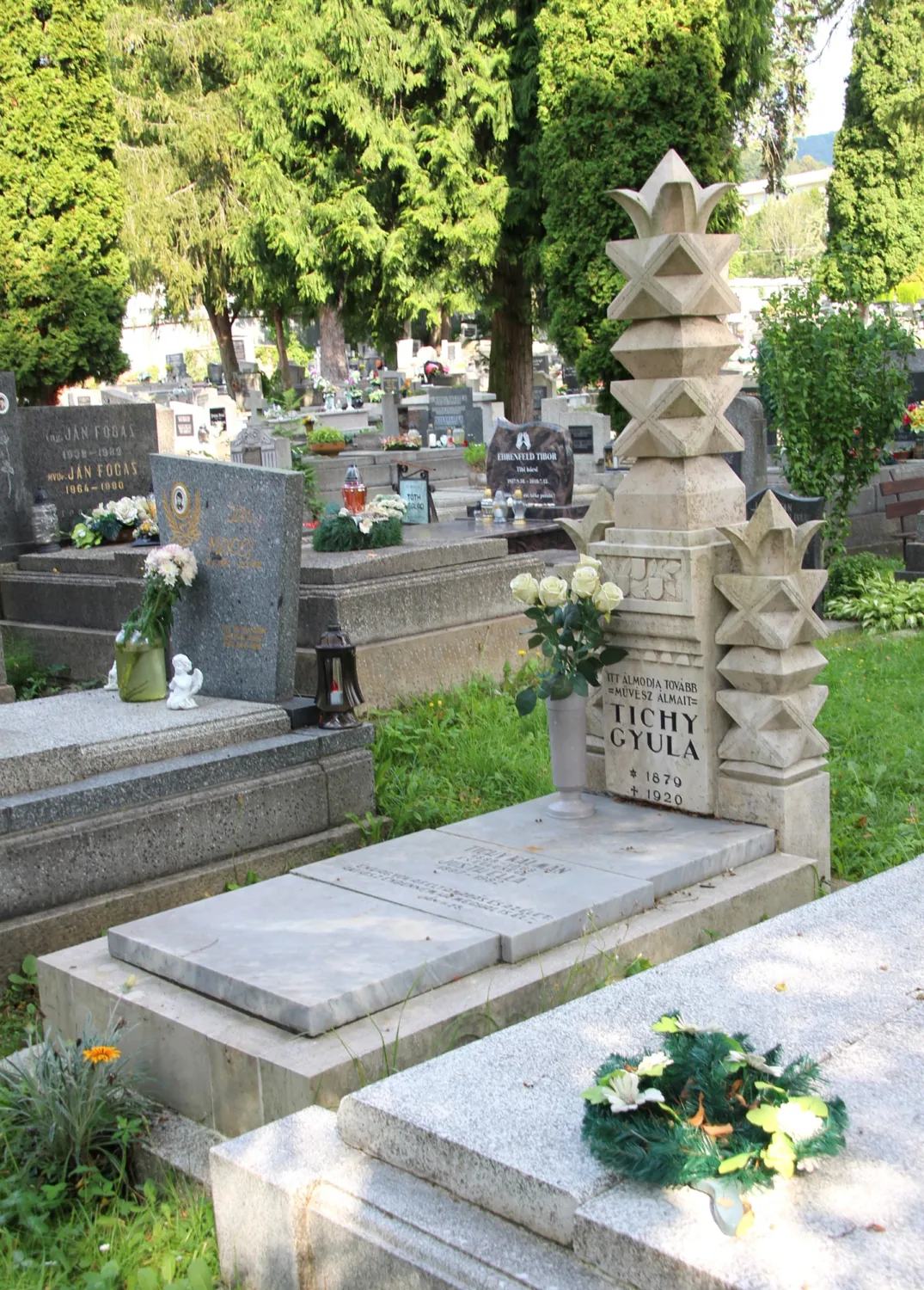
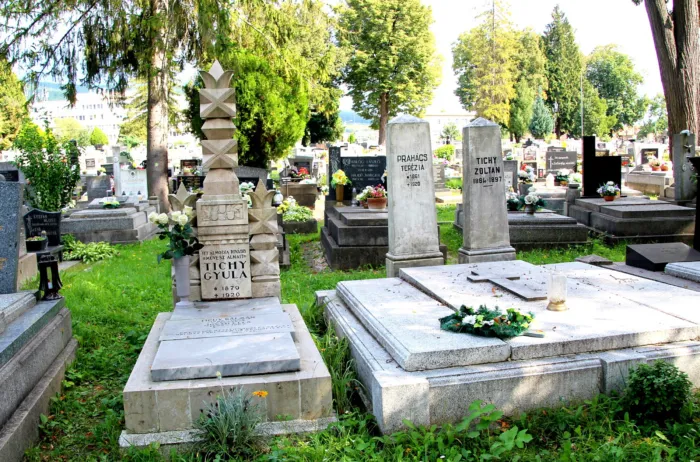
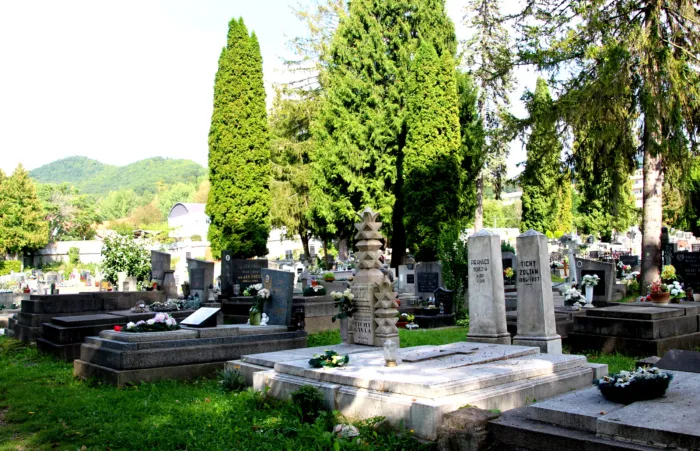
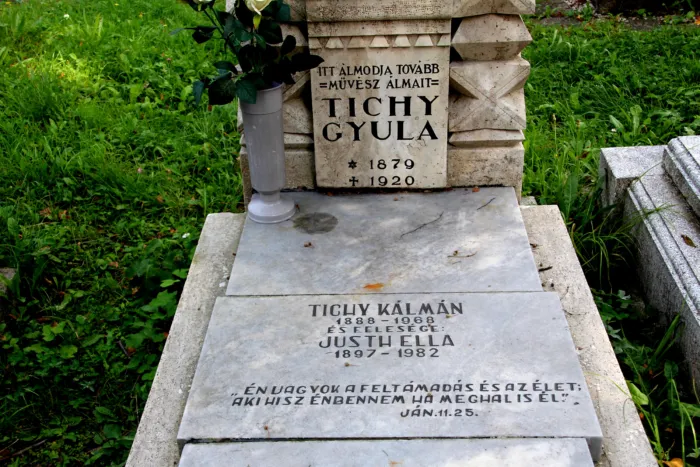
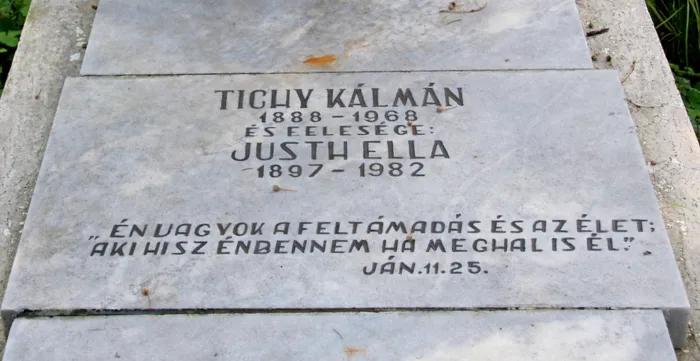
The grave of Kálmán Tichy, painter, graphic artist, and writer
Cemeteries, tombstones, graves
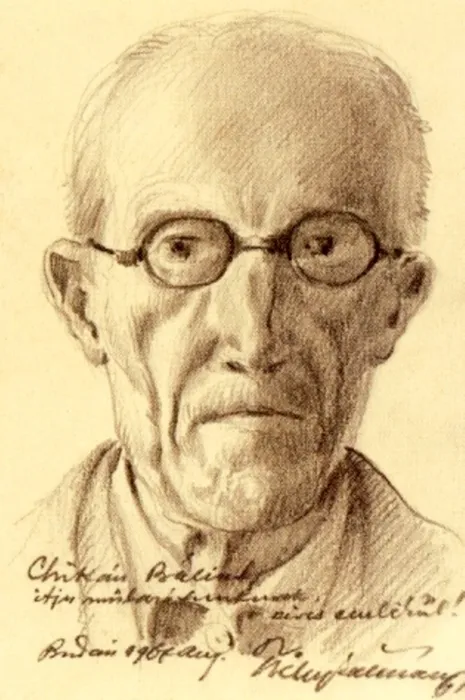
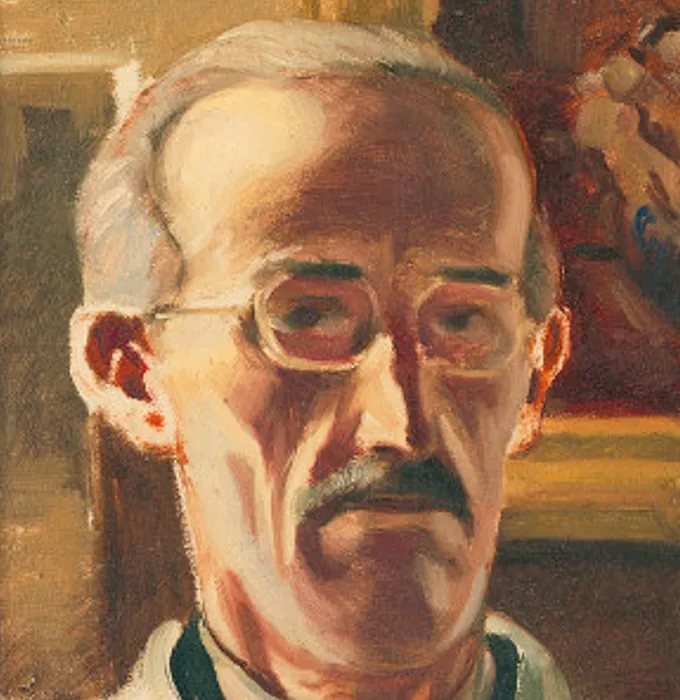
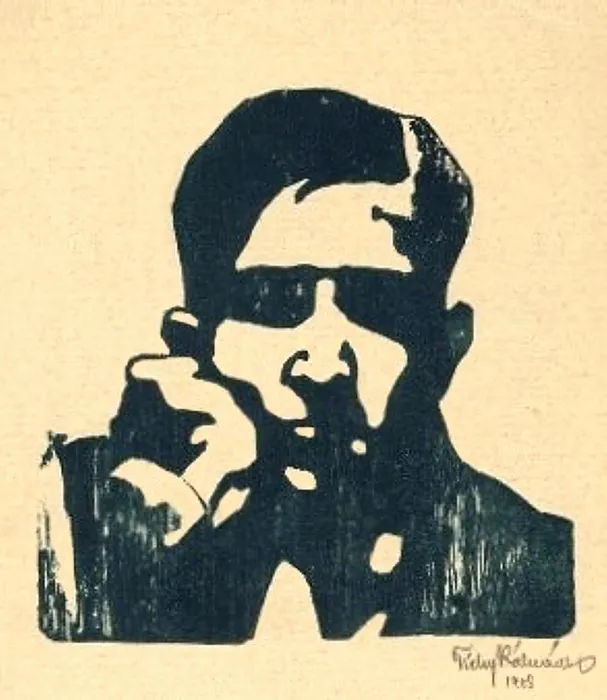
Kálmán Tichy (Rozsnyó, October 31, 1888 – Budapest, October 22, 1968): painter, graphic artist, writer. His father, Mihály Tichy, was a (royal) district judge, and his brother, Gyula Tichy, was a painter. ; He studied at the free school of Simon Hollósy in Munich (1906), then at the Academy of Fine Arts in Budapest from 1907 to 11. His graphic art teacher was Viktor Olgyai. His first graphic art was exhibited while he was still at college, and his first writings were published in the Rozsnyói Híradó, from 1915 he published the novel (Erinnis) in the Budapest daily newspaper in sequels. In 1923–27 he was the editor of Sajó Vidék, then a colleague of the Prague Magyar Hírlap. In 1927 his independent volume entitled A négy évszak was published with his own illustrations. In 1930 he became the head of the Rožňava City Museum, and from 1934 he became the secretary of the Gömör district of the Slovak-Hungarian Cultural Association. His writings were published in the Hungarian Néplap and the Hungarian Minerva in Bratislava. In 1935 he published his monograph Pelsőc (From Philiceum to Pelsőcig). He also engaged in ethnographic research and collection, and his material is preserved in the database of the Ethnographic Museum. He processed the archive legacy of Albert Pákh. Between 1938 and 1945 his writings were published in Napkelet, Pásztortűz, Tükör, Búvár, Forrás, and the New Hungarian Museum. As a member of the KÉVE (Association of Hungarian Artists and Applied Artists) (1910–45), his works of fine art were published one after another. His graphic works, especially of an Art Nouveau nature, are significant. He published a series of linocuts entitled Tales of an Inkwell. His painting The Siege of the Cuckoo Castle became the property of the Bratislava Museum. ; In 1943 he was removed from the head of the museum, and in 1948 he was deported from Czechoslovakia. At that time, he was only engaged in fine arts in Hungary. Despite being deported from his hometown of Rožňava, he maintained constant contact with the people with whom he worked in the field of culture and public education. He died in Budapest in October 1968, but his ashes rest in the Rožňava cemetery with his wife, parents and brother Gyula.