
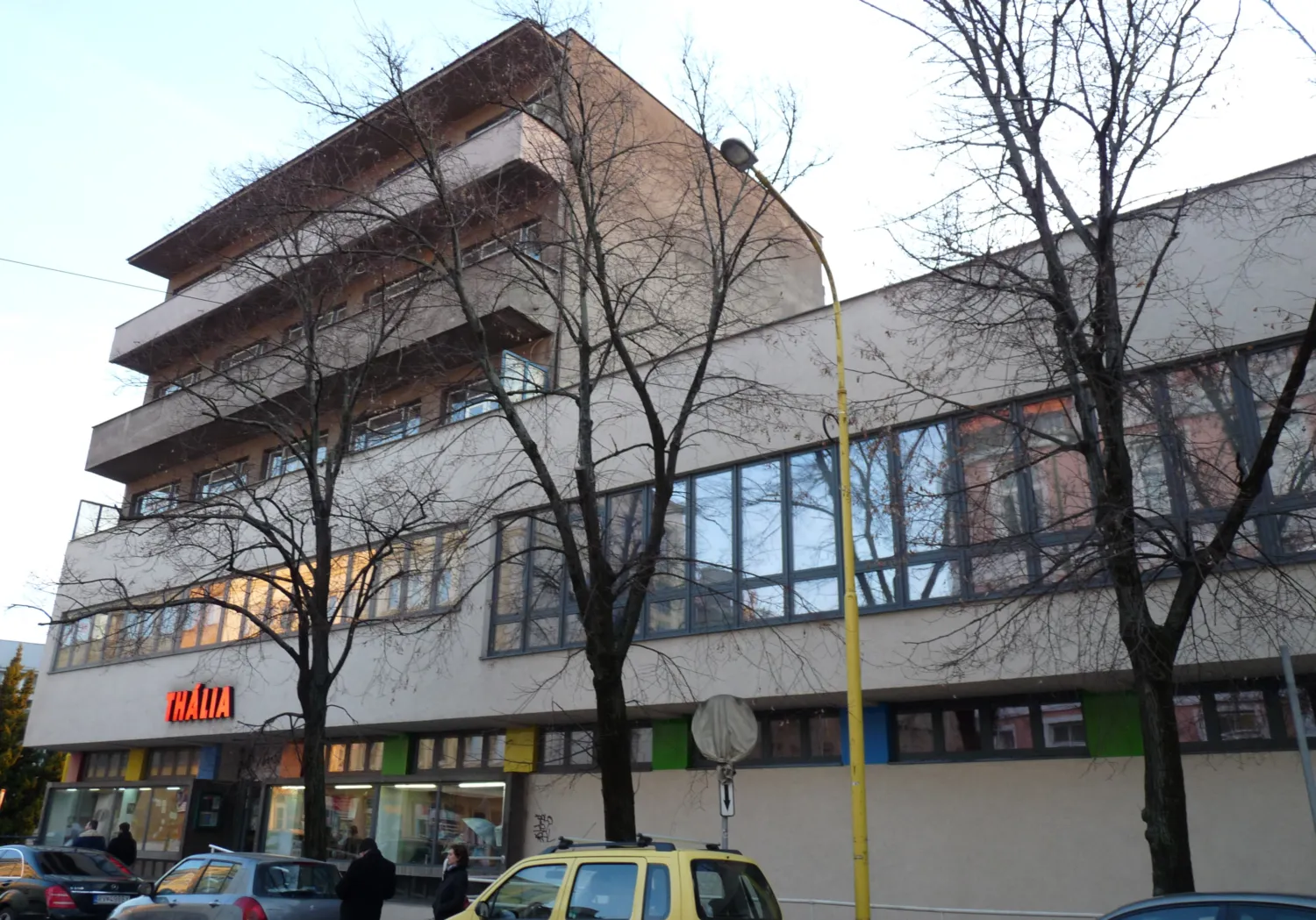
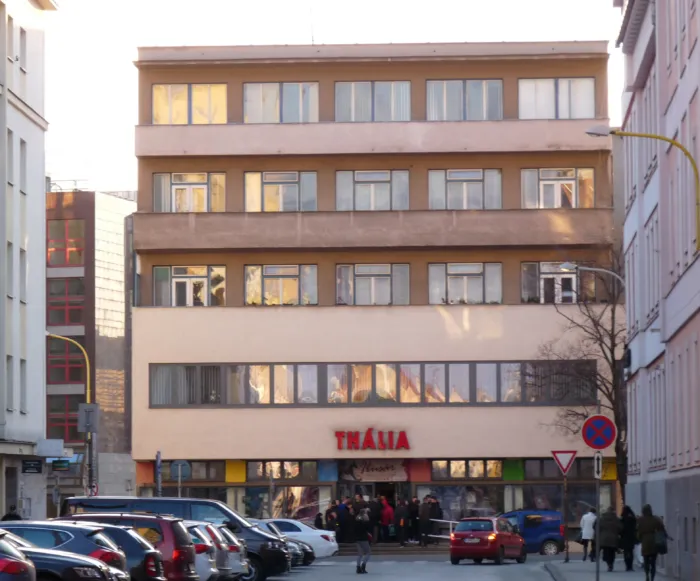
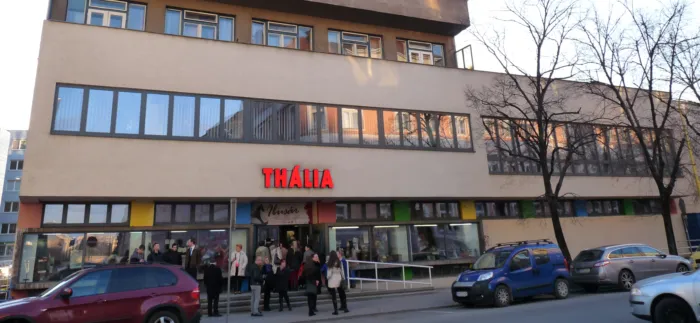
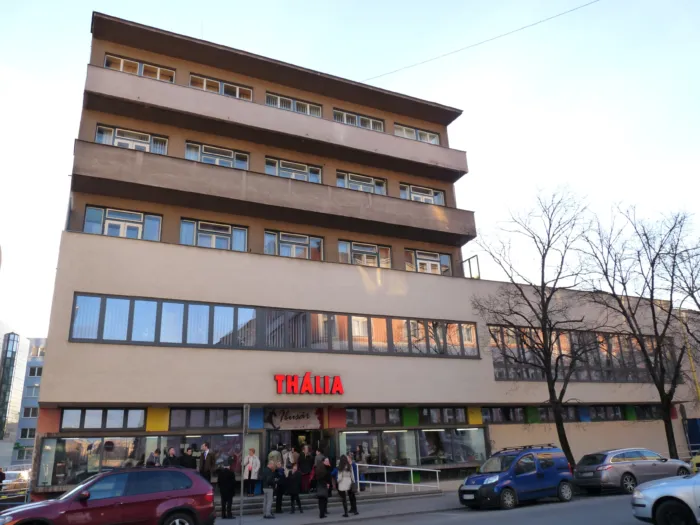
Thalia Theater
Building, structure
In the 16th and 17th centuries, school drama flourished in the city. In 1707, Ferenc Rákóczi II, while staying in the city, "went to the Jesuits", where he saw a performance about the life of King Matthias, and "His Majesty was entertained there for more than three hours". ; For nearly two decades, only German companies performed in the first theatre building, which opened in 1789. The 19th century beginnings of professional Hungarian theatre are intertwined with Miskolc's drama: from 1816, companies performing in Miskolc regularly visited Košice. The first Hungarian-language performance, the farce "Csörgő sapka" (The Tinkering Hat), was also given on 19 May 1816 by a group from Miskolc. Among the performers was Róza Déryné Széppataky. ; From 1828, Košice was the central venue of the Transylvanian Singing Society. In 1833, this company first presented József Katona's drama "Bánk bán". In that year, part of the ensemble went to Buda and continued to operate in the Castle Theatre. This group provided the nucleus of the National Theatre, which opened in 1837. ; Endre Latabár made his debut in Košice in 1858, and two years later he became the director of the theatre until 1873. In the last year of his management, four Latabárs and two female members of the family appeared on the stage. ; In 1899, a new theatre building was inaugurated in Košice. Between 1914 and 1926, director Ödön Faragó tried to keep Hungarian theatre alive. From 1920, Slovak and Czech companies also performed in the city, and in 1924, permanent Slovak-language theatre in Košice began, displacing the Hungarian company from the main season. ; During the war years, the companies of Géza Földessy and Zoltán Kőrössy, among others, performed in Košice. Between 1945 and 1949, Hungarian theatre became impossible. From 1952, the Hungarian Regional Theatre of Komárom visited the city. ; After the Second World War, it took twenty years for the Hungarian theatre to be re-established in Košice, this ancient Hungarian city. Hungarian people from the Uplands, cooperatives and institutions raised the funds necessary for the start-up. At the time, they wanted to name the theatre Vox humana – Human Voice, but this was banned by the party and state leadership. The new Hungarian theatre therefore took the name Thália. The theatre's first performance took place on November 29, 1969. The company of about fifteen members contracted here presented Goldoni: Servants of Two Lords, directed by Sándor Beke. In the absence of a theatre building, the company partly converted the gymnasium of the Hungarian “Industrial School” in Košice into a theatre hall with its own hands. “The twenty years between 1969 and 1989 were not easy,” Péter Kolár, the theatre’s director, told Duna Television. “On the one hand, we had to live up to the Hungarian theatre traditions of Košice, which were already more than a century and a half old, and on the other hand, we had to live up to the political expectations of the system,” said the director. The company was later linked to the Hungarian Regional Theatre in Komárom, and they were only able to free themselves from this forced connection in 1990. Since then, the theatre has been operating independently, holding 6–8 introductory performances per season, and has been very active in preserving the Hungarian traditions, language and sense of identity not only of the Hungarians in Košice, but also of the entire Upper Carpathian region. Between 1996 and 1999, the then Mečiai cultural leadership attempted to close the institution, but the faith and will of the actors thwarted this. After 1999, Thália got back on its feet and delighted its audience with many good performances both here and abroad. Numerous awards testify to its artistic level. The Thália Theatre operates as an orientation theatre. Of its 160-180 performances per year, approximately sixty are held in Košice, the rest in other settlements in Slovakia. It often appears as a guest on stages in Hungary. ; At the moment, the institution is working with a low budget under the authority of the Košice County Government, which makes its activities difficult.