
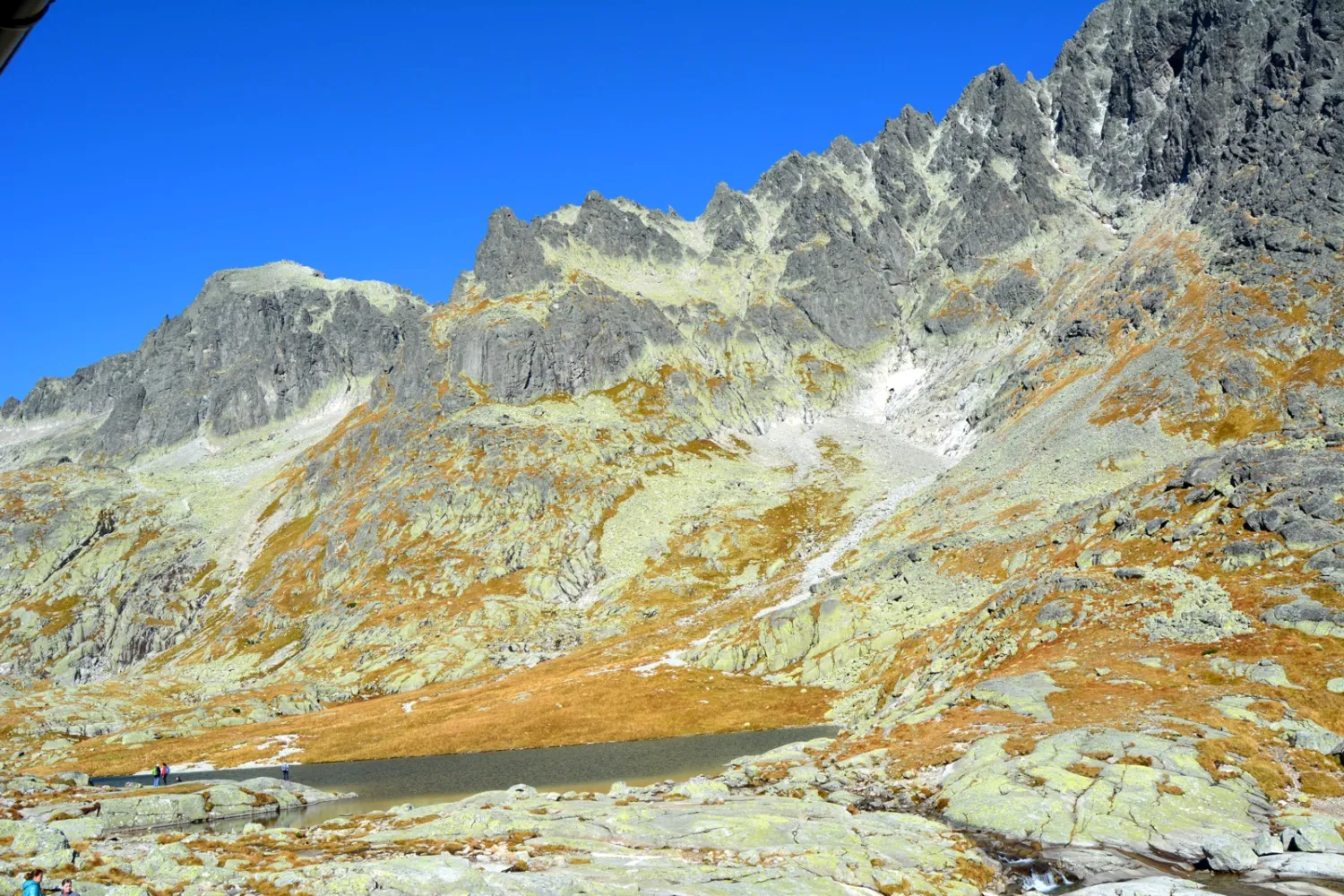
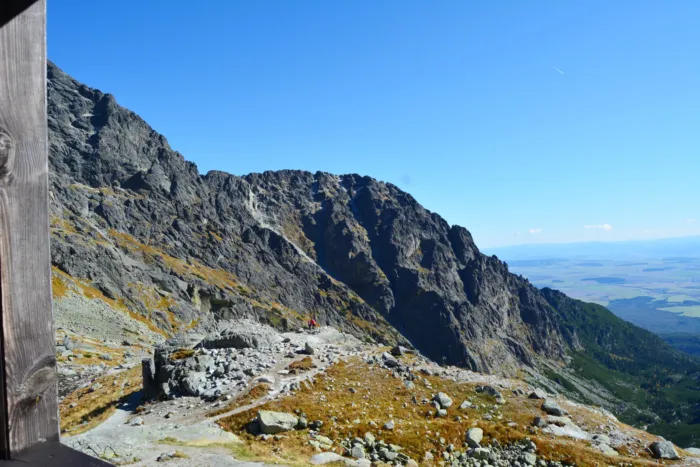
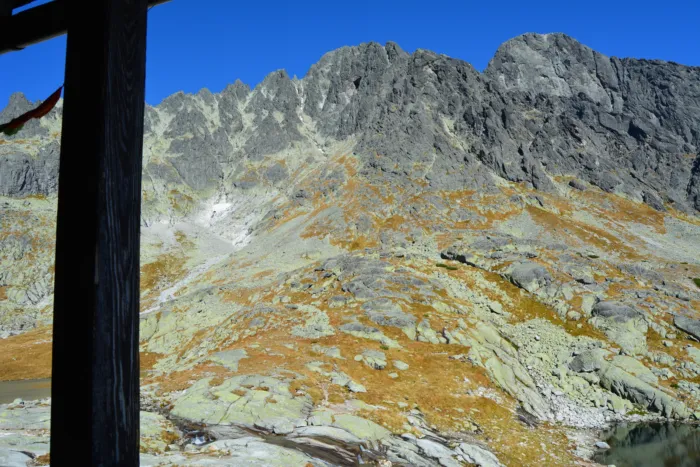
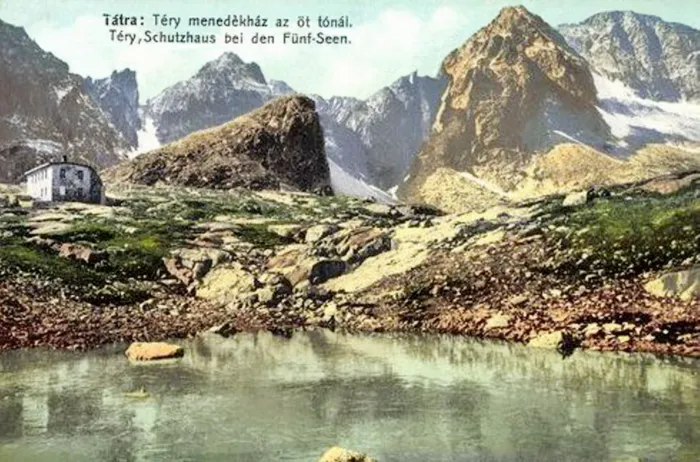
Téry shelter
Building, structure
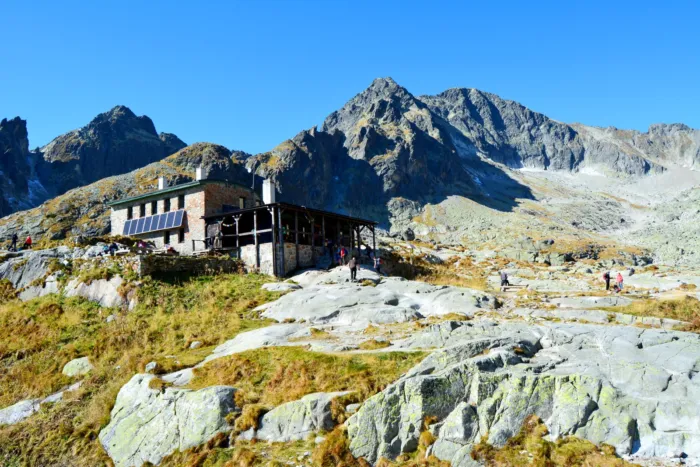
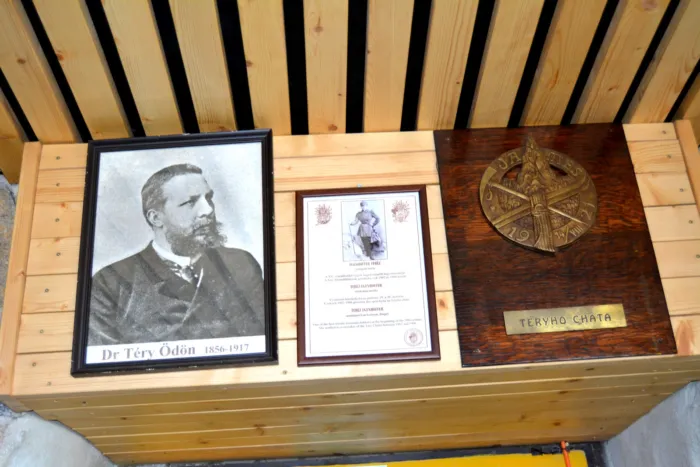
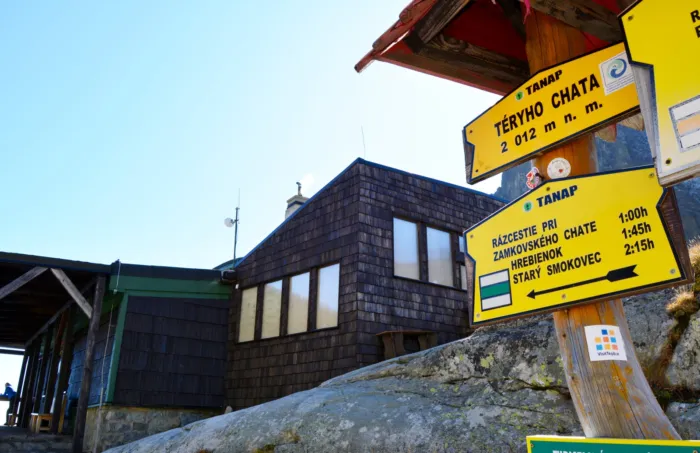
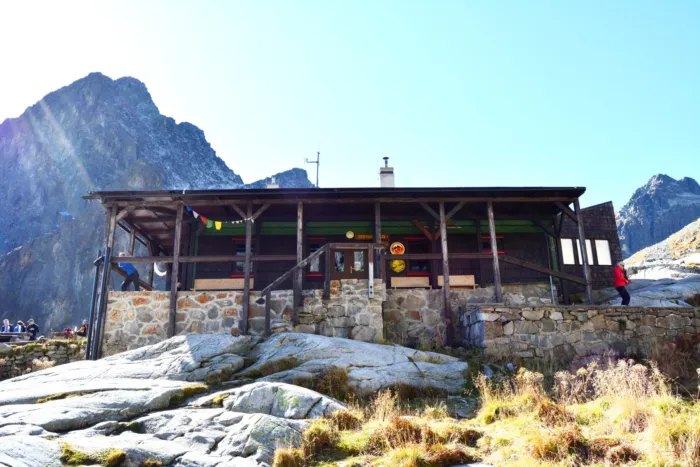
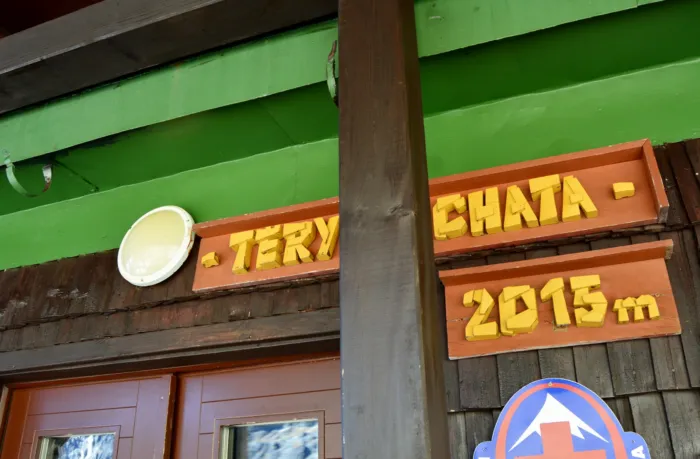
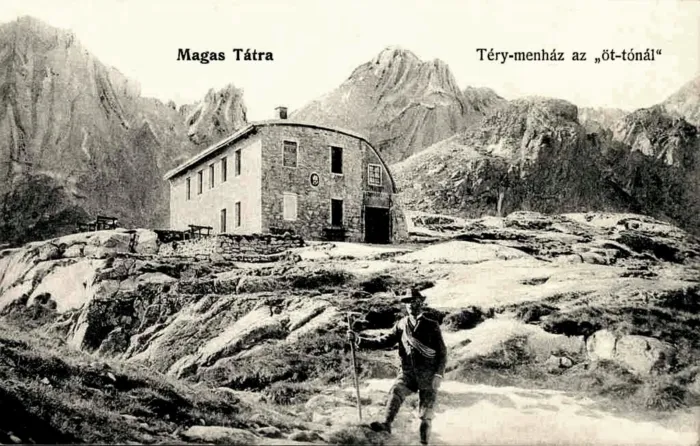
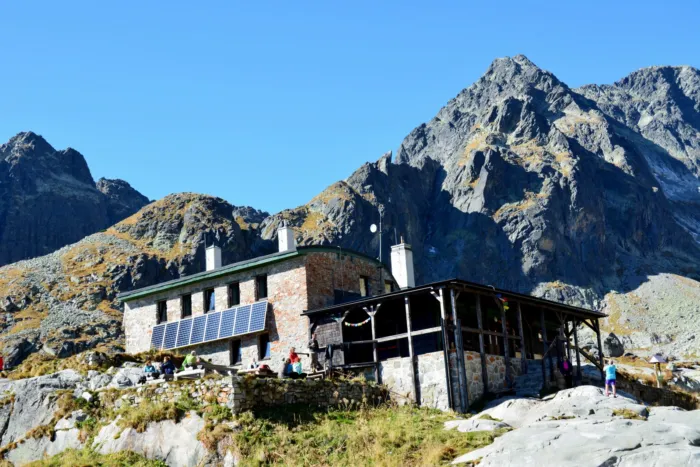
The Téry refuge is the highest year-round tourist refuge in the High Tatras. The refuge was built in 1899 and has been named after Ödön Téry, the “poor doctor” from Selmecbánya. ; At the meeting of the Budapest Department of the Hungarian Carpathian Association (MKE) on May 28, 1889, Ödön Téry proposed the construction of a refuge, right at the foot of the mountain peaks, in the Szepesi-Öt-tó-bogdan. The conflict between the progressive Budapest Department and the conservative center postponed the start of construction, until finally the newly formed Hungarian Tourist Association (MTE) began to implement the plan, and according to the agreement with the MKE, the Kis-Tarpataki Valley became their area of activity. ; In 1896, only 2368 HUF was collected for the construction. When the numerous obstacles that required searching were removed, and the location of the shelter was determined by the construction committee, chaired by Ödön Téry, Lajos Petrik, chief engineer József Pfinn, architect Gedeon Majunke and representatives of the owner municipality of Felsőerdőfalva on May 19, 1898, in a protected place free of snow, a new obstacle unexpectedly arose before the construction could begin. Miklós Szontagh, owner of Újtátrafüred and hunting tenant of the Tarpataki Valleys, objected to the location because the building in the basin there would scare away the chamois. Therefore, he wanted to have the house built under a lake wall. However, the presidency did not allow important tourist interests to be subordinated to petty private interests, insisted on the original location, and even won its position. ; Two building material warehouses were established between the Poprad railway station and the construction site. There was a wooden shed on Tarajka, where the material was transported by cart from the railway station. The next warehouse was the walled Tüzelőkő, where the load was transported by horses. The road was made passable for the horses by blasting in some places. The horses, carrying a 50-kilogram load on their backs, turned around three times a day. On the upper section, day laborers carried the 25-kilogram load on their backs, which took 1 hour and 15 minutes and was repeated five times a day. For a 25-kilogram shipment, the architect initially paid 50, later 62 kreuzers. The porters came mainly from Felsőerdőfalva and Nagyszalók, but there were also a few gypsies from more distant villages and one Czech (from Hradec Králové). The weather was initially favorable, the walls rose quickly, and the Bokréta festival was held in August 1898. Then came the construction of a Monier-type roof. The following year, the finishing work and the furnishing of the house were carried out, the workers were accommodated in the basement. ; The shelter was completed in August 1899. Its ceremonial inauguration took place on the 21st of the same month, amidst very bad weather. 80 people attended the inauguration ceremony, and despite Téry's protests, the department's proposal was approved, according to which the previously unofficial building called Budapesti-ház was christened Téry shelter. With this name, the association expressed only a small amount of gratitude to its worthy vice-president, who was the first climber of the nearby Közép-orom and Fecske-torony (1876, 1877), and whose iron will, knowing no obstacles, created the house, in a place where every foot of land had to be fought for from nature and people, and from which place the Téry shelter proclaims the glory of the now forgotten Hungarian Tourist Association. ; The first caretaker of the shelter was the architect himself, Gedeon Majunke, who two years later handed over the position to the first Hungarian female tourist, Teréz Egenhoffer. During her five years of activity, she made the house very comfortable, so the tourists welcomed her departure with regret. His place was taken by Artúr Csatádi, a pharmacist from Tátrafüred, who was followed by Gusztáv Batsch and his wife, and then by Alfréd Grósz, a gym teacher from Késmárk. ; The Téry shelter underwent a major reconstruction over three years from 1979, as a result of which 197 tons of building materials were transported to the house on foot and 570 tons by air. The stoves were replaced by central heating, a power generator and a toilet were installed, and other innovations were also made. The entire reconstruction was led by the then caretaker and writer, Belo Kapolka, who has since tragically passed away. It was reopened to tourist traffic on October 1, 1982. ; Dr. Ödön Téry (Óbéba, Timiş County, July 4, 1856 – Budapest, September 11, 1917) was a physician, one of the leading figures of organized Hungarian tourism at the time, a renowned mountaineer, the founder of the Hungarian Tourist Association, among several organizations, the founding editor of Turisták Lapja, and the author of numerous tourist works. ; Since the German-born steward of the Óbéba (Bánság) estate only Hungarianized himself to the name Téry in 1862, their child born on July 4, 1856 was registered as Edmundus Félix Antonius Wilhelmus Rikker. The family moved to the capital in 1865, Ödön completed his elementary school in Krisztinaváros and the castle, and then in 1873, while still a high school student, he became an extraordinary student at the Medical Faculty of the University of Budapest, where he obtained his diploma in 1879. ; Already in 1875, he became a member of the Hungarian Carpathian Society (MKE), which had been founded two years earlier, and the general assembly also admitted the young lover of the natural world to its board, who regularly visited the then unexplored mountains around the capital and the High Tatras, where he was the first to climb several peaks or reach them on new routes. He also met Emília Mészáros on a trip to Switzerland, whom he married before graduating from university. ; At the end of 1880, the young doctor successfully applied for the position of doctor in Stefultó, a mining settlement near Selmecbánya, and immediately became involved in Selmec tourist life. In May 1882, the Szittnya Department of the Hungarian Medical Association was established, of which he became acting vice-president. During his short stay there, shelters were built, the Szittnya pavilion was renovated, springs were reserved, and tourist routes were established. These years had a great influence on the development of his individuality, but in order to support his family and ensure his advancement, he moved back to Budapest – through another application. ; First, he became a draftsman for the Ministry of the Interior, then a public health inspector, later a ministerial department advisor, and in 1906 he was appointed chief inspector, and he was department head until 1912. With the reorganization of public health, his field of work became epidemiology and wartime health. Upon his arrival in the capital, he boosted the modest tourist life here. At the 1885 National Tourist Exhibition, he, together with Mór Déchy and Mór Bexheft, set up the MKE pavilion, and he won more and more friends to cultivate hiking. One of their notable excursions led to the Klastrom-kút near Pilisszentkereszt on September 24, 1888. It was then that he and Dr. Gusztáv Thirring decided to reorganize the tourist life of the capital. As a result, the Budapest Department of the MKE was re-established on December 28, and he became the acting vice-president alongside Baron Loránd Eötvös. ; His organizational and creative activities began to truly flourish at this time. In February of the following year, together with Gusztáv Thirring, he launched and edited the first tourist magazine of our country, the Turisták Lap, for twenty-one years. When it was not possible to achieve the relocation of the MKE headquarters to the capital, the department left the association and on September 29, 1891, the independent Hungarian Tourist Association (MTE) was formed. Here too, he was entrusted with the substantive part of the leadership, and his most outstanding creations – the Dobogókő and the High Tatras shelters – still speak for themselves today. He was the executive vice-president of the MTE until 1907, its president until 1910, and upon his resignation, he was elected honorary president of the association in recognition of his work. ; He inspected several Transdanubian prison camps in the winter of 1916, during which he caught a serious cold, and from then on he was constantly ill. His rejection and his concern for his two sons who were in the military also contributed to the further weakening of his organization. Due to his asthma, he was forced to stay in bed more and more often, and finally, in November 1916, when he had completed his full term of official service, he was forced to request retirement. At that time, he was appointed ministerial advisor. ; The excitement caused by the World War had seriously damaged his health by the summer of 1917, and despite spending his holidays at the castle of Count János Esterházy in Nyitraújlak, he was unable to regain his former strength. Upon his return home, on August 16, he fell into bed, and on September 11, he closed his eyes forever. ; His name and memory are preserved in the High Tatras by the Téry shelter, the Téry peak, the Téry horhos or the Téry corridor, and in the Visegrád Mountains by the Téry road. A monument was erected in his honor on Dobogó-kőn. His bust was unveiled in his native village, Óbéba, in 2006. The Téry Ödön National Tourist House Development Program was named after him.