
Cemetery Crucifix (Everyone's Cross)
Sacral small monument
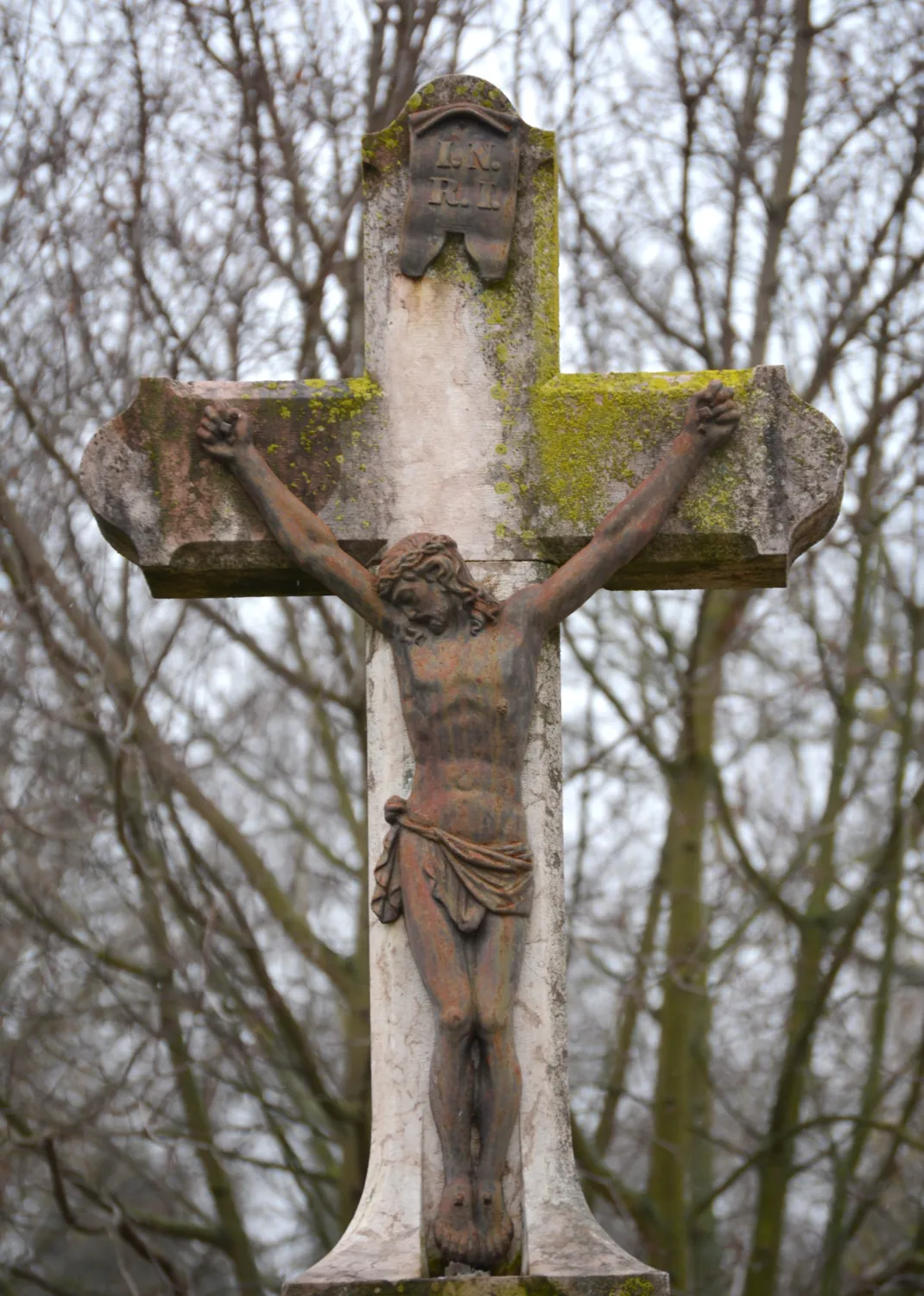
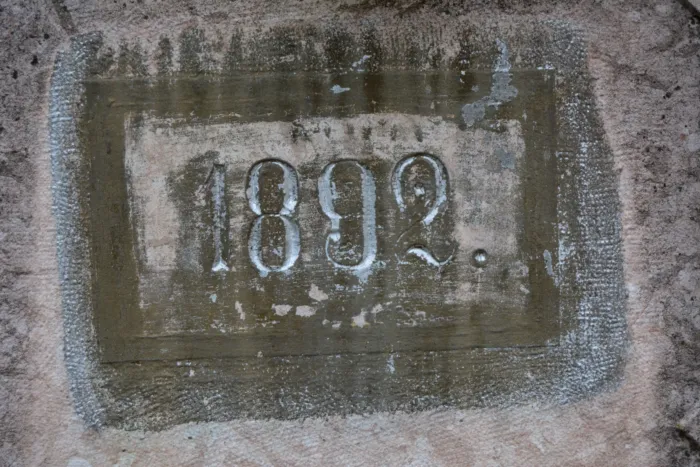
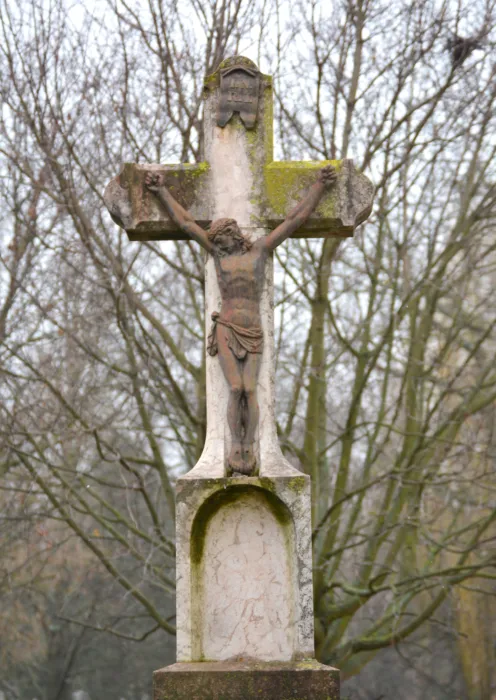
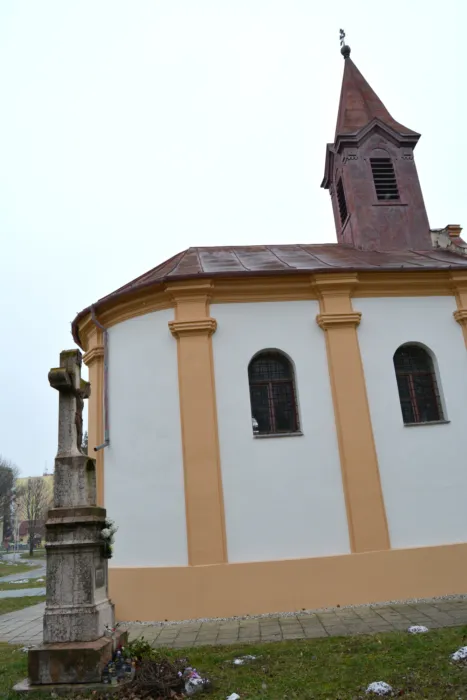
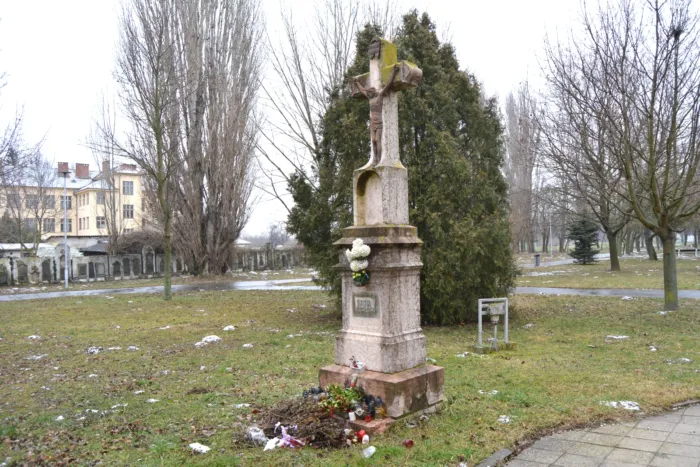
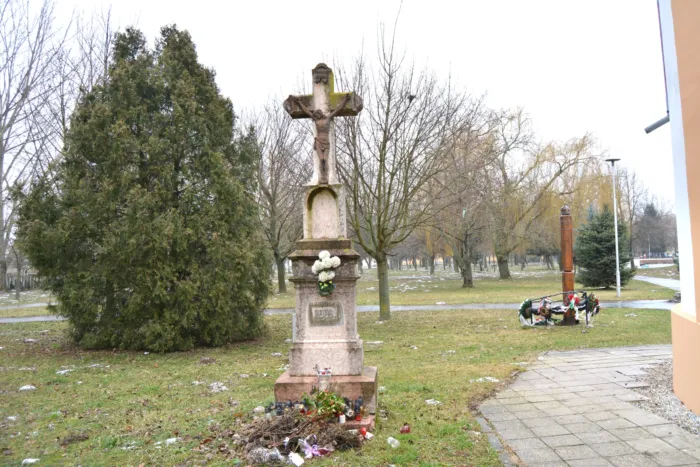
The entire small monument is made of pink Süttő marble, which is currently placed next to the St. Rosalia Chapel, on the left side. It was moved to its current location when the cemetery was transformed into a park. ; Its base consists of two parts, in the middle of the upper, column-like part there is an inscription engraved with silver paint, the year is visible: ; 1892. ; The inscription field is designed like a board, darker in color, it seems as if it has been painted over several times over time. The inscription field is painted around with silver paint. ; At the top, the base widens like a cornice. The cross has an arched stem ending, and on it is a cast iron corpus, painted dark, but worn and rusty over time. ; The lower part of the vertical cross stem is wider, inside we find a 53 cm high and 14 cm deep statue niche. The upper part of the cross shaft bears the inscription I. N. R. I. in two lines in the form of a stylized flag. ; Crucifix details: ; Dimensions of the base: 110 cm x 124 cm x 12 cm ; Dimensions of the lower part of the base: 100 cm x 77 cm x 32 cm ; Dimensions of the upper part of the base: 59 cm x 51 cm x 138 cm ; Dimensions of the inscription field: 30.5 cm x 18 cm ; Height of the cross: 200 cm ; Width of the cross: approx. 90 cm ; Height of the corpus: 100 cm ; Orientation: north–east ; One of my female informants told me about the crucifix: “It was a cross where everyone who had relatives who had died or whose family had died out could light a candle. Everyone had a cross. I don’t know if that’s in third place.” My informant remembers that on the days of the crosswalk (approximately until the end of World War II), the students of the Catholic school at that time came to pray at this crucifix, led by the cantor (2). My informant explained the nature of the days of the crosswalk in this way: “the real meaning was that it was Ash Wednesday, the Ascension of Jesus Christ, and that it symbolized the prayers and wishes of the people, so we all prayed in this way, so that the little Jesus would take it to the good God. It was a day of supplication.” (2) ; Two large crosses are marked on the map from the time of the Third Military Survey. However, neither of these can be the crucifix we are discussing, because the map illustrates the conditions between 1869 and 1887, while the crucifix was erected in 1892. I think it is conceivable that in the meantime one of the large crosses in the cemetery was ruined (damaged, in need of repair), so this marble crucifix was erected in its place. However, further research is still needed to find out. ; On All Saints' Day, people place numerous candles and tealights on the base of the cross, and bouquets of flowers in front of it.