
The work of Lajos Tarczy
Intellectual heritage
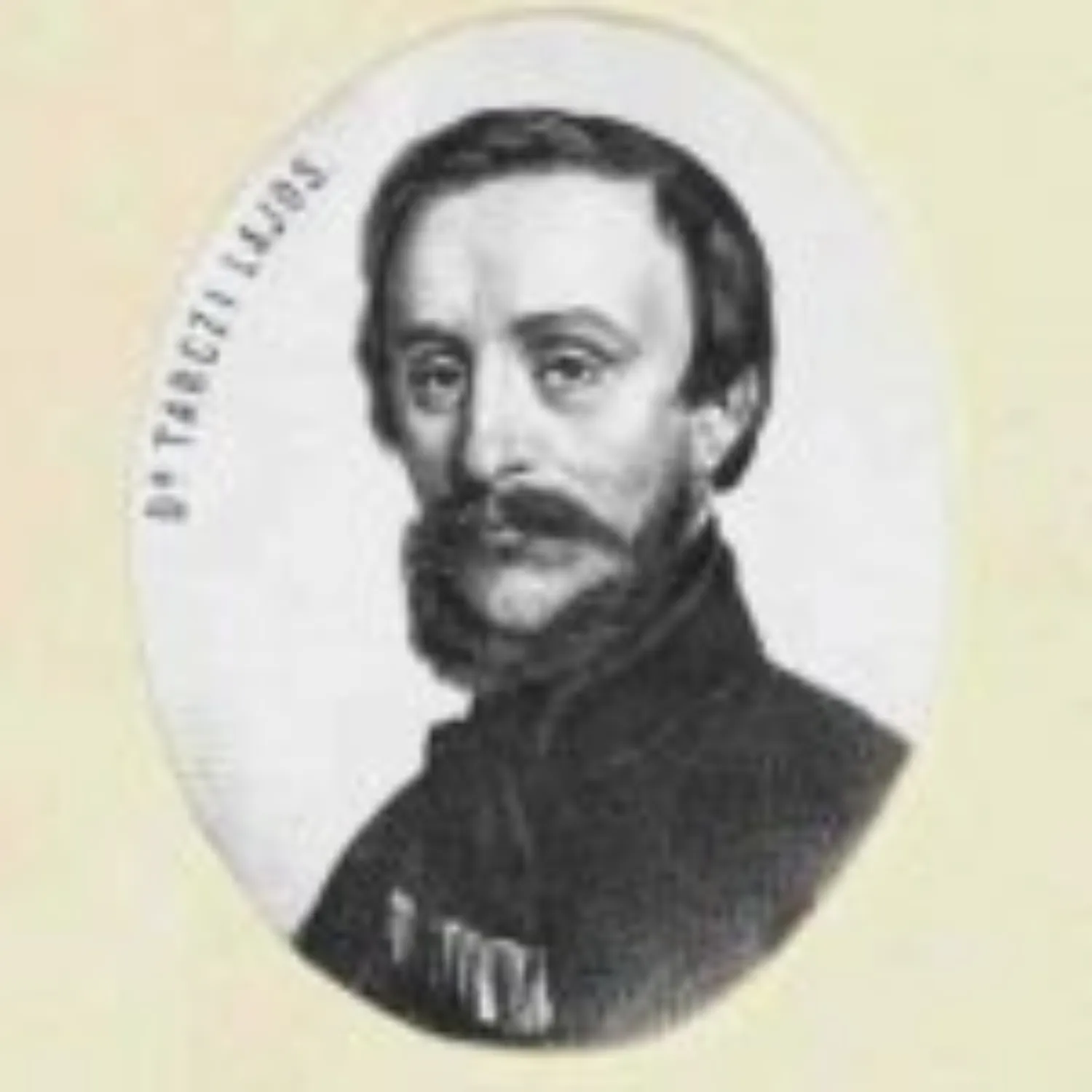
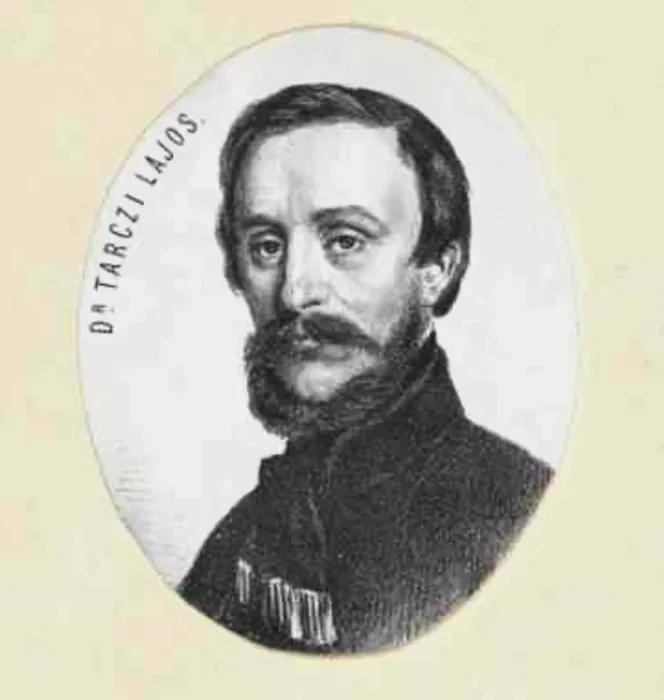
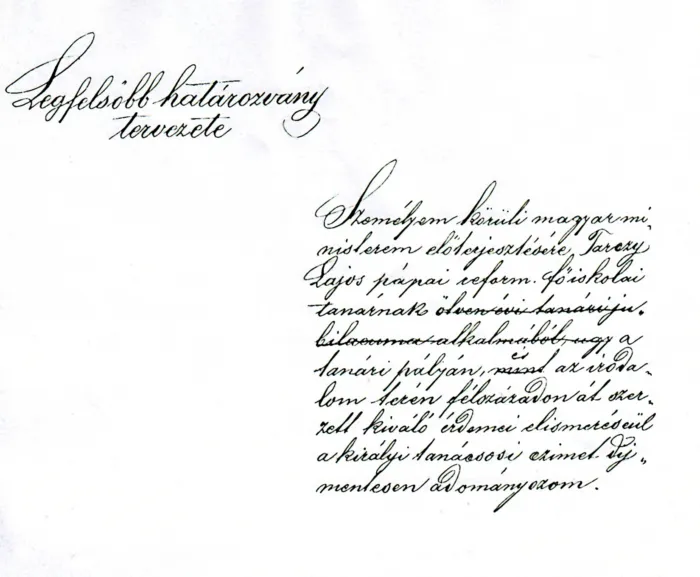
Lajos Tarczy was born in the village of Hetény on December 6, 1807. His father, János Tarczy, came from the village of Néma, and his mother, Juliánna Czike, was the daughter of the notary of Dunamocs. They had 6 children: ; The eldest son, László, drowned in the Danube with his family 7 weeks after his wedding, when they wanted to take a boat across to Neszmély to visit relatives on the Pentecost holiday. The current carried the boat under a mill, and all those in the boat drowned. László and his wife are buried in Neszmély. Zsigmond's brother lived in Hetény. Juliánna married a miller, Eszter a shipping clerk. Klára Tarczy became the wife of György Kovács, the rector of Perbet, and later the notary of Hetény. Their son, Lajos Kovács, is a pastor of Hetény. ; ; Tarczy attended elementary school in Hetény, where Lajos Császár was the rector who graduated from higher school. According to his recollections, the rector was a very kind, smart, intelligent, but strict man. After school work, he led his better and older students to his orchard, where he diligently taught them how to care for trees: pruning and grafting. His orchard was famous far and wide. He also started teaching Latin, which was later continued by the local pastor Péter Kovács. ; He completed his further studies at the Reformed Gymnasium in Révkomárom. In 1823, he began his college studies in Pápa. He immediately became one of the eminent students. In 1828/29, he was the only one to be awarded the grade of “eminent in omnibus”. The following year he was appointed assistant teacher, a year later he was promoted to the highest position, senior, and then elected librarian, when he learned German and French. He received a scholarship and permission to study at foreign universities. However, cholera intervened. István Márton, a professor at the Pontifical College, died, and no one could be found to replace him. At that time, Tarczy was asked to study humanities, physics and mathematics in Vienna, so that he could be a worthy successor to Márton. He studied in Berlin, visited Prague, Dresden, Leipzig, Halle. ; “Small stature, straight posture, head tilted back, lively, red, Hungarian-like face, huge forehead, and large, intelligent and cheerful eyes, dark-colored suits, somewhat sloppy clothing: this was the appearance of this excellent spirit, once my dear teacher” – wrote a former student, Károly Eötvös about Tarczy. ; Lajos Tarczy was a scientist imbued with reform ideas. He created in almost all areas of science. He had something to say, write, and do in scientific theoretical philosophy, in his lectures on physics and mathematics, in the world of education and training, in the dissemination of common sense and aesthetic taste, in land and garden management, and in fruit tree cultivation. ; In November 1833, Lajos Tarczy took the official professorial oath. His inaugural speech, which he gave in Hungarian, has long been preserved. His lecture was lively, lively, attractive, clear, clear, and logical. ; Less well known is Tarczy's literary work, which falls within the first decade of his teaching career. During this time, he was the most prolific writer in Hungary. The Hungarian Society of Scholars elected him a corresponding member in 1838. He also received the recognition of Count István Széchényi, who invited him to his estate in Czenk, which was an extraordinary honor for a simple Calvinist teacher. ; As the leading teacher of the Educational Society founded in 1840, he expanded the library and established a printing press. His books “Popular Natural History, Égrajz” won awards. Mór Jókai remembers him as follows: "Lajos Tarczy was the most excellent teacher at the college. He explained natural history and higher mathematics. And his lectures! It was a pleasure to listen to him..." And Sándor Petőfi writes about him as follows: "...the good Tarczy is the one to whom I owe everything." Our connection is indicated by the fact that Petőfi read a dirge at the funeral of Lajos Tarczy's grandson, and in 1845 we can also find a Petőfi poem (and a Jókai story) in the pocket book entitled Tavasz, edited by the professor and published in Pápa. ; He cared a lot about his students. He introduced regular gymnastics at the Papal College. The students' persistence is indicated by the fact that he often enriched the natural history library with experimental instruments from the pennies they contributed. ; Among his works, his treatise "Reflections on Civil Punishment" is interesting and very instructive, in which he writes: "Not even an individual should forget his rights and duties so much that he should resort to insulting insults against even the greatest evildoer. Oh! where man is unrestrained and indulges in self-indulgence, there the whole of nature mourns". ; His remark is notable, which states: "Fortunate is the country in which exile is considered an extremely severe punishment!" ; Tarczy considered the refinement of taste and the ennobling of feeling to be one of his important tasks. His spirit was zealous for the progress of art. This is proven by his work entitled “The Effect of Drama and the Poverty of Drama in Our Literature”, in which he expresses his opinion that: any reading is better than reading nothing. ; His treatise entitled “Philosophical Sketches” is an interesting read, in Part II of which he presents his principles of education and training, which he applied with great wisdom, tact and consistency in school and in life. ; The task of education is to raise the independent child to independence, which is often missed by parents. That is why strict obedience is required from the student. If he does not comply with this – and we do not want adults to apply this – he should be punished even with a rod. If the child who has not kept his word bursts into tears, so that the heart of the educator is torn – then he suggests as good advice that the educators should go aside and cry themselves out there, but the punishment should not be omitted. ; Before sending his students on their way, Tarczy writes: "But before I would send my student on my own wing, I would try to introduce him to true humanity - I would show him states in this world, the sight of which would excite his soul to high resolutions, and states that would make him shudder." ; "If the young man enters from the pure air of family life into a good school, into the temple of science, where all teaching is directed only to good and public benefit, if he sees continuous serious work in the school, and lives in it himself, he gets used to it, where the love of truth and the delicate feeling are nurtured." ; Dear guests! There is a school that is true to Tarczy's ideas, which teaches its students humanity, love of the homeland, the country, the beauty of the native language, there is a school that accustoms them to continuous work, where they treat the students consistently and lovingly. Teachers and educators teach independence and show that: Knowledge and virtues cannot be gained except through the fervor of unremitting diligence.