
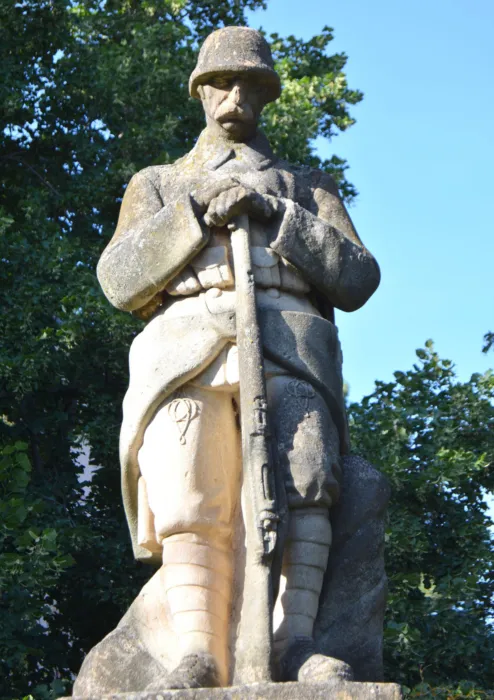
Taksonyfalva World War I Memorial
Statue, monument, memorial plaque
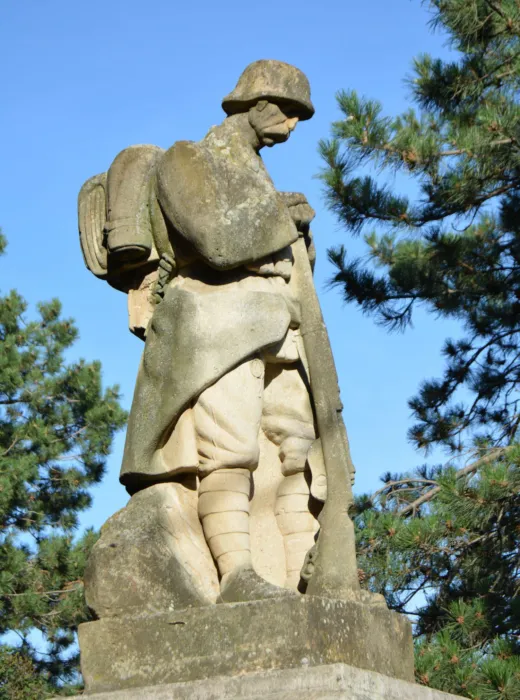
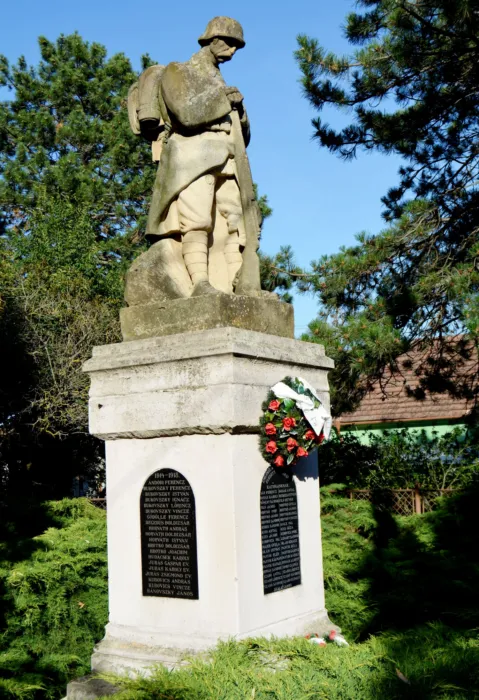
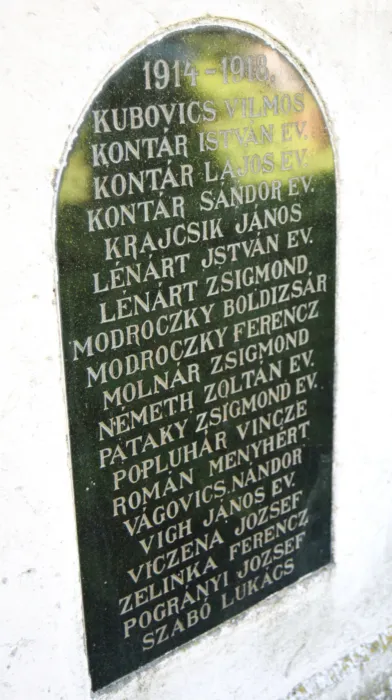
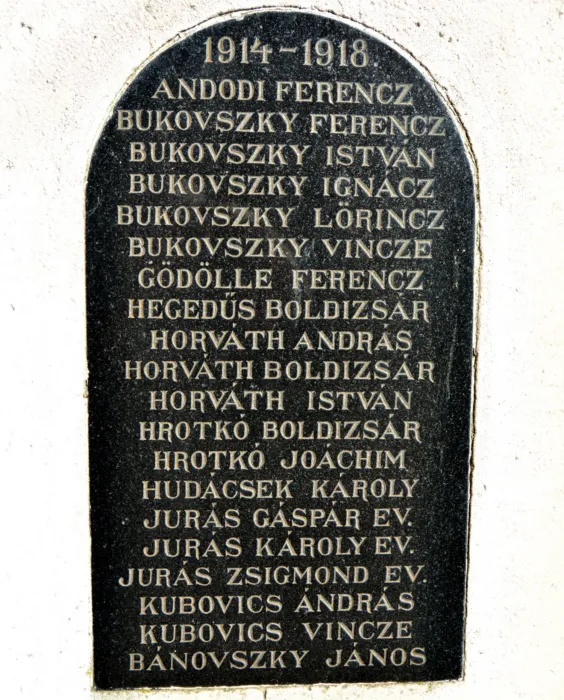
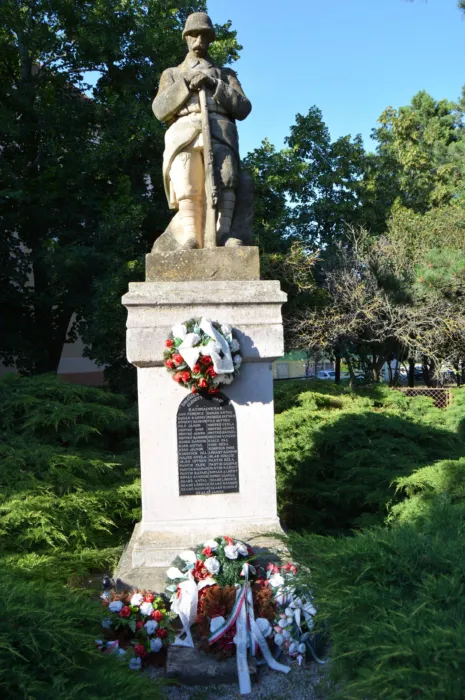
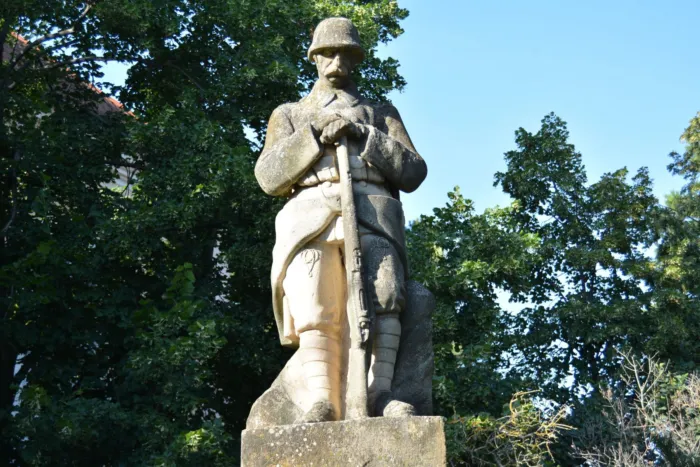
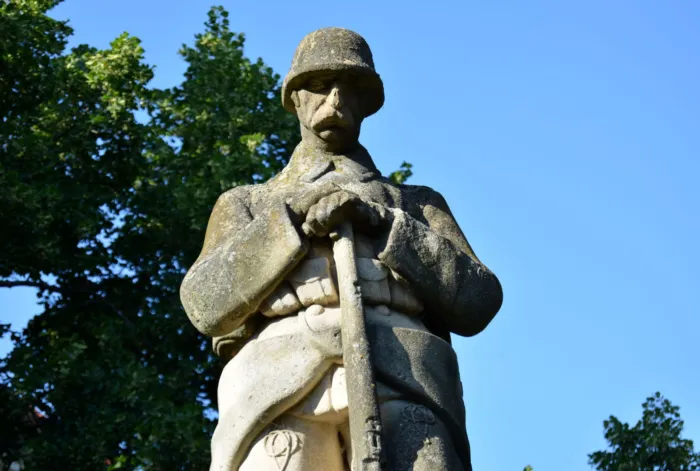
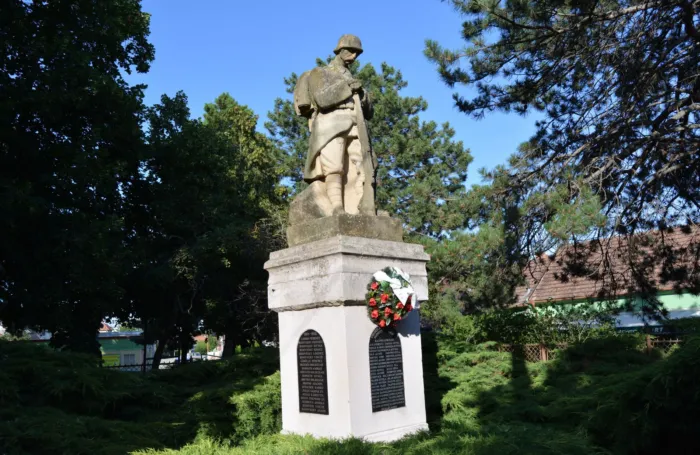
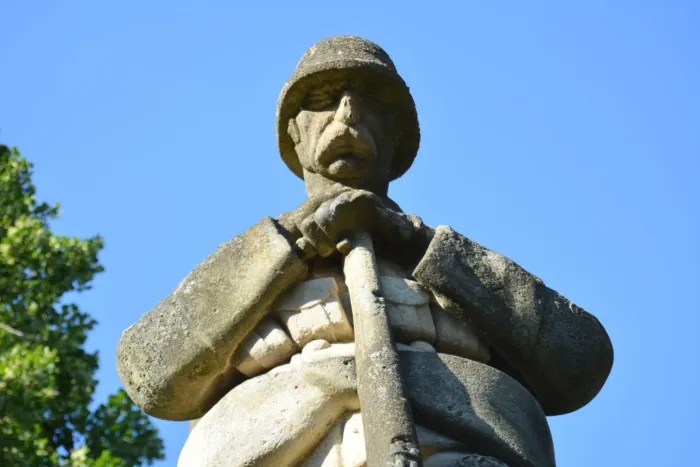
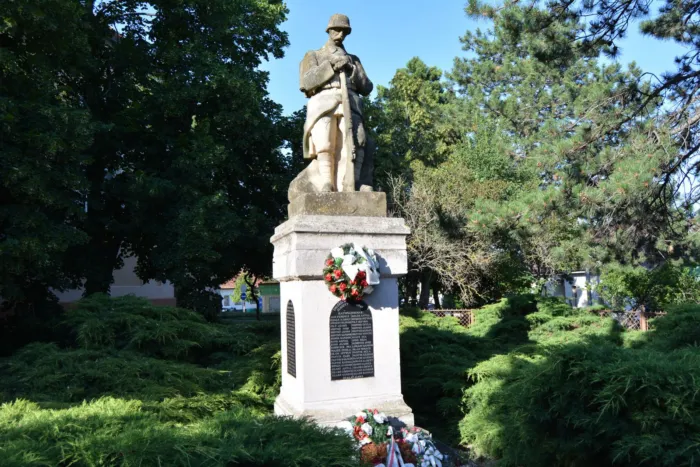
The statue of the Hero Soldier, which was erected by the village population between the two world wars in memory of the war victims of World War I, has an “adventurous” history. The statue was completed in 1928, but the district office of the then Czechoslovak Republic did not allow the statue to be erected, so it was hidden in a warehouse. The bare pedestal of the statue indicated the different political and historical memories of the official political and local community. Like the pedestal of the statue, the villagers were also in a wait-and-see attitude, hoping for “better times to come” and the possible erection of the statue. The border revision that occurred following the Vienna decision in 1938 made it possible to “rewrite” local history, and with it the ceremonial erection of the statue, which finally took place in November 1938. The monument was placed on the church hill, on the main square of the village, on its long-awaited pedestal. During the passage of the World War II front through Taksonyi, the statue suffered serious damage, a Soviet soldier shot the Hero Soldier's head off with a machine gun. At that time, the terrified residents buried the remaining part of the statue near the pedestal, and also tried to sink his memory deep. After the change of regime, the Hero Soldier statue was again on the agenda. In November 1990, the remaining statue body was dug up, and with the help of public funds, which was collected with unparalleled speed, it was restored (a head was made for it), and in the spring of the following year (1991) it was inaugurated in its original place, on the church hill next to the Catholic church. Many people came to the inauguration ceremony – villagers, residents of surrounding settlements, invited representatives of district organizations, but it was also exclusive, it only moved Hungarians (just like the restoration work, the preparations at various levels), and it was addressed exclusively to Hungarians. “We believe, and the knowledge that we have proven once again gives us strength: we can come together for the sake of fair goals, because we are united by our attachment to our homeland, to our home...” – was said in the ceremonial speech. For the Hungarians of Taksony, the statue expresses historical truth, their upheavals, their attachment to the place and their local past, which organically fits into a national discourse. “The statue of the Honvéd has been placed in its place. Let us trust that this is a milestone: a milestone for the betterment of our destiny” – the hopes of the years after the change of regime and the demand for historical justice were formulated. The inauguration ceremony was the first significant movement of the village after the change of regime, moving the entire Hungarian community, it reflected the early, fresh enthusiasm of the democratizing society, the speeches sought to restore the dignity of the Hungarian community, and expressed hopes for a “new beginning”. The local and district representatives of the established Hungarian political parties also attended the inauguration ceremony, and the mayors of the surrounding Hungarian villages also laid wreaths, indicating the importance and “historical rank” of the event. Since then, the statue has been laid wreaths by local leaders and political party representatives every year on March 15 and on All Souls’ Day. These annual commemorations no longer have nearly as much appeal, with only a few dozen people gathering at this time.