
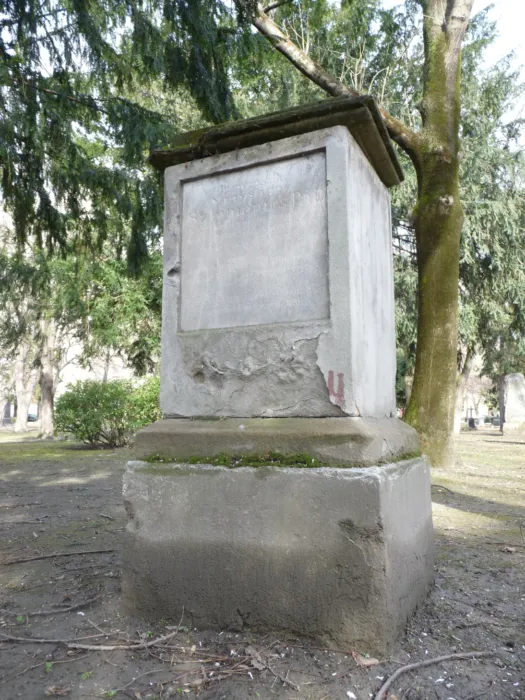
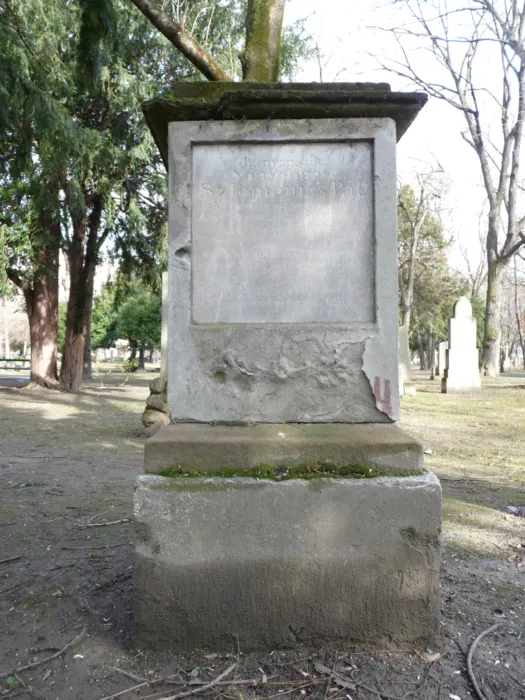
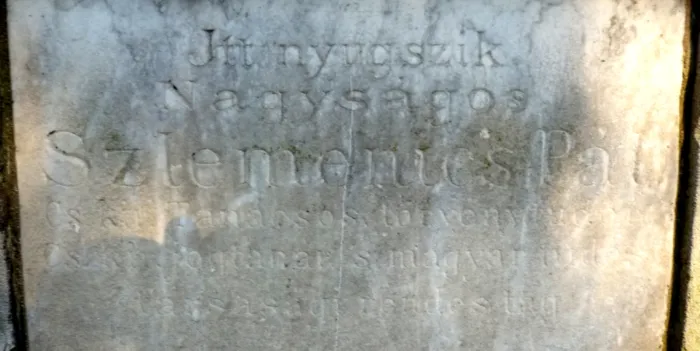
Grave of Pál Slemenits
Cemeteries, tombstones, graves
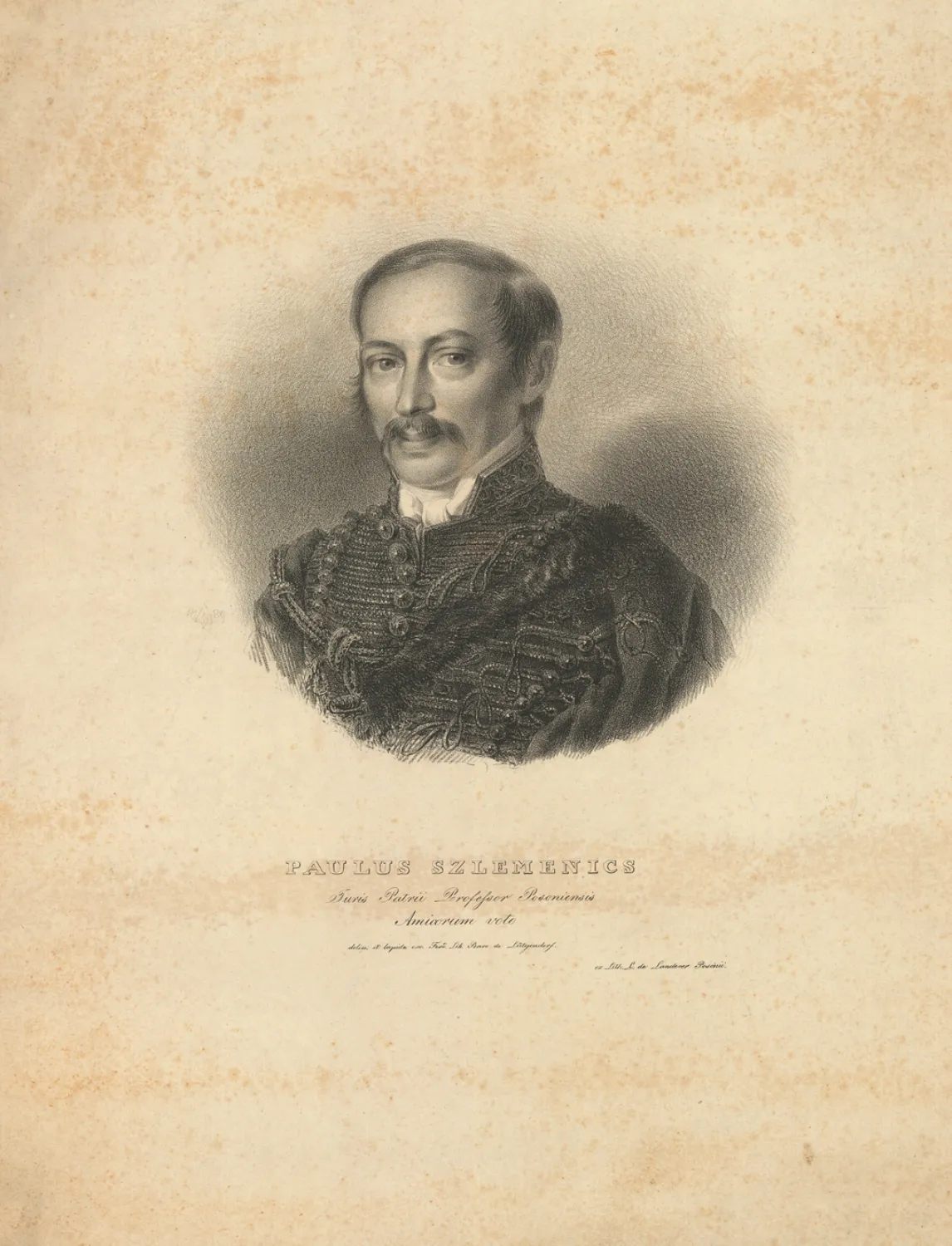
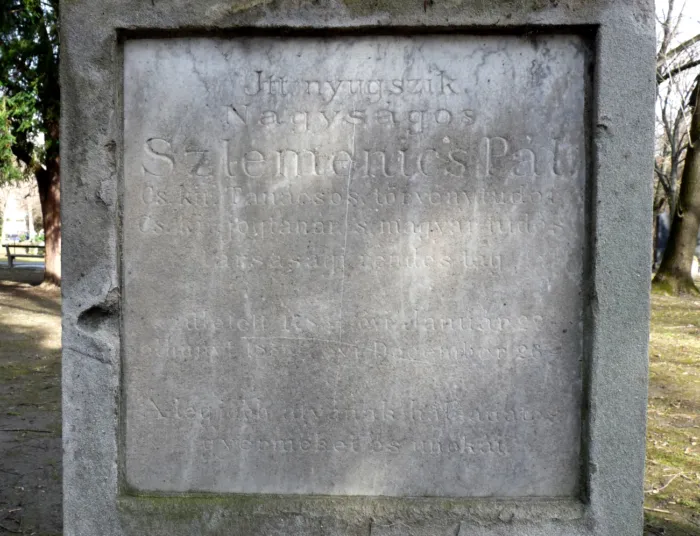
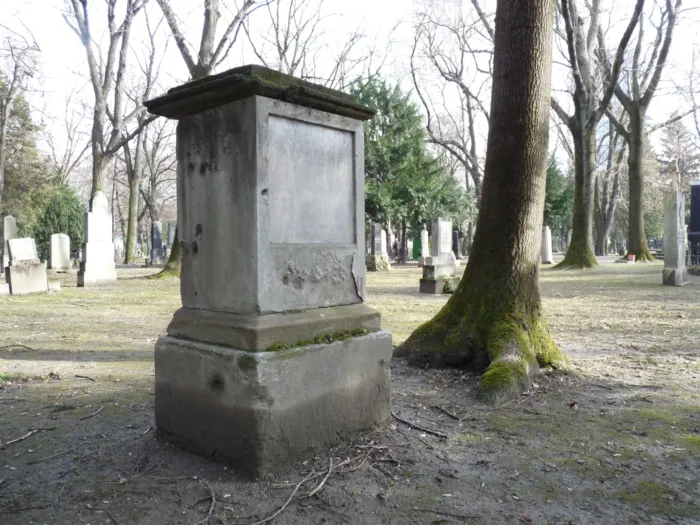
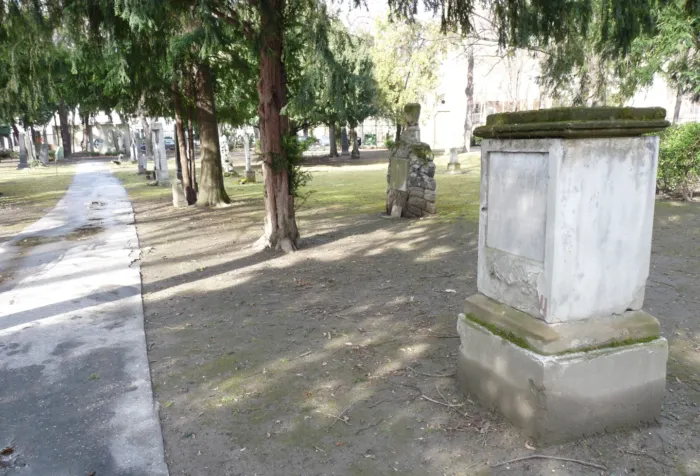
Pál Szlemenics, a legal writer, was born in Kecskemét on January 22, 1783. He completed his secondary school studies in his hometown and in Pest, philosophy and theology in Vác, as a cadet priest of the episcopal county there, and law at the Royal University of Pest under the teachers Kelemen and Markovics in 1804, and in the meantime he listened with a thirsty soul to the famous lectures on the Hungarian language given by Miklós Révai. Then he was a tutor and confidant in the house of Count Ferenc Esterházy in Vienna, and in 1809 he was appointed a regular professor of Hungarian civil and penal laws at the Royal Academy in Bratislava, and he already held a distinguished chair there, when he obtained a lawyer's certificate in 1810 and became a doctor of laws in 1811. The Hungarian Academy of Sciences immediately began its work in November 1830. On the 17th, he was elected a full member of the law department, in which he was one of the most hardworking members. In 1838, the king awarded him a noble title for his outstanding educational and literary merits and appointed him a royal councilor. ; His first major work was Elementa juris criminalis hungarici, published in the first edition in 1817, the second in 1827, and the third, expanded and revised edition in 1833, all in Bratislava. This was followed by his smaller polemical works, also in Latin, against Kövy, in defense of his beloved teacher, Imre Kelemen: Discussio opusculi, cui nomen Ratio Jurisprudentiae hung. ad ductum Institutionum Kelemenianarum (Bratislava 1817) and another similar one (1820). In 1819, it was published in two volumes: Elementa Juris hung. civilis privati and also in Latin in 1829. Elementa juris hung. judiciarii civilis and finally in 1841. Additamenta ad editionem tertiam Elementorum Juris jud. civilis, tam criminalis hungarici (all in Bratislava). The Hungarian edition of his civil law: Common Hungarian Civil Law of the Court of Justice (Bratislava 1823), won the Marczibányi Prize and was published in a second edition in 1844, and the Hungarian edition of his penal law, Penyítő törvényszövegi Hungarian Law (Buda 1836), as well as its newly developed edition (Pest 1847), was carried out by the Hungarian Academy of Sciences. In 1845, his History of Hungarian Laws was published in Bratislava, presented in a short outline, and another expanded, third edition of the Hungarian Civil Law in four volumes. ; In addition to these independent works, a large number of his distinguished and thorough legal treatises were published in the Scientific Collection, the Hungarian Academic Yearbooks and the Scientific Archive, and the Bajza Athenaeum. His last major work, The History of Our Laws from the Origin of Our Country to the Extinction of the Árpáds, was published in the Academic Yearbooks (Vol. VI, 1845, Vol. VII, 1846, and Vol. VIII, 1860), and the same under the kings of the mixed houses, finally the same: under our kings of the Austrian house from Ferdinand I to the death of Francis I. He also has a German work from his youth: 1816. In Vienna, he published the expanded and revised 9th edition of János Farkas' Hungarian grammar for Germans studying Hungarian. ; His family was a solid background for his work, where several children were born from his marriage to Mária-Anna Wilflingseder. ; He died on December 26, 1856 in Bratislava. In 1858, Tivadar Pauler gave a memorial speech about him at the Academy of Sciences. ; Pál Szlemenics lived in the house at 11 Hal Square, which no longer exists. A memorial plaque with the following text was visible on the building: ; "PÁL SZLEMENICS/ residence of a lawyer and Hungarian academy member 1809-1836./ As a sign of the respect of the Toldy circle." ; Pál Szlemenics' grave, which is in rather poor condition, is located in sector I./ 1 of the cemetery.