
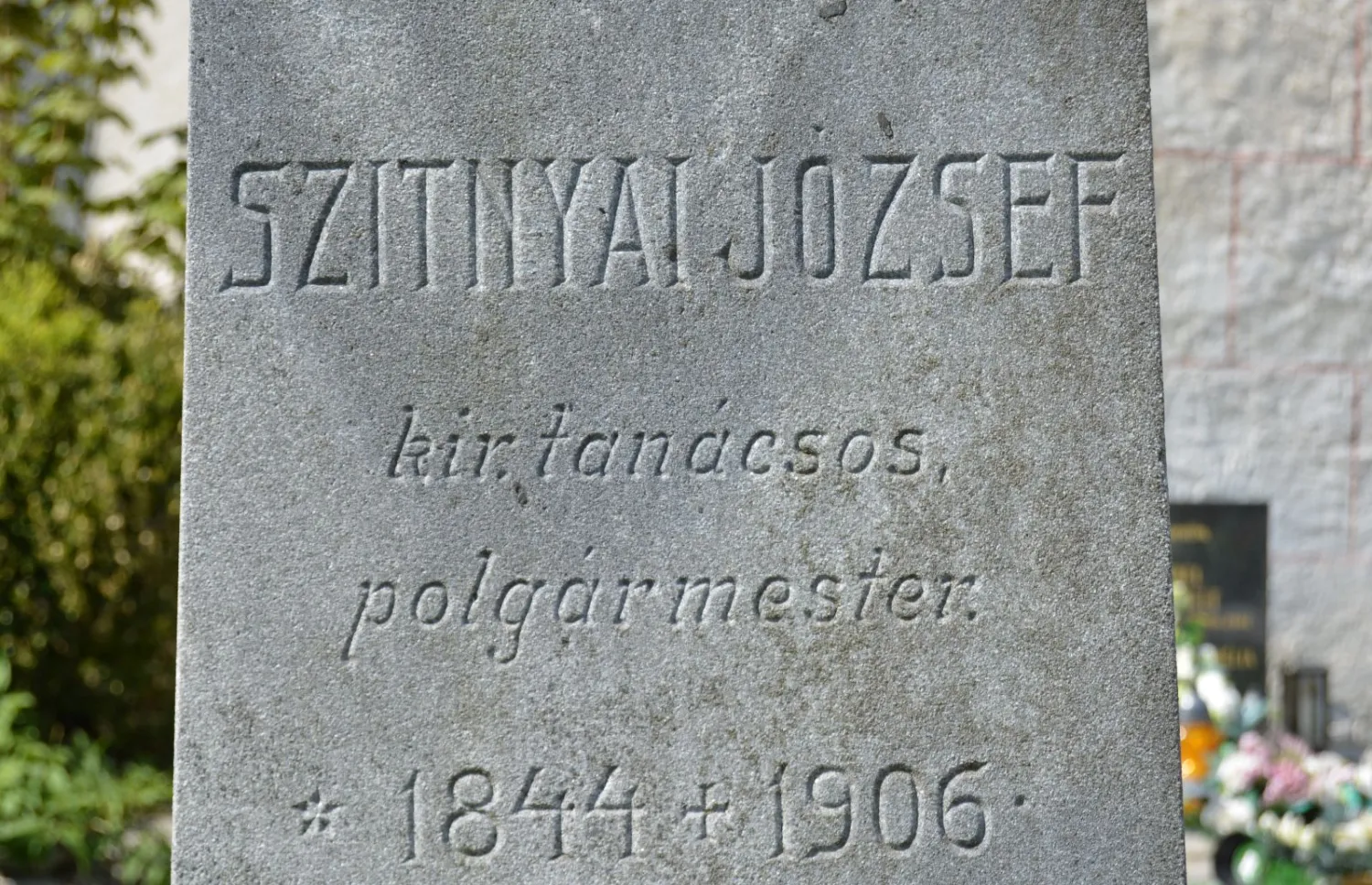
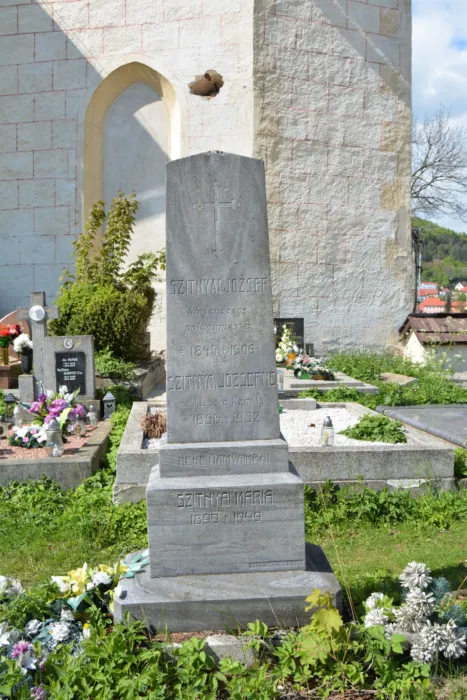
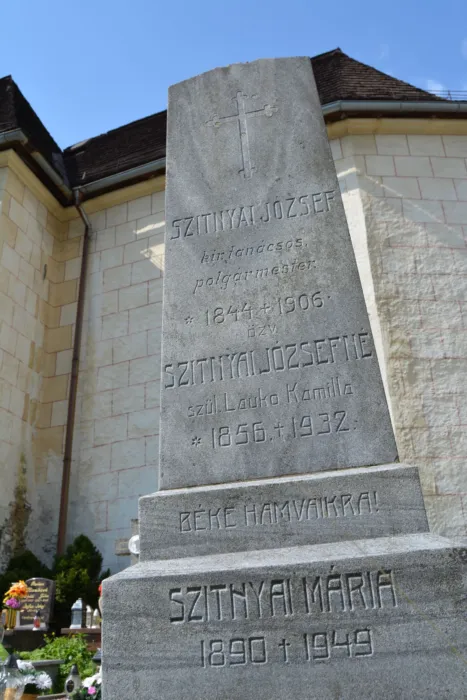
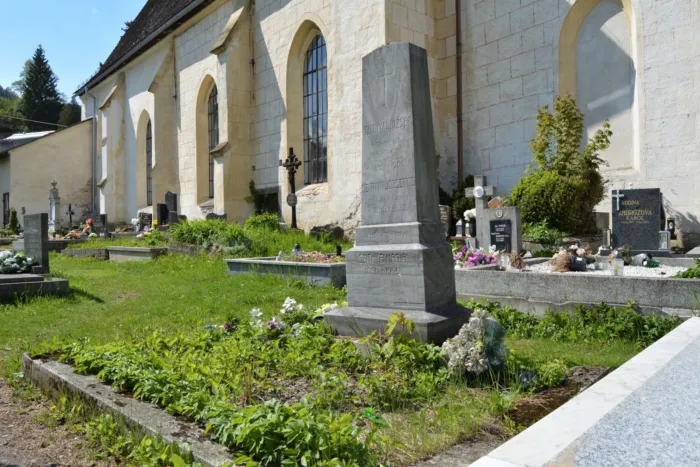
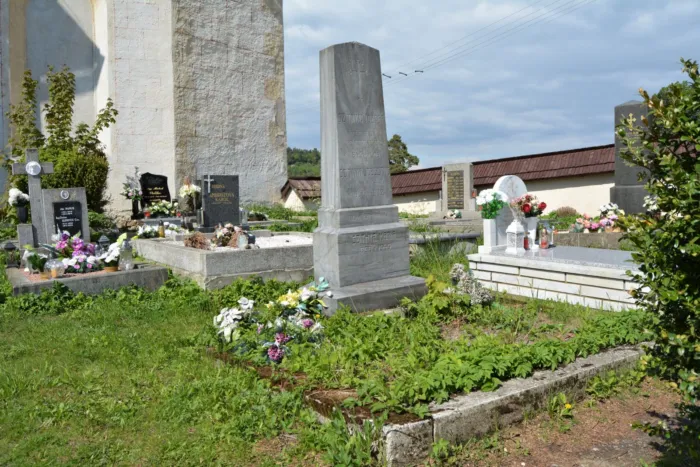
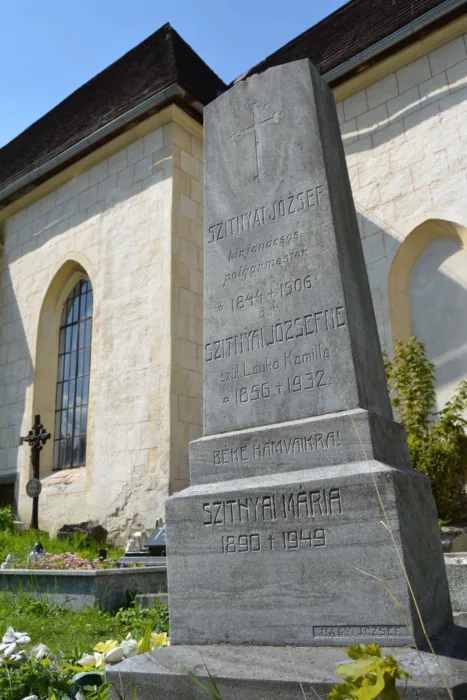
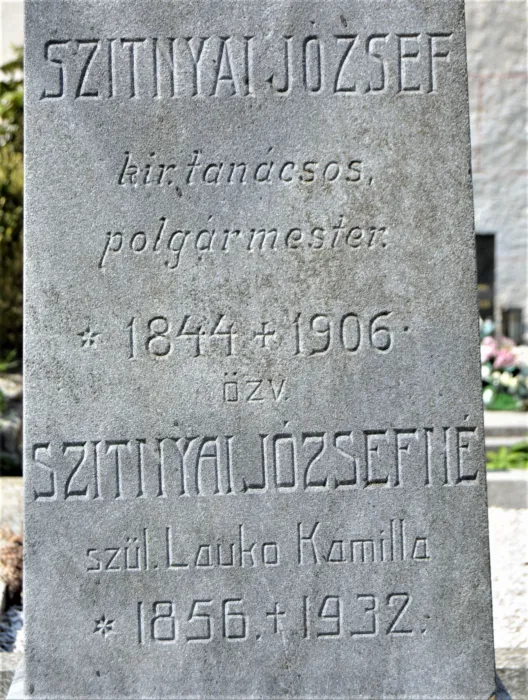
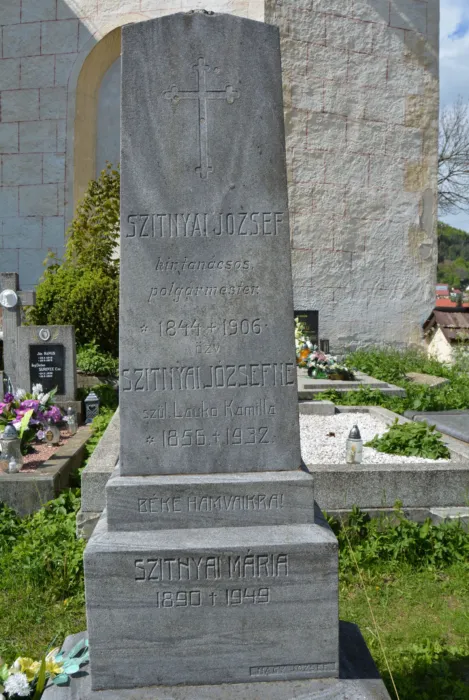
The grave of Mayor József Szitnyai
Cemeteries, tombstones, grave sites
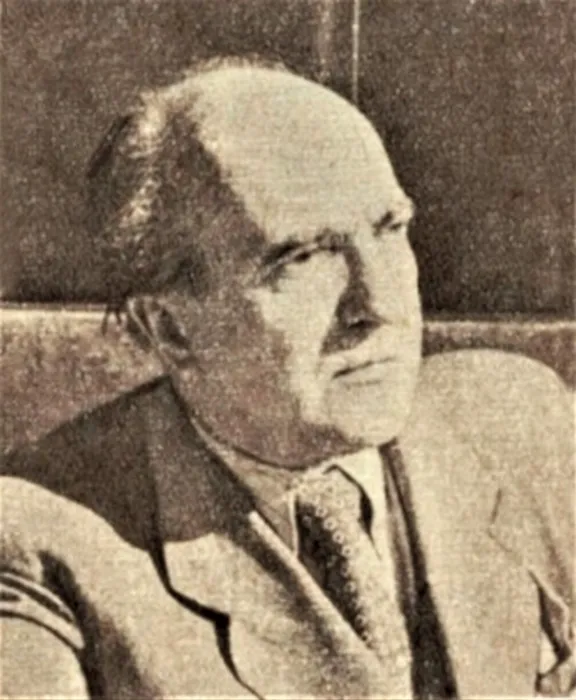
József Szitnyai, royal councilor, mayor of Selmecz and Bélabánya, was born in Szentantal in 1844 and died in 1906. He distinguished himself with his great diligence and spirit while still in school, studied at the Selmeczbánya and Nagyszombat gymnasiums and graduated with honors in 1864. He studied law at the universities of Vienna and Budapest and graduated in 1868. He was a candidate lawyer in Budapest for two years, and then in 1870, as a public and promissory lawyer, he was elected notary to the Selmeczbánya city court, from which position he was elected chief notary of the city in 1872 and mayor in 1895 by the public trust. He earned merit on many occasions in managing the fate of the free royal city of Selmeczbánya, both with his knowledge and with his conscientious, hardworking work. He was first awarded the royal recognition in 1893, when he was awarded the Knight's Cross of the Order of Francis Joseph. In 1900, he received a second decoration, when he was appointed a royal councilor. Prince Ferdinand of Bulgaria also expressed his respect for him on several occasions, decorating him with the Cross of the Order of Alexander in 1898 and with another order in 1906. He earned merit in the field of scientific literature with many small and large works. His studies were published in the columns of Századok, Történelmi tár, Bányászati és Kohászati laps and other journals. ; Independent work: The history of the intelligence institution of the mining companies of Lower Hungary. ; ; His son, Zoltán Szitnyai, writer and screenwriter (Selmecbánya, May 27, 1893 - Salzburg, June 11, 1978); He graduated in law from the University of Budapest. He was a civil servant in Győr, and from 1927 in Budapest, and was also a collaborator of Pesti Napló, Pest, Magyarság, Új Magyarság and Egyedül Vagyunk. He was elected a member of the Petőfi Society. In 1945, the People's Court sentenced him to five years of forced labor, but he was pardoned a year later due to the intercession of popular writers. In 1949, he left Hungary and settled in Austria. He was a collaborator of several emigration newspapers (Hungária, Kanadai Magyarság, Nemzetőr, etc.). In 1958, he received the literary award of emigration, the Vörösmarty Prize. ; In October 1934 he married Brigitta Kochanovszky. ; ; Writer: ; 1. A kegyalmes úr korunana (1941) ; 2. Guardhouse No. 5 (1942) ; 3. Masquerade Ball (1942) ; Screenwriter: ; 1. Guardhouse No. 5 (1942, with Frigyes Bán and Henrik Castiglione) ; 2. Dance (194?) [not realized] ; 3. Asszonyka (1941) [not realized]