
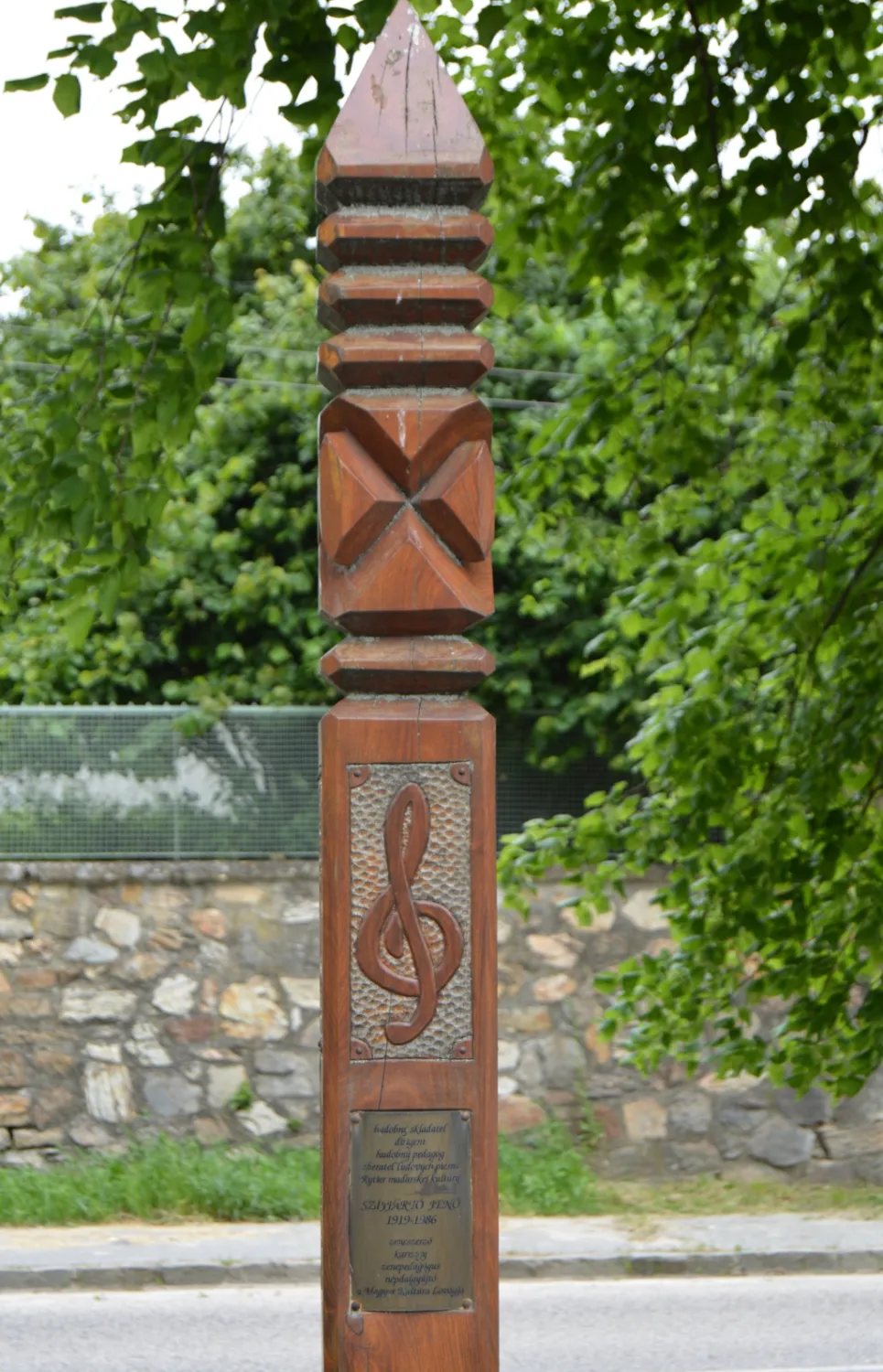
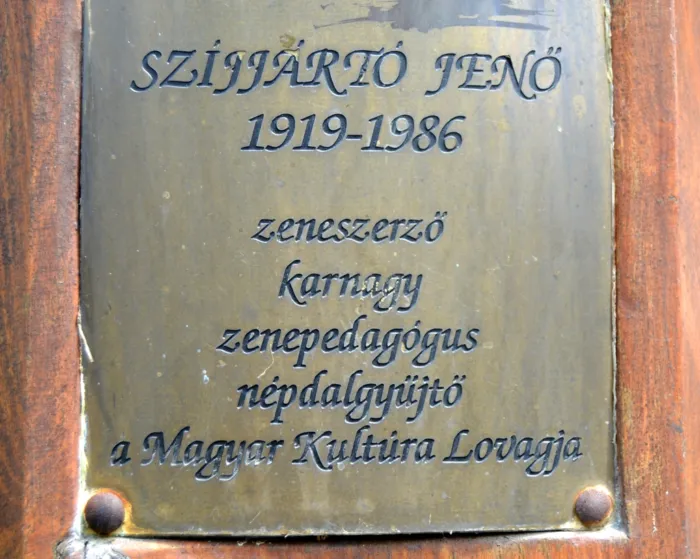
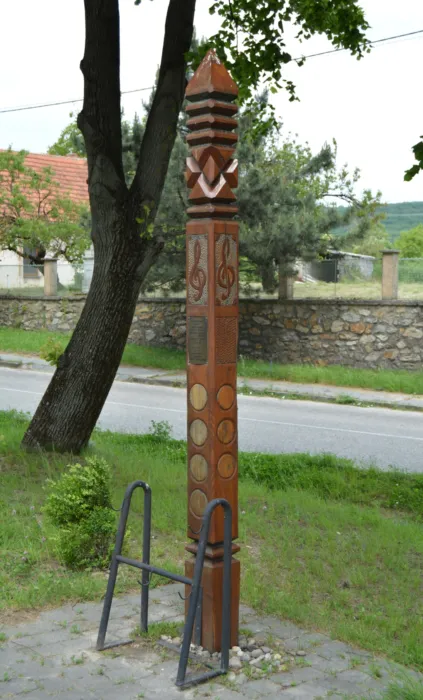
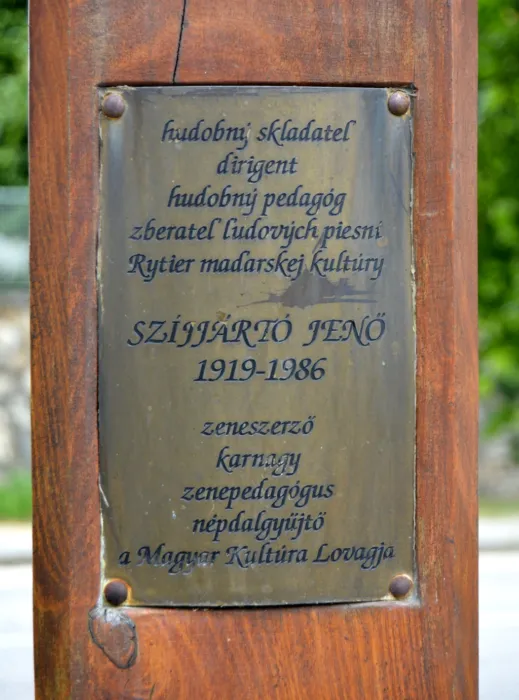
Jenő Szíjjártó's headstone
Statue, monument, memorial plaque
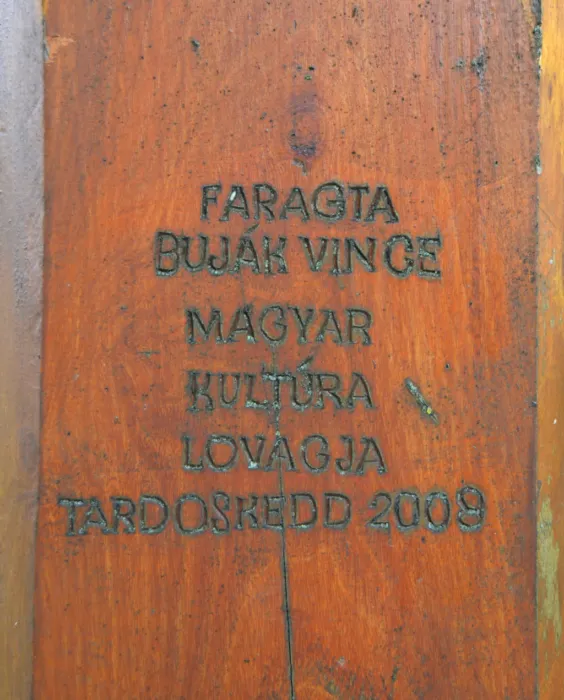
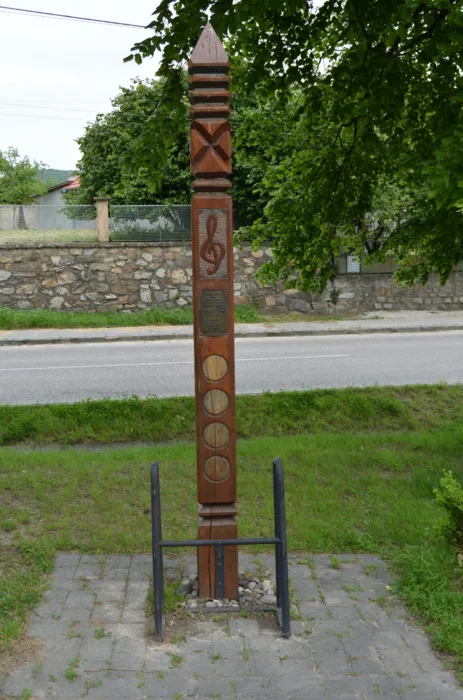
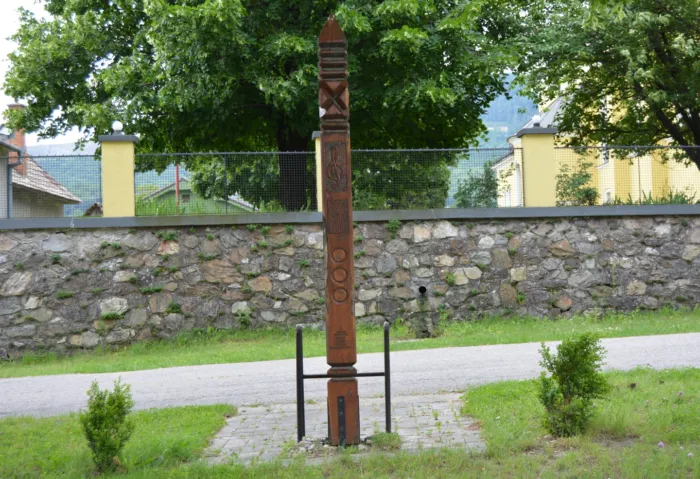
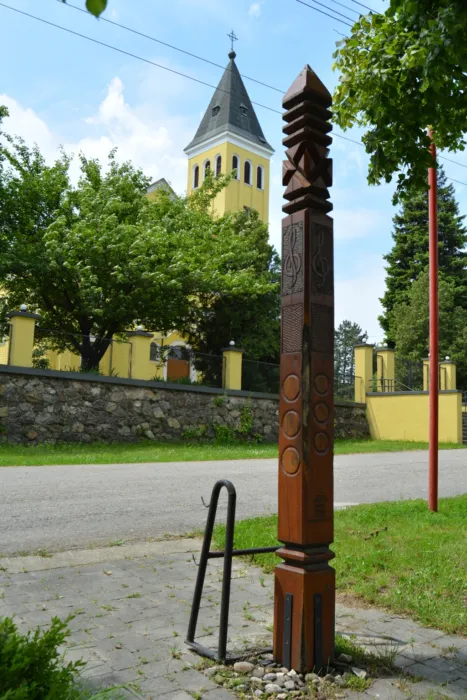
Although Jenő Szíjjártó (1919-1986) is primarily known as a composer and conductor, his folk music activities cannot be neglected either. As an authentic follower of the Kodály path in the Highlands, his work with folk songs consisted of two parts. As a folk song collector – he was active in the fifties, and between 1954 and 1958 he recorded 380 songs from 25 villages in 6 Hungarian regions in Slovakia. As a result of the collections, he also began to arrange folk songs. ; His favorite area is the Nitra region, the place of his youth, where he researched the exceptionally rich folk traditions of the Hungarian villages in the Zobor region, just as Zoltán Kodály had done decades before him. The 13 Hungarian villages (Alsóbodok, Béd, Csitár, Egerszeg, Gerencsér, Geszte, Gimes, Kolon, Menyhe, Pográny, Vicsápapáti, Zsére and Barslédec) located at the foot of the Zobor mountain towering above Nyitra, and gradually becoming culturally isolated since the 18th century, are one of our most unique ethnographic regions. It is no coincidence that in 1906, one of the Master's first collecting trips led him here, only to return to the region five (!) years later (1907, 1908, 1910, 1911, 1915). Such defining gems of our folk song treasury were first heard and recorded here by an educated ear, such as “A csitár hegyek alatt…” (Csitár), “Gerencséri utca…” (Gerencsér), “A jó lovas katonának…” (Zsére), “Meghalok, meghalok…” (Kolon), “Piros alma mosiloog…” (Menyhe), or “Ó, közlető szép…” (Gimes) – to mention only the most important ones. It is no coincidence that Szíjjártó also visited here in three years, in 1954, 1956 and 1957. ; The people of Zsére and the ZOBORALJA Zsére women's choir erected a headstone in memory of Jenő Szíjjártó in 2008 on the square in front of the St. Nicholas Church. The headstone is the work of woodcarver Vince Buják.