
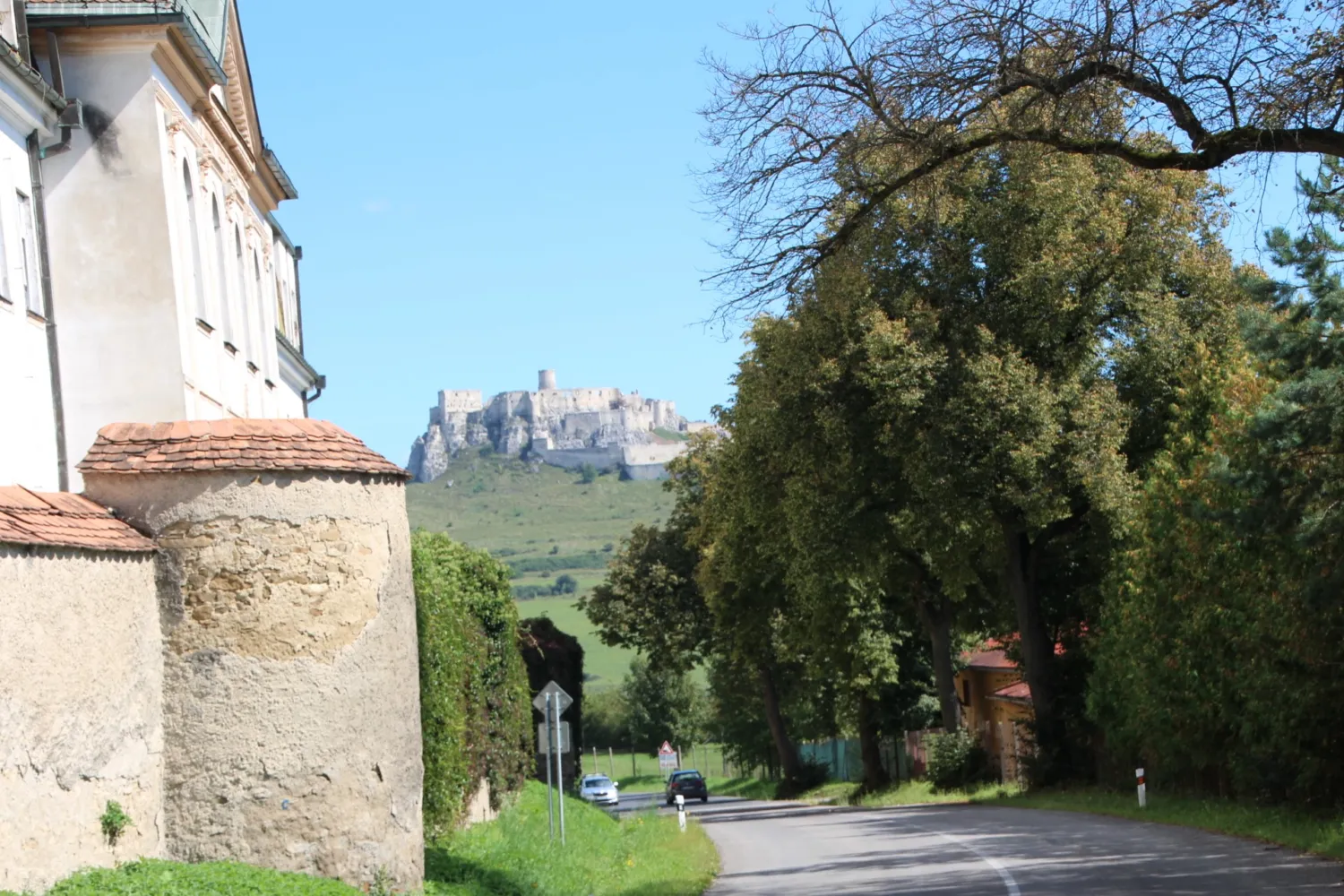
Spiš Castle (Szepesvár)
Building, structure
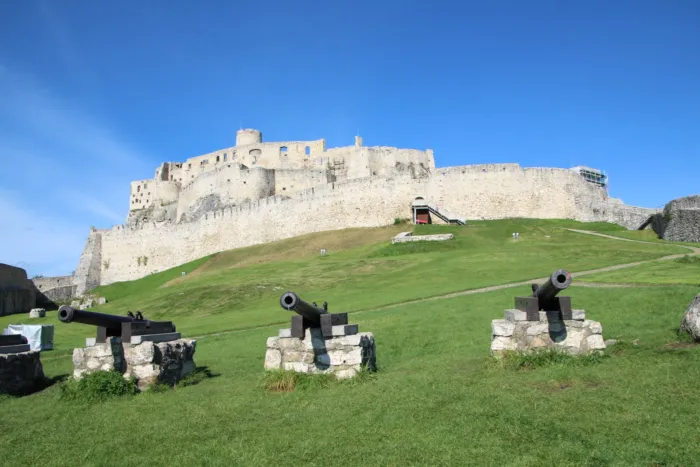
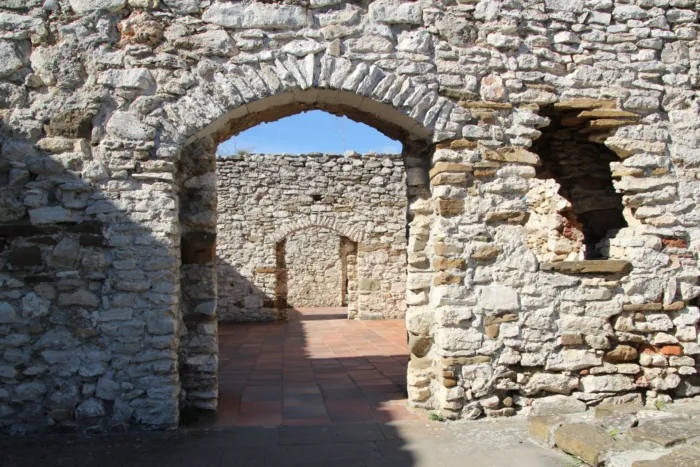
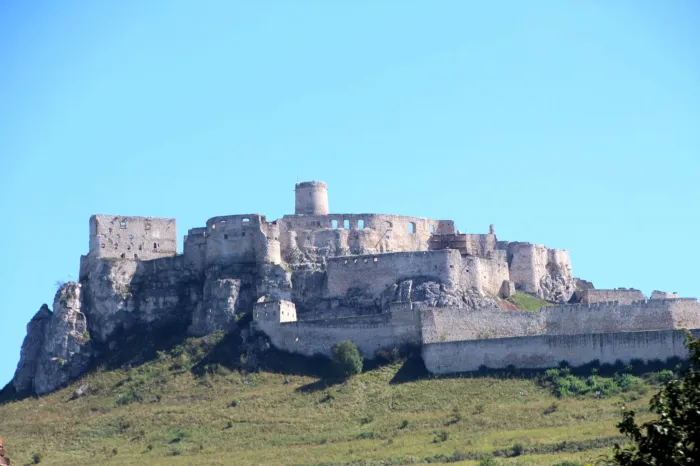
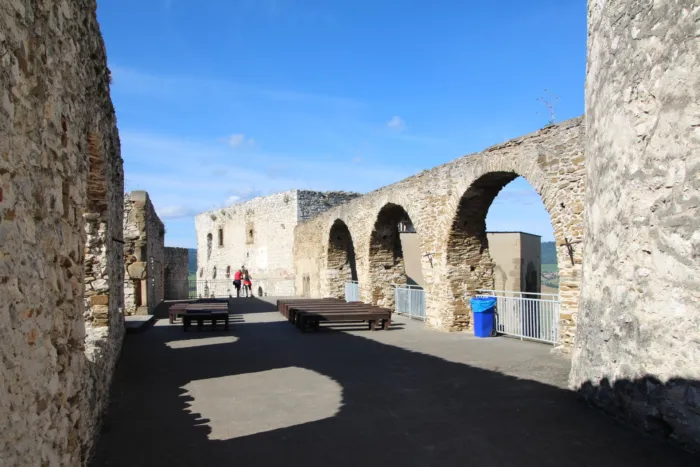
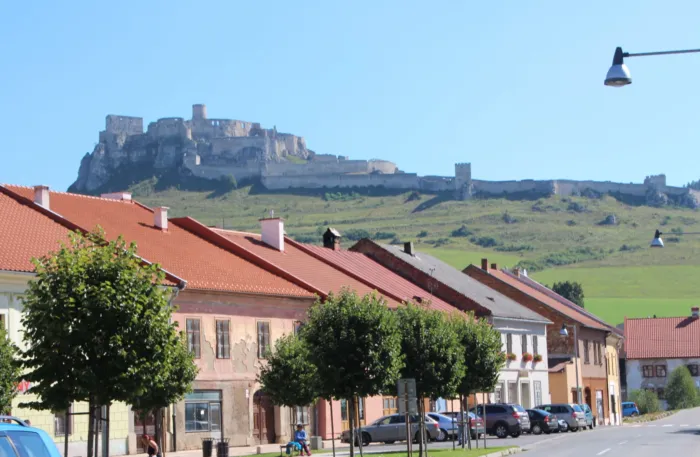
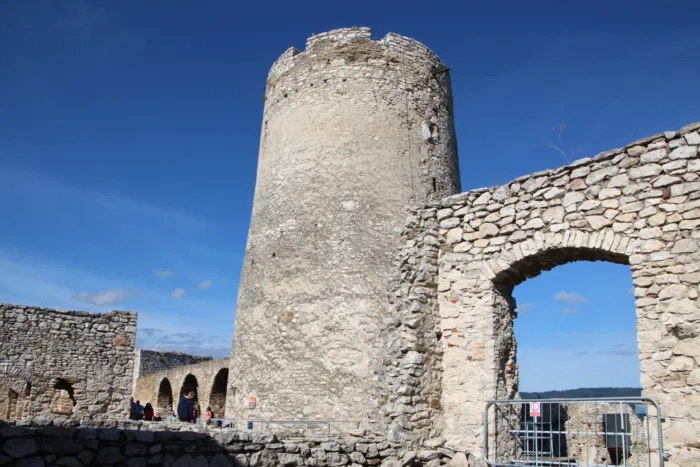
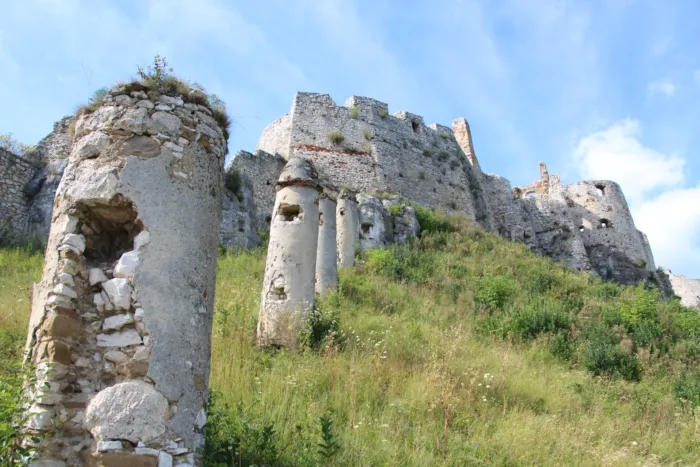
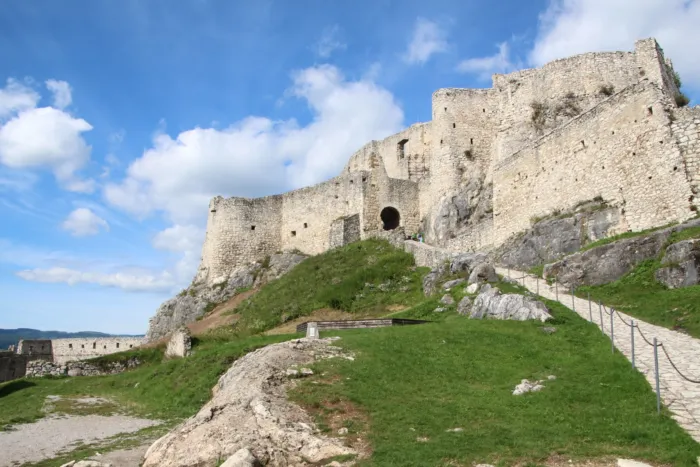
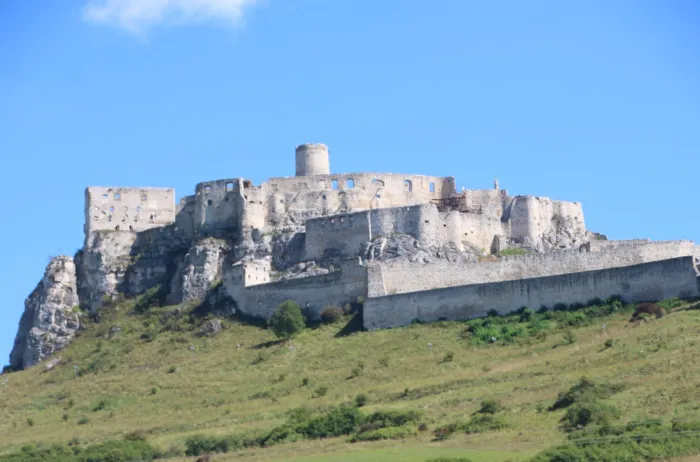
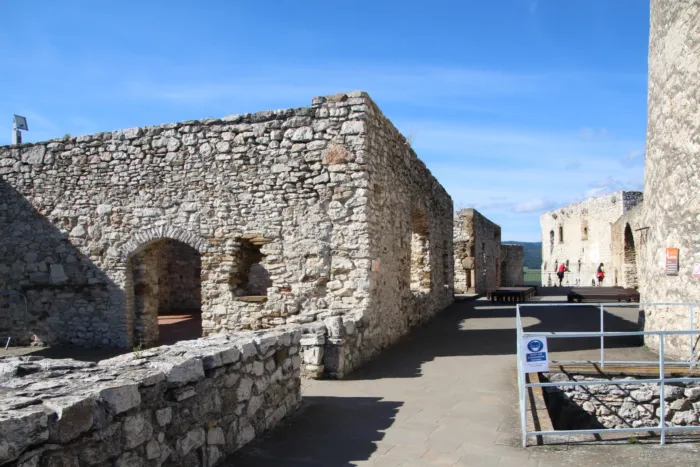
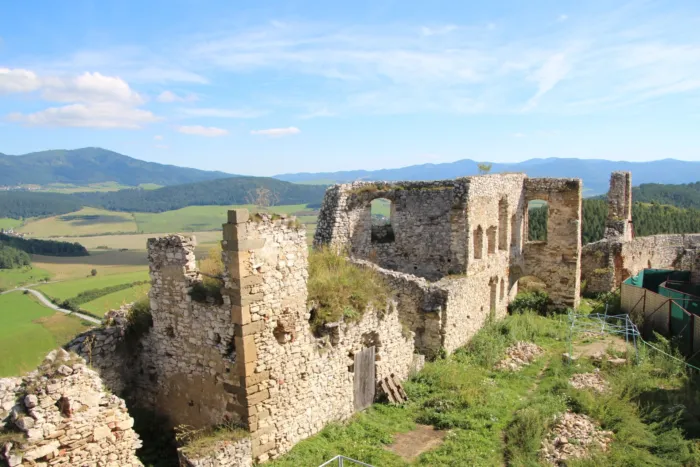
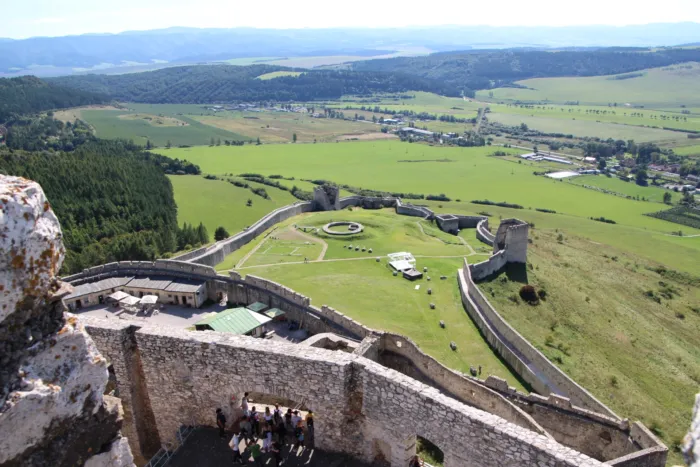
The earliest part of the three-hectare Szepesvár, one of the largest fortresses in historical Hungary, was built on a cliff at an altitude of 634 meters in the second half of the 12th century. In terms of its type, although it was rebuilt many times over the past century, it is an irregular-planned inner-towered castle that was not further developed after the advent of cannons. The fortress can be divided into three parts: the lower castle, the middle castle and the upper castle, which are located above each other, at increasingly higher levels. This way, the medieval defenders were able to subject the invading enemy to devastating fire from the higher castle walls. The lower castle can be entered through the square gate tower built on the west side. The recess of the external portcullis, which protected the entrance, can be clearly observed on the tower. The wide plateau-like castle courtyard is surrounded by a 285 x 115 meter irregular rectangular, thick stone wall, which is also reinforced by two five-story towers. In the middle of the courtyard, you can see the foundation of the round tower that was built after 1445 by the Czech Hussites who occupied the castle as a residence for the chief. The tower was surrounded by a palisade wall and a dry moat, while the battle-hardened Hussites' chariot castle stood around it. Later, the lower castle was built, into which the stones of the demolished watchtower were also built. Its foundations have already been brought to the surface by archaeological research. In the northwest corner of the huge courtyard, the foundation walls of buildings, probably stables and warehouses, have remained. On the ever-rising ridge, we arrive at the next part of the castle through a barbican that has been completely destroyed. The walls of the middle castle were built in the second half of the 14th century, during the time of the Anjou kings. Its original entrance could be approached on the southeast side, through a gate tower secured by a drawbridge and a wolf's lair, which was later supplemented with a larger barbican. The cannon emplacements in this thick stone wall represent the most modern part of Szepesvár, as the castle, far from the Turkish occupation, did not later build defensive works or bastions suitable for placing cannons. The barbican is protected from the outside by a dry moat with bricked sides. We know from a contemporary source that in 1660, during the possession of the Counts of Csáky, the stone colonnade that still makes the entrance very distinctive was completed. These originally held together the palisade formed from the beams between them. Returning to the castle courtyard, here we find the ruins of the castle governor's house, while in the northern part the medieval master builders created living quarters. The parts described so far were all built on the wide ridge. Our path continues along the steeply rising pavement, up to the oldest part of the castle. The Upper Castle, which is the oldest part of Szepesvár, is also located at the highest point of the peak surrounded by fantastically shaped rocks. As we climb the steep slope, a square gate tower, protected by a drawbridge in the Middle Ages, blocks our way. From here we reach a small courtyard, the walls of which were divided by two towers. One of these could probably have been the defensive structure mentioned in a document from the time of King Béla IV, according to which the ruler allowed the Szepes chapter to build its own refuge at the seat of the royal ispánság. Thus, another part of the castle was added to the most important fortress in the area. From there, we can reach the noble palaces via the wooden staircase towering above us. The original entrance to the upper castle was on the southern side, at a square gate tower, but during the possession of the Thurzó family it was walled up and a new entrance was cut into the castle wall high on the top of the cliff. From then on, it was only possible to enter on foot, thus increasing its defense. Based on archaeological research, the construction history of Spiš Castle can now be established, which began with the construction of a huge, circular and 22-meter-diameter residential tower in the second half of the 12th century. In the middle of the tower was a 3.4-meter-diameter column that held the beams in a circle. In addition to the Spiš ispán, the chapter also lived in the tower, while the scattered buildings at the top were surrounded by a stone wall with a partisan wall. This first Spiš castle was destroyed by an earthquake, so it had to be rebuilt before the Tatar invasion. At that time, the two-story new palace was built, the round old tower that can still be seen today, which was surrounded by a chapel and various residential and economic premises over the centuries. The swallow-tailed gables were most likely made by Italian and Lombard master builders. The most significant builders were the Szapolyai families after 1465, who built the western palace row, and after 1660, the Csáky family connected the various palaces with an arcaded corridor. This gave rise to the final image of the vast fortress, to which no new defensive works or bastions were built after the rapid development of military technology in the 16th century. If we can believe the former records, 135 rooms and smaller and larger halls were created in the fortification. After decades of archaeological excavation and restoration, Szepesvár is once again waiting with open gates for the besieging army of visitors curious about its ancient history. ; ; History ; ; At the invitation of King Géza II of the Árpád dynasty, German-speaking settlers arrived in the 1150s in the area near the Carpathians, which was then largely sparsely populated. After the conquest, the population that settled here, although quite small in number, but still Hungarian-speaking, named the region "Szép", which was then adopted by the German-speaking masses arriving in the second half of the 12th century, of course, the name "Zipszer" -- Spis -- Szepes -- was distorted. The guest population, mostly Saxon nobles, made the area called "Szepesség" flourish in the following decades, initially with agriculture and animal husbandry, and then by establishing urban settlements, where the inhabitants were already engaged in handicrafts, mining and long-distance trade. On the orders of the Hungarian king, the ispánság castle consisting of a round residential tower and a surrounding stone wall was soon built on a steep cliff peak, which became the center of the Szepes County. Based on archaeological excavations, we know that in the early 1200s, as a result of an earthquake, this early tower collapsed, but a smaller fortress was soon built next to it, also circular, including a watchtower, a palace and other rooms. This castle was successfully defended during the devastation of the Tatar invasion of 1241–42. The XIV. At the beginning of the 19th century, it was briefly ruled by the armed men of the Czech King Wenceslas, then by Palatine Amadé Aba, an oligarch from Zemplén, but after his death in 1311, King Charles Robert managed to take it back. In the following decades, the castle, which had strategic importance, was given to the king's trusted followers as an honorary estate, meaning that the baron in question received the income from the castle estate for the duration of his royal office. In 1412, King Sigismund of Luxembourg, to cover the costs of the Venetian campaign, mortgaged 16 settlements in Spiš, including Spišváralja, to the Polish King Władysław Jagiellon for 37 thousand Czech silver crowns. However, the important fortress remained in the power of the Hungarian ruler until 1439, when the nobleman István Rozgonyi acquired it for lifelong use. From him, the Czech Hussite mercenary leader Jan Giskra, who arrived in the country at the invitation of Queen Mother Elizabeth and conquered vast areas in the Highlands, took it from the armed men, who built the vast lower castle for their war chariots. In 1454, Giskra sold the castle to György Thurzó, a citizen of Levoča, for 2,130 gold pieces, but it soon returned to the Hussites under unknown circumstances. It only passed from them to the king's possession in 1462 during the Spišské campaign of Imre Szapolyai, treasurer. Three years later, Mátyás Hunyadi donated the castle estate to the victorious general, who lived there as a manor center and significantly expanded the noble residence. In 1487, the son of Palatine István Szapolyai, János, the last national king, was born here. After the defeat at Mohács by the Turks, the country's leading nobility split into two parties: the followers of János Szapolyai, who had been elected king of Hungary from the Transylvanian voivodeship, and the supporters of the Austrian Archduke Ferdinand of Habsburg. The latter's mercenaries captured Szepesvár in 1528 after a two-week siege, which had been given to the wealthy Thurzó family as a gift. In 1543, King John's armed men tried to capture it in a night attack, but failed. Since the fortress was located far from the bloody battlefields of the Turkish conquest, it had no major military significance at that time, and remained a noble estate center, to which the inhabitants of the serf villages under it submitted their dues. The Transylvanian princes in the 17th century During the 16th century campaigns, the area became active again, so in 1604, István Bocskai's hajdús besieged it, but they were unsuccessful against the castle, which had outdated defensive works at that time. In 1636, the Thurzók family became extinct in the male line, and the castle estate, which returned to royal hands, was soon granted by the Habsburg ruler to the Csáky noble family, among whom was the hereditary lord of Szepes County. In 1644, the army of the Transylvanian prince György I Rákóczi besieged it, but they were also forced to withdraw from its walls without completing their work. From the 1660s, members of the noble family moved to the surrounding settlements, building their much more comfortable Baroque-style castles there for living. Only a small garrison remained in Szepesvár, remaining as a refuge in times of crisis. During the time of the Kuruc leader Imre Thököly, Szepesvár was also under the rule of the rebels against the Habsburg imperial oppression, along with the cities of Košice and Prešov, but after their lucky star fell, it was again occupied by an imperial garrison. In 1702, similarly to many other castles in Hungary, the War Council decided to destroy this fortress, but due to the outbreak of the Kuruc uprising, this did not happen. Its garrison resisted the march of the Kuruc troops, but since the castle captain was seriously wounded by a Kuruc-minded tailor named Matthias Trencsény, he gave up the fortress in exchange for a free retreat. During the Rákóczi War of Independence, it had no military significance, but as a safe place, the Kuruc General Simon Forgách, who had disobeyed the orders of the great prince and was therefore arrested, and the captured Count Maximilián Strahemberg, the imperial commander-in-chief, were kept within its walls. The high-ranking prisoner, in exchange for his word of honor, was allowed to move relatively freely in the castle, which he took advantage of and successfully escaped to Vienna. Szepesvár fell into the possession of the Habsburg troops in June 1710, when the Viceroy of Szepes, János Görgey, gave up the hopeless fight to the mercenary armies that were keeping it under blockade. It is not known for what reason, but the medieval fortification of Szepesvár continued to avoid the order to blow up Hungarian castles and remained intact. However, the Csáky family, who lived in their comfortable castles, only used the fortress, which had completely lost its military importance, for economic purposes. Its destruction was caused by the ignition of pálinka being brewed in one of the rooms in 1780, as the entire castle burned down in the resulting huge fire. Since the restoration of the necrotic ruins was not important to the owner, the castle ruins were left to their fate. The next two centuries saw the deterioration of the stone walls and roofless buildings in the face of the elements, while in the 1980s the archaeological excavation and restoration of the huge stone castle began, which is still an ongoing task for monument conservation experts. ; The castle was added to the UNESCO World Heritage List in 1993.