
Church of Saints Peter and Paul
Building, structure
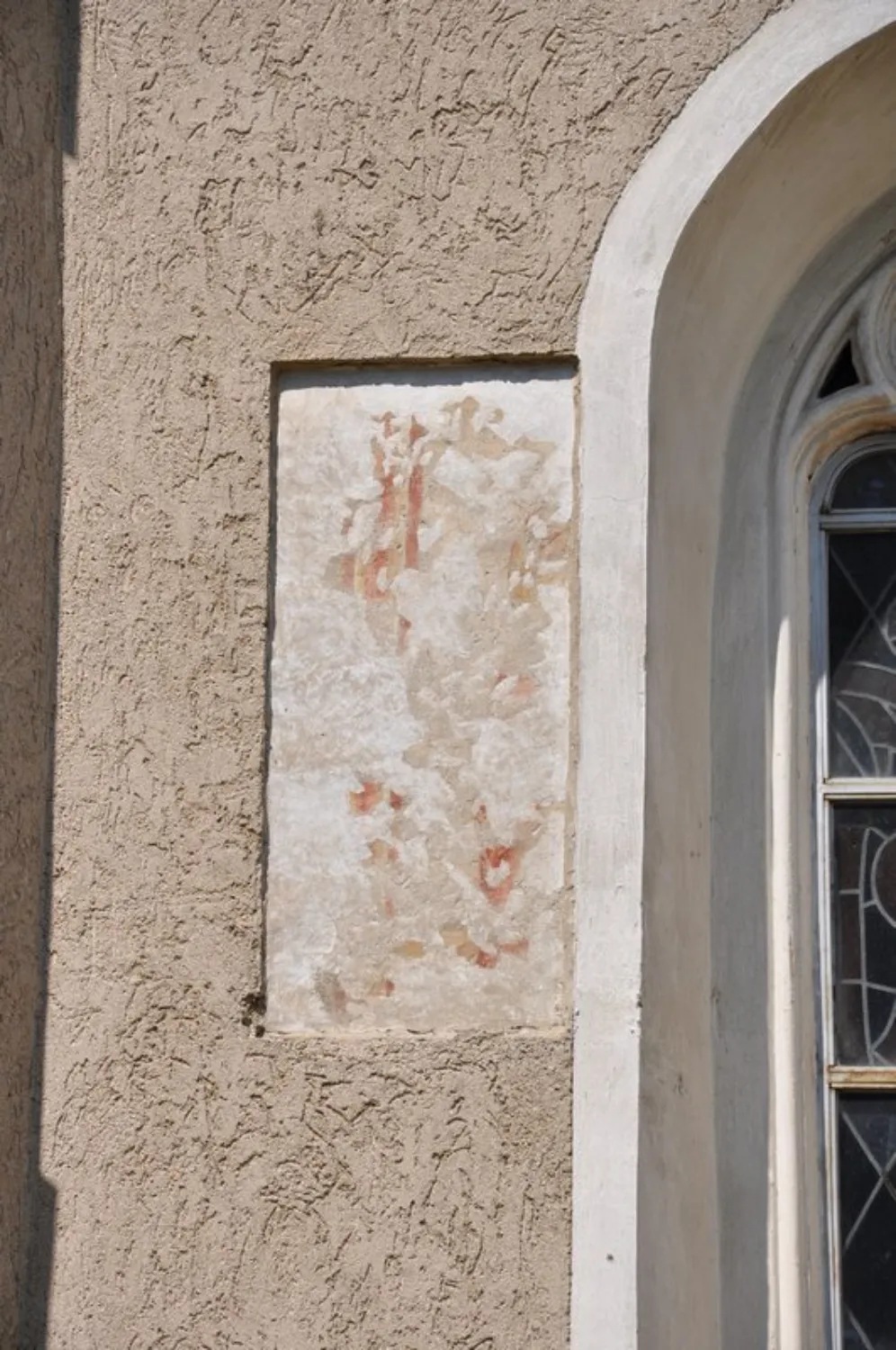
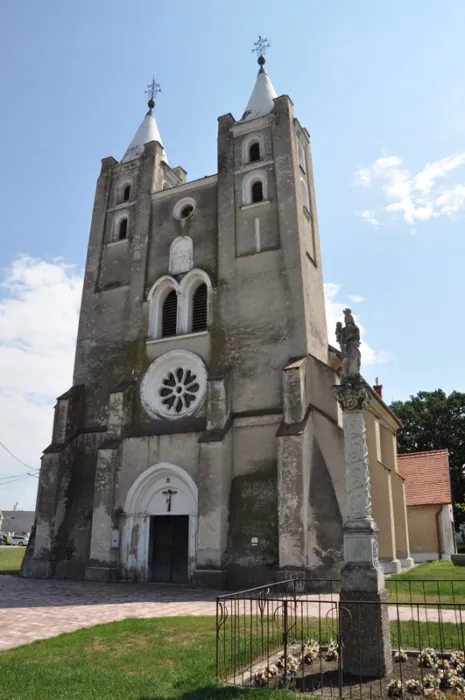
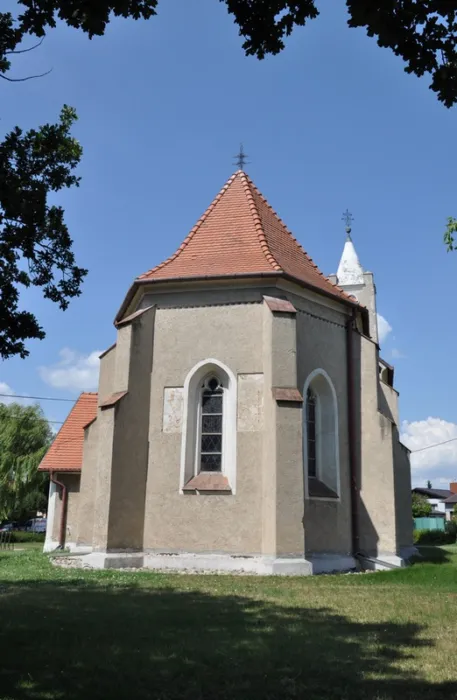
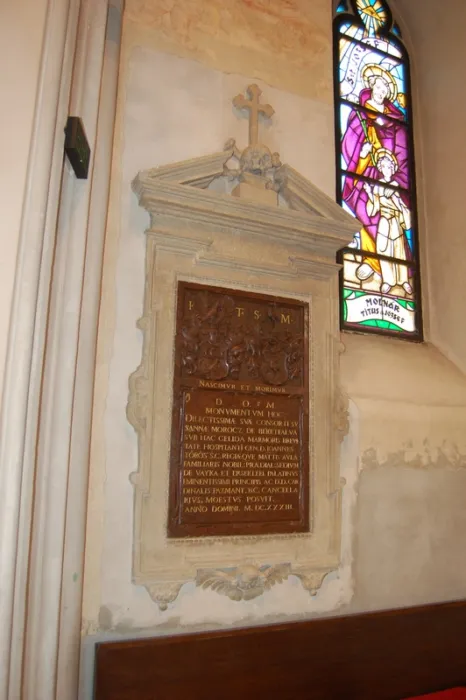
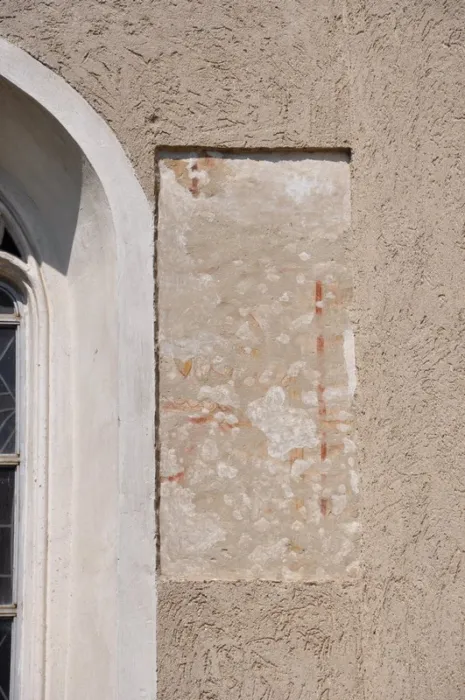
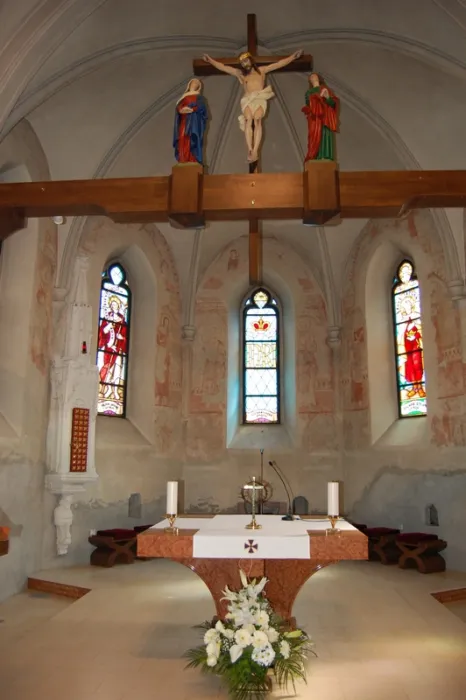
That Gelle is indeed an old church town is also indicated by its first name, “Egyház”, as we have already mentioned above. The existence of this church is first mentioned in a charter from 1253. According to this, the parish played a significant role not only in the life of the village, but also in its immediate surroundings. György Draskovics noted the following in 1634: “In those days, twenty serf villages went to the church.” We know of many parishioners in the history of the parish, but the best known is István Huszár, who wrote the history of the parish and was the parish priest in the village from 1877. ; ; The date of construction of the church itself is unknown, in the absence of a charter mention, we cannot say the exact date, unless we deduce its age based on the stylistic features. The current late Romanesque St. Peter and St. Paul Church was built in the first half of the 13th century. It should be noted that in today's churchyard, during the most recent renovation in 1992, but also earlier, several floor plan fragments were found, presumably dating from the era before the construction of the current church. This also suggests that a church had stood here before. ; ; It was already rebuilt in the Gothic style in the last third of the 14th century, and in the Renaissance style in the 17th century. It was renovated several more times over the centuries, twice in the 18th century, and then significantly in 1936-38, 1982-83, and 1992. ; ; The western facade ; ; The two-towered western main facade of the church bears all the characteristic elements of medieval architecture, both Romanesque and Gothic styles. The towers are square-based, in the last century they were still octagonal, but now they end in pyramid-shaped stone caps. On the corners of the towers, wall lines start from the Gothic spires at the bottom, and at the ends of the spires, square-shaped turrets can be seen. Under the cornice of the tower caps, there are semicircular arched openings on two floors, and below them a sawtooth frieze (the same toothed decoration can be found around the ceiling level of the sanctuary). Both are signs of Romanesque architecture, as are the small round window and the semicircular blind window on the facade wall connecting the two towers. ; ; However, during a late renovation, a very important Romanesque element of the facade disappeared, the arched cornice, which was still clearly visible in the drawing made by Arnold Ipolyi in the last century. ; ; However, the three architectural elements of the western facade are very interesting. The portal, the round window above it and the twin window above it are of Romanesque origin, but they also bear typical Gothic features. The linteled doorway is also Romanesque, but it is not a semicircular arched closure, but a pointed arch, which is typical of Gothic. The doorway is four columns deep, without any special decoration, just like the arch field. The window above the doorway is even more interesting. This was originally a round window typical of the late Romanesque style, with stone ribs running in a radiating pattern towards the center. The Romanesque twin window was transformed into a Gothic rosette, a rose window, in the 14th century, as indicated by the lobed edge of the window. The Romanesque twin window above the rosette also underwent a Gothic transformation, as it became a pointed arch, and its pillars are without any special decoration. The western two-tower facade therefore shows the features of the Romanesque and Gothic styles together in beautiful harmony, which makes it truly unique. ; ; The church interior ; ; The side walls of the nave of the church and the walls of the sanctuary date from the time of the church's construction, i.e. from the 1200s. Today, however, later Gothic buttresses support the walls from the outside, in which Gothic pointed arched windows can also be seen. Three pieces of evidence point to the Romanesque origin of the walls: the aforementioned dentil decoration of the sanctuary at the level of the shoulder line, the remains of the Romanesque southern side entrance, which marks a semicircular arch, on which the buttress was later built, and the external fresco on the northern side of the sanctuary. This fresco is a special feature of the church: the external mural depicts the patron saints of the church, the apostles Peter and Paul. The mural is also broken here by the later Gothic window and the later added buttress. ; ; The sanctuary faces east, ending with five sides of the octagon. It is possible that an earlier groined sanctuary was octagonalized in Gothic form, and this is also preserved in the windows, which show a so-called complex-arch Gothic form. The sanctuary is covered by a ribbed cross vault, the ribbed vault of the nave was demolished and covered with a Renaissance cross vault in the 17th century. The remains of the shoulder stones of the ribbed vault could still be seen in the 19th century. The so-called triumphal arch separating the sanctuary from the nave shows a pure Gothic pointed arch form. ; ; The Gothic ribbing of the apse closing the sanctuary is interesting in that four of the ribs that run regularly from the keystone to the capital of the column end on the side wall of the apse, as if broken off. The apse is separated from the nave side of the sanctuary by a pointed arch, the ridge of which runs to the floor of the sanctuary. The sanctuary is interesting for its columned, double semicircular seating area, which was built into the original 13th-century side wall of the sanctuary, because after it was walled up, the ridge of the pointed arch created during the Gothic transformation was exposed. On the south side of the sanctuary, a late-barred window can be seen, which was walled up from the outside because of the sacristy added here. The nature of this window is different from that of the other early Gothic windows of the sanctuary. ; ; Similarly, one of the most beautiful architectural elements of the sanctuary is the sanctuary, or the pastophorium, which is very rare in the Carpathian Basin. The sanctuary actually imitates a Gothic-style tower and was carved from sandstone. It rests on a guardian stone at the bottom, which shows the bust of a crowned king. The sanctuary, equipped with a lattice, stands on this, with semi-columns at its corners. Above it, the facade is a masterpiece, in the field of which, like in Gothic windows, a three-leaf clover ornament can be seen, with small pediments on the sides, which end with a cross, also imitating Gothic turrets. The floor above the pediment resembles triple-leaf arched windows, above which there is an octagonal turret, and finally the entire structure is closed by a widening cross. Although some of the decorations of the sanctuary are damaged, it is still one of the most beautiful masterpieces of the Gothic style in this genre far and wide. Its form analysis allows us to conclude that its creators were in direct contact with the builders of the Poor Clares and Franciscans church tower in Poznan. ; ; The frescoes are among the newly discovered treasures of the sanctuary. A full art historical analysis and restoration of the frescoes is still awaited, but it is already certain that they were made after the 14th century. The complex, multi-faceted rows of images depict the apostles with their various attributes at the bottom, and biblical scenes are visible above: on the north side the Annunciation and the Flight into Egypt, on the south side the Last Supper and the Last Judgment. ; ; On the north side wall of the sanctuary, a tomb can be seen, made of red marble from Süttő, and commemorating a member of the Mórocz family (the family was also patrons of the church). The marble main panel has an inscription in Latin, which in Hungarian reads: "We are born and we die. To God the Best, the Greatest. This monument was erected by the esteemed Mr. János Törös, butler to His Imperial and Royal Majesty, palatine of the See of the Priests of Vajka and Érseklél, chancellor of His Holiness Arch-Archbishop and Cardinal Péter Pázmány ... in mourning for his dear wife, Zsuzsanna Mórocz of Beketfalvi, who found temporary accommodation in this cool marble. In the year of the Lord 1633." The Törös family coat of arms can be seen on the tombstone.