
St. Maurice Roman Catholic Church
Building, structure
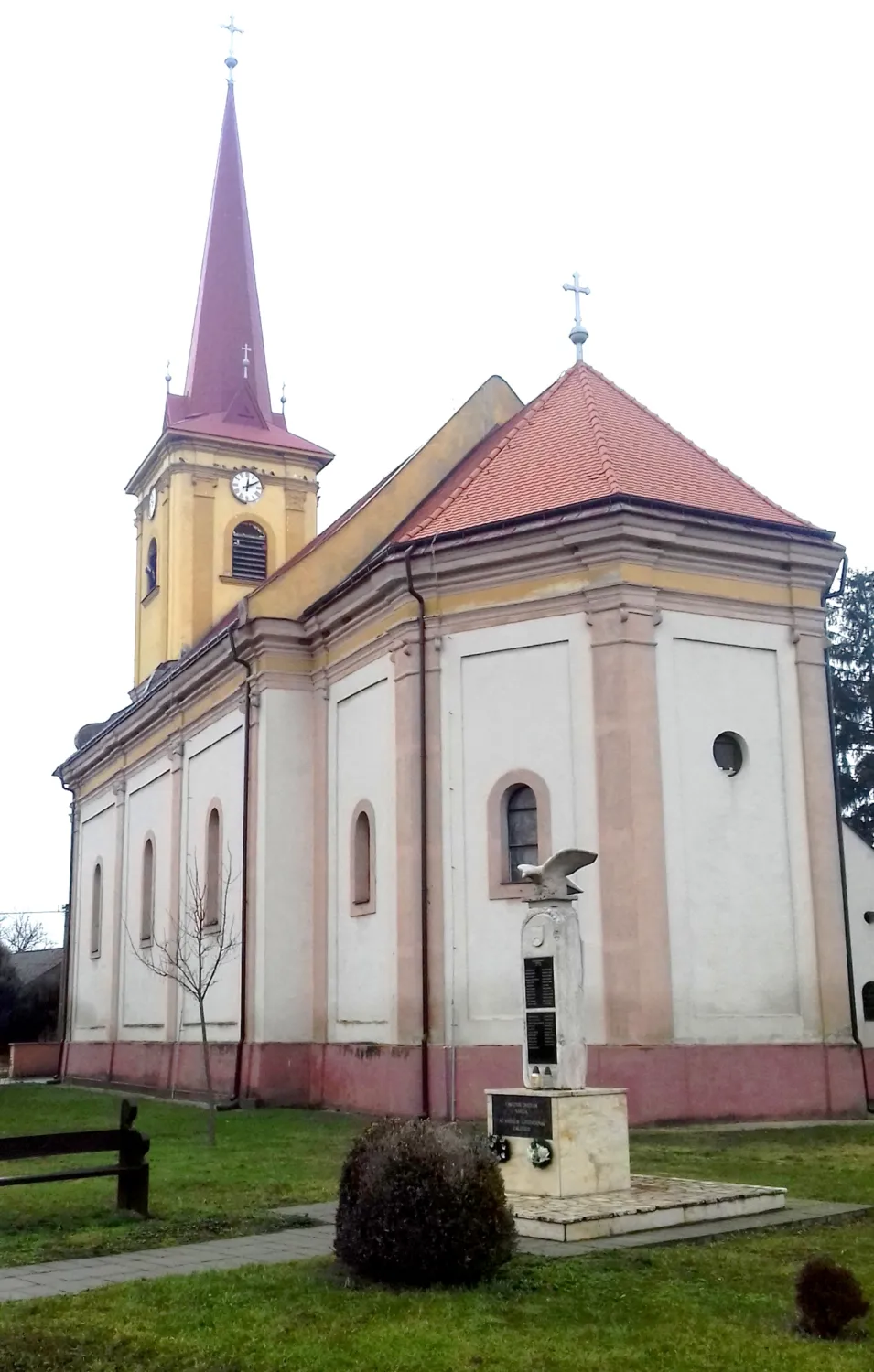
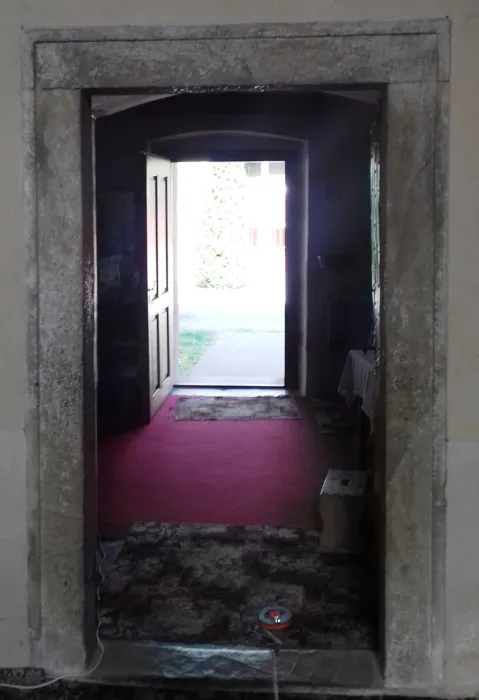
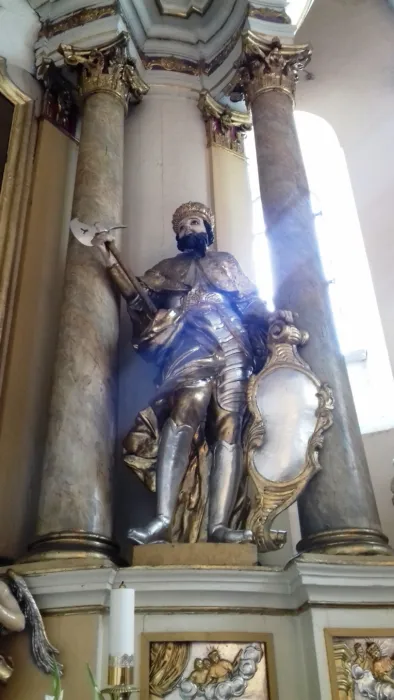
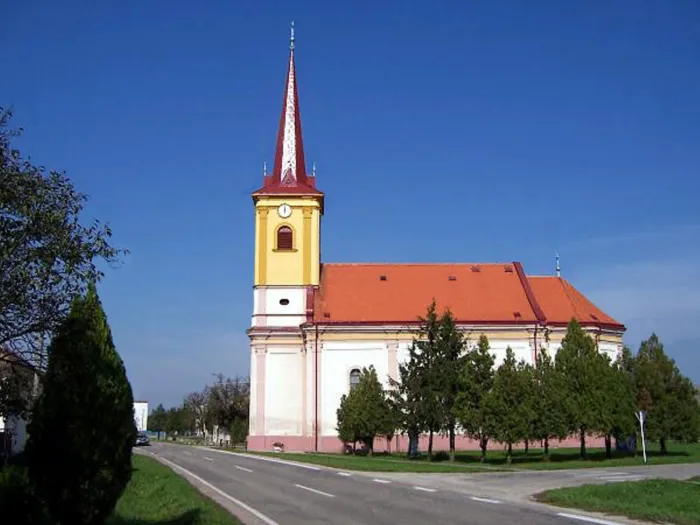
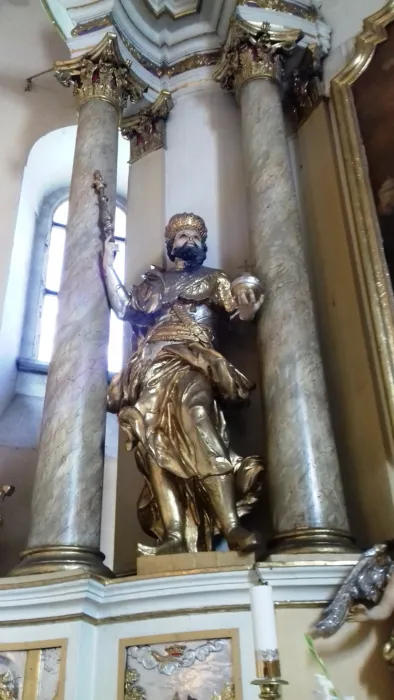
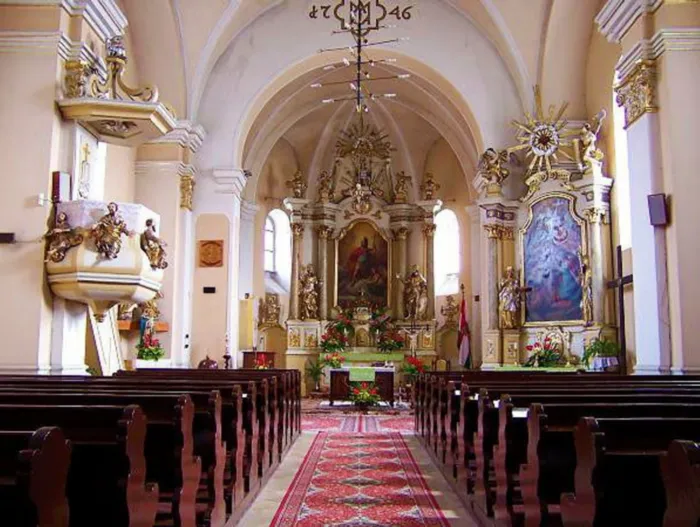
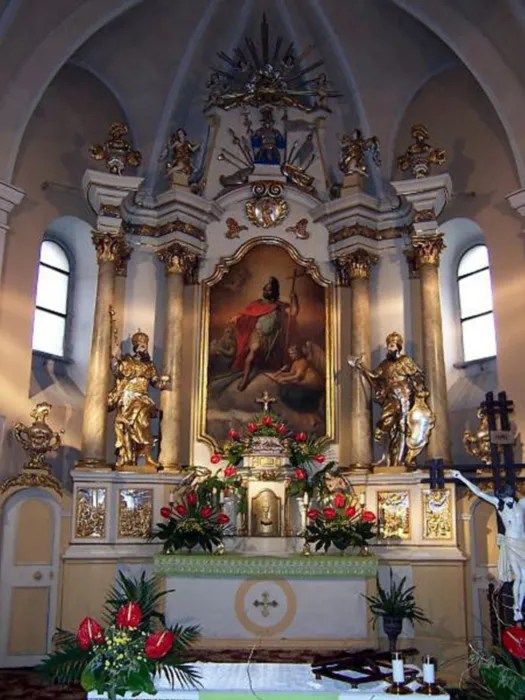
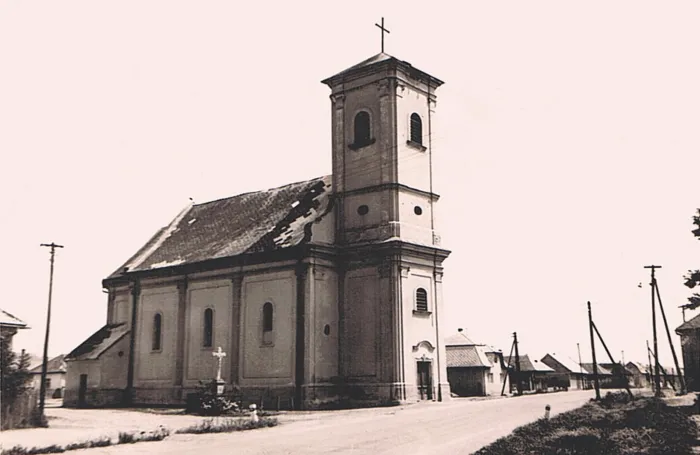
In place of the ancient St. Michael's Church, the Esztergom chapter had a completely new church built in 1742–46, using the old ruins. ; The then parish priest István Bezúr received the full support of the Esztergom chapter for the construction. The new church, with its Baroque style and vaulted design, was consecrated by titular bishop Mihály Frivaisz on May 24, 1748, in honor of the martyr St. Maurice. Mauritius I, commander of the Theban Legion, is a very rare patron saint of churches in our region. At the top of the arch closing the sanctuary, the year 1746 can be seen with the inscription "MARIA". ; After passing through the main entrance of the church, we arrive at the vestibule that supports the load of the 32 m high tower. From here, we enter the nave of the church through a double-winged door. On both sides of the door, there is a holy water tank made of red marble from Tardos, with the inscription “Made by Ágnes Dávid 1917” on the left. ; A spiral staircase leads to the choir, built of stone. The choir itself rests on two massive pillars, which divide it into three arched sections from below. Here you can see the beautiful 11-register organ, the date of its manufacture on the cabinet of which is 1818. ; The confessionals on both sides are decorated with wood carvings. The floor of the church is paved with square stones. The five pairs of semicircular windows were originally made of colored glass. A geometrically accurate round window can be seen in the middle of the apse. The walls next to the benches are decorated with seven wooden Stations of the Cross. The pulpit from the end of the 18th century with its rustic statues of the four evangelists is very noteworthy. The classicist red marble baptismal font dates from the first half of the 19th century. The late Baroque right-side altar of St. John of Nepomuk, with its columned structure, also deserves attention. On one side of the altar is the 18th-century statue of St. John of Nepomuk himself, and on the other side is the 18th-century statue of Abbot St. Nicholas. Next to it is the missionary cross, which contains the years of the missionary prayer days held in Kőhidgyarmat: 1897, 1907, 1918, 1938, 1996. ; Entering the sanctuary, on the left wall hangs the oil painting depicting the Holy Family that decorated the former side altar. On the right wall is a commemorative plaque announcing the 1100th anniversary of the conquest. The most impressive part of the church is the late Baroque style, columned main altar, the central part of which is occupied by the image of the patron saint of the church, St. Maurice, a Roman general dressed in full battle regalia. On two sides, large statues of Hungarian saints, namely St. Stephen and St. Ladislaus, guard the peace. The ornate cassettes depicting battle scenes on the base of the main altar are very valuable. ; The three altarpieces were created by no less an artist than Károly Jakobey, a famous painter of his time: the image of the martyr St. Maurice was placed on the main altar, the Holy Family on one of the side altars, and St. John of Nepomuk listening to the queen's confession on the other side altar. Under the contract, the painter undertook to paint the pictures in the appropriate size, applied to the existing frames, on the best canvas, with the best and most durable paint, with a guarantee of fifteen years, in such a way that they would withstand the criticism of the chosen art experts. If the pictures required repairs during the course of fifteen years, he would perform them free of charge, either on site or in his own studio, according to the parish priest's wishes, without demanding any travel or transportation costs. ; The contract for the production of the pictures was signed on October 6, 1873 - on the one hand by the artist, on the other hand by the Esztergom Grand Chapter and Ákos Marczell, the parish priest of Kőhidgyarmat. Under the contract, the artist undertook another important obligation, namely "to produce the pictures by Marczius 1, 1874, at the latest, and to transport them to their destination." The works have stood the test of time, far exceeding the fifteen-year warranty that Jakobey undertook, and they still adorn the ancient walls of the Kőhidgyarmat church, in impeccable condition. ; Its vaulted sacristy has survived from even earlier times. The building, which has much deeper foundations, predates the rest of the church by a few centuries. The St. Móric Roman Catholic Church in Kőhidgyarmat was added to the list of the monument protection office in 1971.