
St. Ladislaus Piarist Monastery, Church and Gymnasium
Building, structure
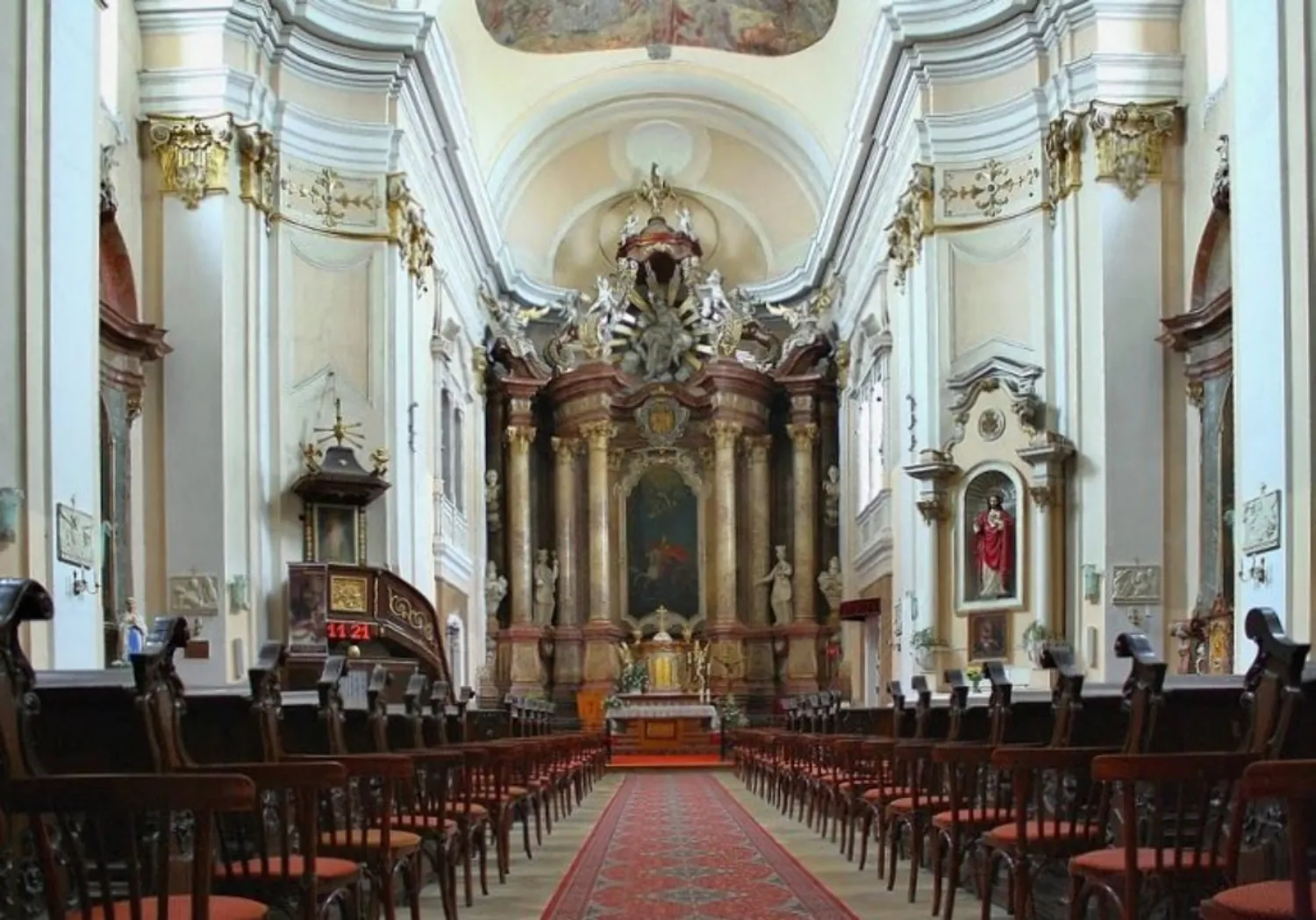
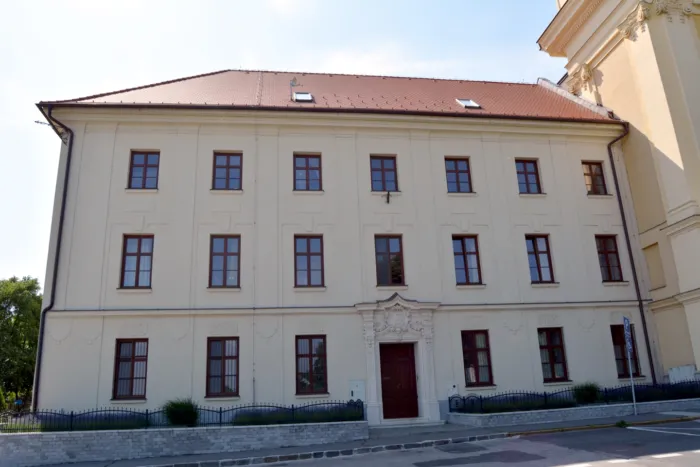
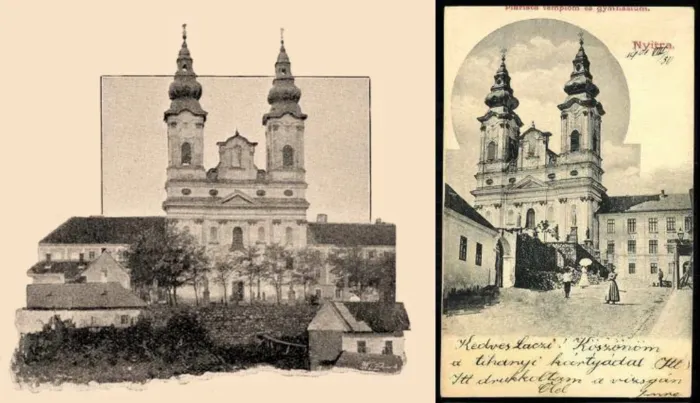
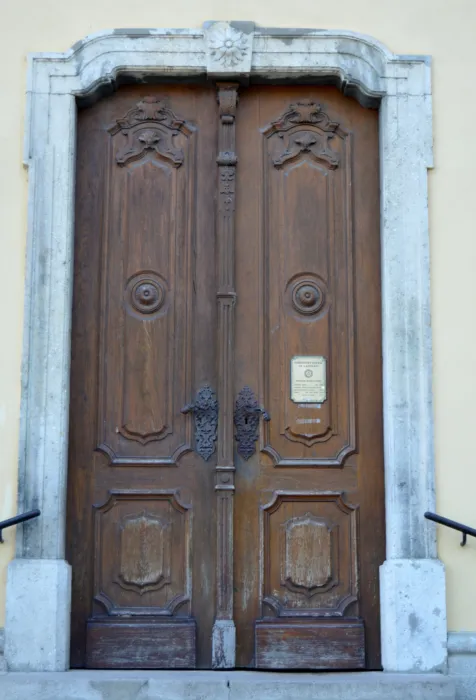
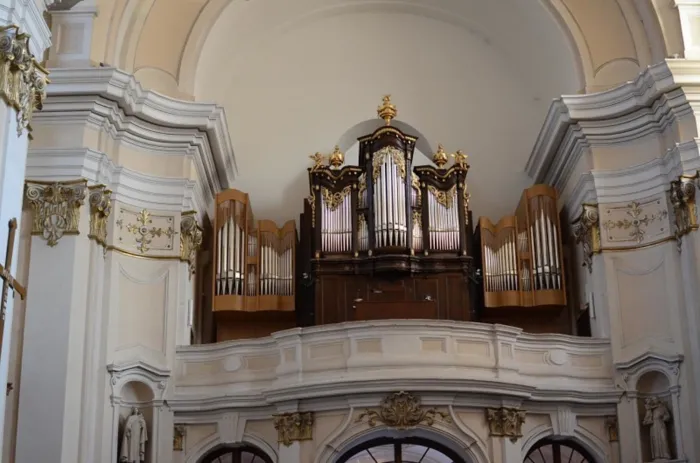
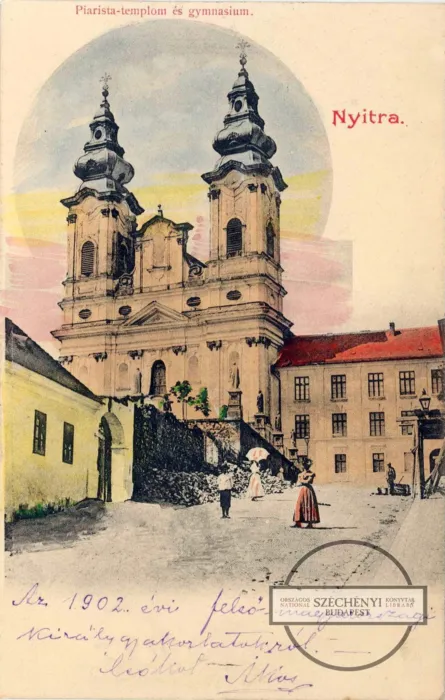
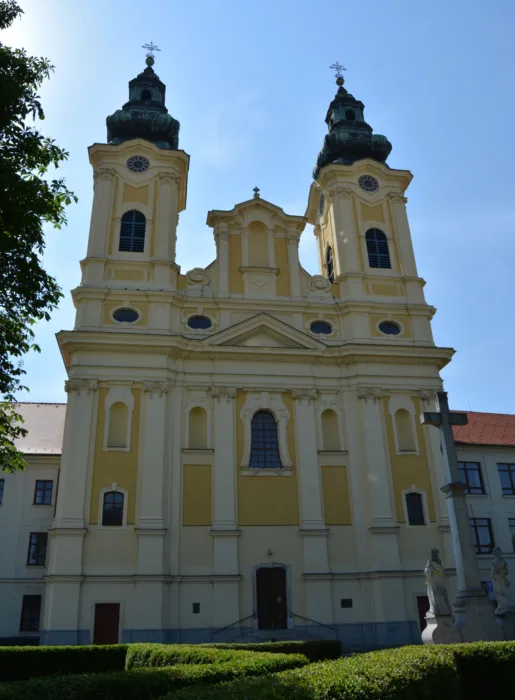
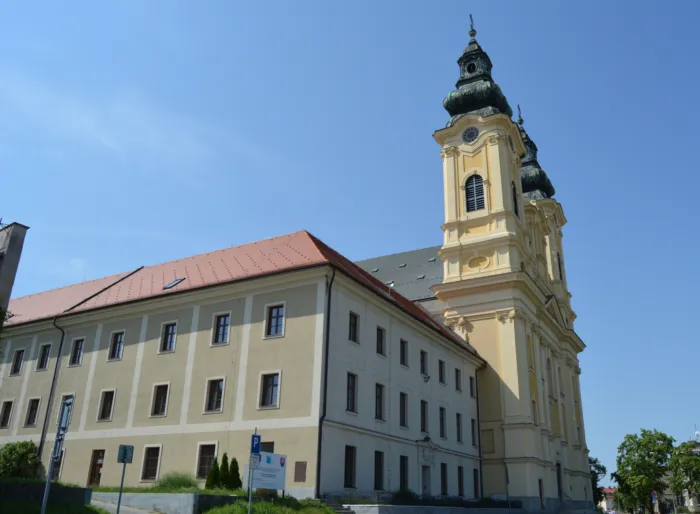
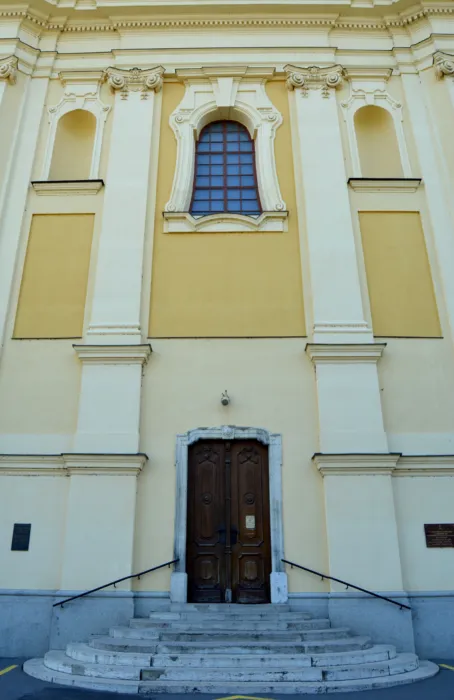
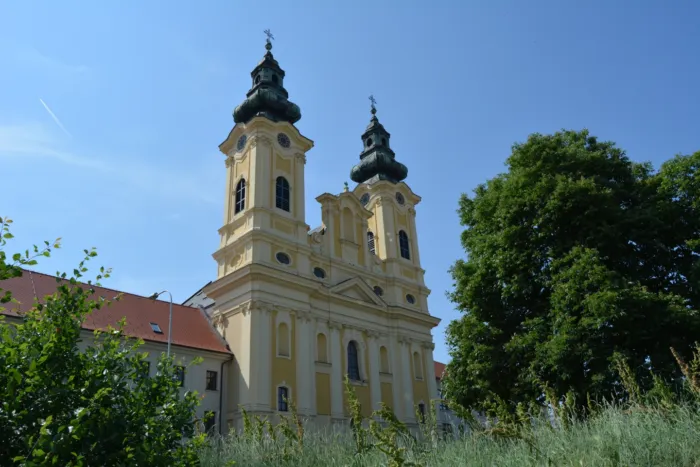
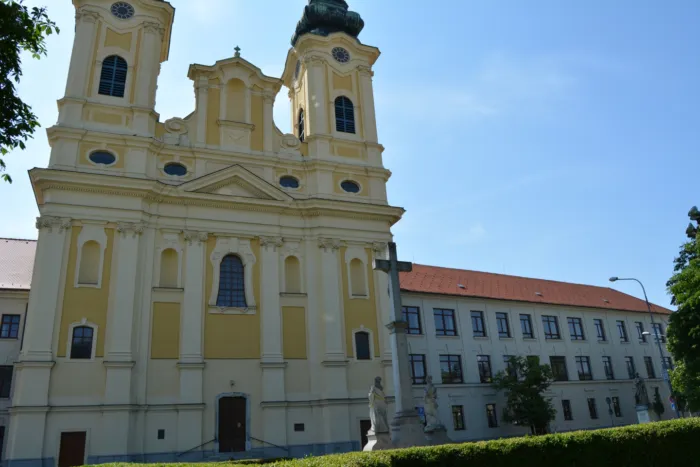
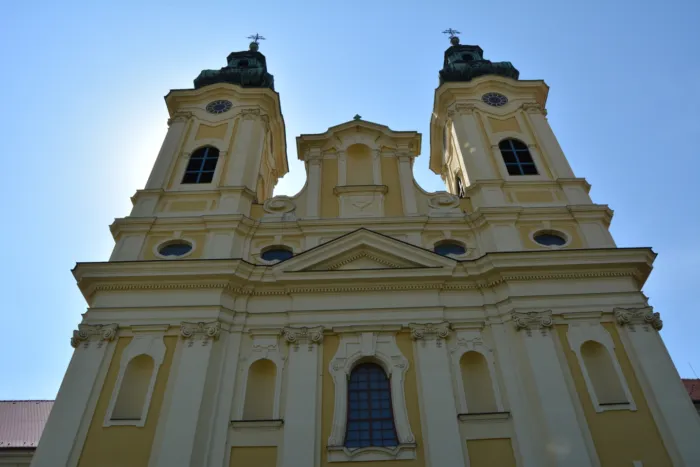
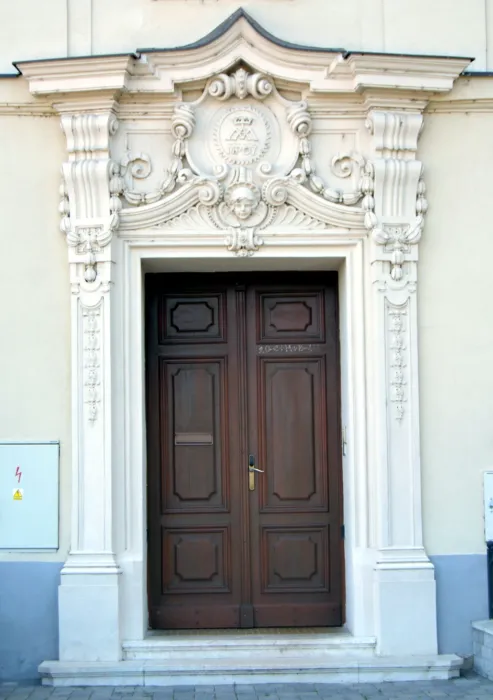
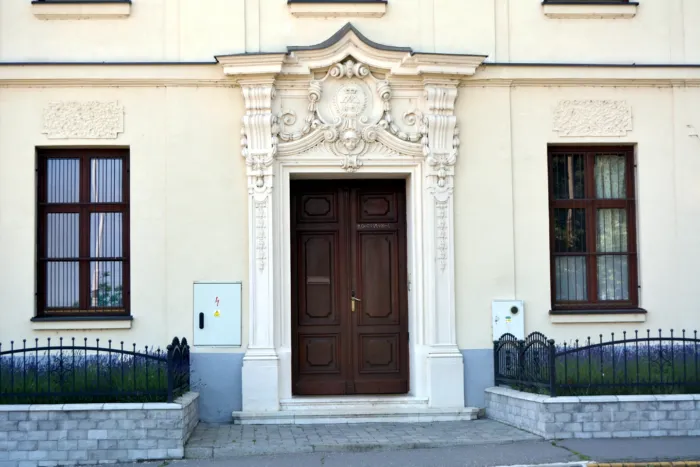
The monastery complex, consisting of a church, a college and a gymnasium, was built in several stages. The foundation stone of the complex was laid on June 9, 1701, during the time of Bishop László Mattyasovszky. In the first stage, the chapel of the left wing of the monastery was built, followed by the school in the right wing. As the number of monks increased, the chapel proved to be too small, so the first church was built between the two wings. When enough money was available for rector Adolf Nemcsényi, he had the church demolished and in 1742 he began the construction of the two-towered church that can still be seen today. In 1759, the entire building complex burned down. Since sufficient financial resources were available, its repair and expansion began immediately. The church was consecrated by Bishop Ferenc Fuchs of Nitra in 1789. ; ; The building complex dominates the skyline of the Lower Town. The part of the building complex serving as a Piarist monastery, designed for monks, was built in 1701-1702. The monastery is two-storey, partly with a basement. The building can be approached from the main square through two main and two side entrances. Its wings enclose an inner courtyard. The early Baroque St. Ladislaus Church is located in the middle of the monastery. The facade of the church is flanked by 2 monumental side towers with sky-high copper helmets. The southern tower is equipped with three new bells from 1928, but the oldest bell dates from 1429. ; The Piarist Gymnasium in Nitra (Szent László Király Gimnázium) operated from 1698 to 1919. It was maintained by the Piarist order, but the Nitra bishopric, the Education Fund and the city of Nitra also contributed to its maintenance. Since 1992, it has been operating as a church grammar school again in order to maintain the Slovak province of the Piarist order. ; The Piarists began teaching in Nitra in 1698 in the house of the Esztergom chapter there. At first, they lived only on alms, and then in 1699 they acquired land from Captain Márton Lehoczy and a mass foundation from Colonel János Bottyán. Finally, in 1701, Bishop László Mattyasovszky made a larger foundation for them, so that from that year onwards the higher classes could be opened one after the other, grammar and syntax from 1701, arithmetic from 1702, poetics from 1706 and rhetoric from 1707. A school theatre was built in 1721. In accordance with the changing state curriculum regulations, it became a five-grade gymnasium from 1777, six-grade from 1806, and eight-grade from 1850. In 1844, the language of instruction remained Latin, with Hungarian and Slovak as auxiliary languages. The first high school leaving exam was held in 1853. From 1861, the language of instruction was Hungarian and Slovak, and from 1868 Hungarian became the language of instruction, with Slovak as the auxiliary language. ; Until 1864, it had only Piarist teachers, from then on, in addition to seven Piarist teachers, six priests from the Nitra diocese also taught, but the Piarist leadership of the school remained until 1919. ; The number of students was 753 in 1741, around 1000 in 1774, 383 in 1862, 395 (19) in 1880, 492 (25) in 1900, and 460 (38) in 1910. The lowest point in terms of the number of students was in 1704, the end of the 1780s, and 1851-1853, when there were only around 200 students. In 1899, the gymnasium moved to a new building and then took on the name of St. László Király Gymnasium. In the 1918/1919 school year, the institution educated 484 students and had a boarding house for 21 people. ; Nitra was occupied by Czechoslovak troops on December 6, 1918, and teaching was suspended due to a lack of coal. From the beginning of 1919, the Slovak language was taught as a regular subject in the gymnasium, but the school year had to be completed without exams on April 30. The last oral exam in Hungarian was held in May. On September 12, 1919, the institution was declared a Czechoslovak high school, and the Piarist monastery was also expropriated. The fathers born in the Highlands were sent to Podolin, the others were expelled. The dormitory was seized on September 15. ; The high school had, among other things, a rich library, a collection of medals, antiquities and natural sciences. ; In 1992, the Slovak Piarists received back the monastery and school building from the state, and in the latter they started a Slovak-language high school. ; ; Notable teachers and students: ; Ede Bulla / Imre Holló / 1706-1714 Béla Tagányi / 1733 Elek Cörver / 1735 Mihály Horváth / 1735 Zsigmond Orosz (1717-1782) was the provincial head of the order. / 1738 László Deményi / 1741 Adolf Nemcsényi / 1749 Norbert Conradi / 1776-1782 László Bielek / 1800-1817 Lipót Kelle / 1810 Antal Diénes / 1852-1863 Ede Kapronczay, head of the house and high school principal-teacher. / 1860 József Chorényi / 1862-1863 and 1865–1867 Pongrác Varsányi / Mihály Imre Csősz taught here between 1865–1886. / József Vágner taught here in 1861 and 1879. / Sándor Takáts ; ; Among others, they studied here: ; ; Gyula Agárdy, Piarist, cartoonist / Antal Andrássy, Bishop of Rozsnyó / Antal Bajtay, Piarist, Bishop of Transylvania / Béla Bangha, Jesuit / Béla Bartakovics, Archbishop of Eger / György Bartal, Minister of Trade / Imre Bossányi, doctor / Elek Cörver, Piarist, naturalist / János Cörver, Piarist / Gergely Czuczor, Benedictine monk, poet / György Császka, Bishop of Spiš / Dezső Laczkó, geologist, paleontologist, Piarist teacher, head of house, high school principal / Adolf Ferenc Láng, naturalist / Károly Lyka, Hungarian art historian, critic, painter / Lőrinc Marczibányi, Archpriest / Ede Mihalovics, theology teacher / József Chrenóczy-Nagy, doctor / László Ocskay / Rezső Ocskay, Archpriest / Ince Dezericzky, Piarist, historian, theologian / Imre Erdősi, Piarist, military chaplain / József Ernyey, pharmacist, museum director / János Feketeházy, bridge construction engineer / Timót Frideczky, lord of Nyitra County / Antal Grassalkovich / József Höllrigl, archaeologist, art historian / László Kámánházy, bishop of Vác / József Kelecsényi, archaeologist / Károly Kelecsényi, entomologist / István Kiss, doctor of law, teacher of law lyceum / György Klimó, bishop of Pécs / Károly Kossovich / Pál Kubicza, lord of Trenčín County / Márton Padányi, bishop of Veszprém. / József Podhradczky, court chamber accountant, full member of the Hungarian Academy of Sciences. / Ottokár Prohászka, bishop of Székesfehérvár / Vilmos Rappensberger, principal of the high school. / Gyula Riszner, parish priest of Nyitrazsámbokrét. / Cardinal Sándor Rudnay, Archbishop of Esztergom / József Samassa, Archbishop of Eger / Konstantin Schuszter, Bishop of Košice / Glicér Spányik, Piarist, Chairman of the Study Committee of the Provincial Council / József Szinnyei, bibliographer / Jozef Tiso (József Tisza), President of the First Slovak Republic / Sándor Takáts, Piarist teacher, cultural historian / Gergely Tapolcsányi, Piarist provincial superior / Vilmos Tóth, Minister of the Interior / Gábor Szerdahelyi, Bishop of Bisztergom / Nándor Várkonyi (1896–1975) writer, cultural historian / Antal Véber (1855-1902) Piarist headmaster, high school principal. / Lajos Véneny (1888-1975) plant breeder