
Remains of St. James' Chapel
Building, structure
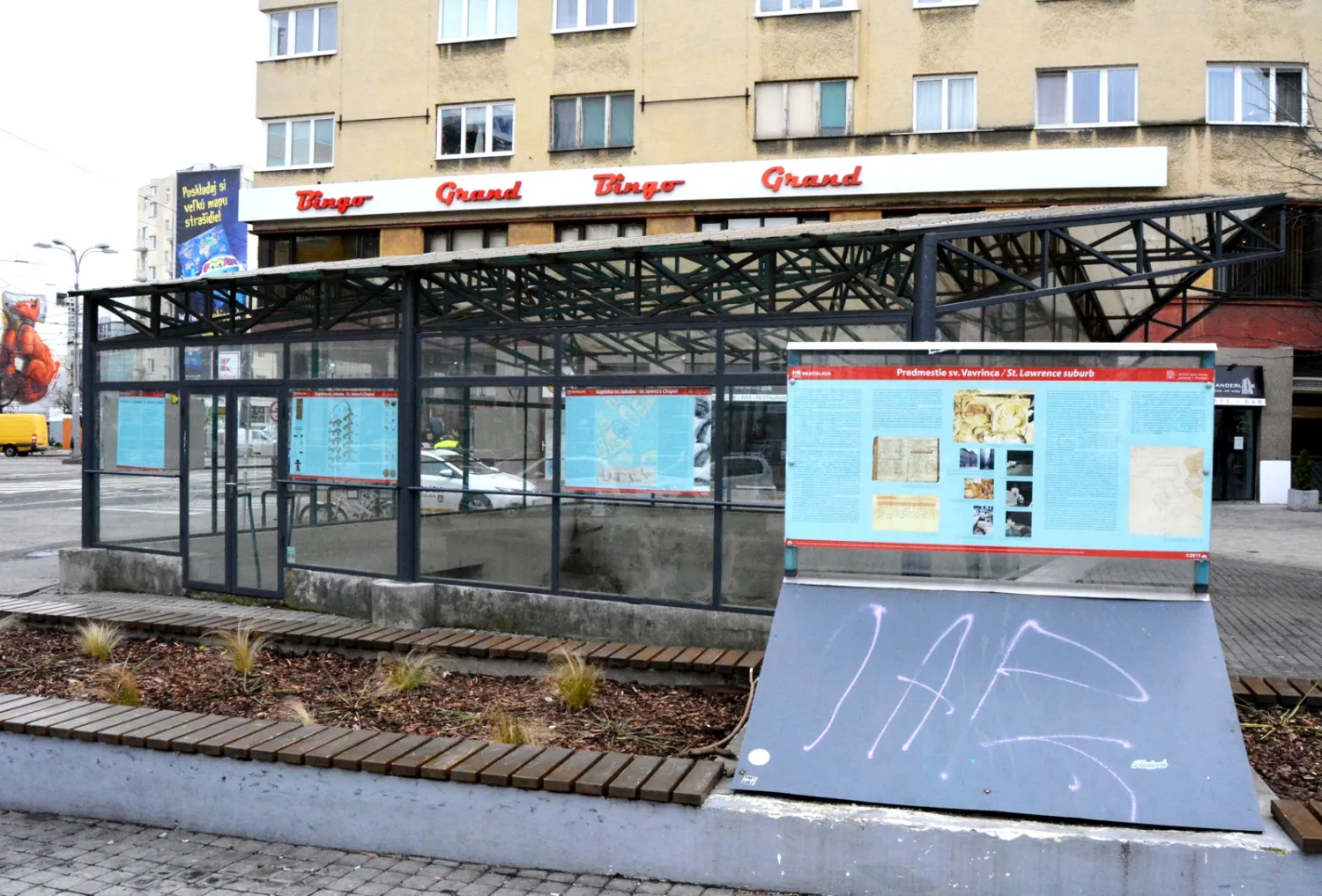
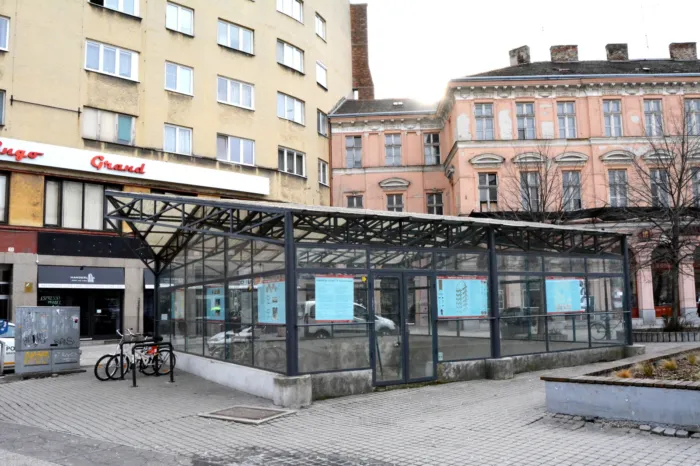
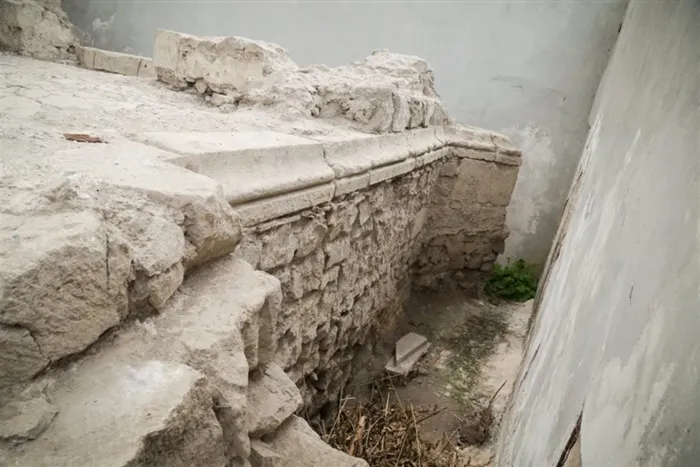
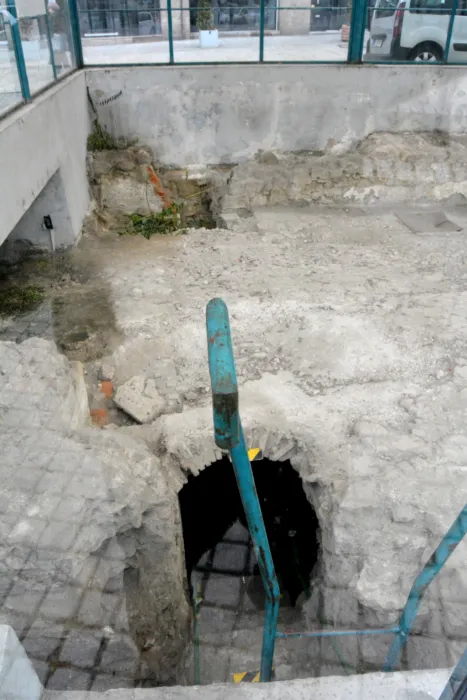
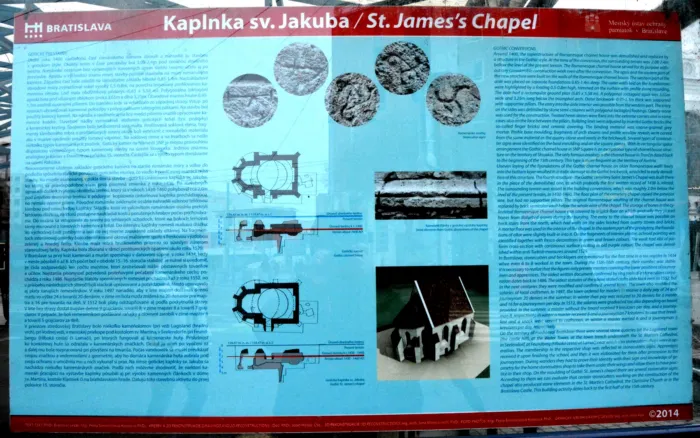
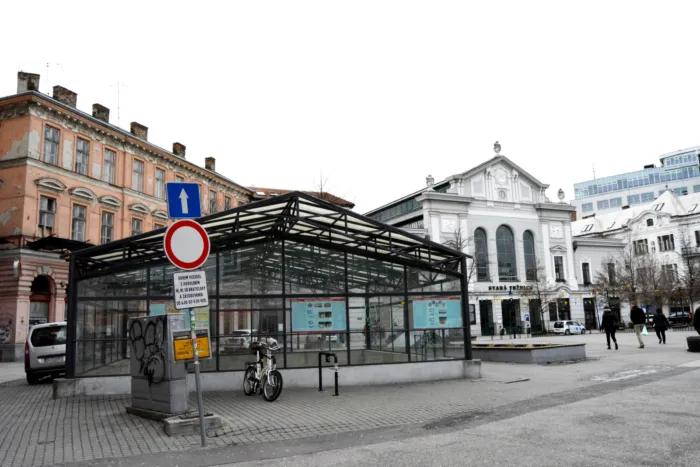
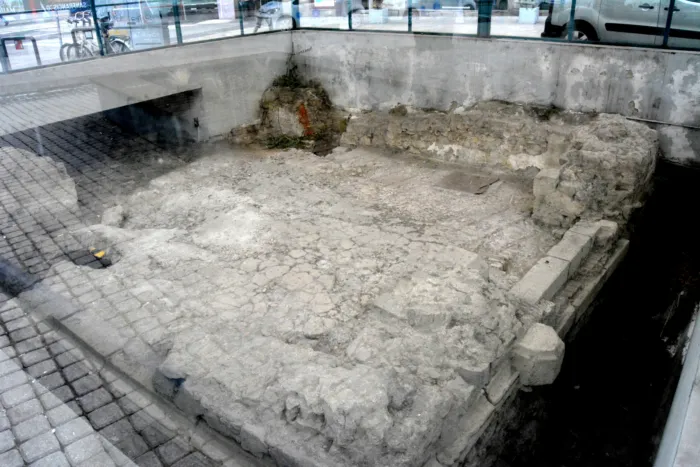
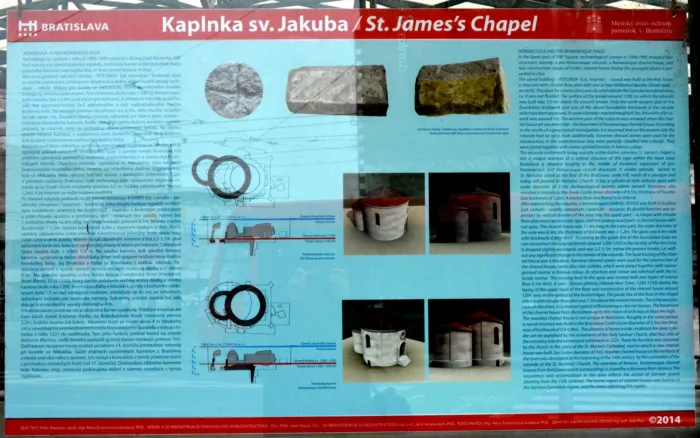
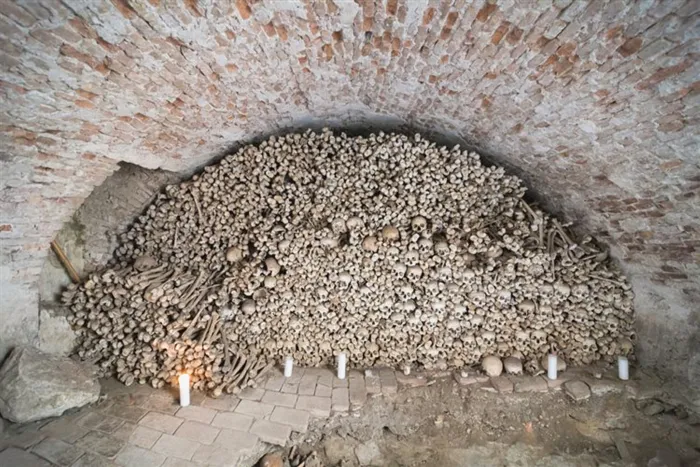
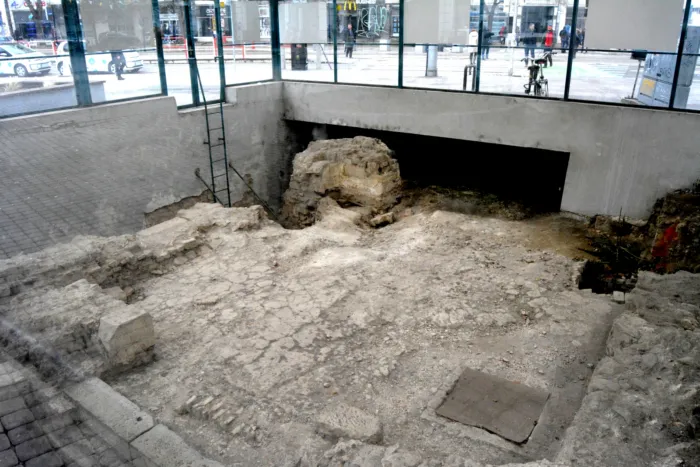
The remains of the former first parish church of the village of St. Lawrence, a satellite settlement in the northeast of Bratislava in the Middle Ages, were discovered in 1994 during the implementation of an electrical project. Archaeological research conducted here was able to distinguish four construction periods of the church, and about 200 medieval graves were also discovered in the surrounding areas. ; The very first phase, dating back to around 1100, was a circular parish church built of ashlar stones with a semicircular sanctuary. In the 13th century, when a large new parish church with three naves dedicated to St. Lawrence was built a few meters north of the circular church, the old building was given the function of a cemetery chapel. Accordingly, a cellar was dug underneath, in which an ossuary was created. In the second half of the 14th century, a new, Gothic-style cemetery chapel was built on the same site, completely breaking with the original ground plan. This small chapel, reinforced with buttresses on all sides, with an east-facing axis, consisted of a rectangular nave and a polygonal sanctuary, its space covered by a Gothic vault. The cemetery functioned unchanged around it. The last, documentable architectural intervention took place in the modern era, when the crumbling walls were reinforced and the nave was re-vaulted. ; The small chapel was destroyed at the same time as the cemetery was closed in 1774. ; The remains of the excavated chapel can be seen in the eastern part of the square in front of the market building, peeking into a glass-and-metal protective building, on the windows of which we can find reconstruction drawings and descriptions in Slovak and English.