
St. Stephen King Parish Church
Building, structure
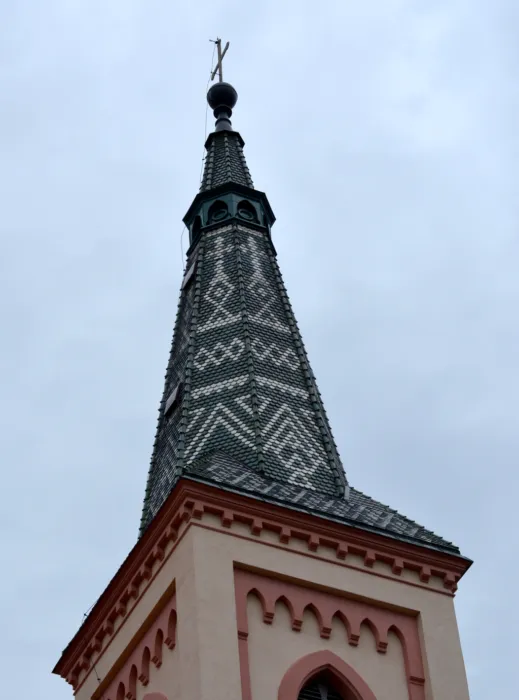
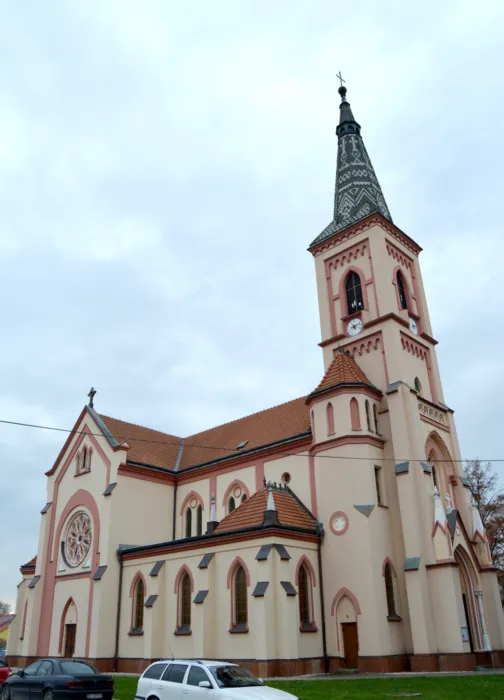
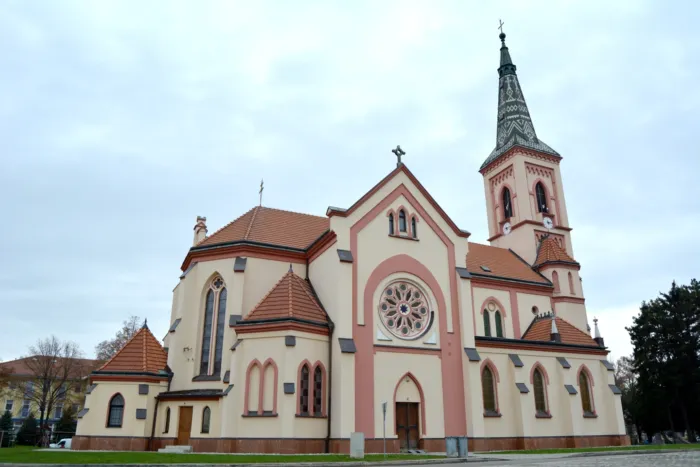
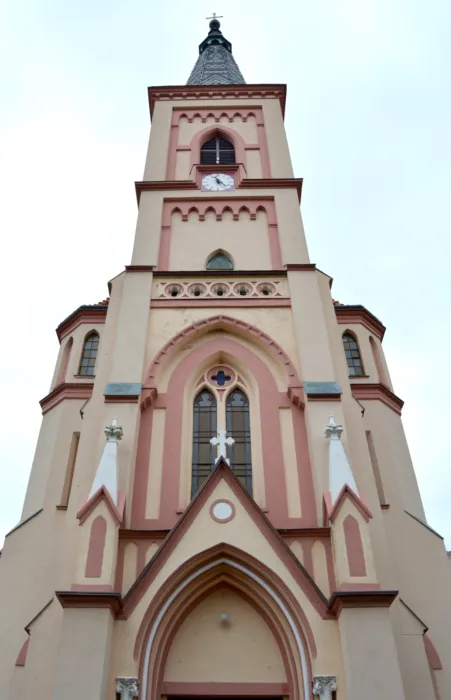
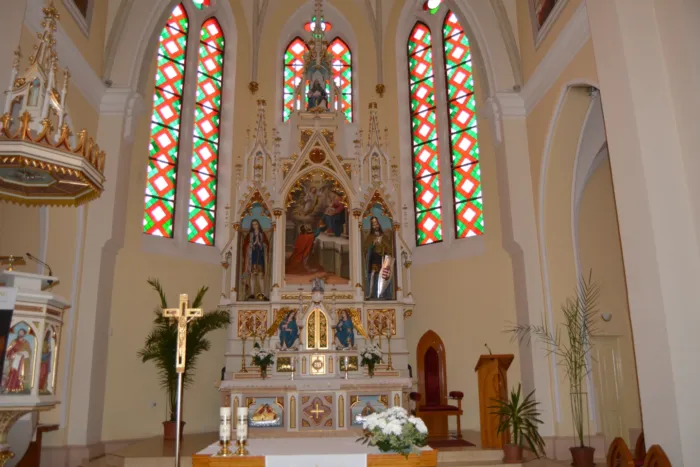
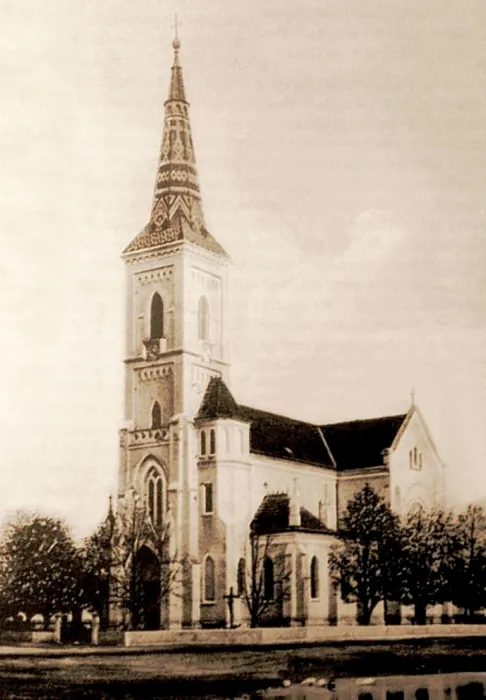
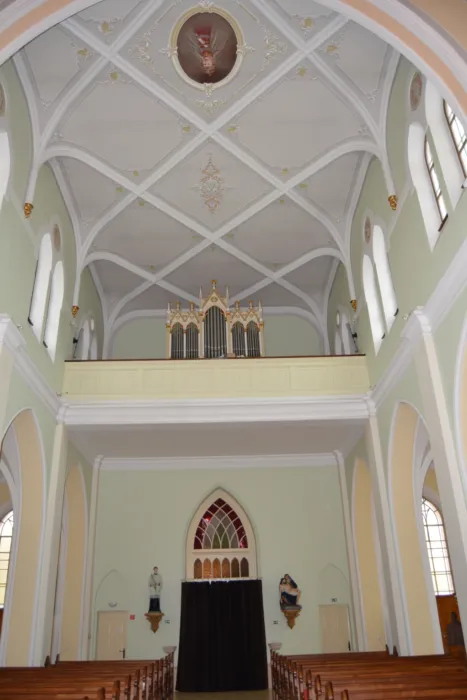
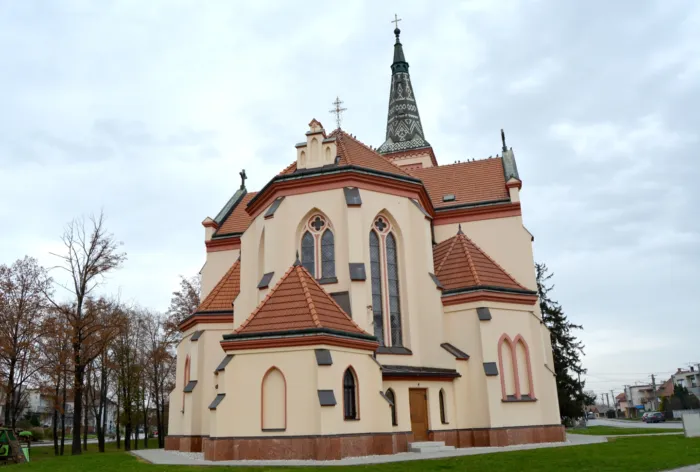
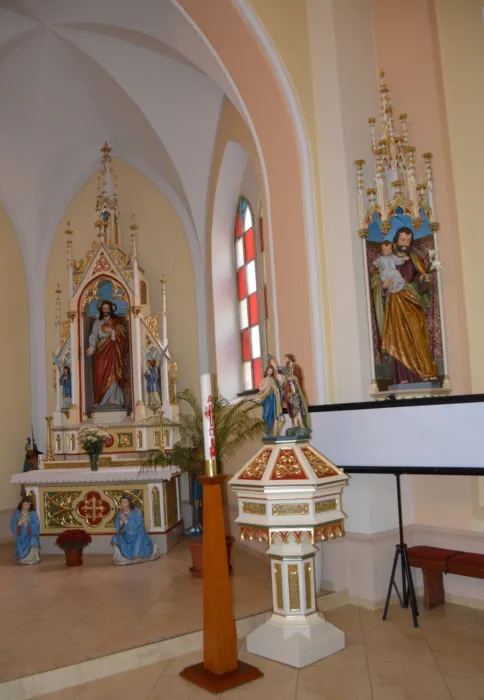
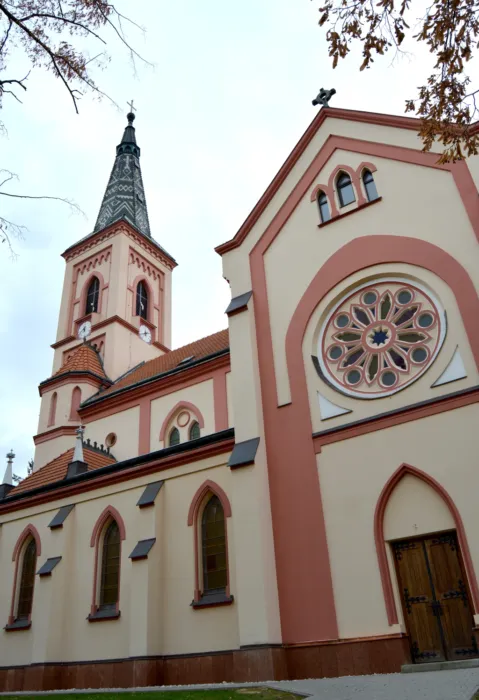
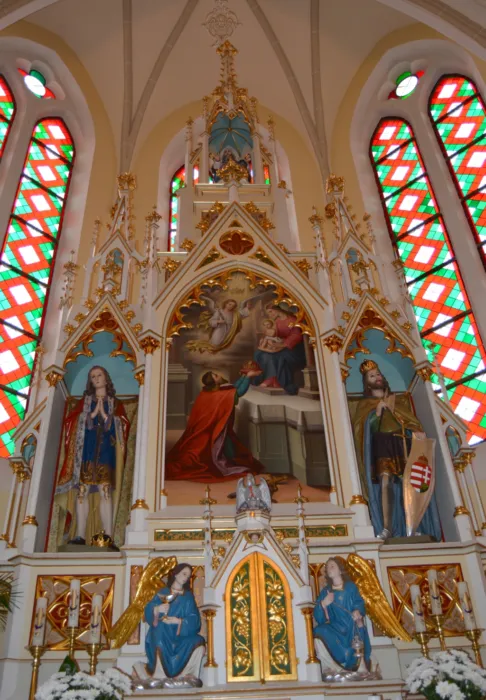
Due to the rapid development of the village, the church became too small in the second half of the 19th century. Therefore, the villagers, at the call of parish priest Károly Bernkopf, decided not to repair the old church, but to build a completely new one. ; A special church building committee was formed for this purpose, which met for the first time on March 2, 1902 at the parish priest's house. Its members were Alajos Kubányi, Mihály Kovács, Lajos Erdélyi, Lajos Gútai, Ferenc Győri, János Győri, Alajos Gáspár, András Győri, József Horváth, István Juhos, Ádám Juhos the elder, János Juhos, Gábor Bugár, Imre Bugár, Károly Petrovics, Ferenc Takács, Márton Gáspár, Kálmán Győry, Antal Bartalos, Ignácz Kürty, János Szőcs, Mihály Győry, György Kelemen, Pál Nagy and János Gútai. The secular chairman of the committee was József Horvatovich, and the recorder was Kálmán Bencze, a cantor teacher. József Schneider, an engineer from Vágsellye, was asked to prepare the plans, and on March 13, 1902, he personally listened to the committee's ideas about the future church. In order to reduce expenses, the village undertook to deliver the materials necessary for the construction. The committee set the maximum price of the plans to be prepared at 200 crowns. ; ; The engineer presented the first plan of the church in the village on April 2, 1902. To create the financial resources necessary for the construction, the church building committee adopted a resolution that the residents would pay 5 crowns for every Hungarian acre of land they owned. The amount of money obtained in this way amounted to 18 thousand crowns. In addition, a collection was started among the local residents. By October 1902, the archbishop's vicar's amendment proposals were obtained, based on which the originally planned iron columns were replaced by brick columns. By the autumn of 1902, the people of Nádszeg had already procured the bricks and sand for the construction, and by then they had already collected 30 thousand crowns. The cost of 8,100 crowns for the construction of the baptismal font and three altars was deducted from the original budget, this amount was donated by the better-off believers for this purpose. The construction of the church was planned for 1903, but obtaining the funds took more time. The Kittler and Gratzel company was first asked to carry out the construction, of course, the selection of the construction company was made after a public call. The Kittler and Gratzel company commissioned the architect Malatinszky to prepare the exact construction plan. This was to be prepared in such a way that the cost of the construction did not exceed 50 thousand crowns. Since the budget was much higher – 94 thousand crowns – the church building committee invited three architects from Bratislava County – József Hanzel from Szenc, János Tomaschek from Nyitra, and the manor architects from Bratislava – to evaluate the design. ; ; No precise data has survived about the architects’ opinions, but serious modifications were certainly made, since the memoirs indicate that the architect of the church was István Elefánty, an engineer from Bratislava. The construction was carried out by József Hanzel’s company. Despite the fact that the cost of the construction exceeded the original ideas, the construction of the church began in April 1903, after the old church was demolished. Only the dry bricks from the previous church were used in the construction of the new church. The Esterházy family also helped with the construction, they provided the lime necessary for the construction. The bricks were burned on site. Several problems arose during the construction. Due to the muddy soil, a strong foundation had to be built. This was solved by driving 4-meter-long, 40x40 cm thick oak piles under the concrete foundations. ; Oak beams were placed above these, laid crosswise in rows at a depth of 3 m, and concrete was placed above these, reinforced with iron beams. After the insulation, the masonry began in June. The work, which was proceeding at a good pace, was slowed down by the flood that broke on June 13, 1903. The work could only continue in the fall. The walls were completed by August 1904 - by then mass was already being held in the new church, otherwise masses were held in the school building during the construction period - and the external construction work was completed by the end of November. The cross was placed on the top of the tower on October 25, 1904. ; “A sea of people surrounded the new church... Briefly recalling the great misfortune that befell Nádszeg during the last summer, due to the flood, he praised that although this serious flood threat, which flooded the entire village and shook the foundations of every building and dwelling, we must happily acknowledge that it was not able to touch the truly strong faith of the pious believers of this noble village. Now, despite the terrible blow, rather denying themselves everything, they worked with the greatest enthusiasm on the construction of the church.” ; (From the printed booklet of István Huszár, the then parish priest of Királyrév, about the baptism ceremony.)