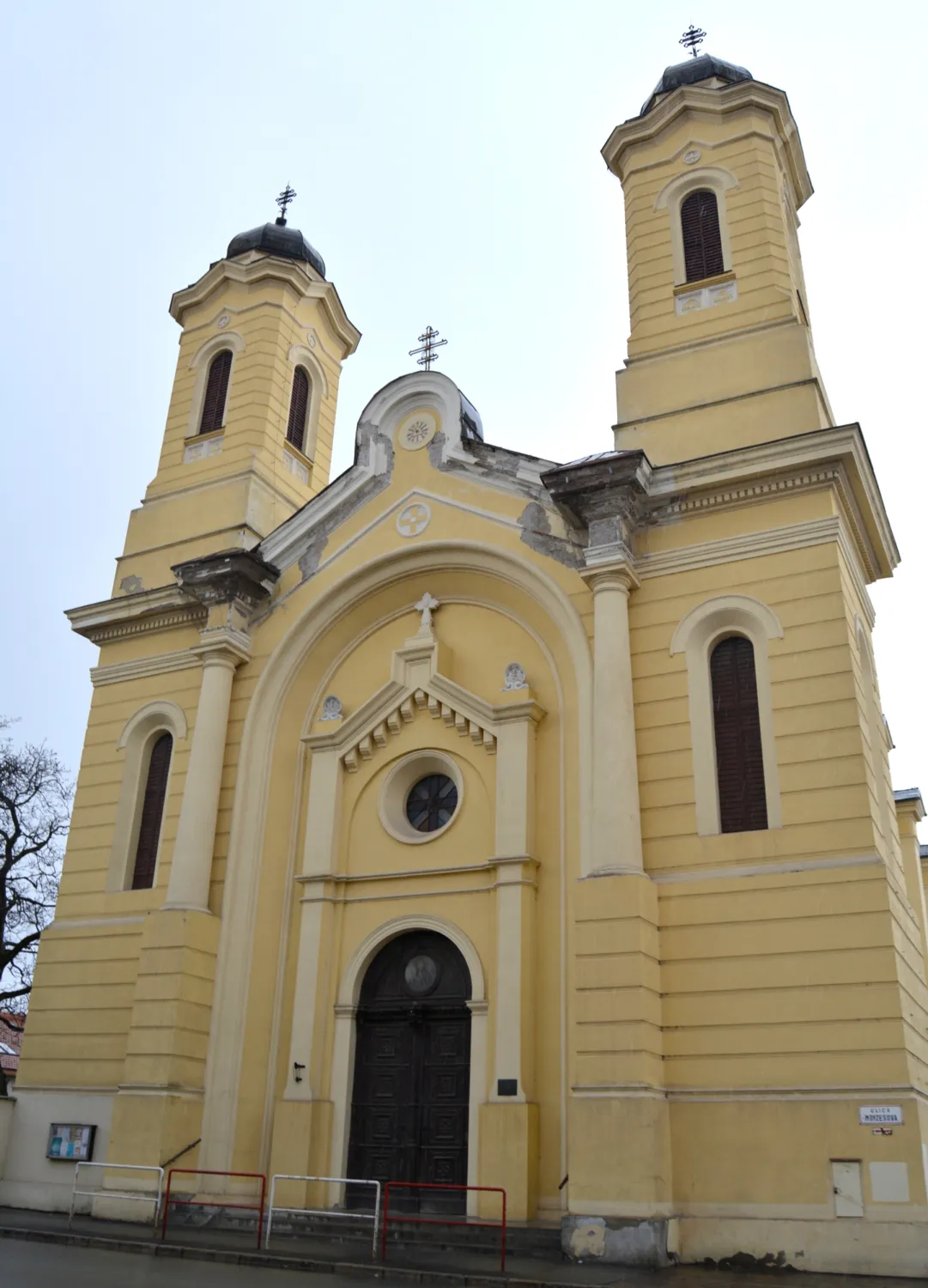
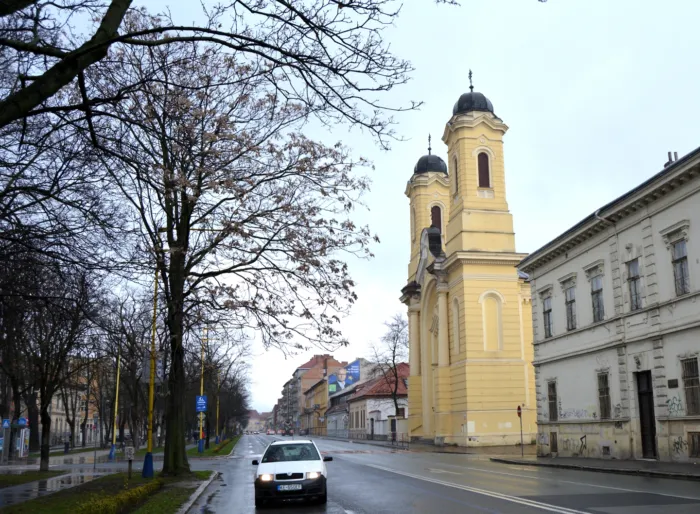
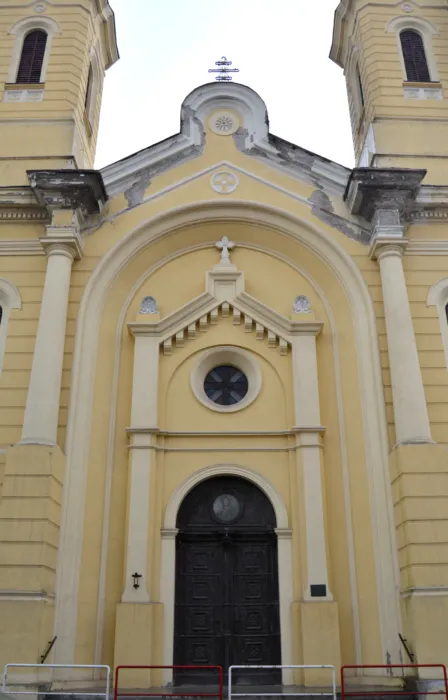
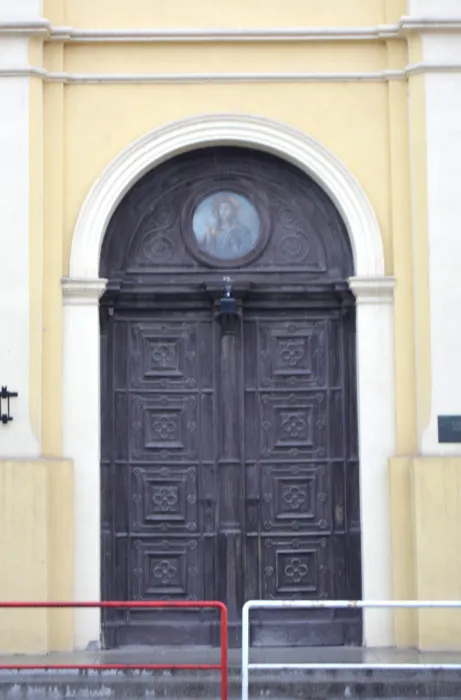
Cathedral of the Nativity of the Holy Mother of God
Building, structure
The Greek Catholics in Hungary are concentrated in the northeastern part of the Carpathian Basin. However, in one of the most important cities of this region, Košice - although attempts have been made since the end of the 18th century - they did not manage to establish a church center: the seat of church government remained in Munkács and Prešov. Moreover, they could not build a church either, and were forced to hold their masses in Roman Catholic churches. ; Finally, in 1882, the foundation stone of a large Greek Catholic church in Košice was laid. The neo-Romanesque, east-facing, gable-roofed church, built according to the plans of the architect Vilmos Kolatsek, was finally completed in 1886. Due to lack of funds, the western pair of towers that dominate the building today were only attached to the church in 1896. The carvings of the carved pulpit and the iconostasis are the work of the local master woodcarver György Urr. They were placed in their current location in 1902. The pictures were made by painters from Lemberg. ; The Greek Catholic community in Košice was trilingual - Slovak, Ruthenian and Hungarian - and still is today, although the proportions have changed strongly in favor of Slovaks over the past hundred years. ; Communist Czechoslovakia banned the Greek Catholic denomination in 1950, formally "unifying" it with the Greek Eastern (Orthodox) Church. The merger also involved the transfer of property, so this church also came into Orthodox hands and remained there until the change of regime. From 1990, Greek Catholics can again operate freely here, to the extent that in 1997, Pope John Paul II elevated Košice to the seat of an independent Greek Catholic diocese, and this church became the cathedral of its bishop.