
St. George's Church
Building, structure
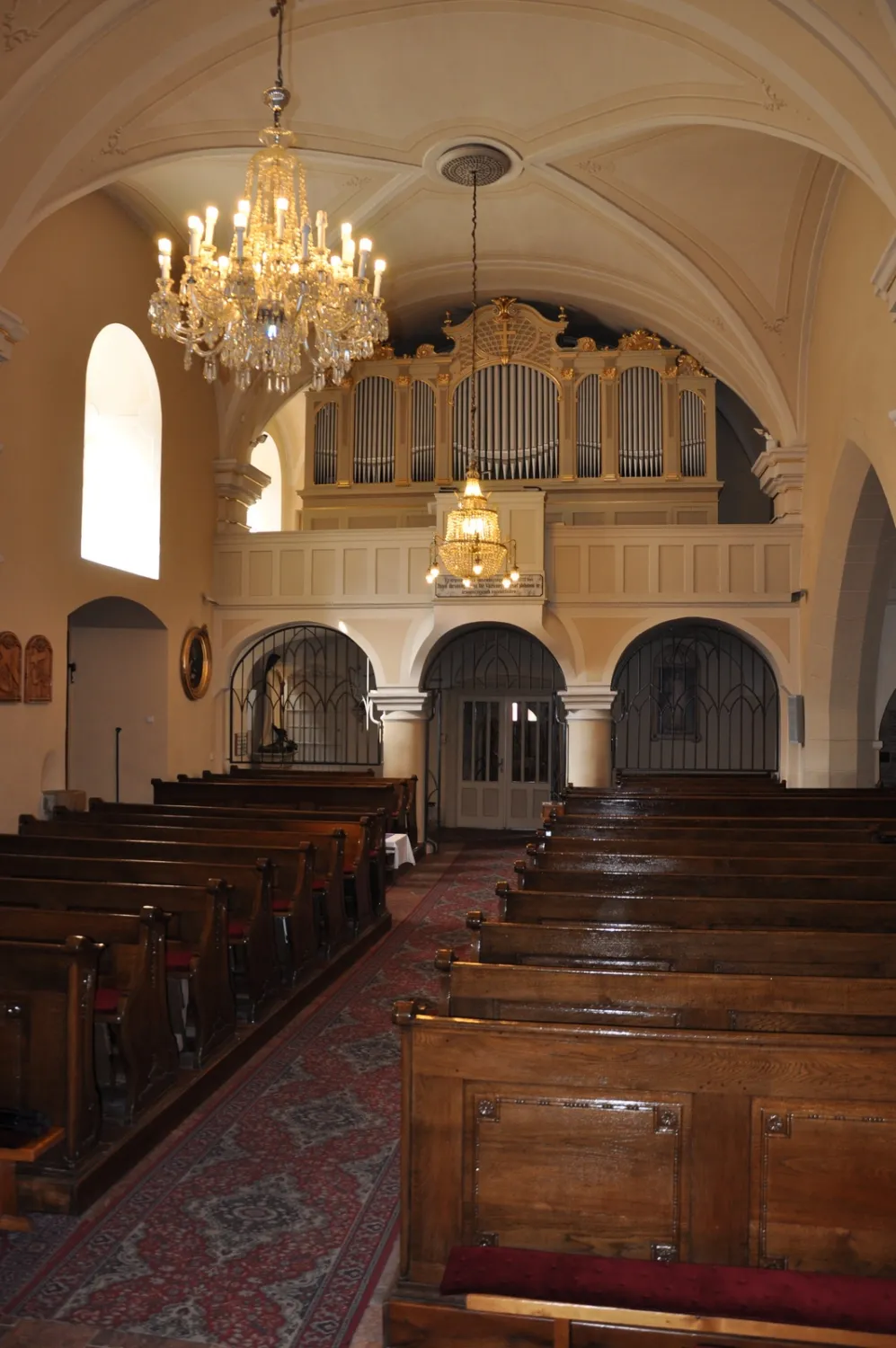
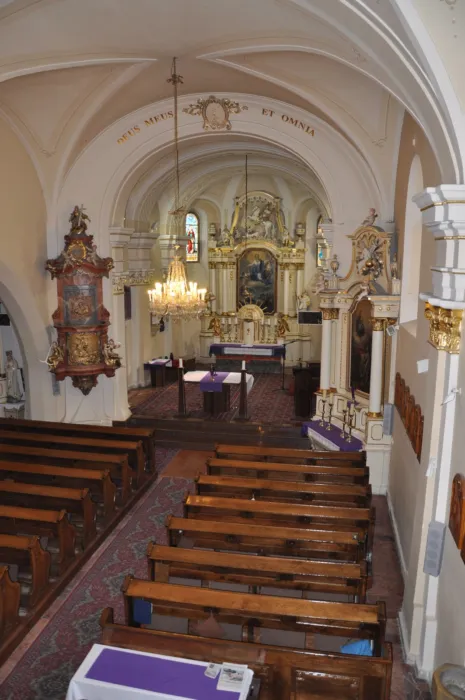
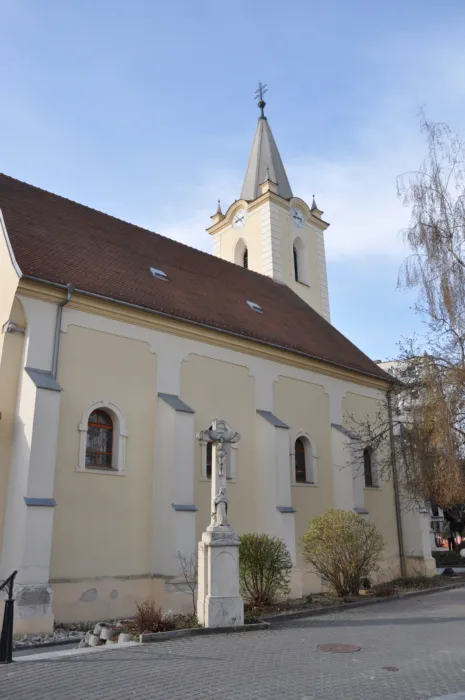
The oldest historical and sacral monument of the city, on the site of which a (probably) wooden church stood already in the early Árpád period. The Romanesque foundation of the present stone church was built in 1329 according to tradition. Fragments of the church's once rich fresco depictions also date from this Angevin period: the depictions of Saint Nicholas and Christ in the sanctuary, as well as the Calvary fresco on the outer wall of the main nave. The title and patron saint of the church was Saint George, and the patron family was most certainly the Szomor (Zomor) family of Pókatelek, and then the related Kondé family of Pókatelek, who also used the church's crypt as a burial place until the end of the 18th century. ; The building underwent a major transformation in 1518, when it was rebuilt in the late Gothic style and expanded with a side nave. At that time, the church itself, the cemetery surrounding it and the higher stone wall, the so-called Szentfundus (Sacere), which included the cemetery chapel, were already standing, which was preserved in the popular memory as the “Szerdahely castle”. ; At the beginning of the 1600s, the church gained a new patron: the new owner of Szerdahely, the Pálffy family (however, the Kondés continued to play an important role in the life of the church and the church). During the Reformation era, the sacred place was used by the Calvinists for a short time (from 1631 to 1647/50). ; At the beginning of the reign of Maria Theresa (in 1742–43), during the parish of Márton Adalbert Laszlovszky, the entire building was restored, expanded and raised/elevated. During the Baroque period, the church lost its former Gothic character: its walls became higher, its windows more spacious, the interior more ornate, and the tower, in which a clock was placed (the clockmaker was paid by the city), was also raised and made higher. Only a few elements of the building preserved its former Gothic style, such as the rebuilt tower cap and the small turrets, the interior of the sanctuary, the old sanctuary built into the wall, and the frescoes mentioned earlier. ; The pulpit, carved from wood and richly gilded, which is still considered the most ornate part of the St. George Church, was donated around 1745–60 by the Csallóköz native, Márton Padányi Biró, bishop of Veszprém. ; At the beginning of the 19th century, the church received new altars – which can still be seen today. On its main altar, there is a painting of the Assumption of Mary, with a statue of the patron saint of the church, Saint George, on horseback above it. On its side altars, we can observe depictions of Saint Stephen and the painful Pieta. ; By 1922, a new church organ was built using public donations – the organ still visible today replaced the old one built in 1754. The church’s “Old Bell” (with the inscription: Saint Joseph pray for us!) was also built in 1922 – its previous bells were requisitioned by the military at the end of World War I. In 1925, a plan was made for a major renovation of the church, expanding it to three naves and completely rebuilding its tower, but due to financial reasons, it was ultimately not implemented. ; In the years following World War II, during the communist era, attempts were made to make the "living space" of the church, which was the center of the former bourgeois Szerdahely, impossible. The old town around it was destroyed, a factory (!) was installed next to the sacred place itself, and then surrounded by panel houses. ; Between 1998 and 2004, the building was completely renovated, which received a new roof and color, the interior was repainted, the pictures and sculptures were restored, and its sacristy was expanded. ; ;