
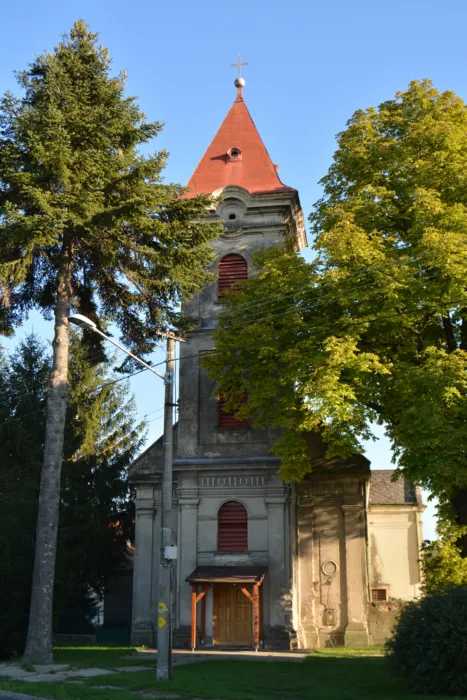
St. Benedict Church in Komáromfüss
Building, structure
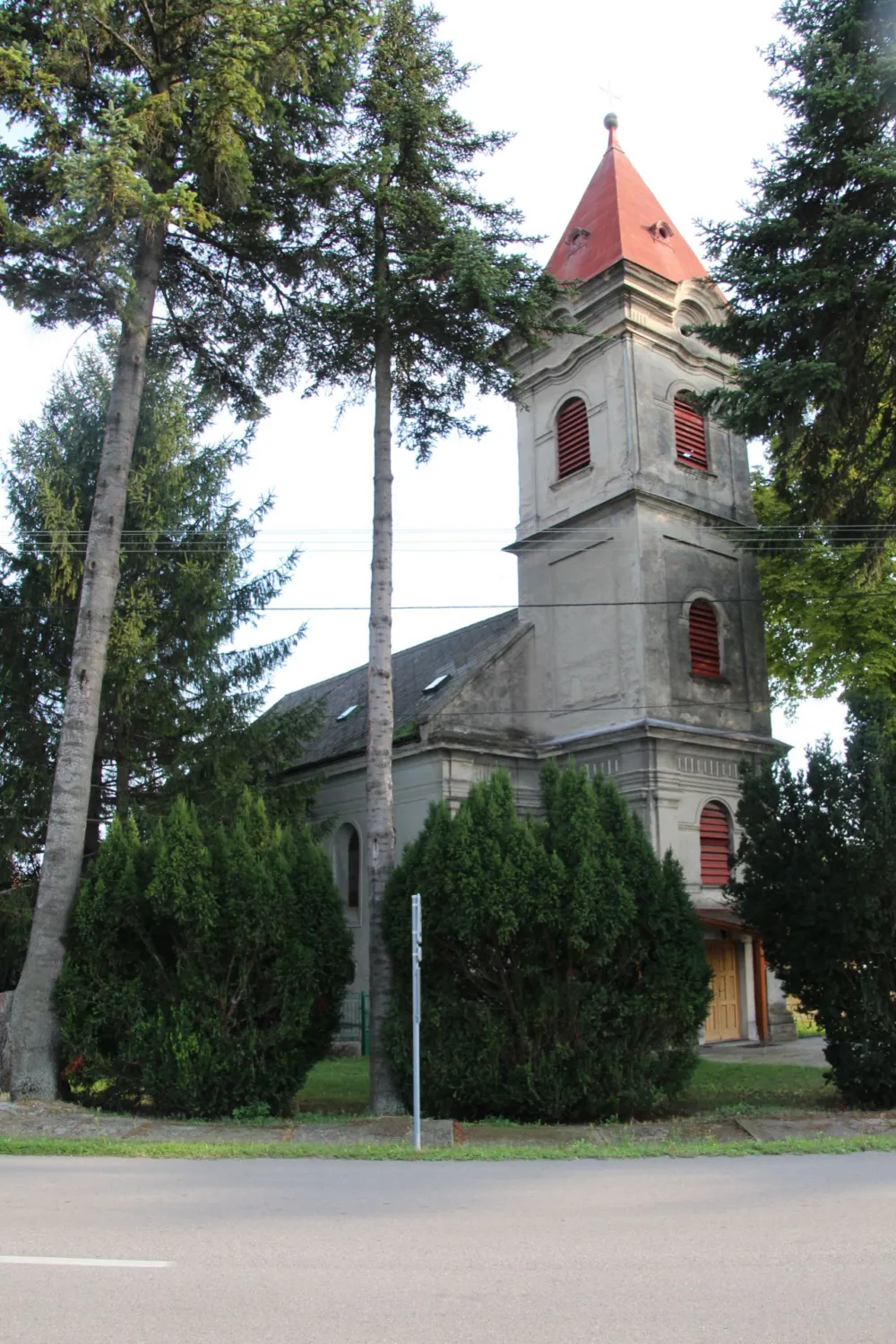
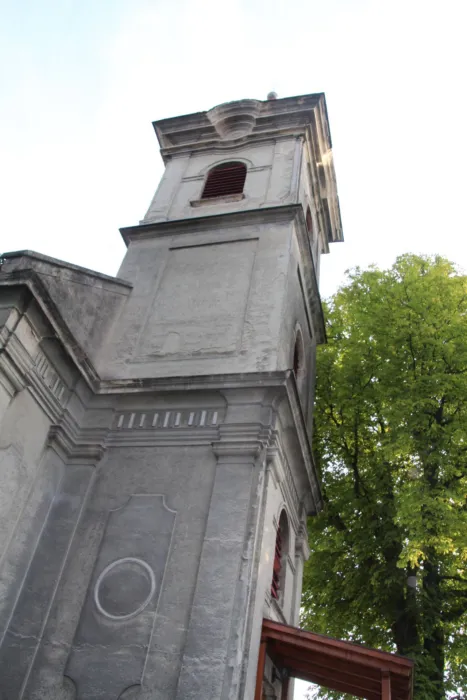
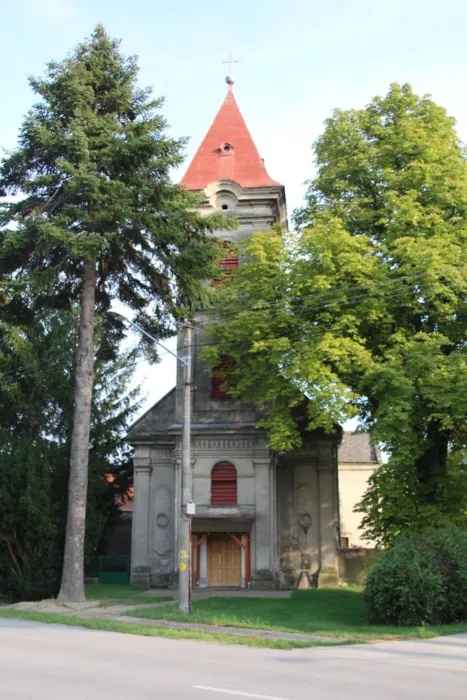
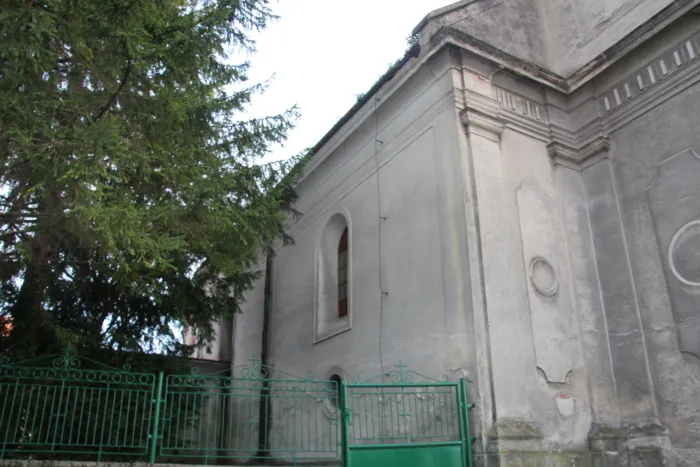
The condition of the village's St. Wendel church deteriorated greatly over time, so the old building was demolished. In its place, in 1762, local believers, with the support of the abbot, built the St. Benedict Roman Catholic church, which was consecrated on November 9 of that year by Dániel Somogyi. In the first half of the 19th century, the church underwent classicist renovations. The organ in the church was only replaced on May 21, 1813. On May 21, 1874, Abbot Kreusz Krizistom established a foundation for the maintenance of the church. In 1911, the church was renovated and expanded with a tower. The high altar was dedicated to St. Benedict. On May 3, 1862, the central image of the high altar was consecrated, which was painted for the 100th anniversary of the work of the painter Stuparovics and the construction of the church. Previously, a mural depicted Saint Benedict. The side altar was dedicated to the Immaculate Conception of the Virgin Mary. The smaller tower of the roof was rebuilt in 1843-1844 and then covered. After 1900, the church underwent further renovations. In 1911, a tower was built in front of the gabled main facade and the facade was remodeled. Before the renovation, the main facade ended with an arched Baroque gable, with a small tower above it. After the flood of 1965, the church was renovated between 1965 and 1967. It is a single-nave building with a polygonal closure of the sanctuary (rounded in the interior) and a projecting tower. The sacristy, once the chapel of the Blessed Virgin Mary, was built to the north side of the nave. The entrance hall to the oratory, for church dignitaries, is located at the southern wall of the sanctuary. The facades of the church are divided by semicircular windows with entablature frames. The projecting tower and the corners of the main facade are divided by pilasters with Tuscan column capitals (with a stone beam section supplemented with triglyphs). The entrance gate is stone-lined. The ceiling of the church nave is straight, the sanctuary has a Prussian barrel vault. The inner walls of the sanctuary are divided by pillars with vaulted frames. The choir, built in 1911, is located on the western side of the nave, with a brick parapet, which rests on two cast-iron columns. The choir breastwork is decorated with geometric figures. The oil painting depicting Saint Benedict above the main altar was created by György F. Globocniz in 1862. On the sides were images of Saint Mor, Saint Placidus, Saint Stephen and Saint Ladislaus (according to a 19th-century inscription). Originally, there was a fresco of Saint Benedict here, made by Stephan Schaller in 1762, which was flanked by two columns. The colors of the fresco faded due to humidity. The altar - similarly to the other furnishings of the church - dates from the beginning of the 20th century. The altar was made by the company of Róbert Lewisch from Szombathely, and two sculptures of angels can be seen on the sides. The side altar was simple according to the 19th-century inscription, but these were decorated with small statues depicting scenes from the Nativity of Christ in Bethlehem. Such an altar was rare in Hungary. In the recess of the wall on the south side, there was originally an altar of the Blessed Virgin Mary, later it was moved to the now-defunct Chapel of the Virgin Mary. On the altar, also made by the Lewisch company, there was a small statue of the Blessed Virgin Mary (today visible in the sacristy). The 19th century oil painting depicting the Virgin Mary remained in place. Its frame was made in 1911 by ; (later a merchant). Below it is the classicist baptismal font from the first half of the 19th century, which has a copper cover dated 1864. The smaller painting on the tin depicts the baptism of Christ, the ceiling dates from an earlier period. Next to it is the processional cross. On the walls are copies of the 14 Stations of the Cross by Luigi Morrar. The interior of the church is decorated with several more recent statues: a statue of the Sacred Heart of Jesus (from 1911), which comes from La Statue Reliquieuse in Paris and was selflessly donated to the church by the faithful. Furthermore, there are statues of King St. Stephen and St. Therese of Lisieux, St. Anthony of Padua from 1903, which were also donated by local believers. The white rectangular base was a gift from Mrs. Jánosné Major, the guardian stone for the statue was made by Márton Mura and the two cast candlesticks were donated by Hermina Weningen of Béláné Galba. At the same time, a foundation was established for the maintenance of the church. The former oratory now houses a warehouse. In 1911, the interior was supplemented with benches, the furnishings with 4 chasubles, 1 pluvial, 2 albs and a handkerchief. The following inscription can be read on the organ made in 1911 (the work of the Rieger brothers from Budapest), which was consecrated on December 8 of the same year: " Laudate dominum". On May 18, 1918, the 25 pipes of the organ were requisitioned for military purposes (cannon casting). In the foreground under the tower is the mission cross with the inscription "Save your soul!" and two years: 1912, 1936. The current interior of the church has completely changed compared to Arnold Ipolyi's description of 1856-1858, e.g. during the renovation works carried out between 1965-1967, the classicist pulpit, the side altar, etc. were removed. It is said that some of the beautiful furnishings of the church were sold without the knowledge of the faithful. There are two copper bells in the tower. The third bell was confiscated (1940-1945) for war purposes.