
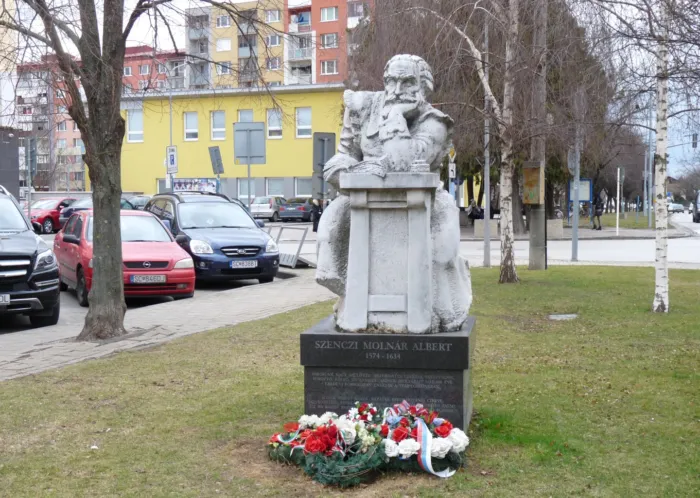
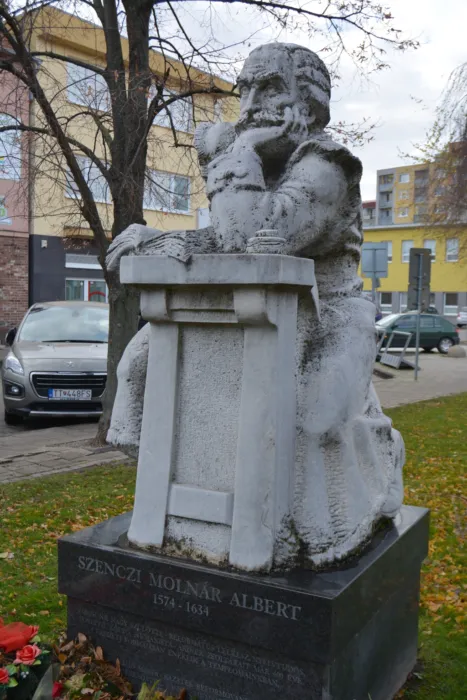
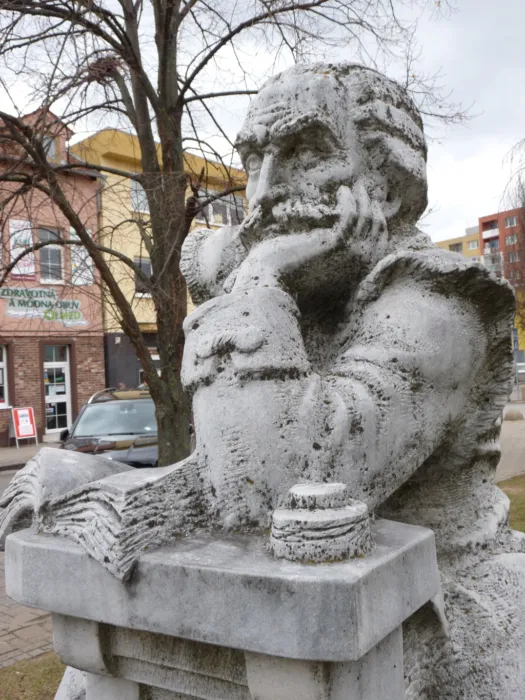
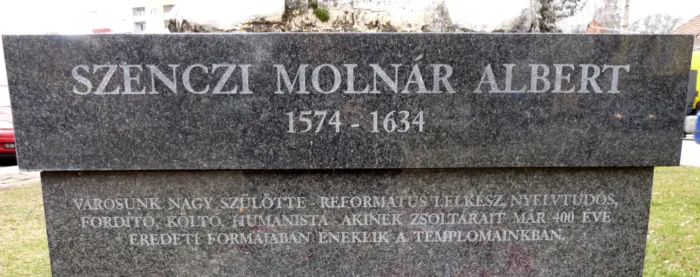
Statue of Albert Szenczi Molnár
Statue, monument, memorial plaque
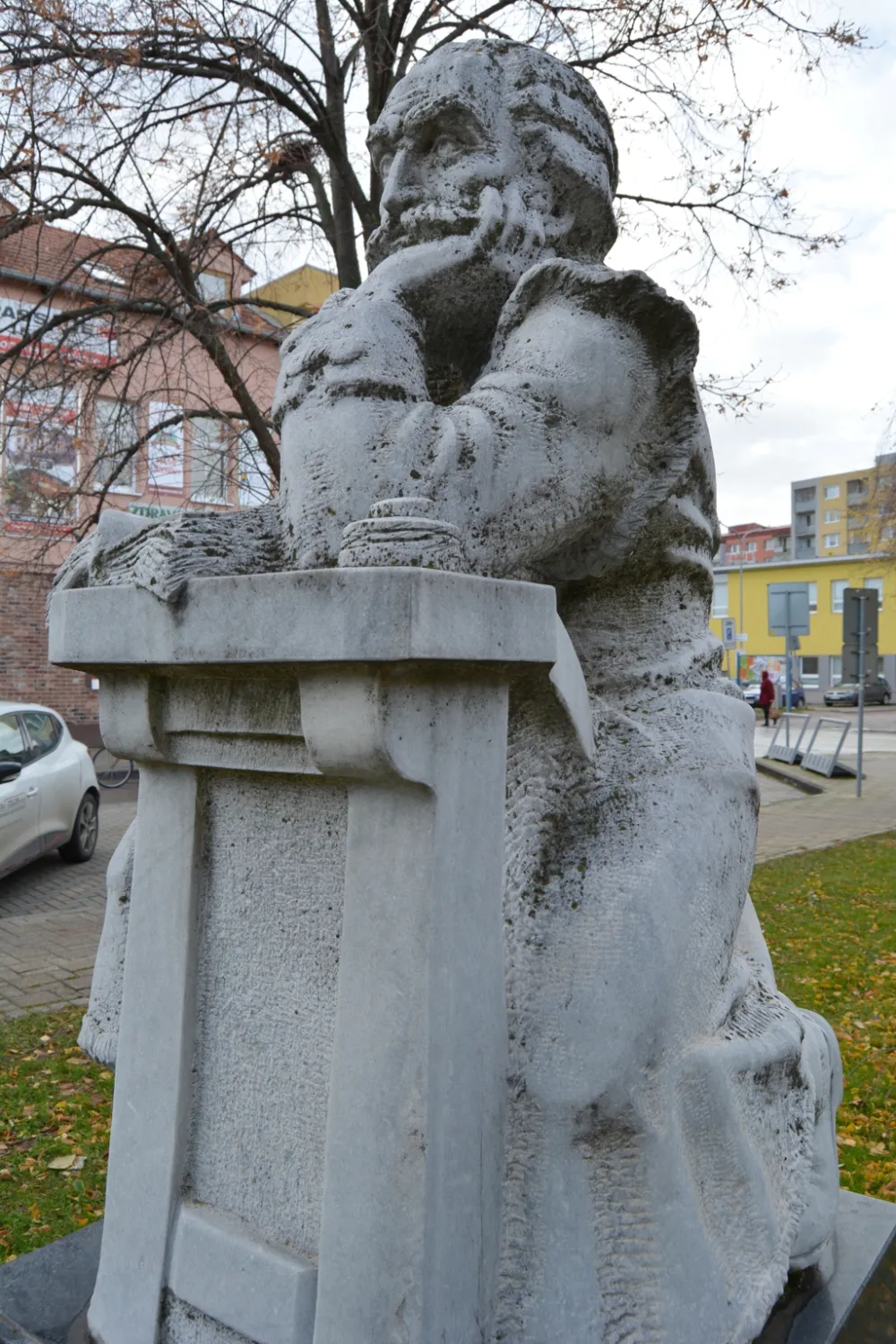
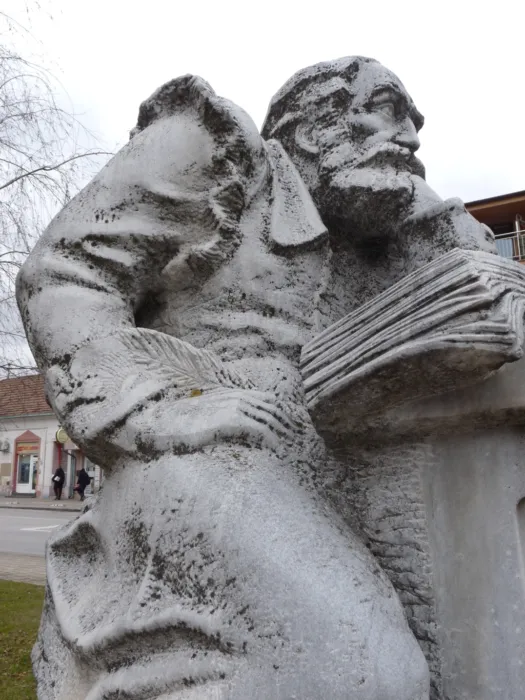
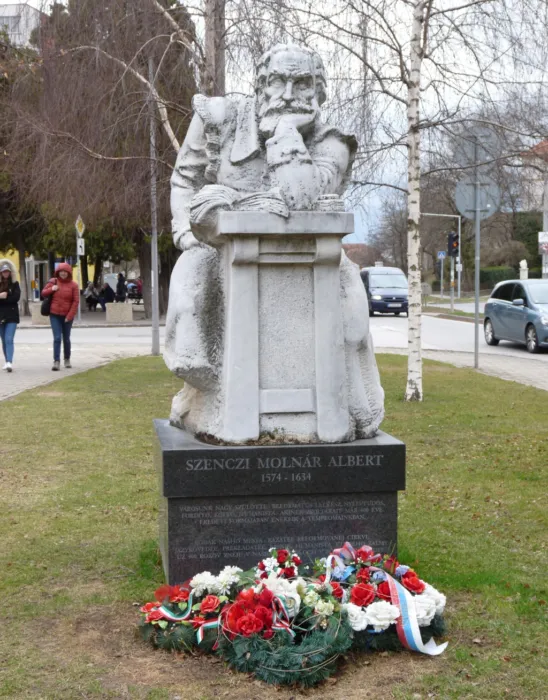
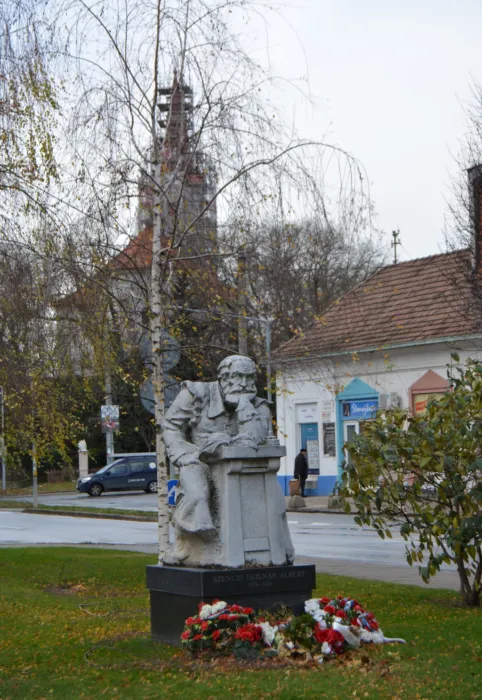
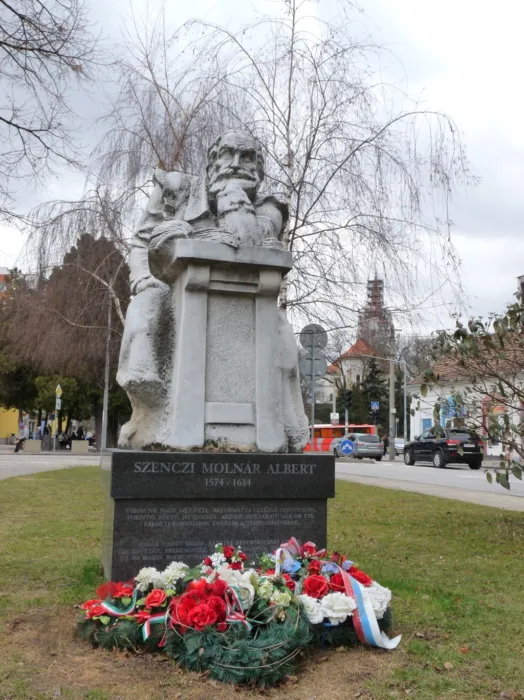
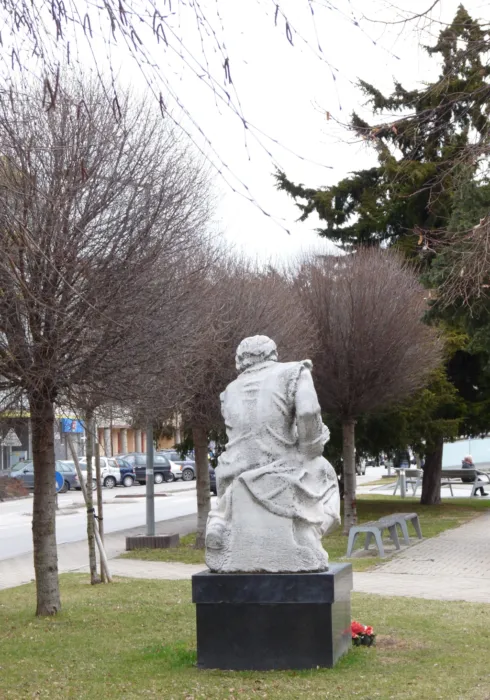
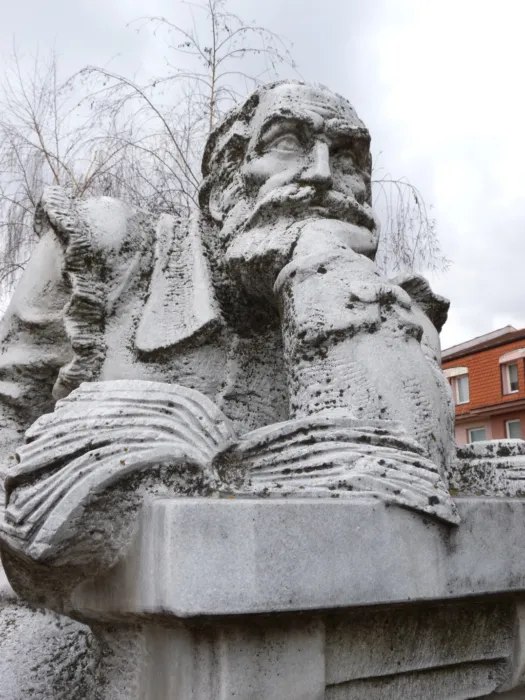
The life-size statue of Albert Molnár (Szenc, August 30, 1574 - Kolozsvár, first half of January 1634) created by János Nagy was placed in the main square of the city. The foundation stone of the statue was laid on October 28, 1994, in the afternoon, as part of the XXV. Szenczi Molnár Albert Days. A year later, on October 14, 1995, the statue was inaugurated during the XXVI. Szenczi Molnár Albert Days on the main square. The construction of the statue was possible with the help of many domestic and foreign supporters. Since then, the statue has been ceremonially wreathed during the Szenczi Molnár Albert Days. ; The 16th October 1995 issue of Új Szó reports on the inauguration of the statue as follows: "On Saturday afternoon, the statue of the great native of the city, Albert Szenczi Molnár, was unveiled in Szenc. The marble seated work of sculptor János Nagy was placed in the main square of the city with the sacrifice of the locals and Hungarians around the world. The statue was inaugurated by Katalin Kolczonay on behalf of the World Federation of Hungarians, and by Mayor Jozef Elšík on behalf of the city. The Embassy of the Republic of Hungary in Bratislava was represented at the ceremony by Councilor Pál Benyó. ; The life story of the Hungarian humanist scholar, poet, translator and Bible commentator was praised by speakers at the festive evening held in the city's cultural center after the statue inauguration. Jenő Mikó, bishop of the Slovak Reformed Church, praised the national historical and highlighted its church history significance. Literary historian Béta Pomogáts spoke about the elements of Molnár Szenczi's creative spirit that are relevant to today. József Halzl, president of the Rákóczi Association, praised the determination of the statue erectors and the nobility of their actions. University professor Mihály Czine spoke about the retaining power that can be drawn from the similarities between the spirit of the church builder and the fate of today's Hungarians. Győző Bauer, president of the Csemadok, outlined the hypocritical and inequitable state of society in connection with the grievances against the Hungarians in Slovakia and the lack of tolerance experienced by the majority nation. After that, he thanked the local government for its support in Slovak. ; After that, the vast majority of those sitting in the room listened in shock to the mayor's incomprehensible thoughts as a compliment. He made it clear to those present that he was dissatisfied with the level of bilingualism he experienced during the ceremony. He objected that the commendatory speeches were not was interpreted into Slovak. He also said that he would do everything within his power to ensure strict bilingualism in public city events to be held in the city. ; József Dinnyés, the song owner, sang some of Albert Szenczi Molnár's one hundred and fifty psalms, and the infinite serenity and hopefulness of the psalmist's faith in God shone through several times in his performance. This was accomplished by Ágnes Bárdos at the evening of performances summarizing the spiritual states of the Hungarian people at the end of the twentieth century. At the end of the collection of poems that strengthened national self-awareness with the means of shocking, she addressed the conscience by raising the first verse of Ferenc Kölcsey's Hymn to the height of prayer.