
Poorhouse
Building, structure
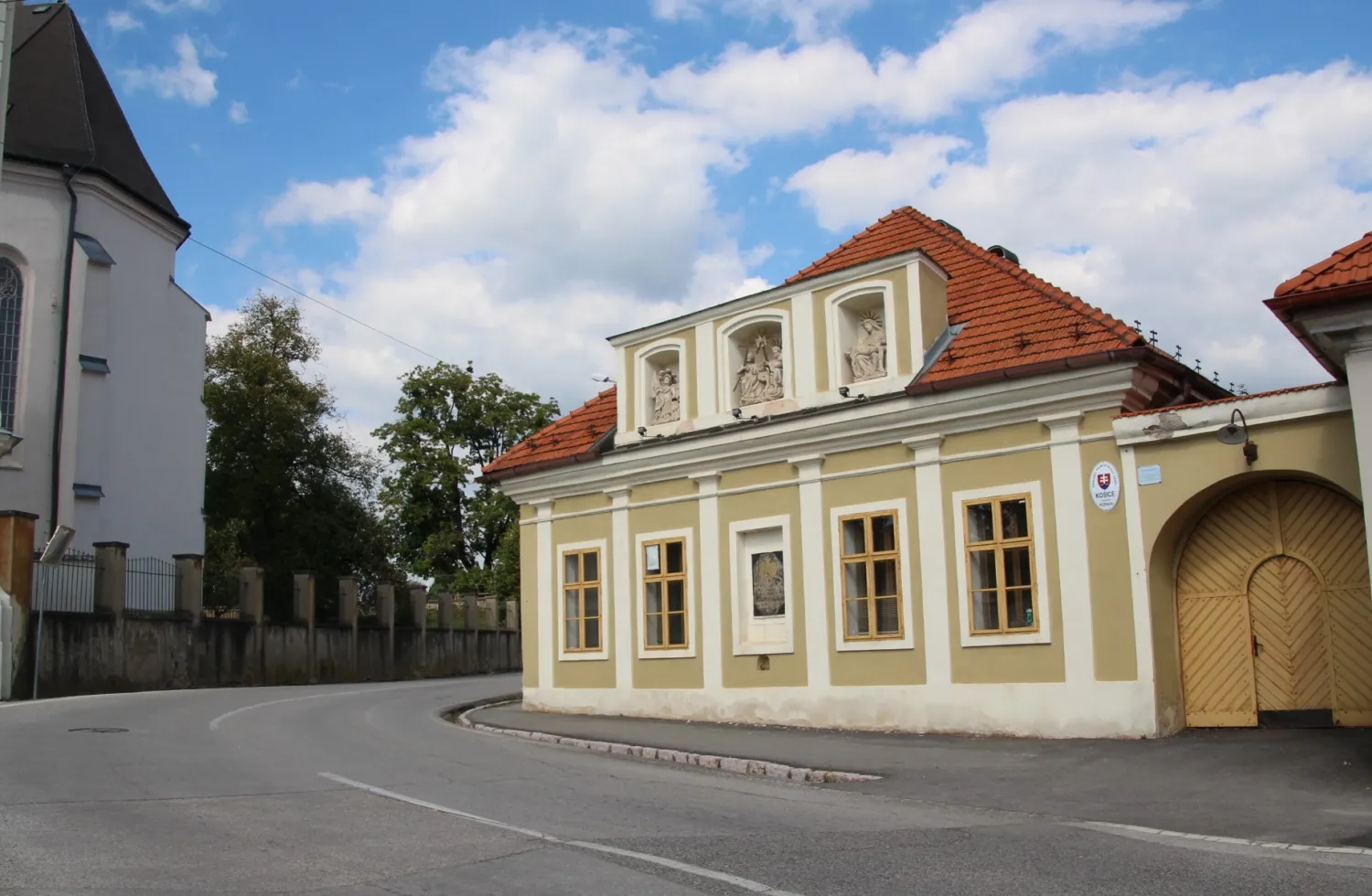
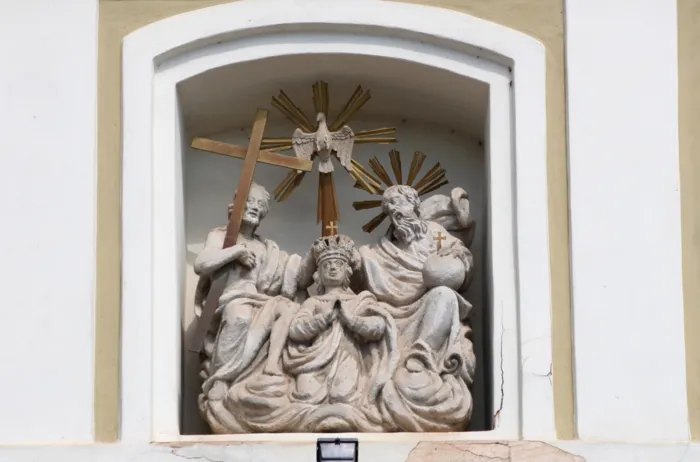
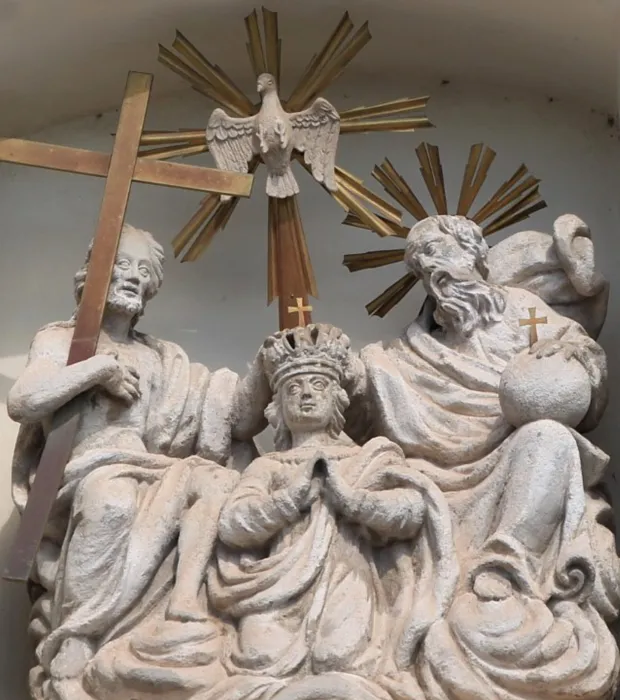
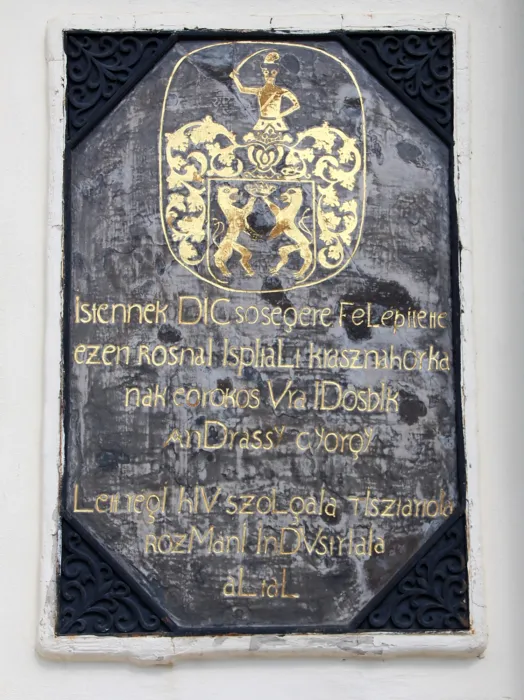
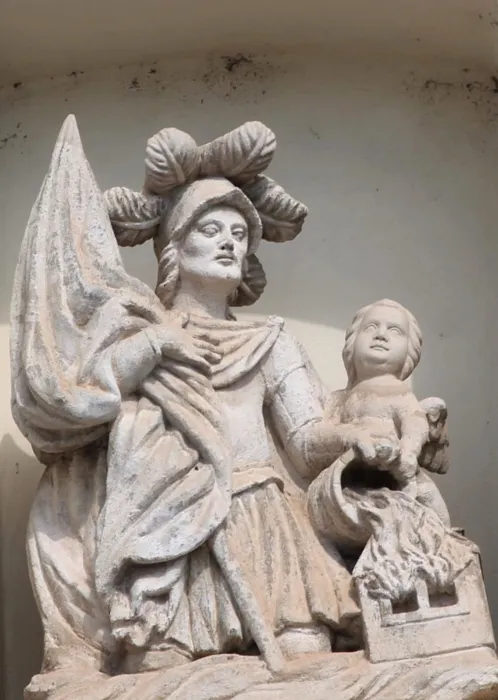
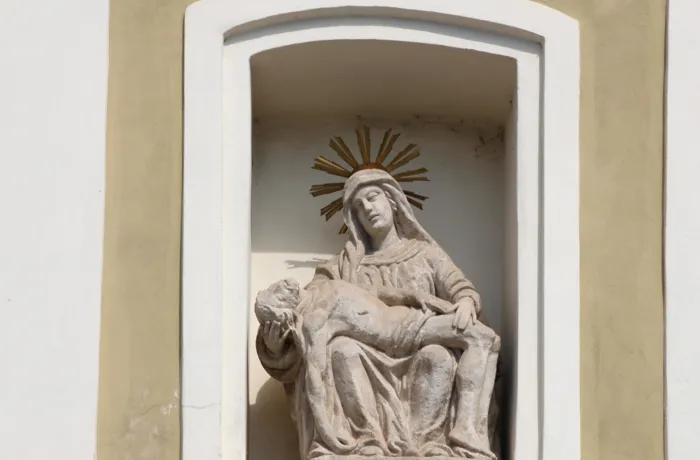
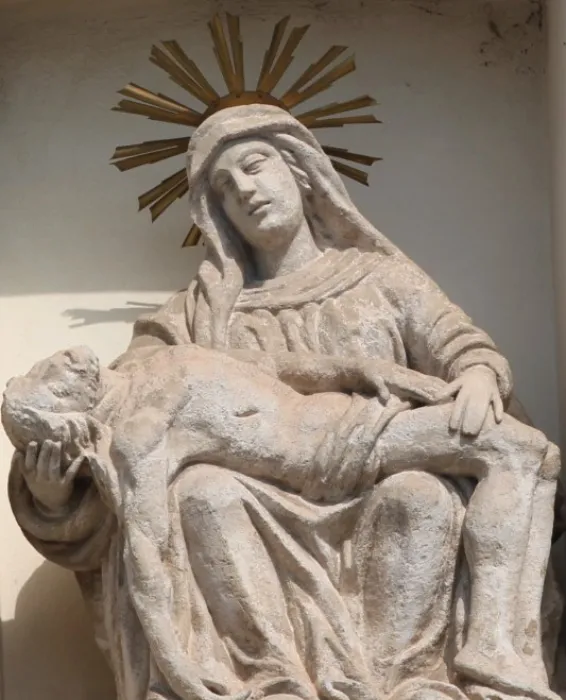
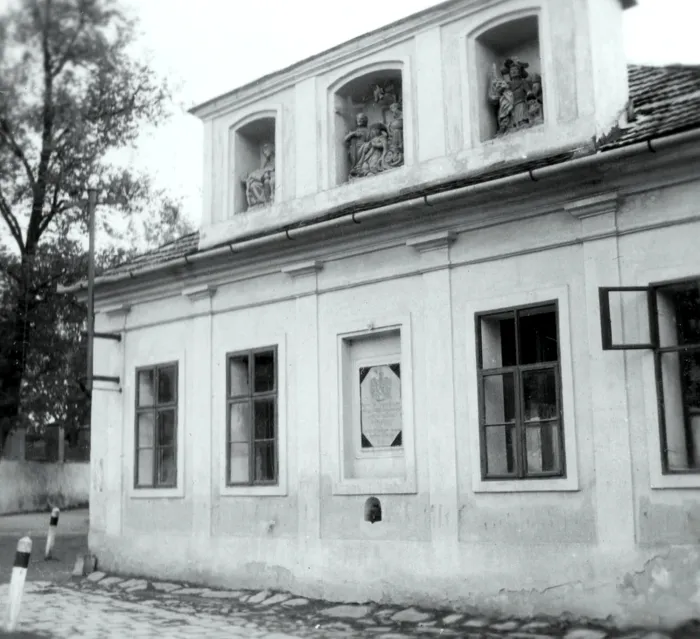
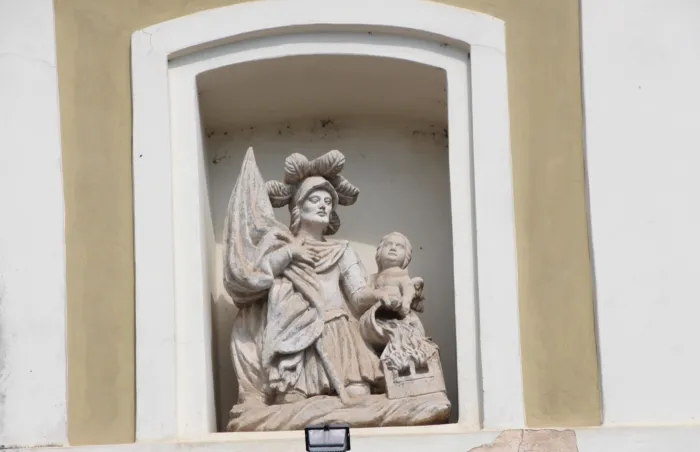
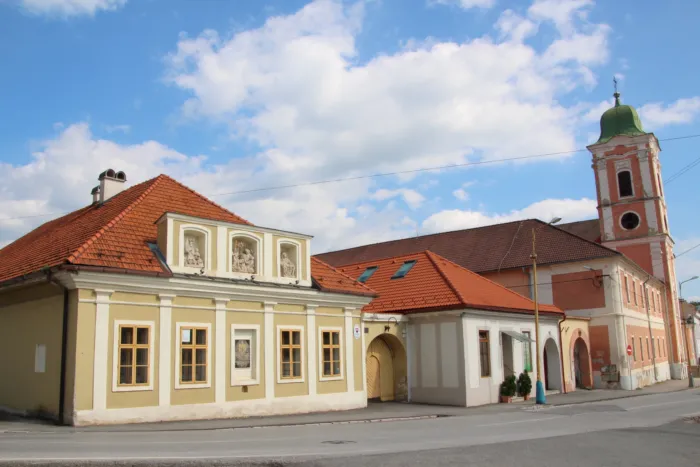
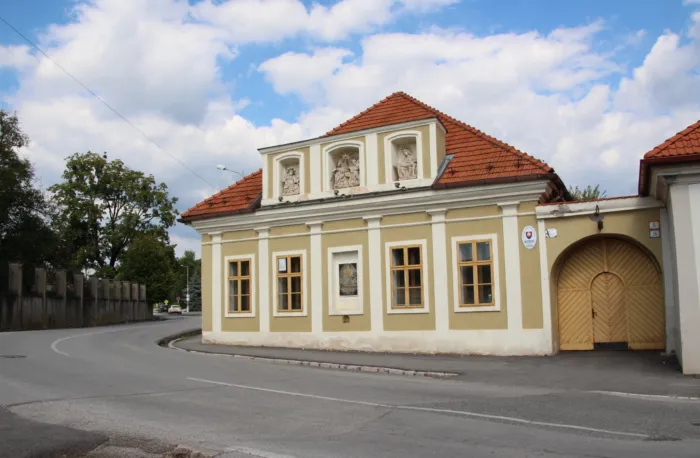
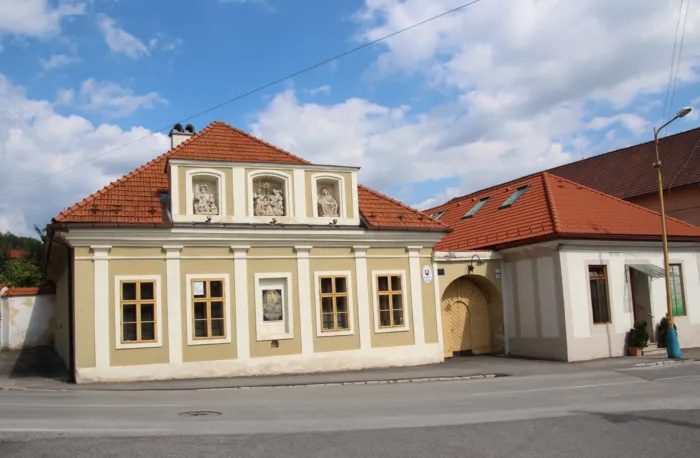
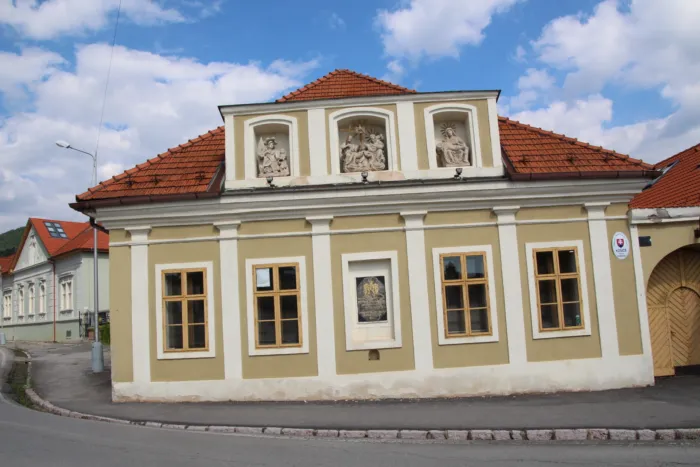
The chronosticon indicates the year 1719 as the year the poorhouse was built. So the benevolent count could have had it built instead of the "hospital" that was destroyed in the fire of 1710. Its artistic value is given by its gable, where groups of statues are placed in 3 niches. On the left is the Pieta, in the middle the Holy Trinity, on the right the group of St. Florian. The fact itself is striking that the poorhouse was so richly decorated. This can be explained by the generosity of the donor. We do not know about the master of the statues. Their style points to a more educated master, and is not related to any monument from Rožňava. It is possible that the count had them brought here ready-made from elsewhere. They also point to an earlier date than the year 1719. Perhaps they are the works of a sculptor from Košice. The master is more fortunate in the broadly handled folds of clothing than in the slightly roughened facial types. The figure of the Virgin Mary holding her dead son on her knees in the Pietà shows the influence of Michelangelo. The arrangement of the folds of clothing on the knees is generous and, despite its small size, has an almost monumental effect. The modeling of the body of Christ was less successful. The muscles of the limbs are withered, the upper body is convulsively hobbled backwards. The Holy Trinity group is template-like. On the left is the Son with the cross, on the right is the Father in the form of an old man, above is the Holy Spirit in the form of a dove. And in the middle below is Mary kneeling, with a crown on her head. The folds of clothing are generous here too. The figure of St. Florian in the third niche most shows the master's individual imagination. On the left is the saint standing calmly, with a reverent smile on his face. His attribute at the bottom right: the burning house, onto which an angel pours water from a bucket and the flames die down in its wake. This angel radiates cheerfulness throughout the gable. A smile plays on his naive, charming face. Here the artist could no longer impose the dramatic expression he had striven for in the Pietà, nor the adherence to tradition, as in the Holy Trinity. The statues were colored. Remnants of the coloring can still be recognized here and there, for example, some blue on the folds of the Virgin of Sorrows's robe, and yellow and red spots on the Holy Trinity. We can see the coloring most strongly on the figure of Saint Florian: vermilion-red folds of the robe.