
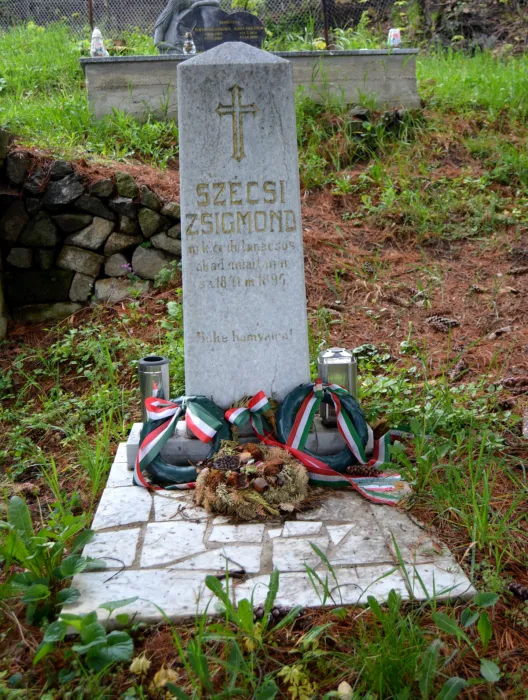
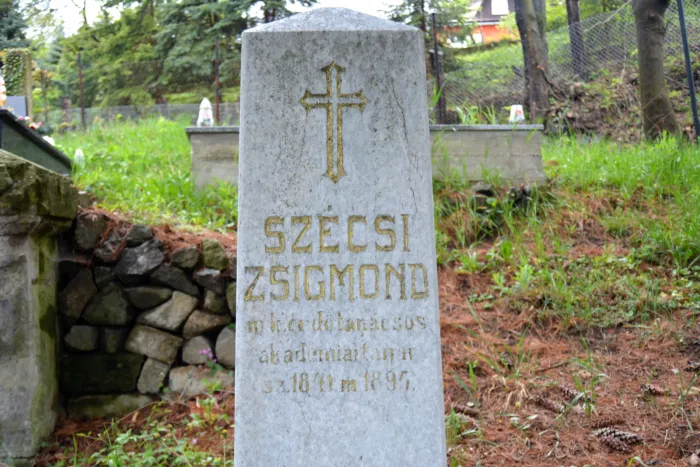
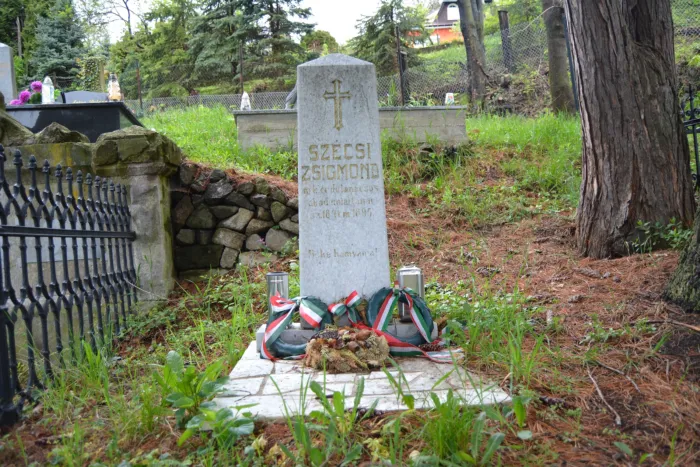
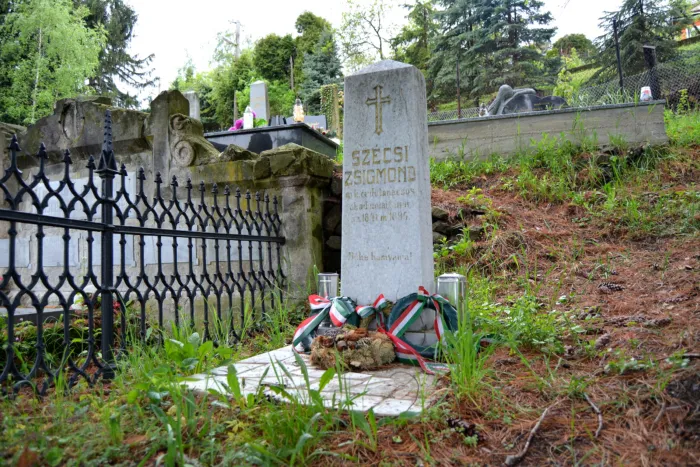
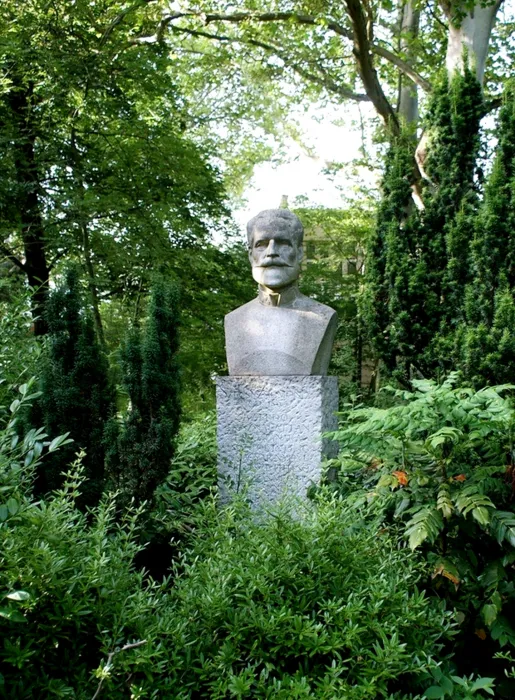
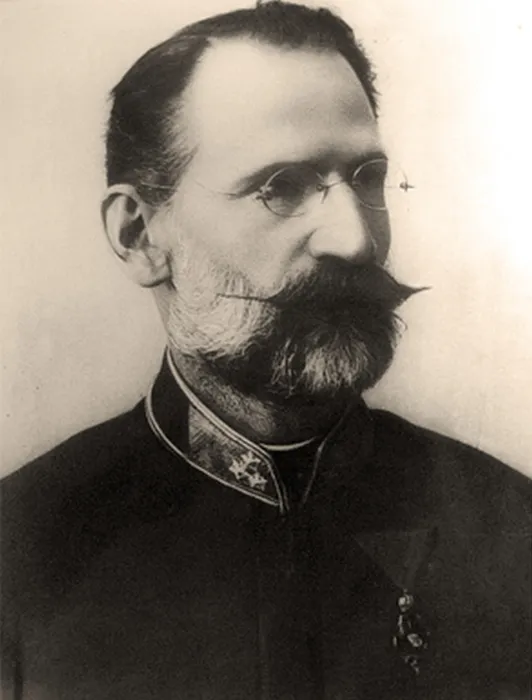
The tomb of Sigismund Szécsi
Cemeteries, tombstones, graves
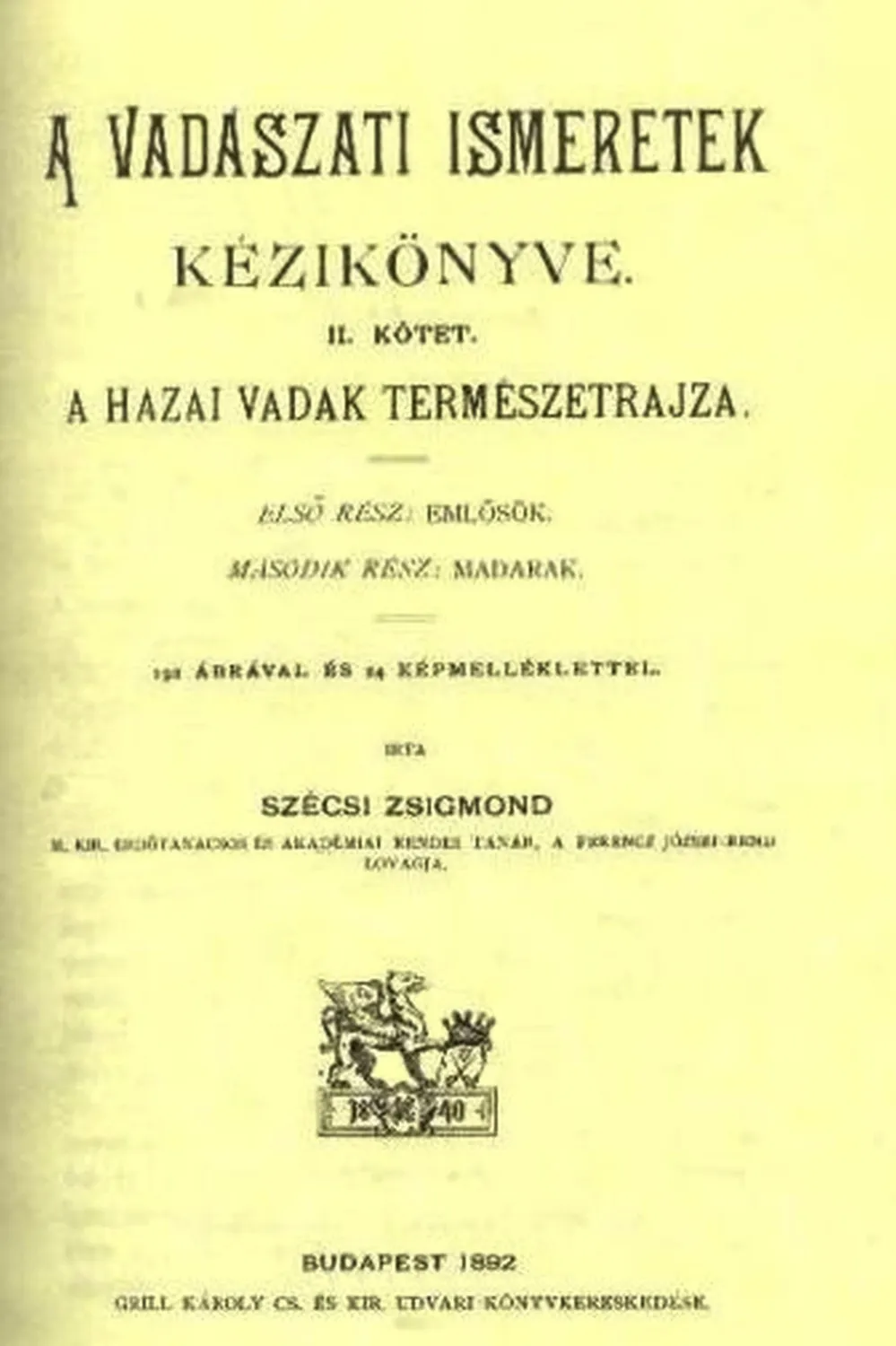
The renowned forestry and hunting writer and outstanding academic teacher, Zsigmond Szécsi (he changed his family name from Nikel to Szécsi in 1881) was connected to the Uplands almost his entire life. He was born on October 6, 1841 in Kisgaram. He completed his high school studies in Bánya Beszterce and was a student at the Forestry Academy in Selmecbánya. In 1867, he became an assistant professor at the forestry department of the Selmecbánya college. After it was divided into several departments, he headed the forest utilization department until 1895. His name is associated with the beginnings of Hungarian-language education and the development of specialized literature. János Pauer writes that around this time, “during the Hungarianization of the academy,” the teachers “had great difficulty and much struggle in anglophoneizing technical terms.” (Pauer J., 1896. 361. l.) Szécsi also worked a lot in this field. He was a member of the academy's first Hungarian-language teaching faculty, and "he had a particularly great task in creating Hungarian-language specialized literature that was at the European level of the time". (Dr. Oroszi S., 1989.319. l.) ; The outstanding work of his literary work, the Handbook of Forest Use, was published in Budapest in 1884 by the National Forestry Association. In his thick volume, he covers all areas of the topic. For example, he thoroughly presents the tools and equipment of logging and wood processing. The section discussing the transportation of wood on water "is so thorough even today that it can be used to learn about the raft forms and common water equipment of the time". (Dr. Oroszi S., 1989. p. 320) Szécsi's professional activities as an academic teacher were versatile. He lectured on forest management and general agriculture to his students, and dealt with public works, water and road construction. On his initiative, artificial fish farming and lectures on hunting and weaponry were introduced to the academic subjects. In addition, he had other merits. He collected a huge amount of illustrative material for the academy's department. As János Pauer mentions: the compilation of the collections required an extraordinary amount of work, great care, and tireless research, but "fortunately, Szécsi's tenacity was rather increased by new and new difficulties, his strength never tired, his perseverance did not weaken, and if he considered something to be a useful innovation in his profession, or if it was a question of increasing his collections, he used every means to achieve success." (J. Pauer, 1896. p. 362) He also presented his demonstration tools at the 1885 Budapest exhibition. He was awarded the Knight's Cross of the Order of Franz Joseph for his merits in collecting forestry material. On the occasion of the exhibition, he published the Bulletin of the Selmeczi Magy. Kir. Forestry Academy in Selmec. Szécsi, who worked as the head of the department from 1871, also made invaluable contributions to the academy's construction projects. He prepared most of the plans, which were also implemented. (J. Vadas, 1896. p. 357) Szécsi was also a great fan of hunting and target shooting. As it was written in this regard: "His enthusiasm and the lectures he gave on the noble sport of hunting and target shooting awakened the passion for hunting in many young foresters." (J. Vadas, 1896. p. 358) The second volume of the Handbook of Hunting Knowledge was published in Budapest in 1892. It is about the natural history of domestic game: “In addition to the morphological description of individual animals, he dealt with their lifestyle and living conditions, and then evaluated them from a hunting perspective.” (S. Oroszi, 1989. p. 320) Szécsi taught his students at the academy for nearly three decades. He was a versatile man, engaged in a wide range of activities. He published, organized, built, made tools, hunted, founded professional circles, etc. His students loved him, because he worked for them with every fiber of his being. He died in Selmecbánya on October 8, 1895. He deserves to be bowed down to his spirit and memory. After all, he was a day laborer for his country and the nation. ; Works: ; - Human manure in agriculture. Award-winning work 1881. (with Lajos Fekete). ; - Handbook of forest management. Work awarded 100 gold coins. With 508 woodcuts. Budapest, 1884. (2nd revised edition. Selmeczbánya, 1899.). ; - Natural history of domestic game. Budapest, 1892. (Handbook of hunting knowledge II.).