
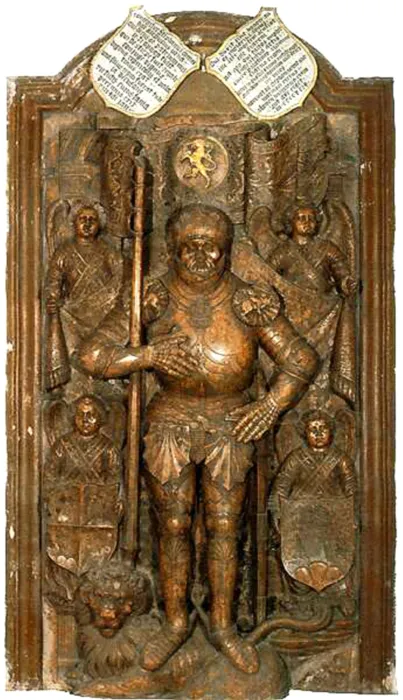
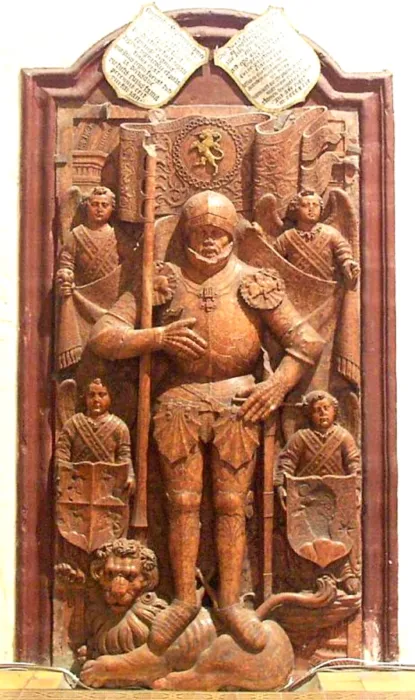
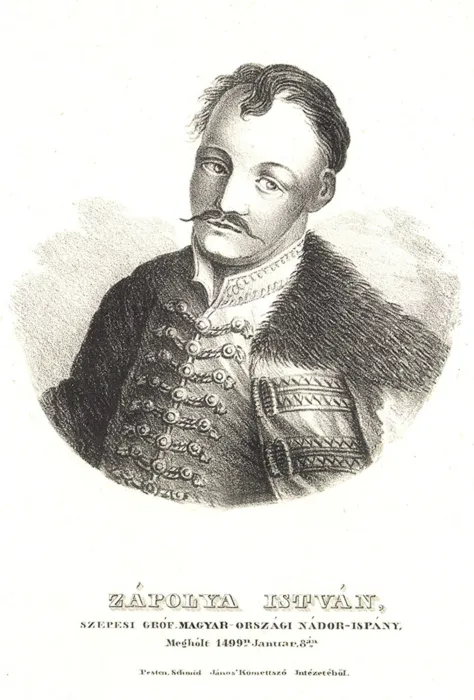
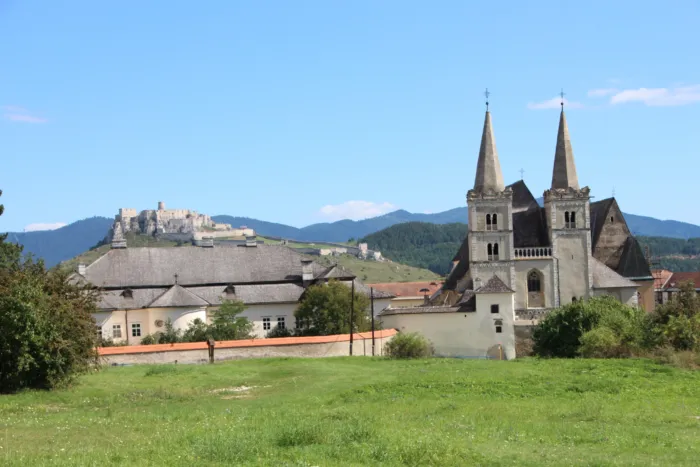
Tomb of Palatine István Szapolyai
Cemeteries, tombstones, graves
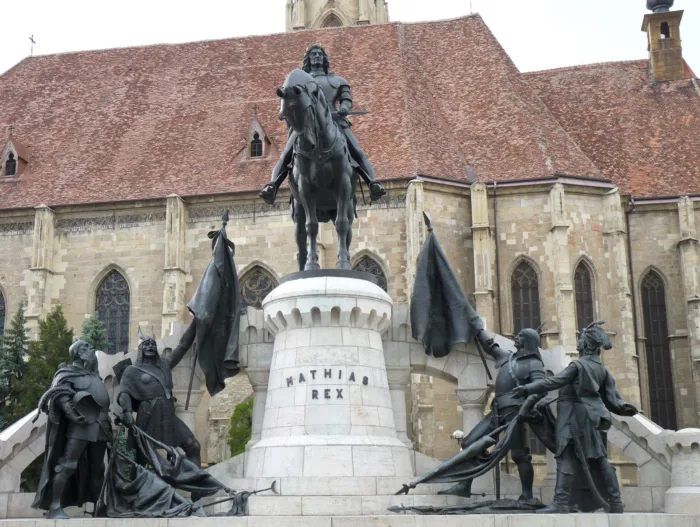
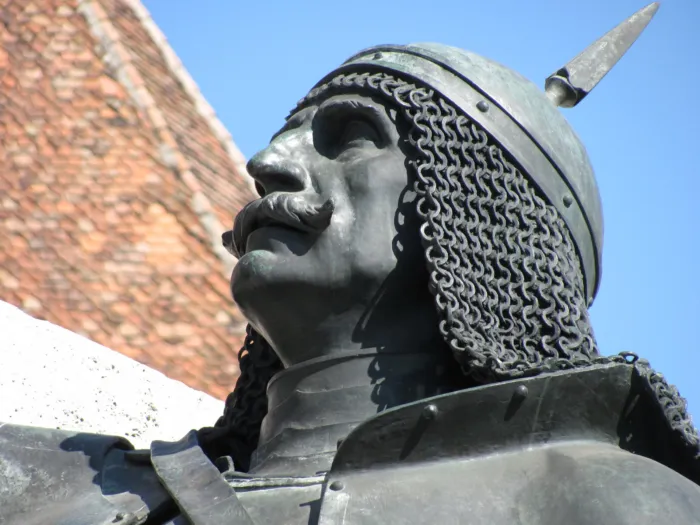
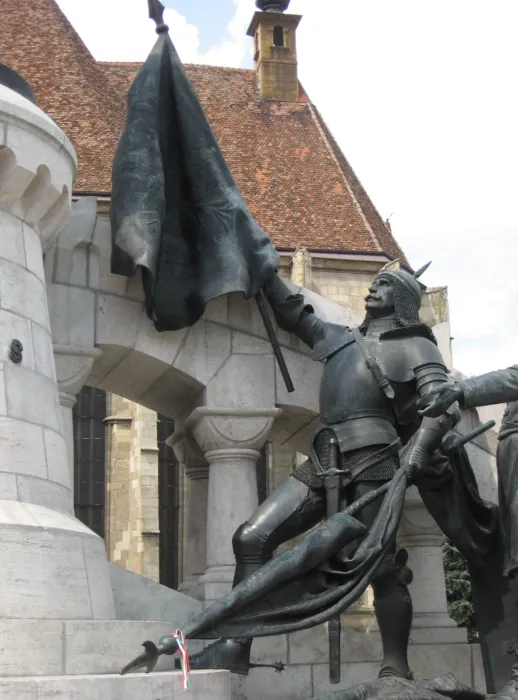
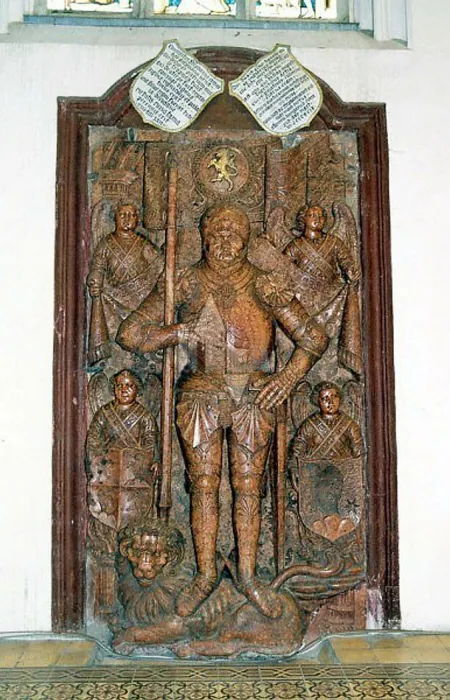
István Szapolyai, (? – Pápa 23 December 1499) lord, palatine. Brother of Imre Szapolyai, father of King John I (Szapolyai). Governor of Silesia from 1474-81, hereditary lord of Szepes County from 1487 (Count of Szepes), governor of the Austrian provinces occupied by King Matthias I (Hunyadi) from 1489-90, palatine of the Kingdom of Hungary from 1492. ; His father was László Szapolyai "Vajdafi". At first he acted as a military assistant to his brother Imre, leading his campaigns with him or instead of him. In 1465, however, King Matthias relieved his brother of his duties with the title of hereditary lord of Szepes County – at that time the colloquial language began to refer to them as counts of Szepes, following the German model – compensating him, but informally he remained an important factor, to whom the king gave occasional assignments. Stephen then became an independent political factor. ; He then served the king as a general, captain, governor and finally captain-general during his conquests in Silesia and Austria. In 1474, he was present in the camp at Boroszló, and then until 1481 he became the governor of the conquered Silesia territory. As a reward, he received a wife from a side branch of the Polish royal Piast dynasty, and in 1483 he was able to marry Princess Hedvig of Teschen. Matthias did not initially play an important role in his Austrian campaign. In 1482 he was captured at Bruck, but escaped. In 1485 he played a major role in the overthrow of Jaroslav of Cernahora and took his place among Matthias's confidential military advisors. ; At the death of his brother, Imre, in 1487, he owned 20 castles together with his younger brother, Bishop Miklós of Szapolyai, Transylvanian, and only Matthias' illegitimate son, Prince John Corvin, could claim more than this. The estates were clustered around Tokaj, Pápa and Trenčín, but they had also had a castle estate around Szapolya since the 1470s. ; On 4 April 1490, King Matthias took part in the long Palm Sunday ceremony, then began to feel dizzy, his vision went dark, and he had himself taken to his bedroom, where he fell ill around six o'clock. They immediately summoned his son, his two cousins, Péter Geréb and Mátyás, Nagylucsei, Bakócz, the Austrian captain-in-chief István Szapolyai, and the voivode István Bátori. The king was in great pain, and finally died on Tuesday, April 6, between 7 and 8 a.m. After Mátyás's death, news spread that his enemies had poisoned him. Some 16th-century historians accused Queen Beatrix, others István Szapolyai, of poisoning Mátyás. However, neither of them had any interest in the king's early death, and their relationship with the monarch was not such as to justify the murder. Later, upon examining the symptoms described by Bonfini, it was determined that they did not indicate poisoning, but a cerebral hemorrhage. However, as an anecdote, it was recorded that the governor of Vienna “picked up his three-year-old son upon hearing the news of his lord’s death and exclaimed: If only you were older, I would make you king now.” ; Matthias’s death enabled him to further increase his holdings. At that time, he was the captain-general of Austria from 1490. In order to protect the Austrian conquests, the state council gave him many royal revenues. Thus, royal cities (e.g. Nagyszombat, Szakolca) and border customs. The new king, Władysław II, was unable to reclaim most of these from him. He played a decisive role in Władysław’s election as king. His contemporaries blamed him for the loss of Vienna – he surrendered the Austrian parts without a blow of the sword, then fled Vienna, but before his escape he plundered Matthias's Vienna palace, and for his indecisive action against the Polish prince John Albert, who claimed the Hungarian throne for himself, which ended successfully with the Battle of Prešov in 1492, but after that his power became unquestionable, in March 1492 after a 5-year vacancy after the death of his brother, he became the palatine, a title he held until his death. ; He then continued to amass wealth, sometimes legally, sometimes illegally. After the dissolution of the Buda Diet in the autumn of 1493, he caused great astonishment throughout the country when, as the palatine of the Kingdom of Hungary and the guardian of the Holy Crown, he suddenly besieged and soon occupied the castle of Prince John Corvinus in Bajmoc. He acquired part of the wealth of John Corvinus and part of the inheritance of Paul Kinizsi. In 1495 he was already the richest lord of the country. King Władysław was forced to tolerate all this, as he was the largest creditor of the royal treasury. During the rebellion of John Corvinus and Count Bernat Frangepán in 1496, he defeated the rebels' mercenary army attacking from Poland in the Battle of Rózsaheg. ; He acquired his vast wealth without being selective in his means, for which he was condemned by many speakers at the 1497 Diet. He increased his family estates to such an extent that by the end of his life he was the owner of 72 castles and manors. Between 1493 and 1499 he founded a family burial chapel in Szepeshely, built extensively in Trenčín and Szepe castles, and founded a Pauline monastery in Tokaj. ; His body was buried in the Szapolyai Chapel of the St. Martin's Cathedral in Szepeshely, where his full-length, armored tombstone made of red marble can still be seen today. The figure of István Szapolyai was sculpted by János Fadrusz as one of the minor figures of the Matthias statue in Cluj-Napoca, as he holds and bows the Austrian double-headed eagle flag before Matthias. ; István Szapolyai did everything he could to pave the way for his son János to the throne. When he died, his widow weaved even more skillful plans, so that his son, the young János Szapolyai, as the king-candidate and leader of the national party in 1510, at the age of twenty-four, became the royal governor and sole voivode of Transylvania and thus the commander of one of the most prestigious armies in the country. ; A total of 2 sons and 3 daughters were born from his two wives. ; His first wife was the daughter of Simon Drugeth of Homonna, who was called Margit according to László Zubánics (2017). ; His children from his second wife – they married in 1483 – Princess Hedvig of Teschen: ; John (1487–1540), King of Hungary (1526–1540), ; George (1488k–1526), one of the main leaders of the Battle of Mohács as a companion of Pál Tomori, ; Borbála (1495–1515), Queen of Poland, first wife of King Sigismund the Old of Poland.