
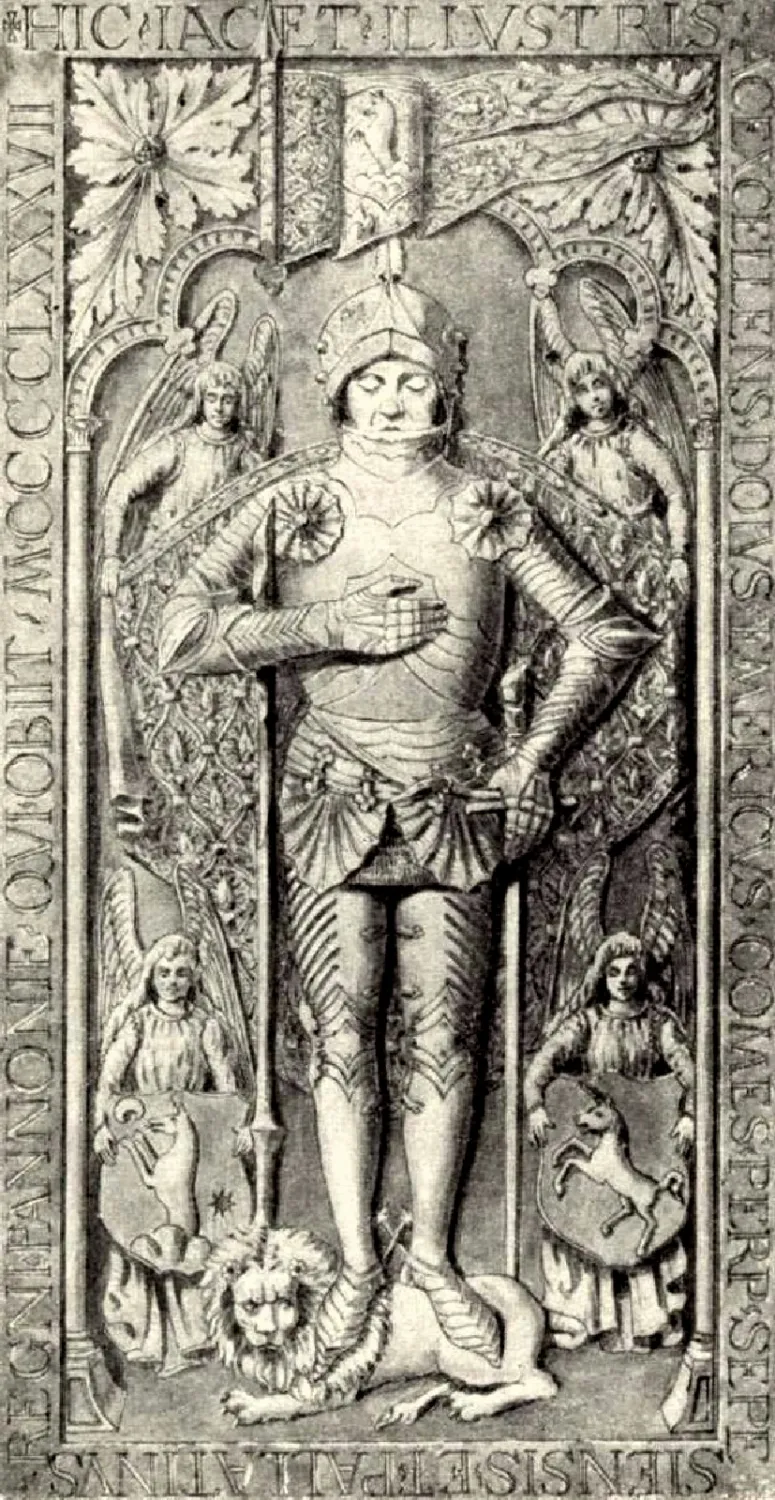
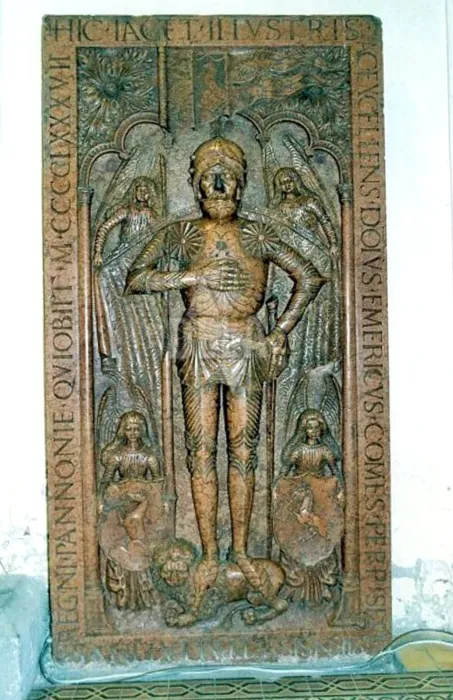
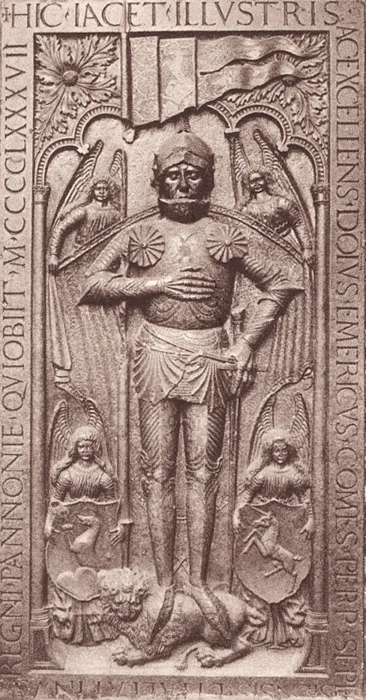
Tomb of Palatine Imre Szapolyai
Cemeteries, tombstones, graves
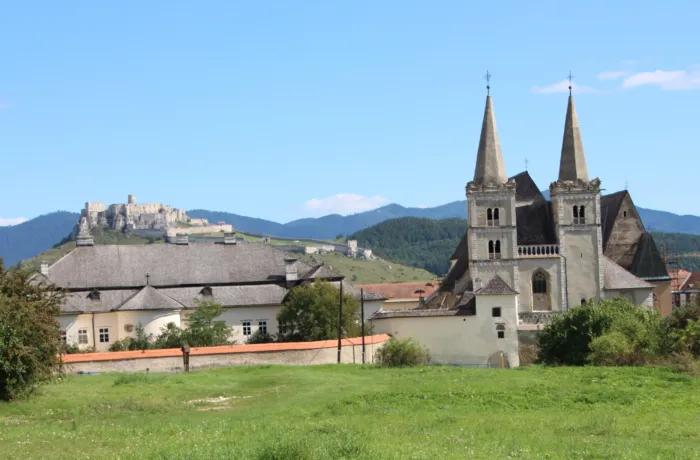
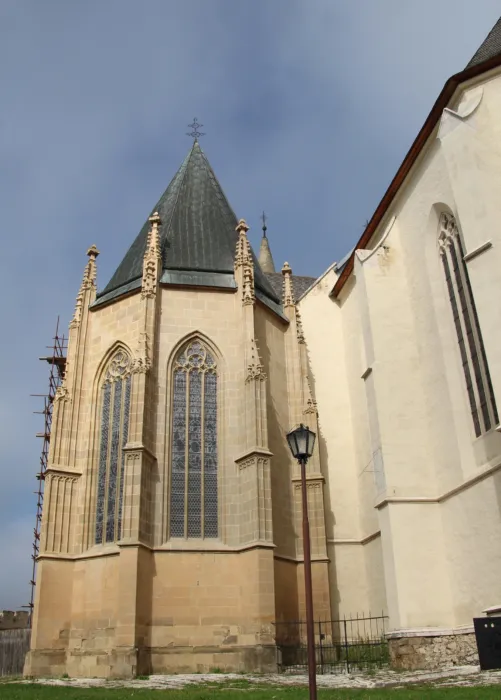
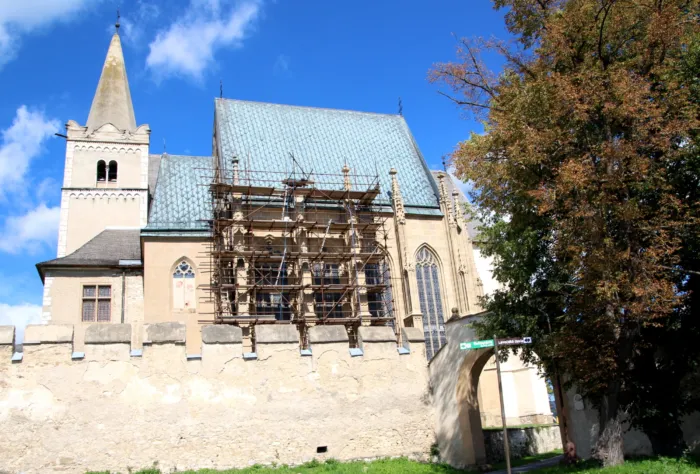
Imre Szapolyai (? – September 12, 1487) was a nobleman, palatine, Croatian-Slavonic ban, brother of István Szapolyai, and the first significant member of the Szapolyai family. His father was called László Vajdafi, who may have received his distinctive name after one of his ancestors' positions as voivode or sub-voivode in Transylvania. ; His rise began with János Hunyadi, under whom he performed secretarial duties. As a result of his services, he was able to build a castle with his father and brothers in Tiszovc near Szapolya before 1455. He remained in the service of the Hunyadi family even after János Hunyadi's death. After Matthias ascended the throne, he was the castle lord, chamberlain and salt chamberlain of Nagybánya from 1458 to 1459. He did his job so well that he was the royal treasurer from 1459, which was already considered a baronial position. At that time he received his first castle estate, the Dominion of Tokaj, which became his residence for a while. He then led campaigns to the northeastern regions of the country against foreign mercenaries who were plaguing the region. At that time, he increased the number of his estates with additional castle estates and a royal city, Késmárk. In 1462, he secured the bishopric of Transylvania for his older brother, Miklós, and his younger brother István assisted or replaced him as a soldier in the campaigns. ; Ban of Croatia-Slavonia from 1464–66, Governor of Bosnia from 1464 to 65, which position was the second highest noble rank after the Palatine at that time. The king removed him from his positions in 1465, but as compensation he could be the hereditary lord of Szepes County from 1465 until his death. In return for loans to King Matthias I, he received extensive estates. Although he repeatedly opposed Matthias, participated in the Transylvanian rebellion of 1467 and joined the conspiracy led by János Vitéz in 1471, he was always pardoned. András Kubinyi therefore suggested that he might have been the illegitimate son of János Hunyadi, but this idea cannot be substantiated. ; After a period of 21 years without a baronial office as royal governor from 1475, he was elected palatine in 1486, a position he held until his death in 1487. His remains were buried in the Szapolyai Chapel of the St. Martin's Cathedral in Szepeshely, where his tombstone made of red marble can still be seen today. ; The tombstone shows the full figure of the deceased, fully armed, with a helmet on his head, a banner with a coat of arms in his right hand, a sword in his left, his feet resting on a lion. Below on both sides is a shield held by an angel, on the right a wolf emerging from a triple mound, accompanied by a crescent and a star (the same coat of arms can be seen on the banner), on the left a unicorn. The inscription: HIC • IACET • ILLVSTRIS • | AC EXCELLENS • Do(m)I(n)VS • EMERICVS • COMES • PERP(etuus) • SEPE | SIENSIS • ET • PALLATINVS REGNI • PANNONIE • QVI • OBIIT • M • CCCCLXXXVII.