
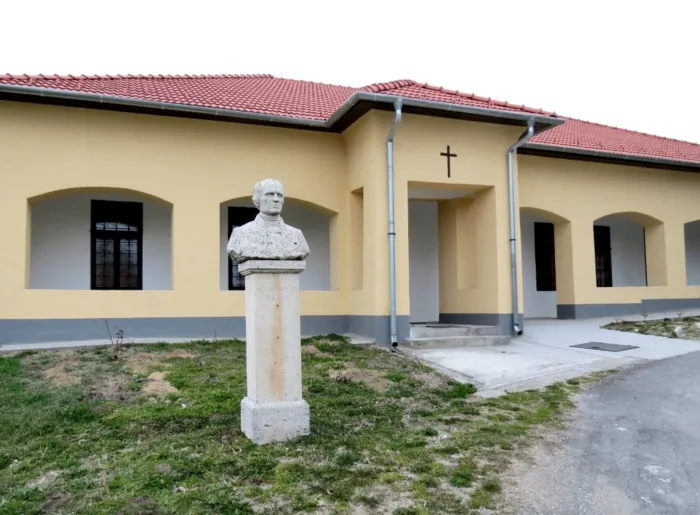
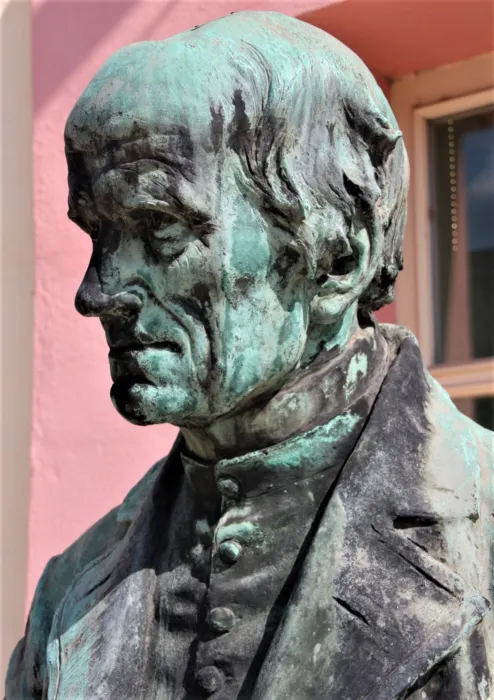
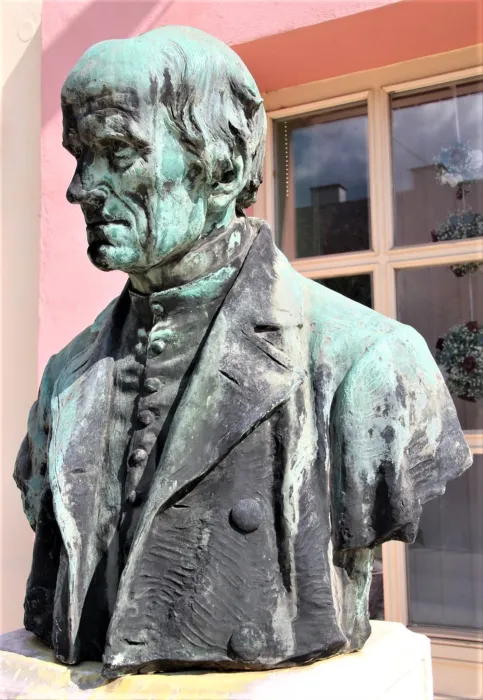
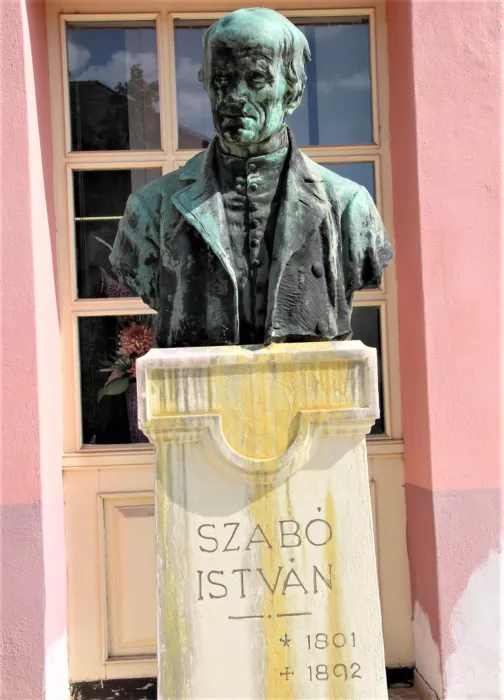
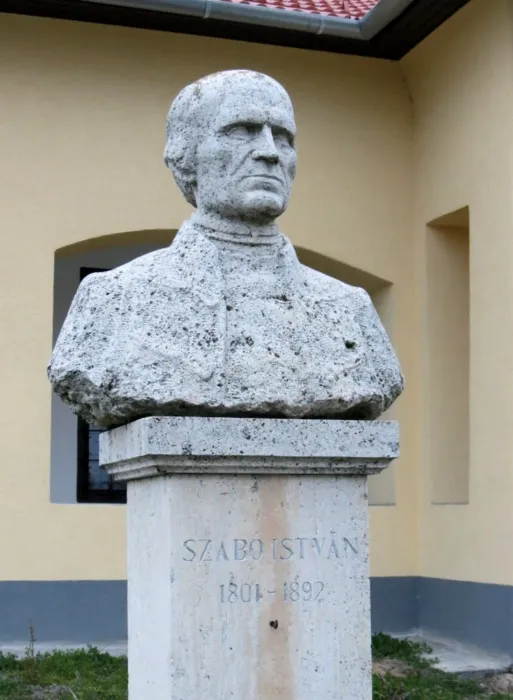
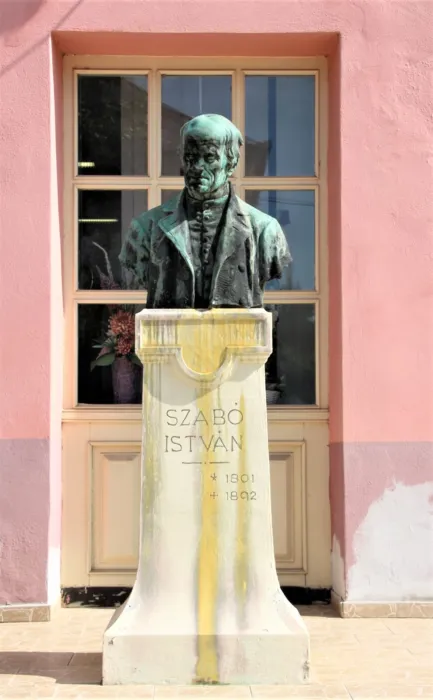
Bust of István Szabó, Catholic priest and translator
Statue, monument, memorial plaque
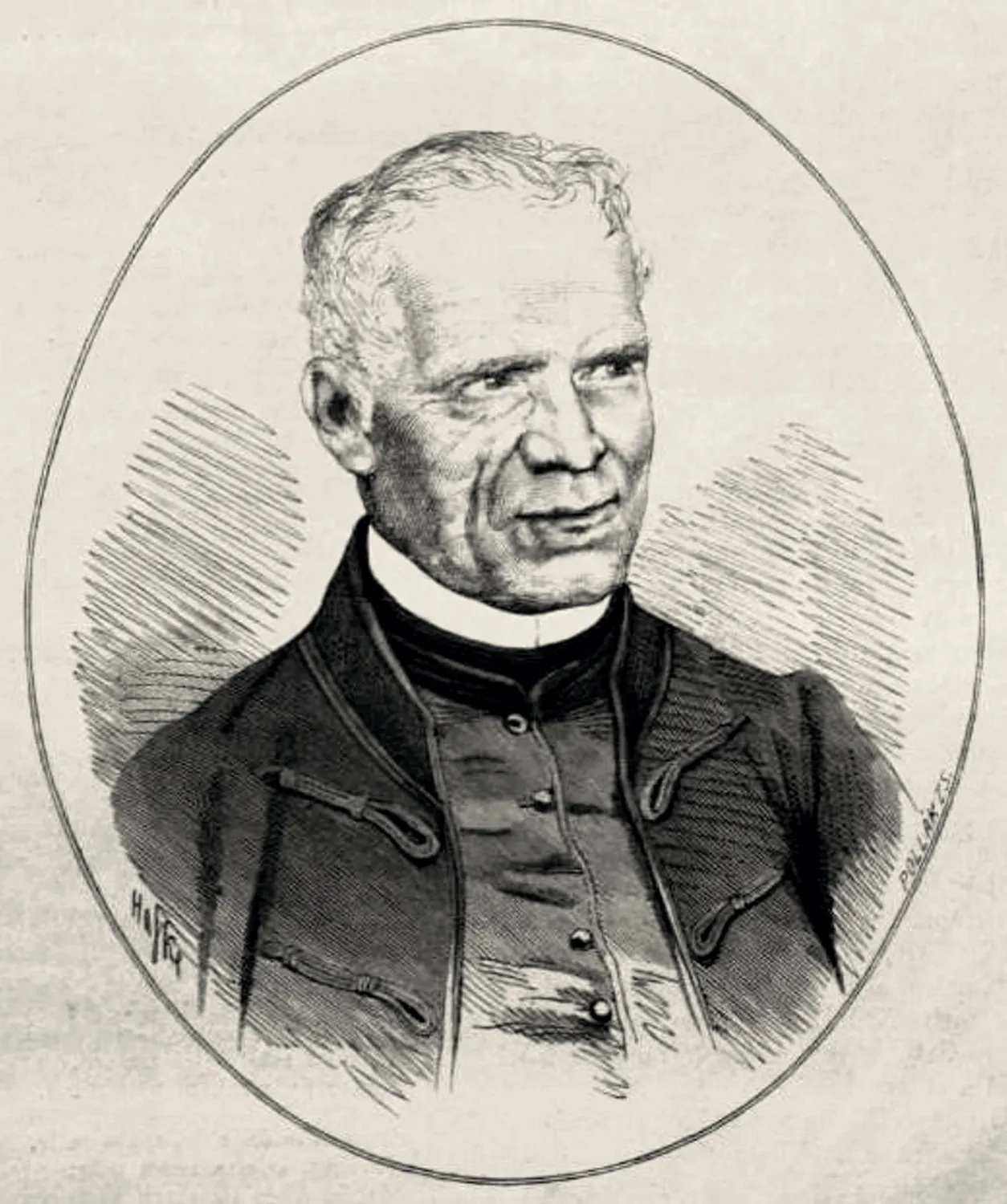
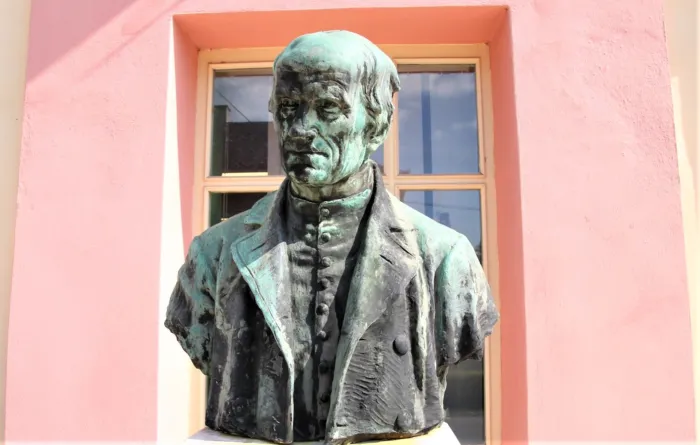
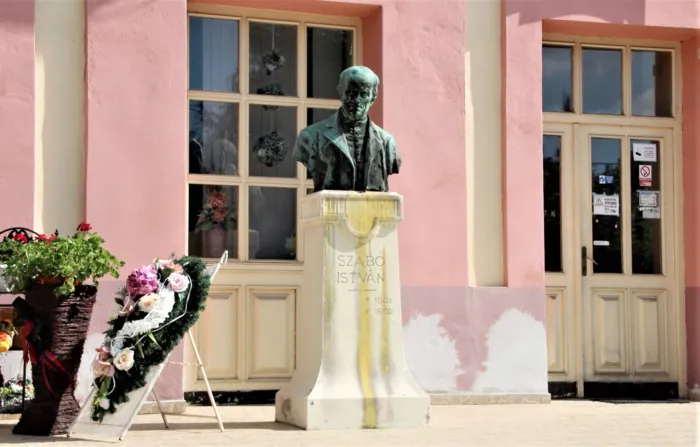
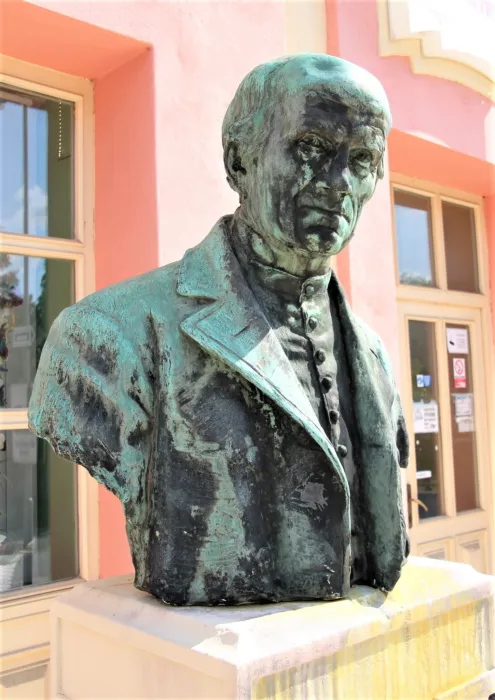
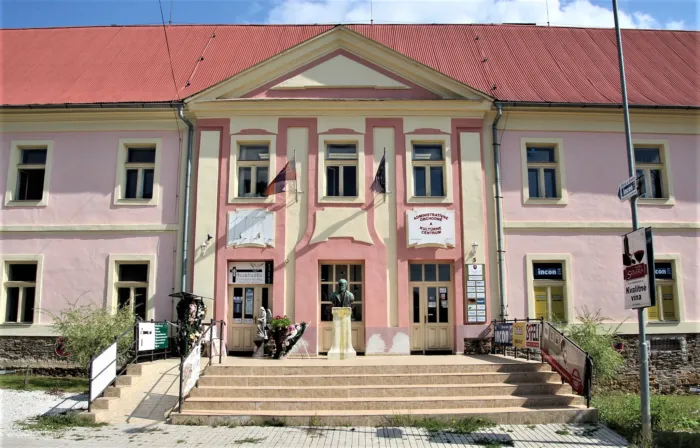
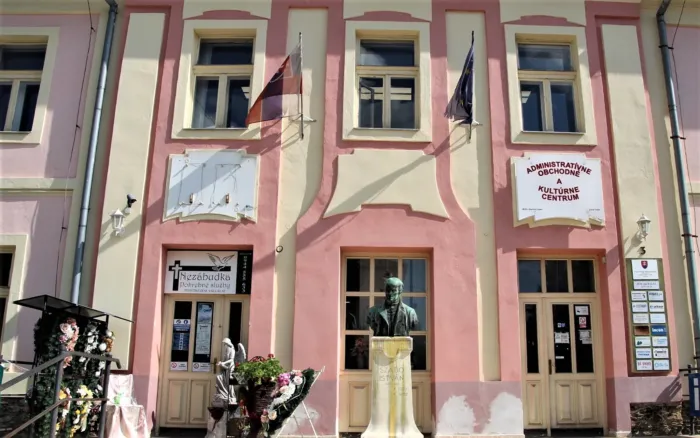
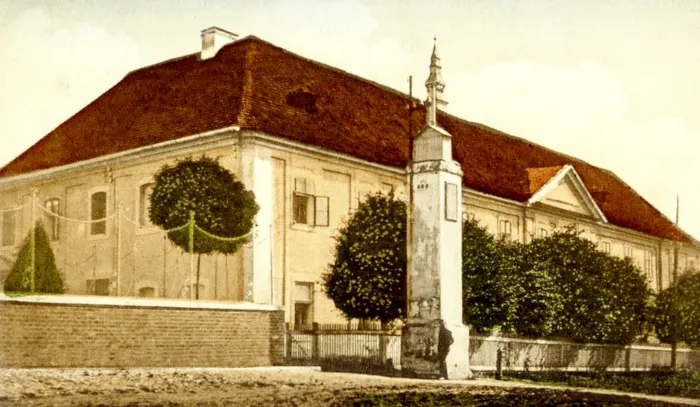
The bust of István Szabó, a former student of the Catholic high school and the great Hellenist, stands in front of the former Premontrean convent. The artist makes the power of the intellect feel great on the face looking to the left in two-thirds profile. It has a good effect on its simple pedestal and the smooth wall of the building in the background. The statue, standing on a one and a half meter high stone column, created by Barnabás Holló in 1897, was the first bust in the city of Rozsnyó. ; ; István Szabó (Bakonyszentkirály, Veszprém county, July 4, 1801 - Kazár, Nógrád county, March 27, 1892) was a priest, translator, Hellenistic scholar, member of the Hungarian Academy of Sciences and the Kisfaludy Society. ; The son of wealthy farmers, János Szabó and Éva Tárkányi. He lost his mother at the age of six and his father at the age of eleven. He first studied at the Reformed College in Pápa, then in 1812 he was admitted to the boarding school of Count László Esterházy, the then Bishop of Rožňov. He continued and completed his secondary schooling in Rožňov with the Premontres. In 1819 he was admitted to the priestly school in Rožňov, and was ordained in 1826. He began his priestly career in Karancskeszi, where he served as a chaplain for seven years from 1827, and here in 1831 Ferenc Kazinczy also noticed the young priest during his travels in the highlands. ; ; “And who would have thought that someone here would read the anthology in Greek and plant the flowers of Meleager on Hungarian soil. – Where have you gone, beautiful works of the Greek soul? – I could exclaim this after the well-known words of Molière. István Szabó Szentkirályi, chaplain in Karancskeszi between Ludány and Bocsár, translates them. His acquaintance, as well as that of his worthy deacon, was very dear to both of us.” (Ferenc Kazinczy: Hungarian Journeys, p. 599) ; ; István Szabó then worked as a deputy parish priest in Osgyán for three years. From 1837 he was a parish priest in Guszona (Gömör County), from 1842 in Pilis, and finally from 1857 in Kazár. The Hungarian Academy of Sciences elected him a corresponding member in 1839, and he became a member of the Kisfaludy Society in 1842. In 1889, he celebrated the 50th anniversary of his election as a corresponding member of the Academy. ; A bust, the work of Barnabás Holló, was erected in his memory in Rozsnyó on 24 October 1897. In Kazár, a bust of István Szabó, the work of sculptor Péter Molnár, was erected in the parish yard on 20 August 1995. ; István Szabó became known to his contemporaries with his prose and verse translations of the texts of the Greek classics. At one time, he was considered the most outstanding Hellenist of Hungarian literature, who was the first to translate Homer's two great epics, the Iliad and the Odyssey, into Hungarian, and also to adapt Aesop's fables into Hungarian. ; In addition to his major translations, his articles were published under his own name and under the names Martialis and K. P. Kazári Pap in Szépliteraturai Ajándék (1825), Koszorú (1830), and Athenaeum (1838-39). Between 1839 and 1840, Figyelmező published his book reviews, and his writings were published in the Kisfaludy-Társaság Évlapjai (Új F. VI., XI., XVI., XVIII.), and in 1842 in the National Almanac. The Pesti Divatlap of February 21, 1845, published his epitaph in memory of Sándor Kisfaludy, and between 1851 and 1852, he wrote in the Új Magyar Múzeum under the title Arkadia a magyaroks hazaja (Arcadia, the homeland of the Hungarians), and in the Akadémiai Értesítő (XIV. 1854) he published his writing under the title Prometheus ýrgylljeőről. István Szabó was also a collaborator of the Idők Tanő between 1862 and 1866 (Epigrams, Swearing in a linguistic perspective). ; ; Works: ; Greek Flowers from the Anthology. (Kosice, 1834.) ; Aesop's Tales. (Pest, 1846.) ; Homeros Iliasa. Trans. (Pest, 1853.) ; Homer's Odyssey. Trans. from Hellen (Pest, 1857.) ; Golden Fleece Warriors or Apollonius Rhodius' Argonauticon. Trans. (Budapest, 1877.) ; Moses' Traces in Homer. (Budapest, 1889.) ; Mamzer. (Budapest, 1890.) ; The Origin of the Muses and the Meaning of Names. (Budapest, 1891.) ; The Arkaszkos before the Moon. (Budapest, 1891.); The God of the Hungarians. (Budapest, 1892.); In manuscript: Tetralogy from Isocrates, Argonautica of Orpheus.