
Sebók mansion
Building, structure
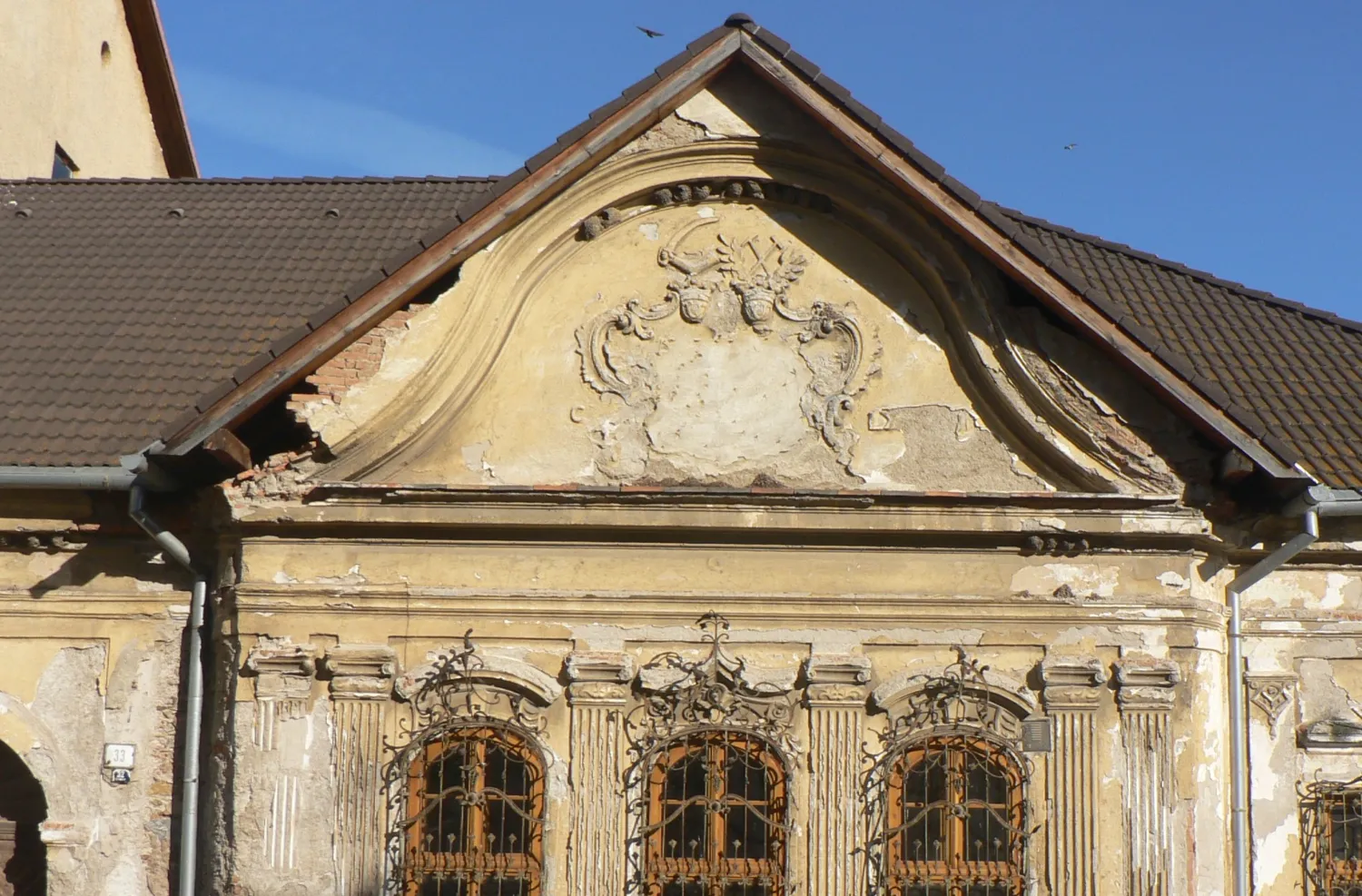
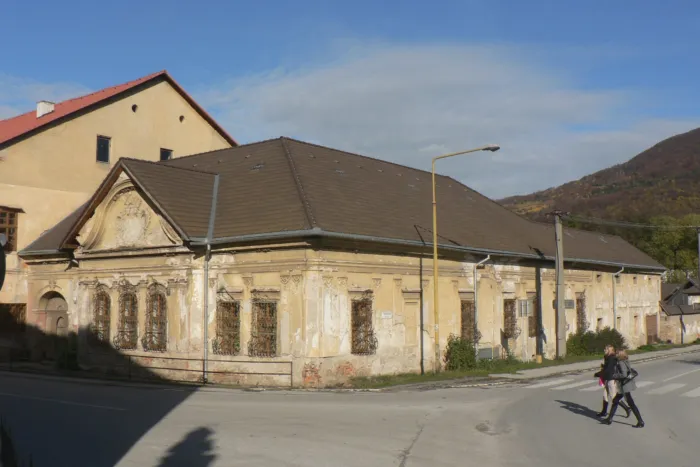
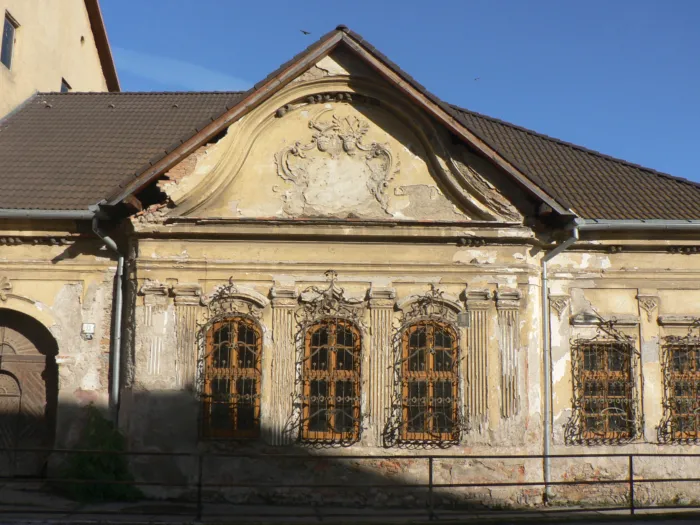
The history of Csetnek, which dates back to the Árpád period, has been intertwined with mining and the metalworking industry from the very beginning. Thanks to the diligence of German hospices, it soon embarked on the path of market town development, characterized by several medieval churches and a castle built on the edge of the city center. ; In the early modern period, several noble families moved into the city and took part in mining and the iron industry and trade that were based on it. These families also built several almost palace-like town houses. One of these is the Sebők mansion, built by the Kerepesy family in 1783 on the eastern side of the main square of medieval origin. ; The late Baroque and Rococo plaster decorations, cornices, and pilasters of the two street facades of the single-story, gable-roofed corner building are exceptionally valuable. Its main entrance gate opens from the main square. The projection protruding from the middle of this facade is crowned by an arched tympanum, with a noble coat of arms made of plaster - now very dilapidated. ; The neglected, constantly decaying, privately owned building is most likely used as a warehouse. ; (The description was based on the work of Gábor Tököly: castles, mansions, manor houses in Gömörben.) ; ; Csetneki kúria - based on the recollections of Pál Sebők ; ; Pál Sebők's ancestors come from Felsősajó near Dobsina, and they received their nobility from King Leopold in 1701. ; The Csetneki kúria was renovated in 1843. ; Pál Sebők grew up in the manor, his parents: Pál Sebők (born in Csetnek) and Piroska Sebők (born in Déván), married in 1925, divorced in 1936 – their children: Éva Sebők (1926), Judit Sebők (1928), Pál Sebők (1930), Antónia Sebők (1933). id. Pál Sebők later remarried. ; After the divorce, Piroska Sebők moved to Rozsnyó with her three daughters, Pál Sebők remained in Csetnek, where she attended elementary school. ; Pál Sebők later attended the Premontrei Gymnasium in Rozsnyó, at that time he lived with his mother, but spent his holidays in Csetnek with his siblings. Their servants called him the young gentleman, he had horses, rode a lot, and hunted. ; Even before Pál Sebők was born, in 1919, the Sebők family was taken by the Red soldiers to Putnok, as a noble family, and kept there until the end of the Red rule. By the time they returned home, there were already Czech soldiers in Csetnek, the mansion was robbed, the antique furniture, paintings, family documents were taken, and the animals from the stable were also taken. After the looting, the noble certificate and the life-size portrait of Pál Sebők's great-grandfather, Jenő Kerepessy, a painting by Viktor Madarász remained. ; Pál Sebők experienced the horrors of World War II at the age of 14-15 in Csetnek, the mansion was home to the German command, the local command, and Hungarian soldiers also lived there. ; Piroska Sebők was resettled to Hungary with the population exchange after World War II, she went to Eger with her three daughters, her son, Pál Sebők remained in Csetnek. id. Pál Sebők re-Slovakized in order to save the ancient estate and manor. Thus, he was able to stay in Csétnek, receive Slovak citizenship, and farm the family lands until 1948. ; 1948, after the so-called "liberation", the communist takeover, the Sebők family lands were taken by the state. Pál Sebők's father was forced into the cooperative by austerity and unjust decisions. The farm yard of the manor was used as part of the JRD (cooperative), where the cooperative farmed, the communists completely swept away the sheds, granaries, and barns. The family's animals and agricultural machinery were taken by the state. ; Pál Sebők married for the first time in 1950, and had a son from their marriage, his first wife divorced him during her husband's imprisonment. ; Pál Sebők was drafted into the army in 1951 and assigned to labor service because of his origin. Later, he was forcibly taken to a military prison in Rumburk, where he was interrogated. They tried to get him to sign a fabricated indictment against his father for anti-state activities. During this period, the STB ransacked the manor house and the family crypt in Csétnek, because they were looking for weapons. ; In 1952, the state court sentenced Pál Sebők to 15 years in prison for treason, 10 years of loss of civil rights, a fine of 20,000 crowns, and complete confiscation of his property on fabricated charges. He survived forced labor, camps, uranium mining, torture, interrogations, and a prison camp. In 1960, the president issued the first post-war amnesty, which also applied to political prisoners. Pál Sebők was then released and returned home to Csetnek, where he found the ruins of the looted mansion and estate. ; Pál Sebők married for the second time in 1960. Since he could not find suitable work in Csetnek or Rozsnyó, he moved with his family to Košice in 1964, where he worked as an electrician at the Iron Works. He had three daughters from his second marriage, one of whom died tragically at the age of 8. ; Pál Sebők's father and grandmother lived in the mansion. His father died in 1988, his grandmother in 1991. In 1989, after the change of regime, Pál Sebők submitted a rehabilitation application to the state. At that time, he was fully rehabilitated, received compensation and was asked for forgiveness. ; After his retirement, in 2006, Pál Sebők and his wife moved back home to Csetnek, but not to the mansion, but to the house of his wife's deceased younger brother, which they bought from relatives. ; The mansion is currently owned by the daughter of Pál Sebők's father from his second marriage and her family. After partial renovation, they mainly used the yard and parts of the farm buildings in their agricultural activities.