
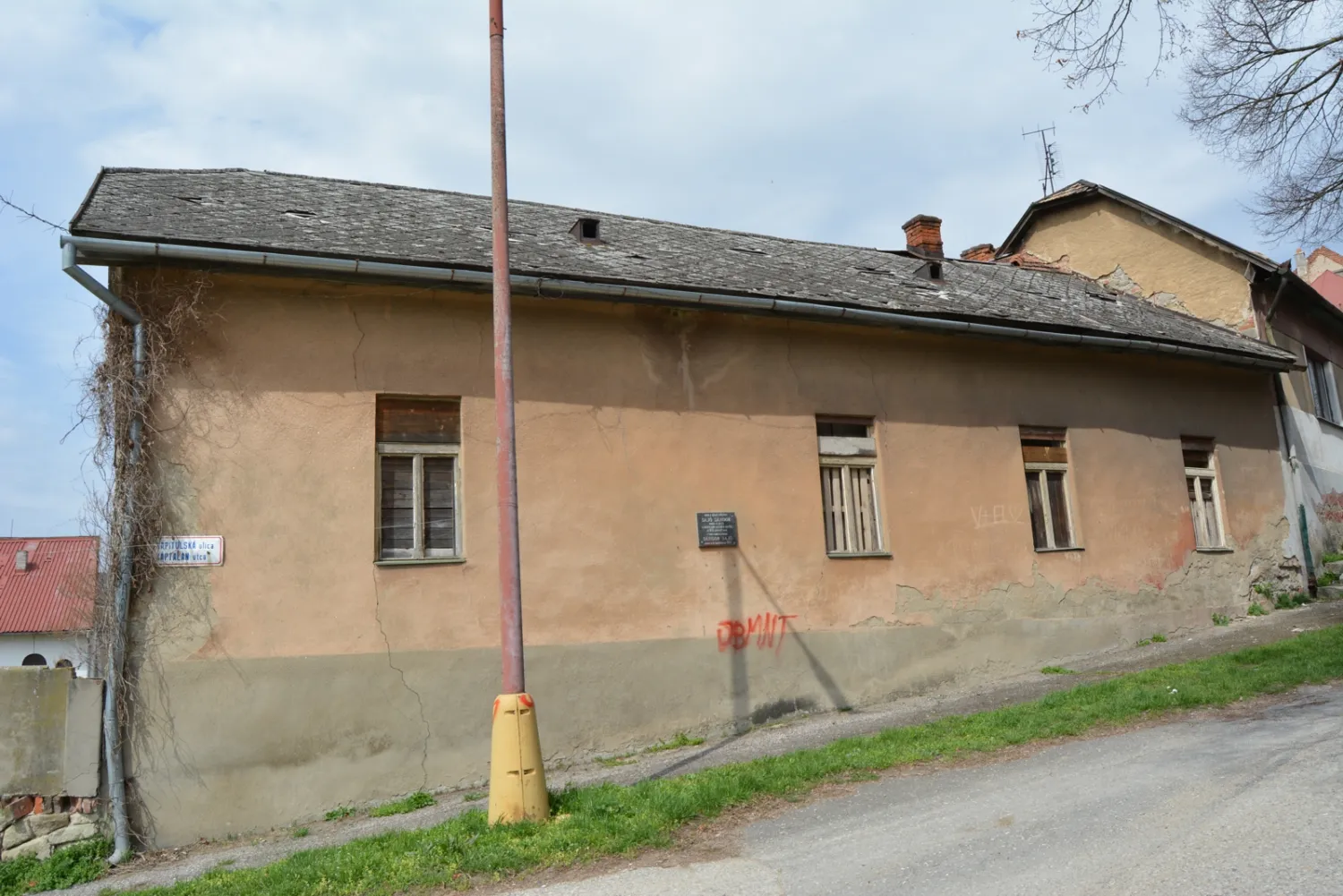
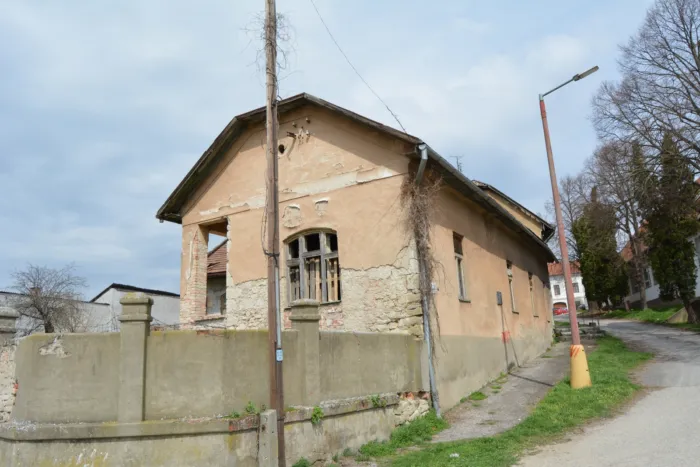
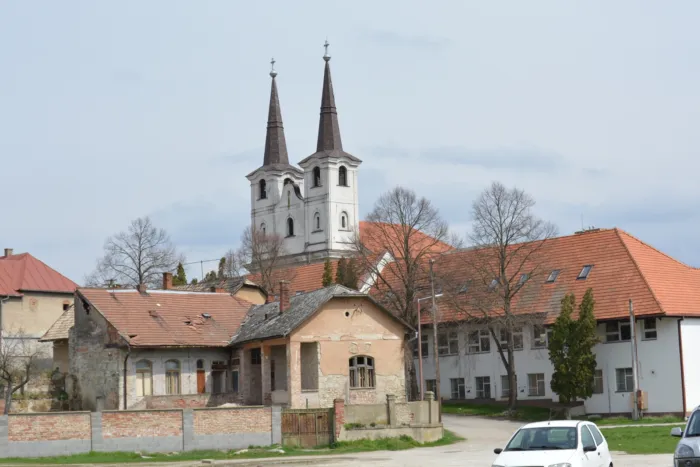
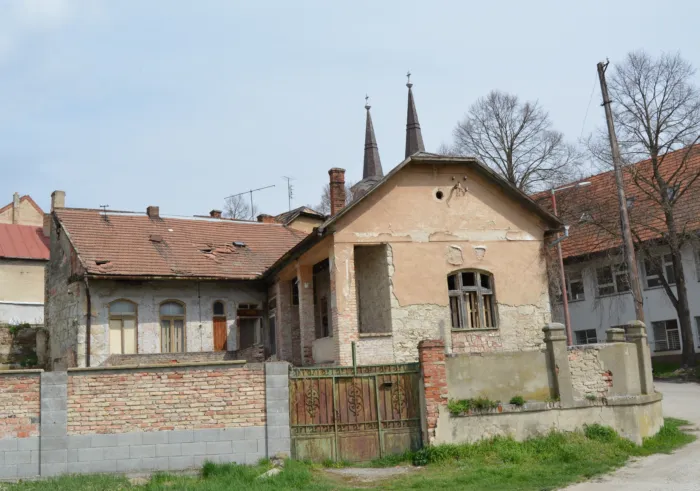
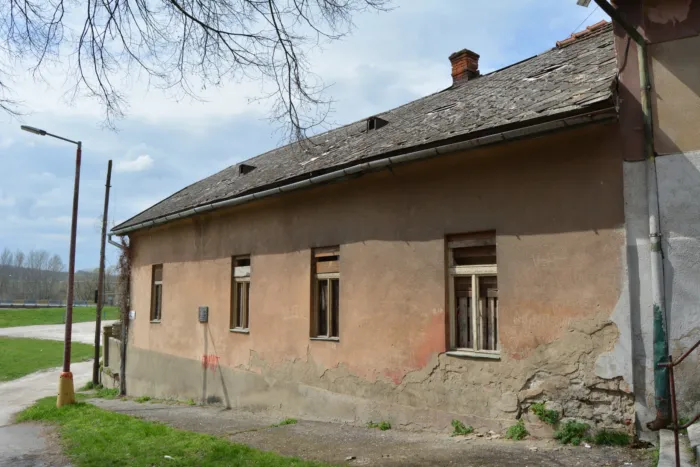
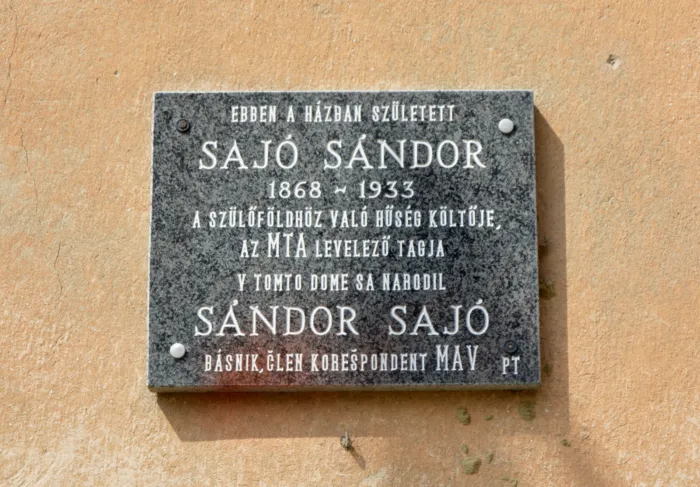
Sándor Sajó's birthplace and memorial plaque
Building, structure
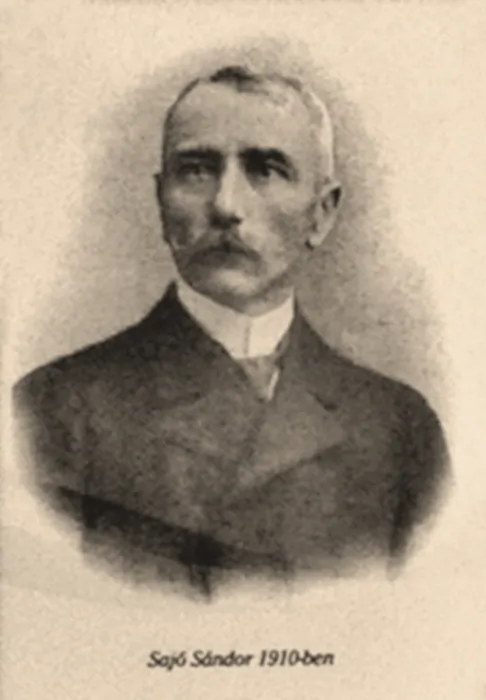
Sándor Sajó was born in Ipolyság, in an old building on the corner of Káptalan Street on the hillside next to the old Premontre monastery, on November 13, 1868. ; Sándor Sajó's love for his homeland was combined with patriotism, even though he did not come from a Hungarian family with deep-rooted roots. His original name was Heringer, and his family had already been Magyarized generations earlier. That is why he could later write that he was born Hungarian. On his part, this was as sincere a confession as Károly Kós, who came from a Transylvanian Saxon family, when he spoke of his homeland with such great love. ; Sándor Sajó went to elementary school in his hometown, then continued his education in the old mining town of Selmecbánya, the free royal city of Hont County. In the same building where Sándor Petőfi and Kálmán Mikszáth also studied. His first poems were written here, and his fellow students helped him publish them by raising the necessary money. In 1886, he enrolled in the Faculty of Humanities of the University of Budapest, majoring in Hungarian-Latin. He learned about style and poetics from the lectures of Pál Gyulai and Zsolt Beöthy. His poems were also published in contemporary newspapers, weeklies and literary magazines. He met János Vajda in the editorial office of the Vasárnapi Újság, and Gyula Reviczky at the meetings of the Petőfi Society. ; Another interesting aspect of his biography is that in 1890, he enlisted as a volunteer in the Károly Barracks in Budapest, where he was promoted to lieutenant a year later. He began his career as a secondary school teacher in Nyitra, and then was assigned to teach in Újverbáz in the southern region. He started and edited the Verbász és Vidéke newspaper. Here he met his love, Lujza Delhaes, with whom he married on August 17, 1895, under the Hungarianized name Sándor Sajó. He greeted the millennium celebrations of 1896 with his poem A Thousand Years. After that, he returned again and again to sing the great events of Hungarian history in his poems, such poems as Rákóczi, Bezerédiné, Jókai, Kossuth, Drégelyvár ruins, etc. ; A new phase of his poetic life began in 1897, when he became a teacher at the Jászberény gymnasium. He ended up in a “dusty, but at least Hungarian town”, where Lehel’s horn was still kept, and he fell in love with the Jászs. His second collection of poems was published here in 1898. In this, he was still searching for the voice, the most suitable form of expression, and thus published the volume Ifjú szívvel. In 1903, in recognition of his successful teaching work and poetic successes, he was transferred to Budapest, to the then District III high school. Here, in 1904, his new volume, On the Road, was published, in which he expressed his deep emotional attachment to the nation the most. The year 1910 brought another success to his poetry: the book of poems Gordonka was published. It contained his best-known poem, To be Hungarian, which won the Hungarian Academy of Sciences award. ; His public activity was significant: he was elected secretary of the National Association of Hungarian Teachers, and then became its general secretary between 1911 and 18. He was appointed director of the Szent László High School in 1917, then was dismissed from his position during the Red Terror, and only returned to his old position after the fall of the Commune. At that time, he was elected president of the National Association of Hungarian Teachers. Later, from 1921, he became a school district director. The Hungarian Academy of Sciences accepted him as a corresponding member in 1932. The poet may have already felt his death approaching when he wrote his last poem in 1933, titled I Do Not Want Cowardly Silence. Death took him away on February 2, 1933. ; At his grave (Budapest - Kerepesi Cemetery) Lajos Áprily gave a speech on behalf of the Kisfaludy Society and the Hungarian Academy of Sciences: "passionate love of the nation was the defining feature of his poetry... Even in his bitterness, he was the poet of national affirmation of life, and he himself was full of love of life..." ; A long time has passed since his death, during which time his exclusion from the national consciousness and the erasure of his existence and poetry from Hungarian literature have almost succeeded. The Palóc Society and the Association of Literary Societies inaugurated a memorial plaque in his birthplace on November 19, 2000. Since then, we have commemorated him every year, because he lives on in the poet's poems. The Palóc Society annually organizes the Hungarian poetry festival under the title "To be Hungarian: a great and holy will", a review of young people reciting patriotic poems marked by the name of Sándor Sajó in the poet's hometown, in which poets from the Highlands, Hungary, and the South participate. In 2008, a bronze bust was inaugurated in his hometown (created by sculptor Szilveszter Oláh). In 2018, the Sándor Sajó Memorial Year was declared to draw even more attention to the patriotic poet and teacher.