
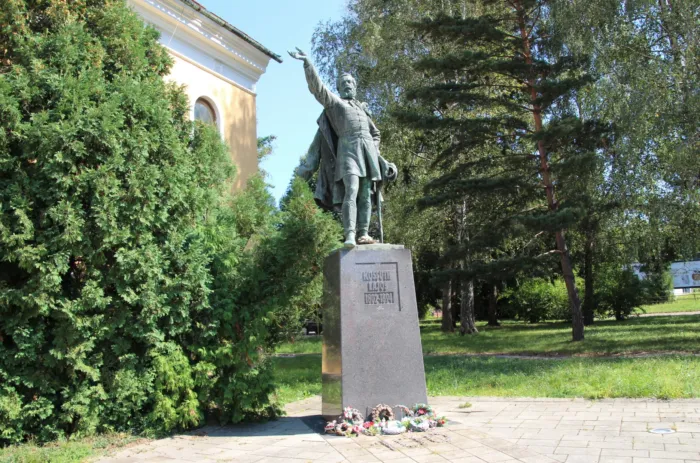
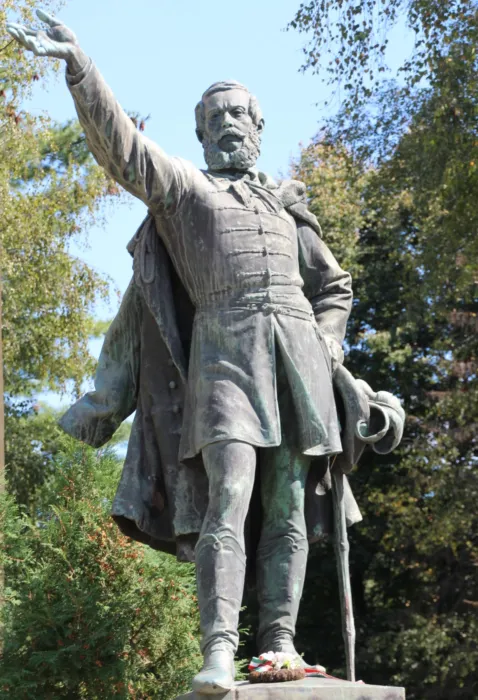
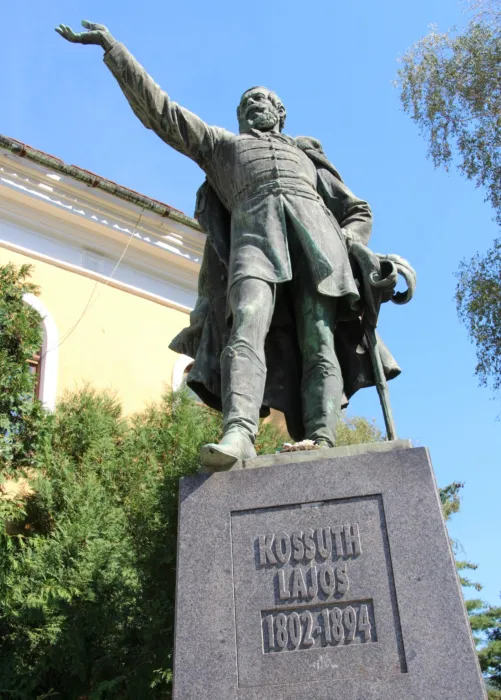
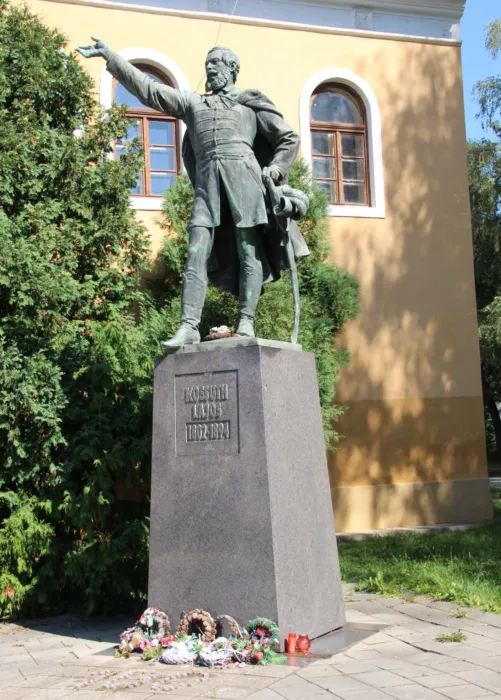
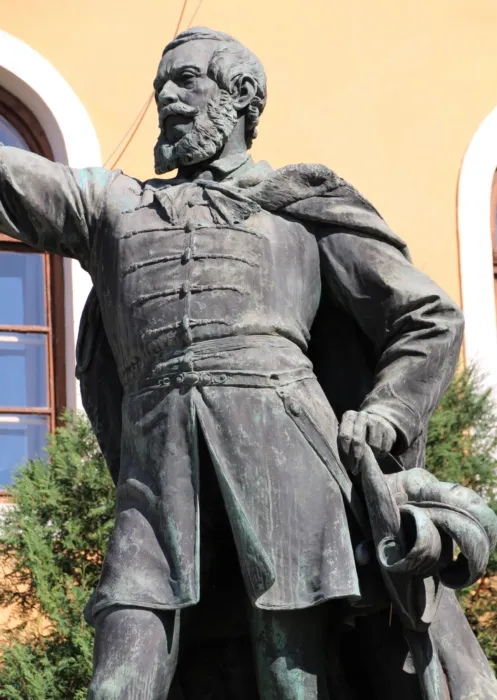
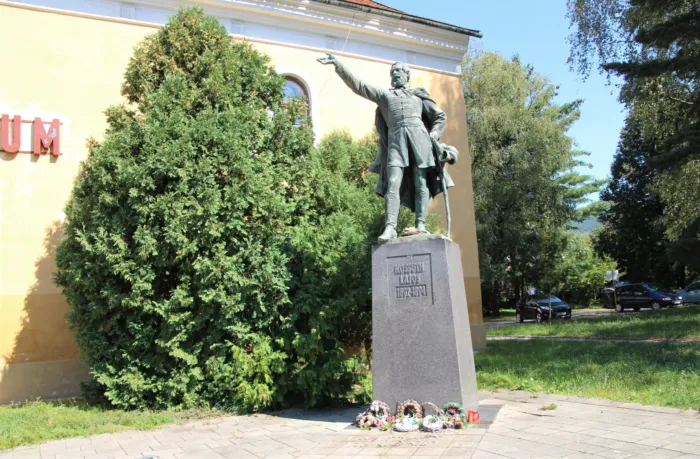
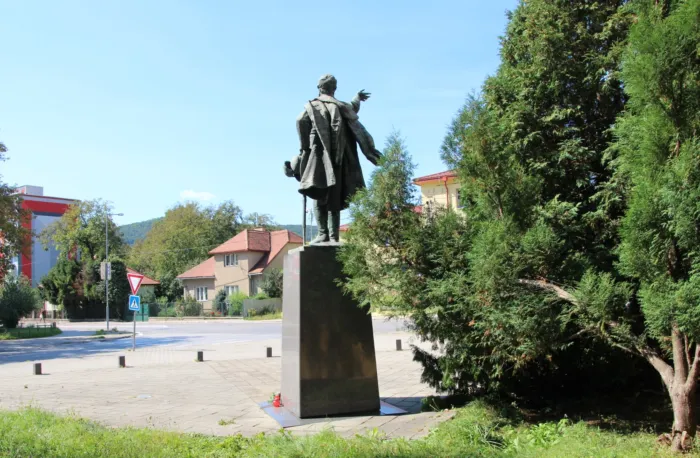
Kossuth statue in Rozsnyói
Statue, monument, memorial plaque
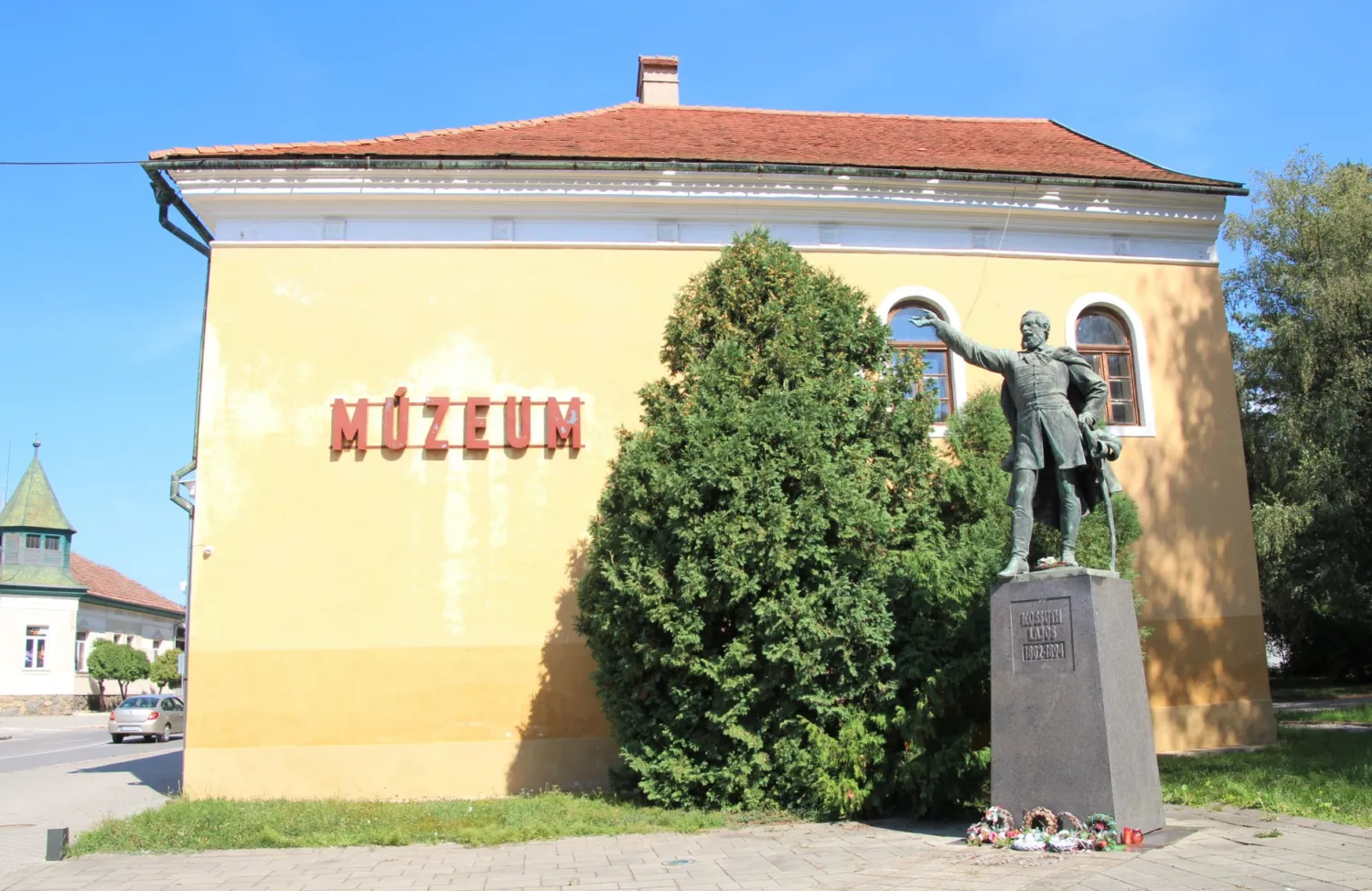
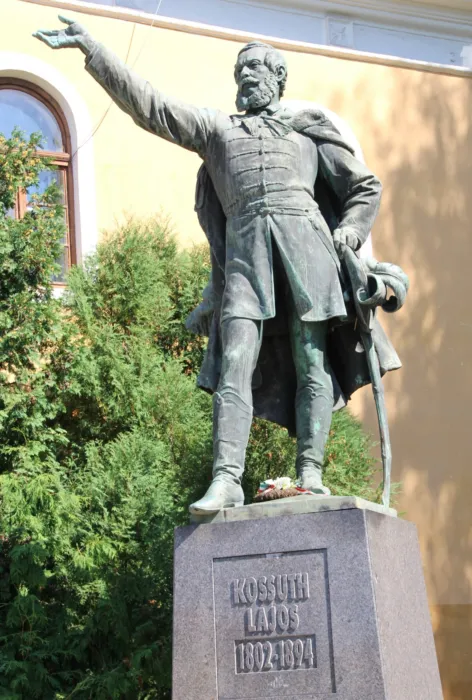
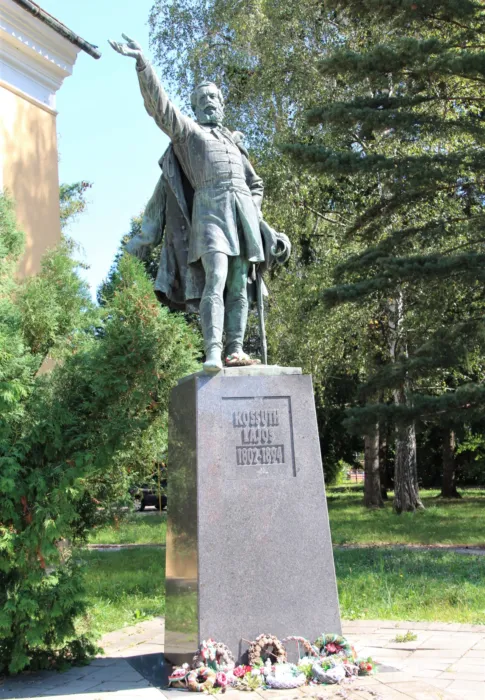
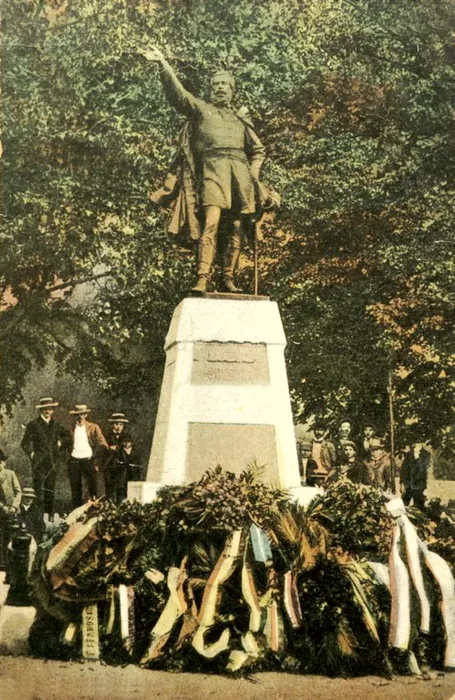
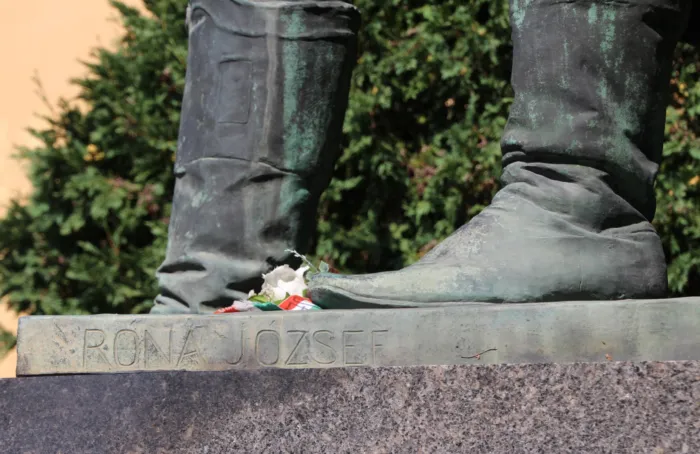
As early as 1902, it was suggested that a memorial celebration should be held for the 100th anniversary of Kossuth's birth. On July 30, a committee headed by Dezső Pósch was formed, which was tasked with organizing the event. A Memorial Book was then published about the celebration on September 20-21, the purchase of which could be used to support the erection of the Kossuth statue, as suggested by the Reformed pastor László Réz. Dezső Pósch also became the chairman of the statue committee and the four-year collection began, with the most money being donated by the lord of Krasznahorka, Dénes Andrássy. József Róna's almost three-meter-high creation (which was a copy of the statue in Miskolc) was finally inaugurated on May 26, 1907, in the presence of Ferenc Kossuth (also the Minister of Trade in the second Wekerle government from April 8, 1906 to January 17, 1910) in the city's main square, which was then called Rákóczi Square. Kossuth's son said: "This statue is not metal, but an embodied idea. This statue is not metal, but an embodied longing, hope, faith and trust. Whoever looks at this statue will never doubt the future of our country. Whoever believes in the idea that this statue embodies, believes in the independence of the Hungarian homeland. And in the idea of independence, this homeland will be glorified and the nation will be happy." After this, the statue committee was dissolved, but the statue itself could only remain in place for 12 years. ; The Czechs invaded the Highlands in 1919. However, at the beginning of June, the Hungarian troops returned, and the people of Rožňov allegedly mocked the Czechs by saying that the arm of the Kossuth statue pointing north indicated the direction of escape for them. Perhaps this explains why the re-invading Czechs tore down the statue on June 18, which was placed in the shed of the town hall for 20 years. In its place, while keeping the pedestal of the Kossuth statue, they erected a statue of the Slovak military officer Milan Rastislav Štefánik. ; In 1938, when Rožňov was returned to Hungary in accordance with the First Vienna Award, the withdrawing Czechoslovak authorities took their statue with them. The statue committee was re-formed, and as a result of the fundraising, the restored statue was re-erected in its original place on June 25, 1939. The speaker was Andor Jaross, a far-right politician who was executed as a war criminal after the World War, and the then government commissioner for the Uplands. The statue only remained in place for six years. ; In 1945, the Soviet city commander, who respected the revolutionary in Kossuth, did not allow the statue to be torn down, but after its relocation, he could no longer prevent its removal again. The statue was once again placed in the already well-known shed. A little later, it was given an (undeserving) place in the courtyard of the Mining Museum, under the foliage of a weeping willow. ; At the initiative of the Albert Pákh Society, founded in 1993, a fundraising campaign was launched again to erect the Kossuth statue in a public square. While a decade-long tug of war began within the Municipality regarding the location of the statue, it was torn down for the third time on January 8, 1994. The city had the damage repaired, but since it was not erected in its original place, it was placed in a housing estate heating house, where it was laid with a wreath every March 15th under undignified circumstances. However, the Gömör Youth Society did not give up the fight! In 2003, the Representative Body unanimously supported the erection of the statue, and even money was provided for it by Deputy Prime Minister Pál Csáky. ; Finally “released” from its forced hiding place, it was re-inaugurated in 2004, although not in its original place, but on the less frequented square in front of the museum, where it took the place of a group of statues depicting an allegory of the labor movement. ; According to Új Szó, about 500 people gathered at the Mining Museum, according to the mayor, about 1,000, and according to an online article by National Geographic, about 1,500 people. The ceremony began with the playing of the Slovak anthem and the singing of the Hungarian anthem. The speeches and introductory texts were given in both Slovak and Hungarian.