
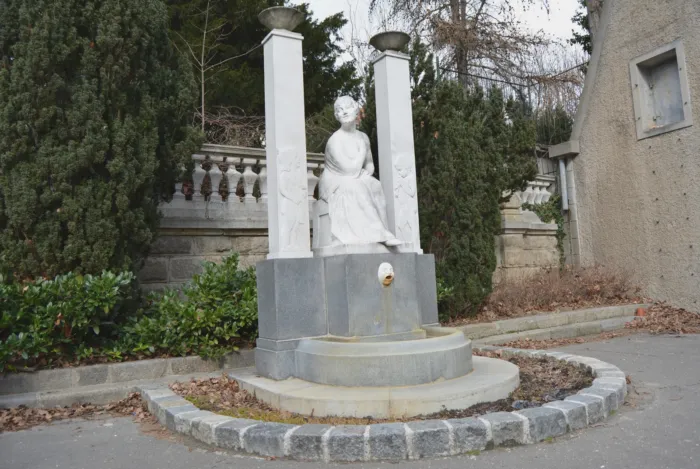
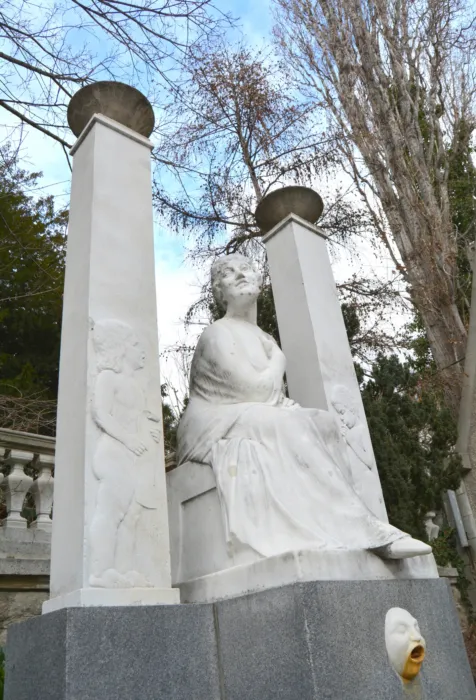
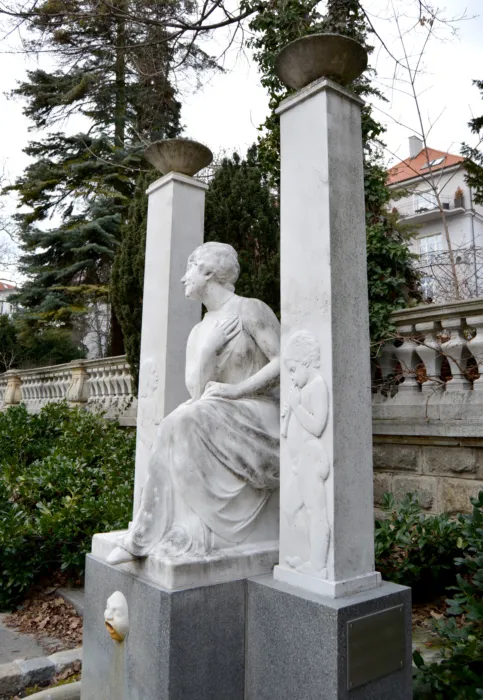
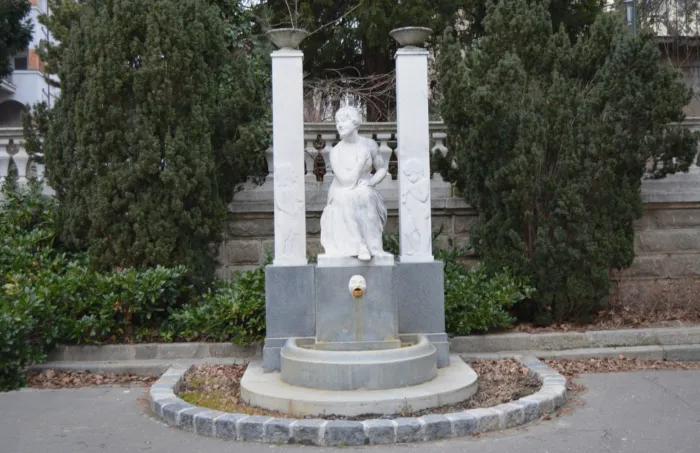
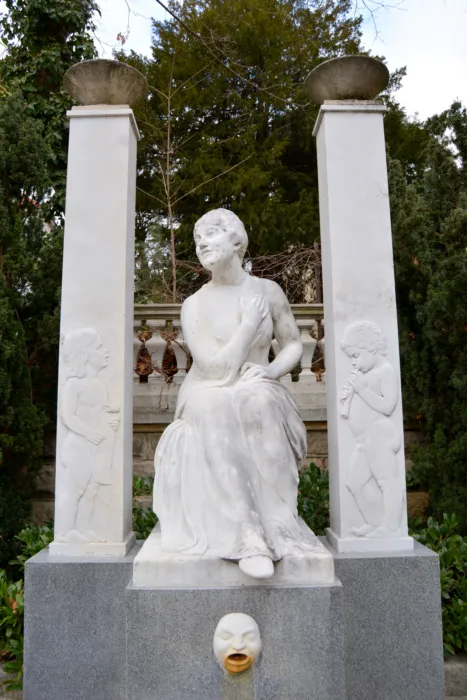
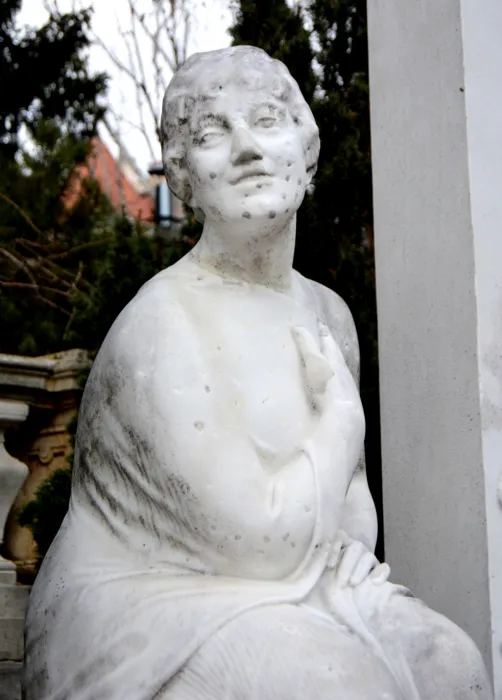
Alajos Rigele's sculpture called Cantus
Statue, monument, memorial plaque
The disease known today as the Spanish flu was one of the earliest examples of influenza type A, and in common parlance many people identify it with bird flu, but in reality there is a difference of two amino acids between the two viruses, which plays a role in which sugars the cell attaches to in the body. In addition to its lightning-fast spread, the Spanish flu increased people's fear by the fact that its course was also extremely rapid and that it chose its victims seemingly completely unpredictably, since a significant proportion of the deceased were healthy men between the ages of 25 and 40. The virus naturally also claimed many victims among children, the elderly and the seriously ill, who usually died of pneumonia. ; The Spanish flu killed about 50-100 million people in less than two years, which is more victims than Hitler, nuclear weapons and terrorists combined. The disease begins with the usual symptoms of influenza, but since the causative agent of the Spanish flu is much more dangerous than the simpler influenza viruses, over time extreme chills, exhaustion and pulmonary secretions appear. A treating doctor writes about the terrible epidemic: “The faces of the patients turn blue and they cough up bloody sputum, and in the morning there are piles of corpses around the morgue.” The Spanish flu was practically a death sentence for the patient, as there is still no cure for the infection. All that the doctors could do was to lay the patient in a sitting position due to the secretions accumulating in the lungs and the untreatable cough. The bluish complexion soon turned brown or purple, and the patients’ legs often became gangrenous. The luckier ones simply drowned in their own pulmonary secretions, while the less fortunate ones were forced into bitter agony by the secondary bacterial pneumonia. ; Bratislava also had its victims. The Hirado of West Hungary reported on October 10, 1918: “There are many deaths in Bratislava too. The morgue of the St. Andrew’s Cemetery is full of patients with fresh, beautiful faces: all of them victims of the Spanish flu, who came to this sad place after a relatively short suffering, an illness of one or two days, and thus the suffering did not change the color or fullness of their faces. The day before yesterday, eight dead people were lying outside in the morgue – this is just a cemetery! and the next day, yesterday, twelve new deaths were reported.” ; The disease killed indiscriminately. Neither poor nor rich, neither old nor young, neither manual worker nor talented artist could be sure whether they would survive if they fell ill. Dénes Trebitsch, a bank manager from Bratislava, was a wealthy and socially prominent citizen, but he could not save his young wife, Olga – or, as he was fondly called, Olly – from the death. On January 27, 1919, at the age of 32, he died in a Vienna sanatorium. The educated public of Bratislava was shocked and devastated by the news. Her relatives, husband, parents, and siblings were obviously more deeply affected by the loss of Olly than those who saw her as the singer and the charitable lady. – Dénes Trebitsch published the news of the loss of his “beloved, dear wife, the happiness of his heart, his kind Olga”, who was 11 years younger than him, in the obituary columns of the newspapers. Shortly after his funeral, on February 8, 1919, a colleague of the Hiradó in Bratislava remembered him as follows: “This name was a concept. A concept that lived in the hearts of all his acquaintances and friends. …Because he was the embodiment of the young, cheerful joy of life, the songful good humor, the mischievous humor, the knowledge of living beautifully, which qualities he was able to preserve for himself with his wonderful, indestructible powers in all his troubles and sorrows. And he passed them on to all of us who were with him. But it is not only the cheerful charm of his personality that makes his name a concept. His truest, most noble, heart-touching singing art, for which nature blessed him with a rare, beautiful, warm voice, was just as important a quality of his being. And he used this great artistic gift with great skill and excellent artistic knowledge. But he used it only to alleviate, to heal, that the war to heal the wounds she had made, to dry the tears, so that we could warm ourselves on this journey by the life-giving light of the sunbeam that emanated from her whole being. Olly Trebitsch appeared in public for one purpose only, to sing for the benefit of our heroic soldiers and invalids. …she developed and cultivated her singing art with incredible diligence and zeal. When other women in her place would have calmly enjoyed the benefits of her social position, she was happiest when she could set off with her music bag in hand to her excellent teacher in Bratislava, Irma Spányi, or later, when she regularly went to Vienna to continue her studies at an even higher level, to Professor Schlemmer-Ambros, the greatest teacher in Vienna. The teacher - who only accepted outstanding talents - took great pleasure in working with her and predicted a wonderful future for her. Her appearance, character, and vocals all attracted her to the stage, they lured her there. constantly her teacher. Art, which wants to completely dominate everyone who submits to its service, also cast its net over her, but it did not completely win, because the woman's heart prevailed, which, for the sake of an artistic career perhaps full of glory and laurels, but often strewn with thorns, could not leave what she loved even more and who dedicated her entire life, her entire being to her, who was her best friend and most understanding, most devoted life partner: her husband, Dénes Trebitsch. " So despite her undoubted talent, Olly did not become a stage singer, she only used her qualities as an occasional concert singer. In that, however, she gave an outstanding performance. ; Her husband, who loved her with immeasurable love, could not be separated from her. Her cold body was placed in the central cemetery in Vienna for eternal rest, but her figure carved in white marble was placed in the garden of the palace he had purchased shortly before. As the branch manager of the Hungarian General Credit Bank, Dénes Trebitsch also held the position of president of the Bratislava Fine Arts Association at the time, and was in close contact with the sculptor Alajos Rigele, who later replaced him as head of the Kunstverein and commissioned a statue depicting his deceased wife from him. In his grief, the husband, who was left alone, tried to pay tribute to the memory of his beloved wife in other ways, in accordance with the traditions of the time and his Jewish religion. The Hiradó also reported on September 7, 1919, that the artistically designed Torah scroll, which Dénes Trebitsch had offered in memory of his deceased wife, was consecrated during a festive service. On this occasion, “many thousands of crowns were collected for charitable purposes, and Dénes Trebitsch established a large foundation for the marriages of poor brides”. On the occasion of the one-year anniversary of Olly's death, Trebitsch again gave charity. According to the Hiradó, the mayor made a statement that "Dénes Trebitsch, director of the Hungarian General Credit Bank, donated 3,000 K to be distributed among the poor without regard to denominational differences, with the intention of having this amount distributed on the anniversary of the death of his unforgettable wife on January 27, 2011, which was done according to the donor's wishes". In the meantime, the statue was completed in Rigele's studio, the fate of which was later quite turbulent. Even today, there is a lot of contradictory information circulating about it, and we can witness a strange mix of dates. The confusion begins right at the time of the statue's creation. According to some sources, Alajos Rigele made the statue in 1921. What contradicts this, however, is the inscription engraved on the back of the statue: A RIGELE 1922. However, it is also a fact that in the issue of Hiradó dated January 22, 1920, the writer of one of the articles noted this thought: "The never-ending pain seeks relief and finds it through the artistic paths given by Rigele's hand in marble, and the memory of Olly Trebitsch "comes alive" in the hearts - in the eyes - of all those who have a sense for the sublime works of art." The quote suggests that the master Rigele was already planning the statue at this time, the plaster model of which was actually completed in half-life size and was given to Trebitsch around this time. The marble statue known today, and the creation of the monument, can be dated to a later date. According to some claims, Rigele's work was made from a piece of the broken Maria Theresa monument. If this were the case, then this could only have been after October 29, 1921, after the remains of Fadrusz's barbarically broken creation were transported to the Mahr-type stone carving workshop, where Rigele's "workshop" was also located. However, Zsolt Lehel, an expert on Rigele's life and art, does not share the opinion regarding the origin of the marble, although this cannot be completely ruled out, since he also claims that Trebitsch took over the marble statue placed on the granite pedestal in 1922, so theoretically this is conceivable in time. ; From then on, the almost life-size, seated statue of Olly Trebitsch adorned the palace garden. However, life did not stop so much that there was time to mourn the loss of his beloved woman for a long time. The following year, in January 1921, Dénes Trebitsch, taking on a diverse social role in addition to his banking activity, which obviously required great intellectual effort, already ensured a good atmosphere at the carnival ball of the Bratislava Private Officials' Gymnastics Club, as the president of the PMTK. According to the Hiradó correspondent, “the ball night really achieved its goal, because among all the glitter and laughter, those present forgot their worries and the hundreds of thousands of daily bitterness.” Such is life – we could say, while October 21, 1923 came, when Dénes Trebitsch led the widowed Mrs. Eisler Miksáné née. Mrs. Aranka Popper to the altar. – The grief passed, new love came, and Dénes Trebitsch and his new partner moved from the former Georgievits Palace, to Pusztafödémes, and took Olly's statue with him, because after 1924, when the apartment building for the employees of Zemska banka was built at the end of the garden stretching from Apácapályá to Védcölöp Street, it was no longer in its original place. Dénes Trebitsch, who was living a new life, finally decided to donate the statue to the city of Bratislava. All this happened in 1931, as evidenced by the inscription on the pedestal of the fountain decorated with the statue: "CANTUS", "FECIT A.RIGELE" and "URBI DONAVIT DYONISIUS TREBITSCH MCMXXXI". ; It is known that the city erected the monument in the ornamental park of the park. It was there until 1938, but before Ligetfalu was annexed to the German Empire, it was dismantled, and the columns that formed part of it were brought from there and then erected in the swimming pool in Teglameze. The statue itself remained in the park until 2002, when its restoration was inevitable (it is a paradox that the statue of the Jewish woman survived the Nazi rule in the open field unharmed). Finally, in 2009, it was returned to the courtyard of the Georgievits Palace.