
Rákóczi crypt (cathedral)
Building, structure
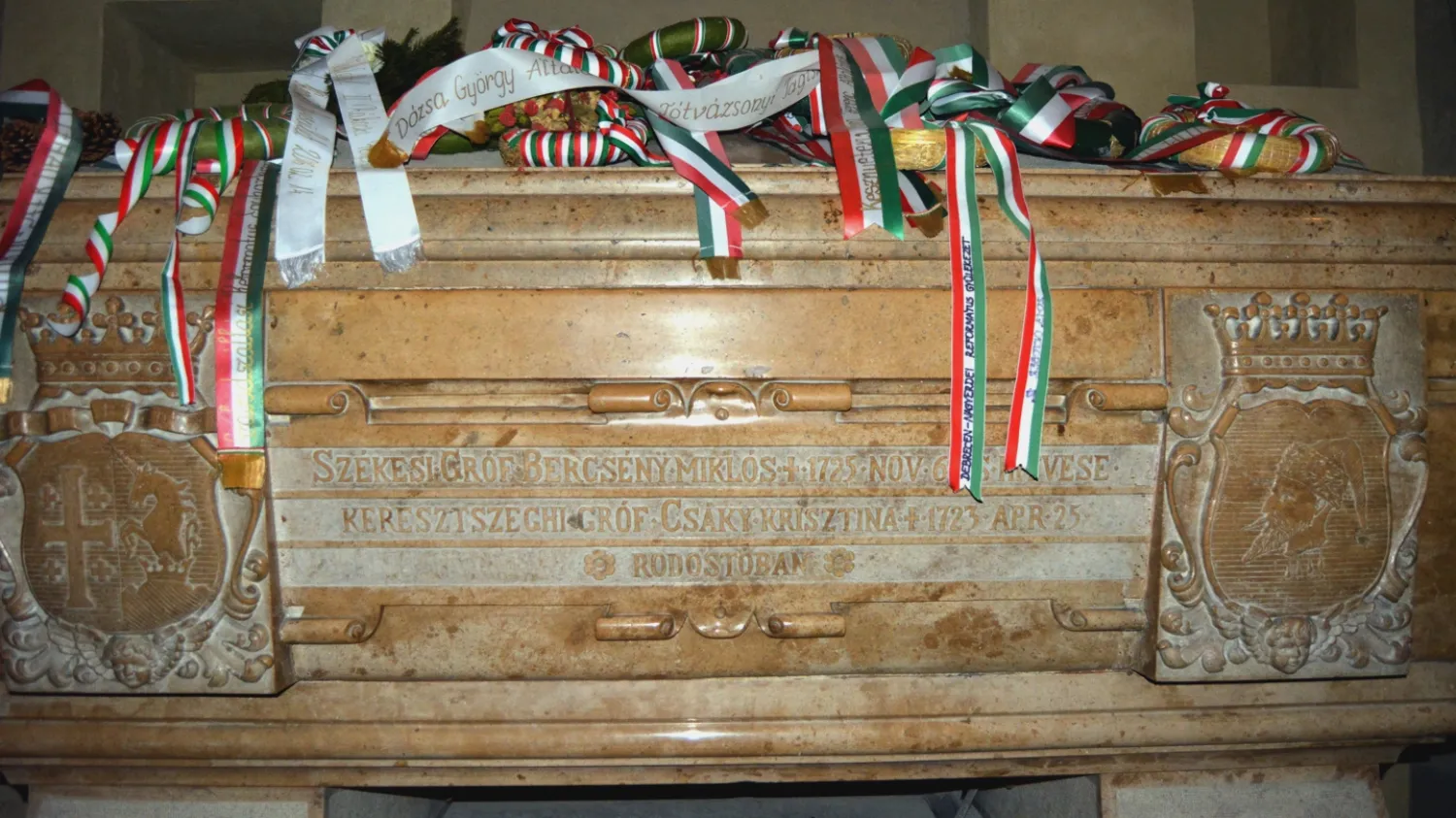
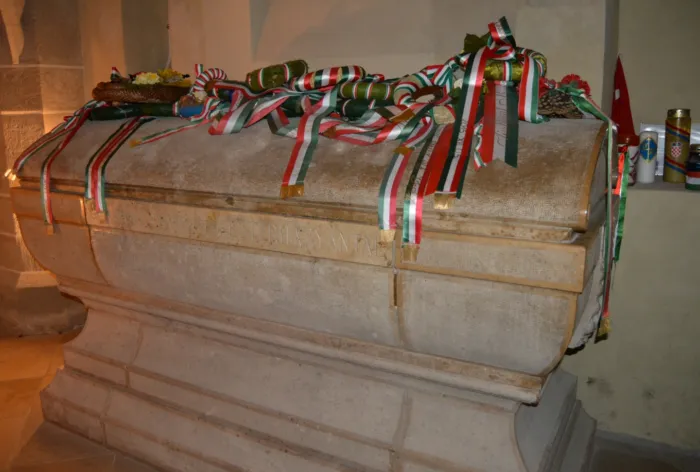
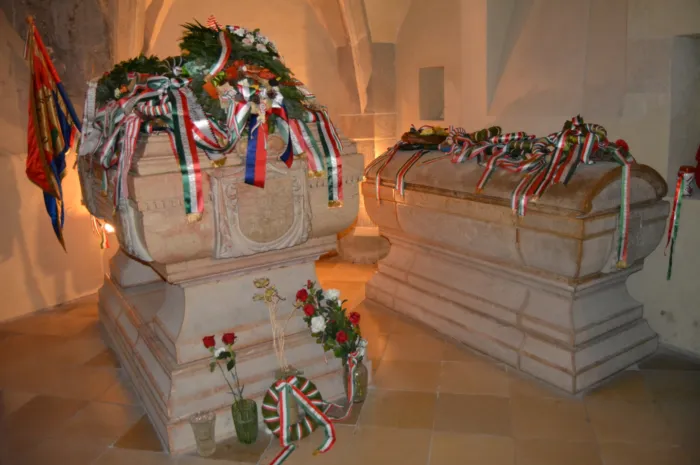
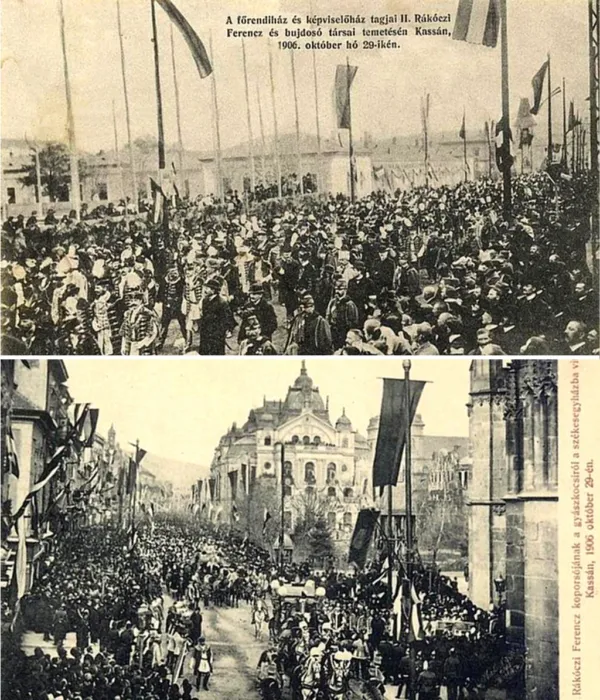
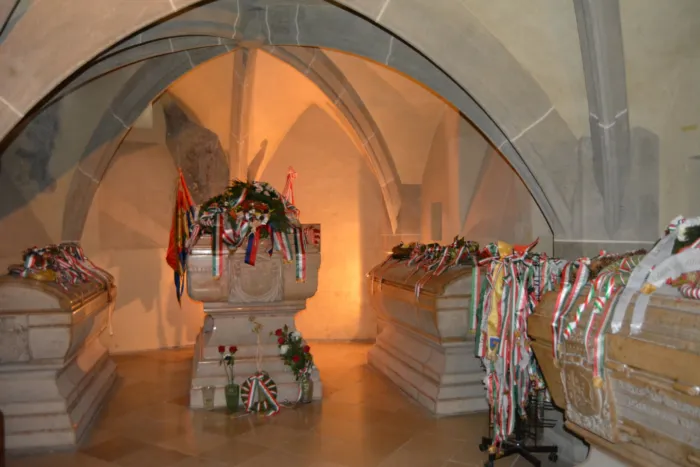
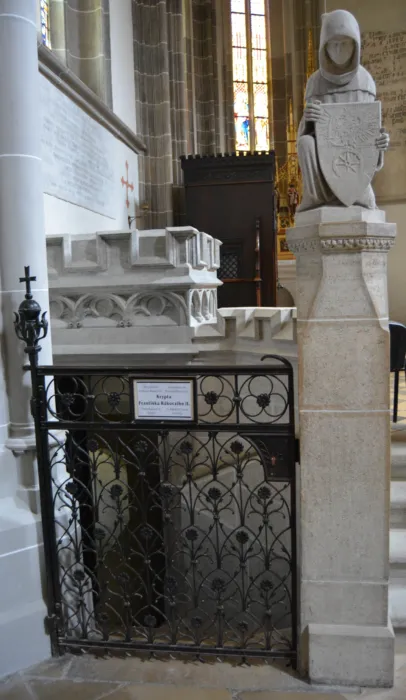
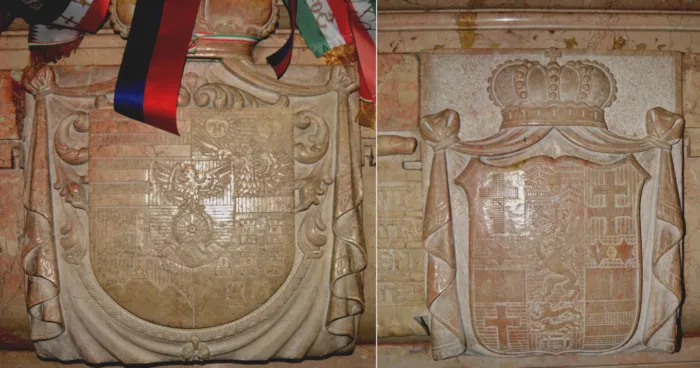
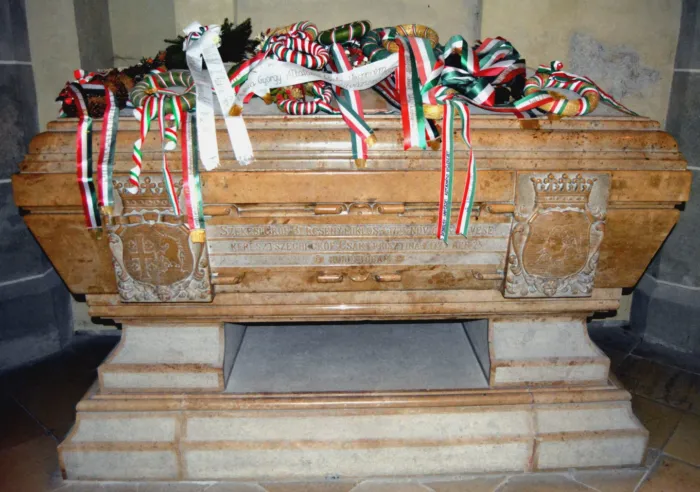
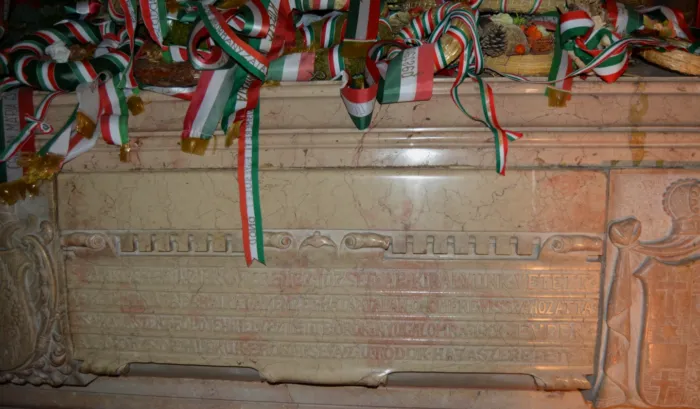
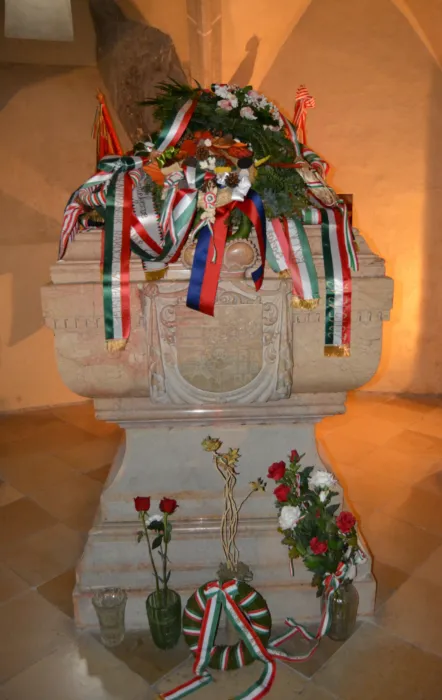
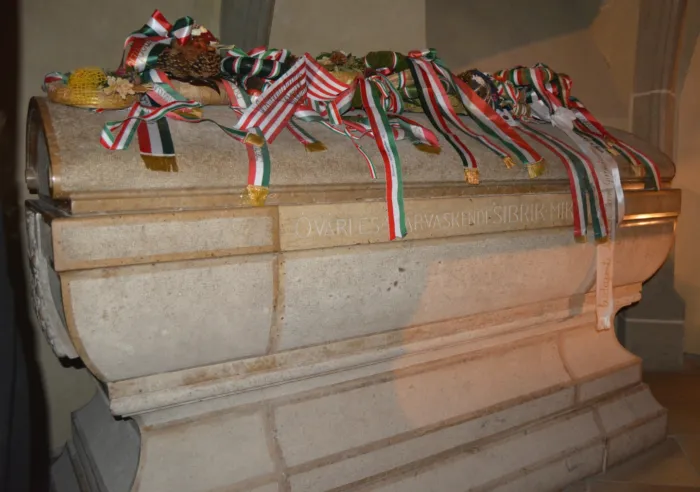
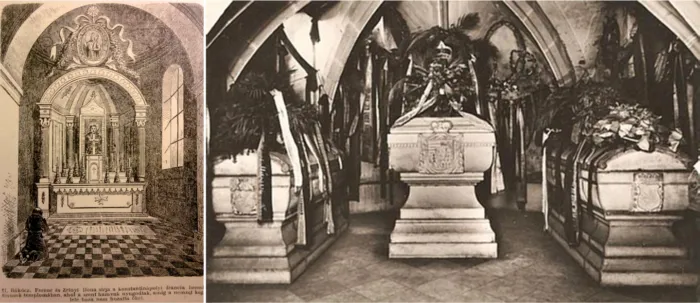
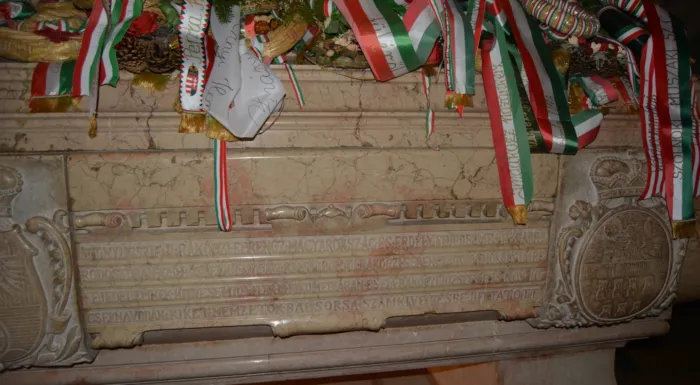
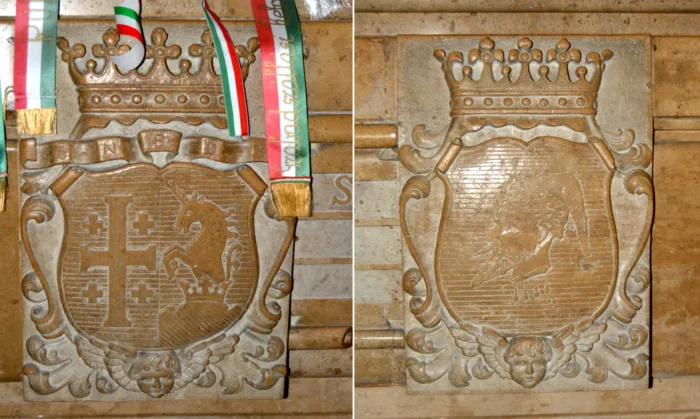
The ashes of Ferenc II. Rákóczi and his fellow exiles, brought home on October 29, 1906, were placed in the crypt of the cathedral. The crypt is located on the north side of the church, and a narrow staircase leads down. Opposite the staircase are three sarcophagi: the middle one hides the bronze coffins of Ferenc II. Rákóczi, Ilona Zrínyi and József Rákóczi, the one on the left holds the body of the courtier Miklós Sibrik, and the one on the right holds the body of Count Antal Esterházy. To the right of the staircase, next to Esterházy's sarcophagus, lie Count Miklós Bercsényi and his second wife, Krisztina Csáky. The mourning flag carried by an armored knight at the head of the procession during the reburial can be seen by visitors at the bottom of the staircase. The tombstones brought home from Rodostó were placed in the wall of the St. Stephen's Chapel above the crypt. Every year on the anniversary of the reburial, wreaths are placed on the graves. The sarcophagi were designed and carved by Anzelm Andreotti and Franz Graf Mikula (1861-1926), former sculptor of the Vienna Court. ; ; At the suggestion of Prime Minister István Count Tisza, Franz Joseph ordered the repatriation of the ashes of Ferenc II. Rákóczi and his companions in exile from Turkey in April 1904. ; "Among the outstanding figures of Hungarian history, only the ashes of Ferenc II Rákóczi rest in a foreign land, and the repatriation of these ashes is a repeatedly expressed public wish of the nation. Thanks be to divine providence for this: the contradictions and misunderstandings that weighed heavily on our predecessors for long centuries are now historical relics of a completely gone era" - stated King Franz Joseph in his royal decree of April 18, 1904, addressed to the head of the Hungarian government, Count István Tisza, and which concluded as follows: "Therefore, I instruct you to deal with the issue of repatriating the ashes of Ferenc II Rákóczi and I await your proposals on this matter." ; Franz Joseph fulfilled the long-standing wish of the Hungarian leaders. It did not escape his attention that the plan would entail no political risk at all, but rather an increase in popularity. Rákóczi himself was not an opponent for him, and his funeral - unlike Kossuth's - could be elevated to an official level. ; Ferenc Rákóczi II died in 1735, on Good Friday, in his exile in Rodosto. He was buried next to his mother, Ilona Zrínyi, in the Jesuit church in Galata in Istanbul, and his heart was placed in Grosbois near Paris. His resting place was not forgotten, but it would be an exaggeration to say that it had become a place of pilgrimage. In the 19th century, with the development of the Rákóczi cult, the demand for reburial arose more and more frequently. The bicentenary of the Rákóczi War of Independence in 1903 was already celebrated throughout the country, as if preparing for rehabilitation and the repatriation of the ashes. ; The reburial took place in October 1906, when the opposition coalition, rather than the dominant political force of the era of dualism, the Liberal Party, was no longer in power in Hungary. However, preparations for the event had already begun before the change of power, so the Rákóczi reburial was not solely the merit of the "independence" coalition, although this opinion later became widespread. It should be emphasized that Sándor Wekerle was at the head of the government at the time of both the 1894 Kossuth funeral and the 1906 Rákóczi reburial. ; On October 14, a five-member committee traveled to the Turkish capital for the prince's ashes, led by Kálmán Thaly, who also played a leading role in the identification of the graves in 1889. The rise to prominence of Thaly, who was close to the coalition, is no coincidence: although his name is now known only for his false kurucnóts, he once played a lion's share in creating a widespread Rákóczi cult. On October 20, the parliament abolished the 1715 resolution stigmatizing Rákóczi and the War of Independence, and also voted for Act XX of 1906, which stipulated the reburial and the costs of the tomb to be erected. ; On October 27, 1906, near Orsova - where so many emigrants had left the country in the past - the princely relics arrived on Hungarian soil. The reception committee consisted of four special trains of dignitaries, to whom Thaly proudly announced: "I will hand over the holy ashes to the Hungarian government." II. In addition to the mortal remains of Ferenc Rákóczi, the ashes of his son, József Rákóczi, his mother, Ilona Zrínyi, and his former companions, Count Miklós Bercsényi, Miklós Sibrik, and Count Antal Esterházy, as well as the coffin of Count Imre Thököly, who had been exhumed in Nicomedia, were also returned home at that time. From the border to the capital, similarly to the Kossuth funeral twelve years earlier, the train carrying the ashes was greeted by celebratory crowds everywhere. All over the country, especially in settlements associated with the Rákóczi cult, memorial pyres, so-called Rákóczi fires, were lit. ; Although the final destination was not Budapest, but Košice and Késmárk, the climax of the series of celebrations was clearly in the capital. On the morning of October 28, the train arrived at Keleti Railway Station at half past eight, where the welcoming ceremony was led by the new mayor of the capital, István Bárczy. The coffins were placed on hearses, and then a procession of dignitaries dressed in Hungarian costume and the historian János Szendrei, representing the Rákóczi era, choreographed along Kerepesi Street and Károly Boulevard to Deák Square. ; After that, Rákóczi and his companions were buried in the St. Stephen's Basilica, and Thököly in the Lutheran Church on Deák Square. Funeral masses were celebrated in both churches, which were attended by representatives, the nobility, leaders of scientific public life, the capital's prelates, and the descendants of the reburied emigrants. In the evening, another procession accompanied the ashes back to the railway station. On the morning of October 29, the special train arrived in Felvidék. The funeral of Rákóczi, Bercsényi and the others took place that same day in the Košice Cathedral, and the next day Thököly was laid to rest in the new Lutheran church in Késmárk.