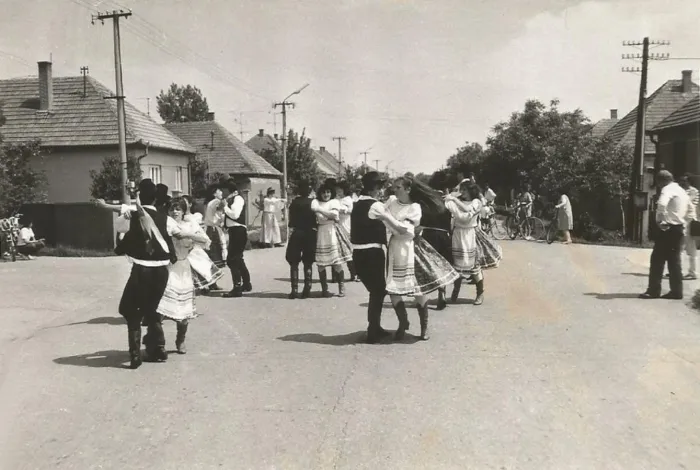
Pentecost line dance and wheel setting
Cultural heritage
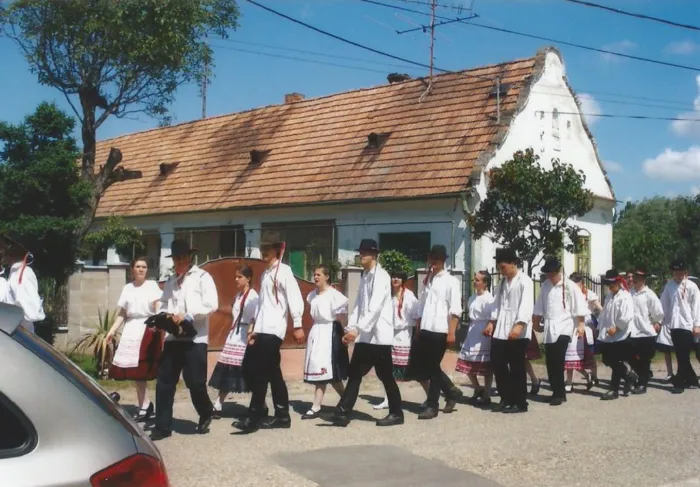
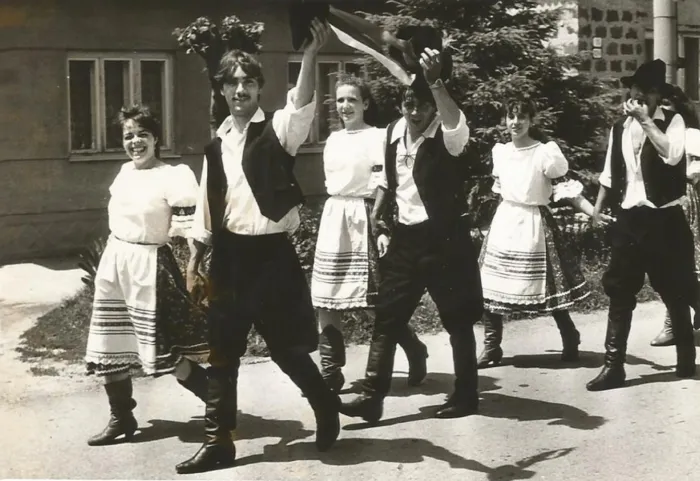
Pentecost is the celebration of the coming of the Holy Spirit and the founding of the church. Throughout the Carpathian Basin, there are many folk traditions associated with this holiday, all of which are about spring, joy, renewal, and choosing a partner. In Gútán, a small town located at the confluence of the Little Danube and the Váh, the most spectacular and most interesting event of the spring period was the Pentecost procession and the setting of the customs wheel. ; Preparations for the event began long before Pentecost. The young men, who had been drafted into the military and had several years of organizational experience, visited an inn with a spacious courtyard suitable for dancing. At the very beginning of their meeting, the most experienced young man with a confident performance was chosen as the bachelor judge. He was responsible for the safe conduct of the event. In addition, two more leaders, the leaders of the dance procession, as well as a treasurer, a clerk and hajdús, were chosen. The young men agreed with the innkeeper and the village elders who hosted the procession. They also asked the village hall for permission to organize the party. ; On Whit Saturday, the young men obtained a long straight fir tree (later pine), which they brought into the innkeeper's yard, and attached the cart wheel decorated with flowers, ribbons, and a wine bottle to its end. They attached freshly cut fir leaves to the end of the pine tree. The completed customs wheel was set up in the inn's yard. ; On Whit Monday, after lunch, 10-12 dancing couples dressed in folk costumes gathered at the customs wheel to begin the Pentecost procession. This consisted of the village leaders, led by the pipers and accompanied by a band, visiting the village leaders: the parish priest, the notary, the judge, and the wealthier farmers, greeting them and inviting them to the Pentecost ball. The hosts offered the line dancers wine and scones, and then gave the bachelor judge a modest donation of money. After that, the dancers also made the household dance. If the pipers gave the signal, the procession continued its journey towards the next stop. Along the way, in front of the more important buildings and at crossroads, they also performed the festive dance to the curious onlookers who were visiting there. ; After the line dance procession was over, the participants returned to the tavern, where the bachelor judge opened the Pentecost ball and gave the musicians a signal to play until dawn. When the participants were already dancing, the csósz, who were known as the greatest pranksters, got down to work: they approached a dancing couple, jokingly accused them of trespassing and throwing away the wheat. For this, one of them was chained to the wheel of the wheel. In the hilarious scene, bargaining began for the ransom of the captured member of the couple in money. After paying the fine imposed by the bachelor judge, the couple was released. The csósz repeated the scene several times until there was a dancing couple who did not pay. The spectacular ball usually lasted until dawn the next day. The wheel of the wheel usually stood until the harvest, the so-called Scythian Fair, which was held on the day of the fair to the sound of music. ; ;