Bishop's residence
Building, structure
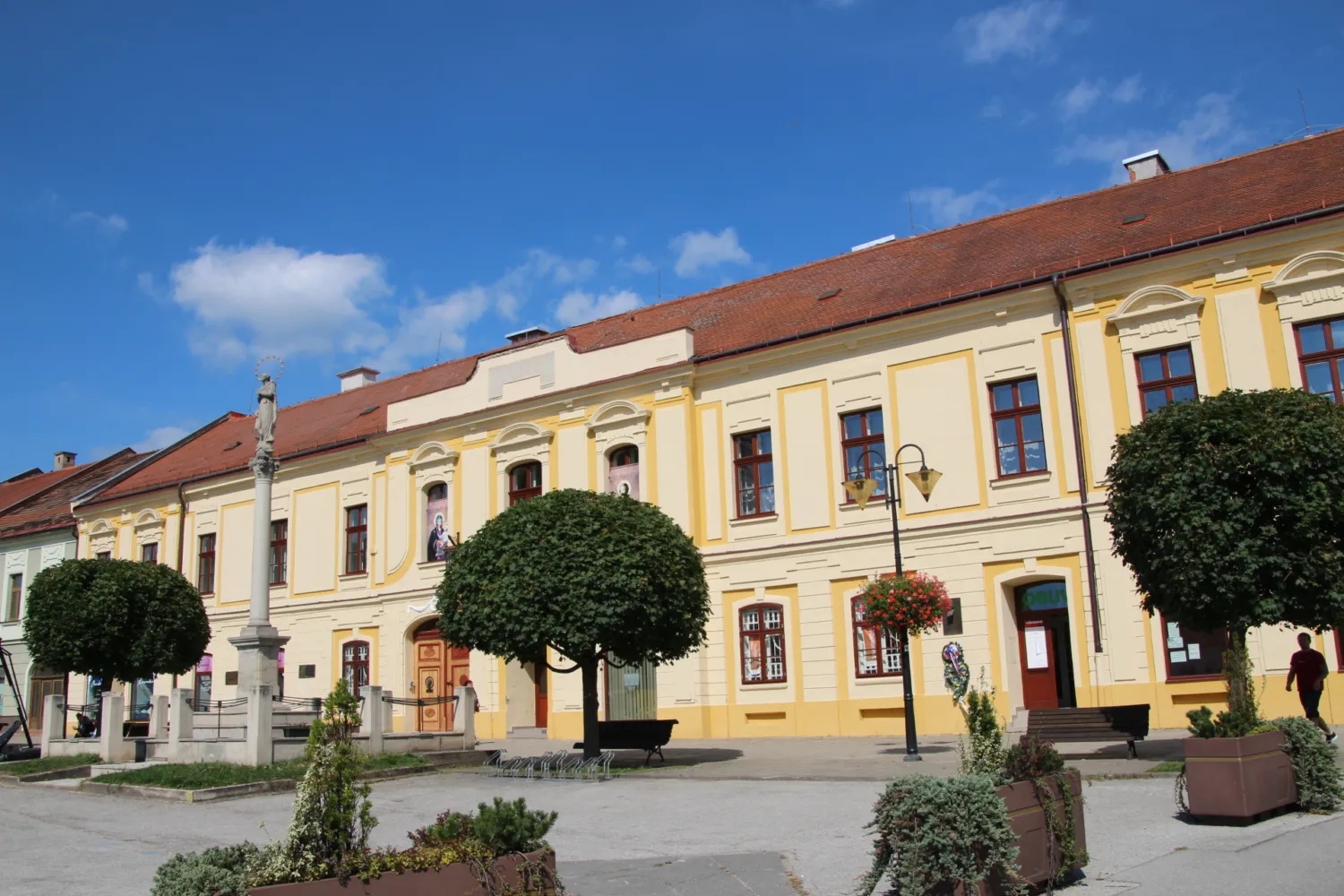
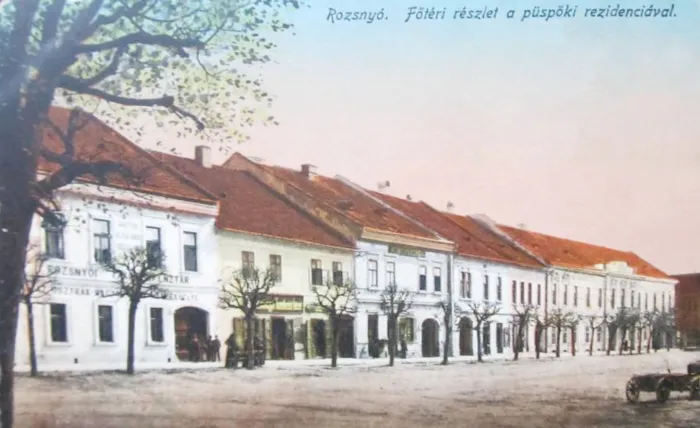
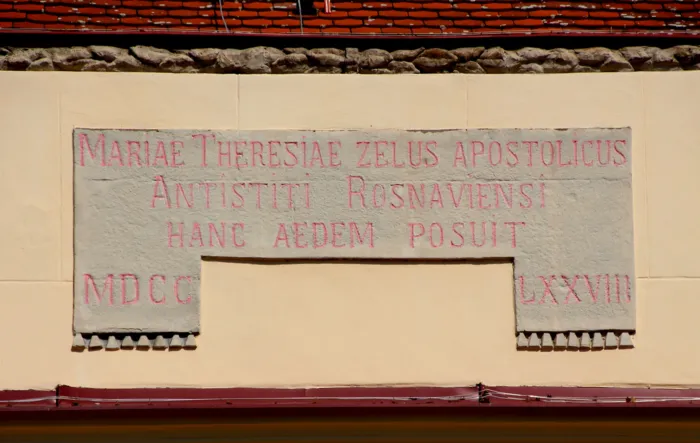
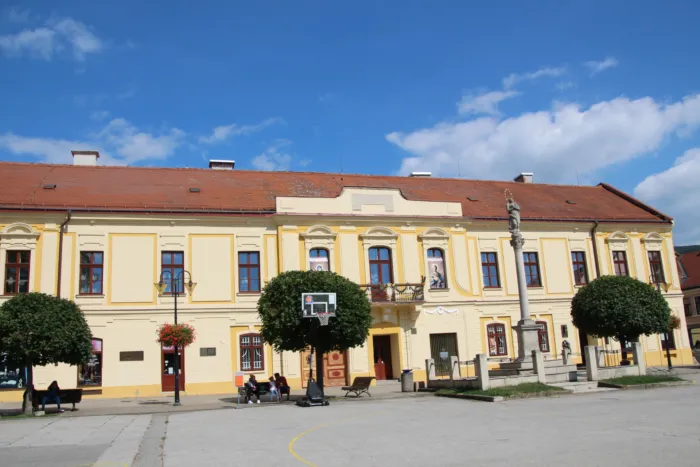
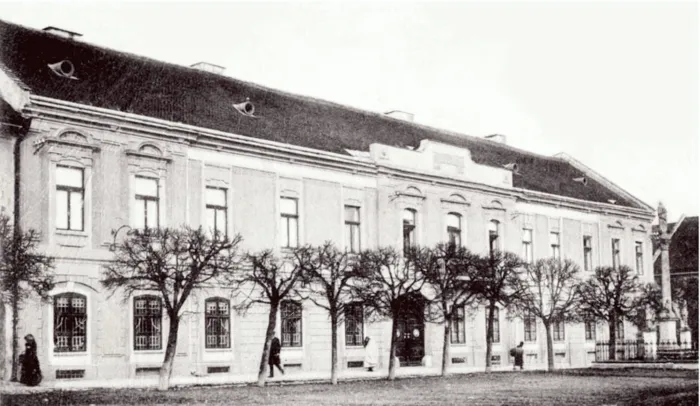
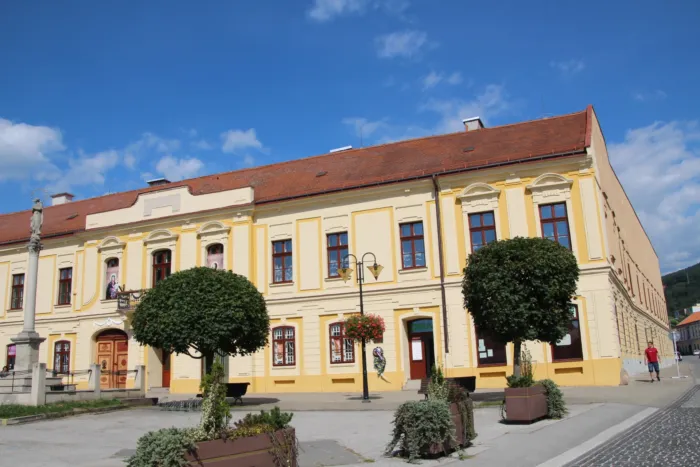
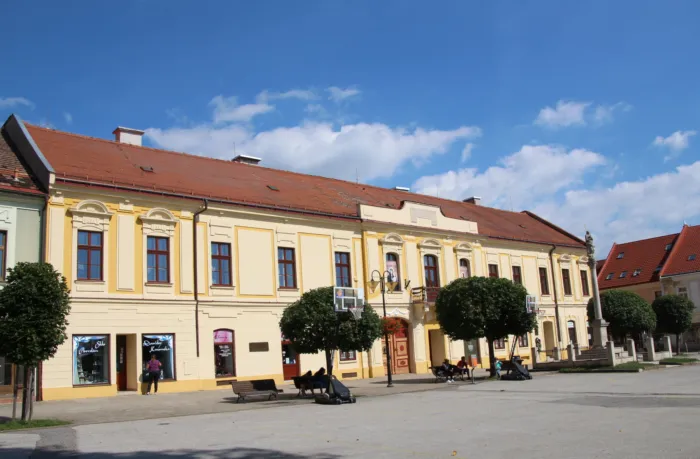
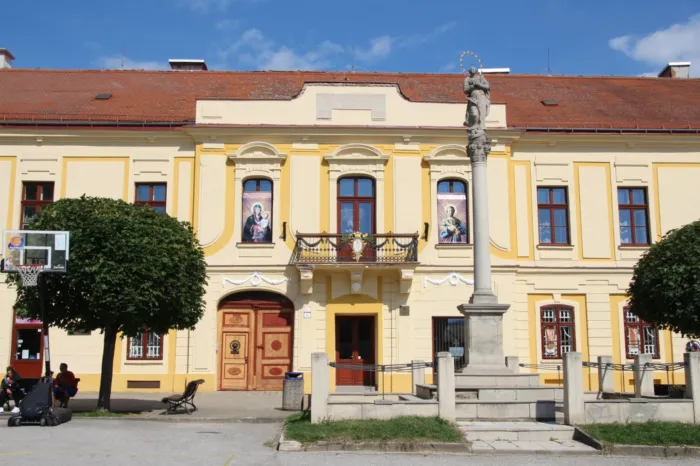
The bishopric of Rožňov was founded during the reign of Maria Theresa, just like the bishoprics of Bánya Bisztergom, Szombathely, Székesfehérvár and Szépes. It was founded in 1776. It was confirmed by Pope Pius VI. The line of bishops of Rožňov: János Galgóczi died on 5 April 1776, before he could take up his position as archbishop. Count Antal Révay, 1776—1779, (later Bishop of Nyitra), Gr. Antal Andrássy, 1780—1799, Ferenc Szányi, 1802—1810, Gr. László Eszterházy, 1811—1824, Ferenc Lajcsák, 1825—1827, János Scitovszky, 1828—1839, (later Bishop of Pécs, then Prince-Archbishop of Esztergom), Gr. Domonkos Zichy, 1841—1842, (later Bishop of Veszprém), Béla Bartakovics, 1845—1850, (later Archbishop of Eger), István Kollárcsik, 1850—1869, György Schopper, 1872—1895, János Ivánkovits, 1896—1904, Lajos Balás, 1906—1920, During the Czech occupation, József Cársky was the apostolic supervisor (today the administrator of Prešov), Mihály Bubnic, the current bishop. ; Bishop Révay took care of the construction of the episcopal seat. It was a transformation, as the Jesuit seat built in 1666 and the house of the decimators standing next door, where the Rozsnyo clerk of the Archbishop of Esztergom lived, were built together. The central part of the facade of the one-story building juts out. The jutting part has a triple division. Its ground-floor section, from left to right: entrance gate and two windows. On the upper floor, there are three windows, a balcony in the middle. It ends with an Empire-style pressed semicircular tympanum. On the calm, straight-lined gable is the inscription: MÁRIÁÉ THERESIAE ZELUS APOSTOLICUS ANTISTITI ROSNAVIENSI HANC AEDEM POSUIT MDCC LXXVIII The eastern wing of the building has still preserved its monastery-like character. The rooms open from the corridor like cells. The western wing, which was the house of the decimalors, was home to the bishop's suite. The low, cross-vaulted rooms are divided by squat, cylindrical columns. The spiral staircase, built in the Renaissance spirit, runs up around the squat pillar in the middle with two turns. In this wing is the house chapel named after the Holy Cross. Later, Bishop Schopper added the library to the north with its nobly simple facade. The residence preserves many old pictures. High priests look at us in priestly vestments from simple frames. The most beautiful is the portrait of Archbishop Kérésztély Szász of Esztergom. The old altarpiece of the chapel is remarkable: Christ on the Cross. The cross rises high against a dark blue, almost black background, behind it the tapestry of the sky splits and the light shining through illuminates Christ. At the foot of the cross, the skull flashes white. In the figure of Christ, we feel the soft, gentle forms of the late Baroque. This was the basis for the painting depicting the crucified Savior, which was the chapel's altarpiece until recent times. Signature: Theodor Kolberg. Size: 133x110 cm. It was painted around 1834. His master was Scitovszky's court painter. We see a difference only in the anatomical elaboration of Christ's body. The body stretches out from pain, the muscles tense and bulge. He turns his head towards the sky. The cross, rising against the dark background, eloquently expresses the loneliness of suffering. In the background, from the left, the small houses of Jerusalem are visible. The colors of the picture are very dark. The 123 cm. high and 75 cm. wide Madonna, placed at the entrance, is by the same artist. In the sad smile of the face, which is set in two-thirds profile, we feel a premonition of the suffering to come. The colors here are also dark, fading into black. Several other paintings have survived from the former Jesuit monastery. They are mediocre Baroque works of a weaker quality. The most skillful is the small picture of St. Alajos hanging in the archive. The ordinary setting is forgotten by the spiritualized fresh charm of the face. In the bishop's palace, we also come across interesting relics of applied art, they date from the time of Maria Theresa, we cannot find anything older among them. The reason can be sought in the spread of the Reformation. When the Protestants occupied the Catholic churches, they used the ciboriums found there for their own worship purposes and - when the church became Catholic again - they took them with them when they fled. In the data of the Košice archives for 1512-1514, we find the name of the goldsmith Gábriel from Rožňany. We can also read here (archive no. 3473/66) the name of the goldsmith István from Rožňany. This again serves as proof of the close artistic connection between the two cities. In 1715, the name of the goldsmith György Fenzerus appears in Rožňany. In 1720, two more, Lőrinc Miller and Mihály Molnár, competed with him. At the beginning of the 19th century, the goldsmith András Libay worked in Rožňany. His hallmark is the triple rose and the A. L. monogram. Later he moved to Rimaszombat, so most of his works can be found here: a silver crucifix in the Roman Catholic church, cutlery in private ownership. The silver wafer box of the Lutheran church in Osgyán is also his work, and his braided monstrance is kept in Rozsnyón. A coconut-shaped sugar bowl set in silver is from him. It is decorated with simple line-decorated petals and finely shaped roses. The master's authentication stamp and monogram are stamped into the plate of the lower part. The most valuable of the residence's goldsmith's works is the gold crucifix from 1732, decorated with gems. ; The processing of the library's values would require a separate study. In addition to the book bindings, gold-printed book edges, engraving illustrations, and the richness of the lining papers, it may also hide thousands of volumes of manuscripts decorated with miniatures.