
Premontrei Holy Trinity Church
Building, structure
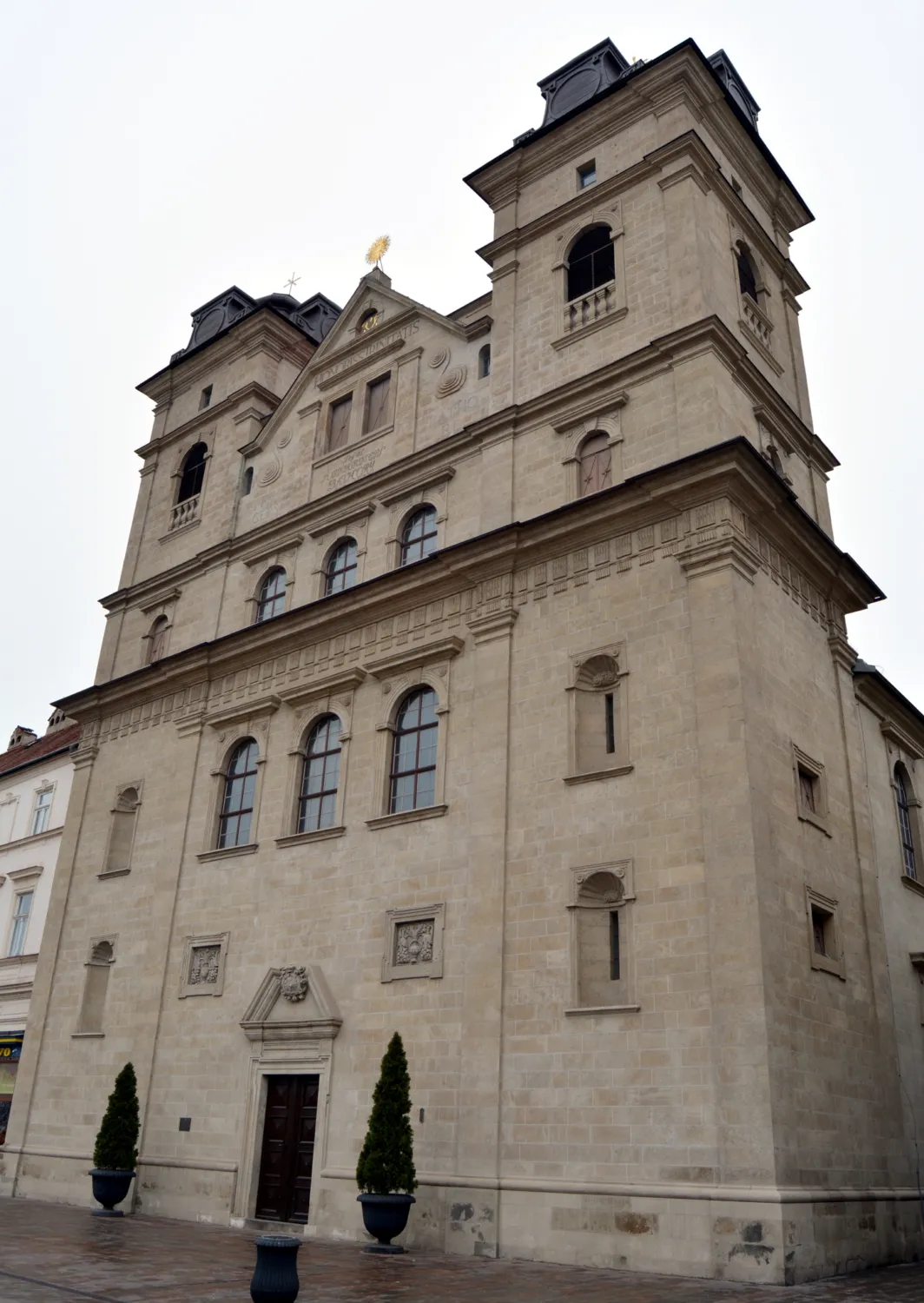
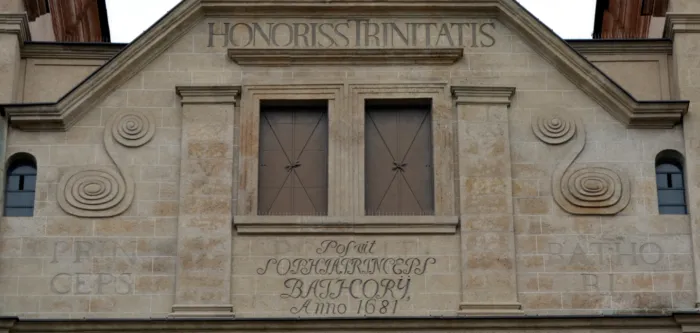
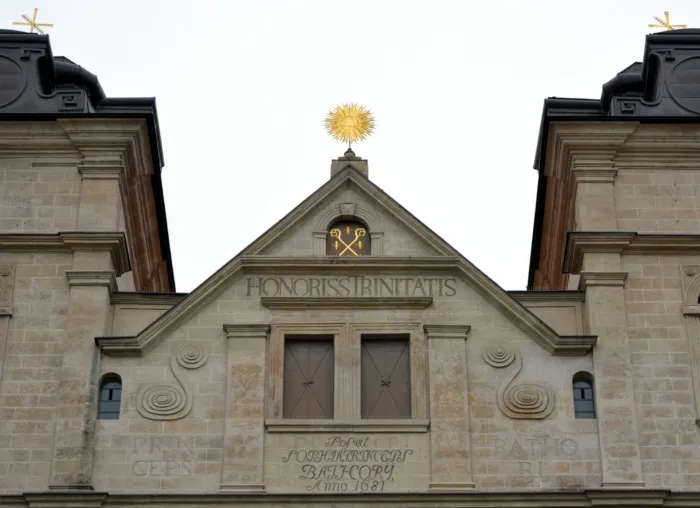
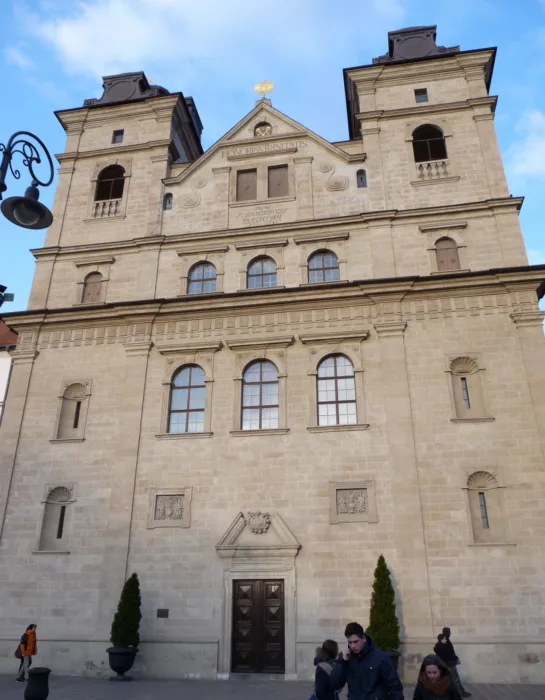
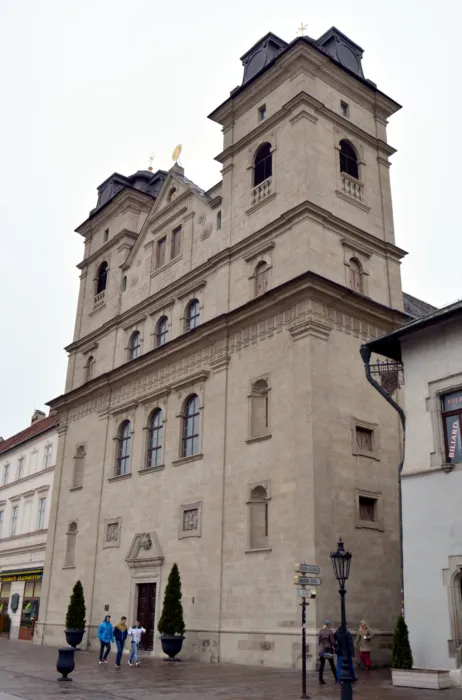
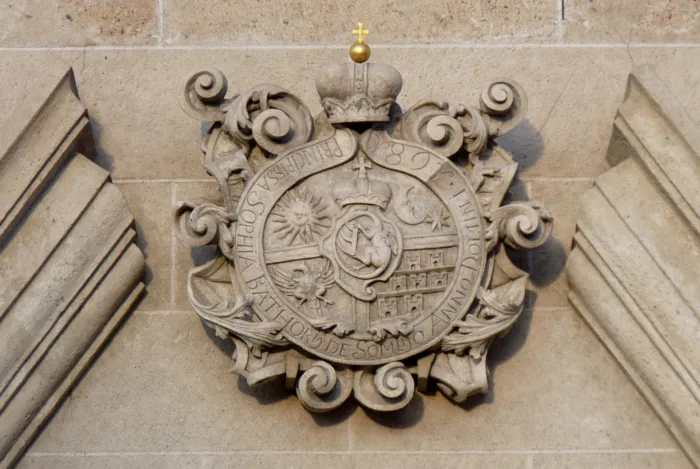
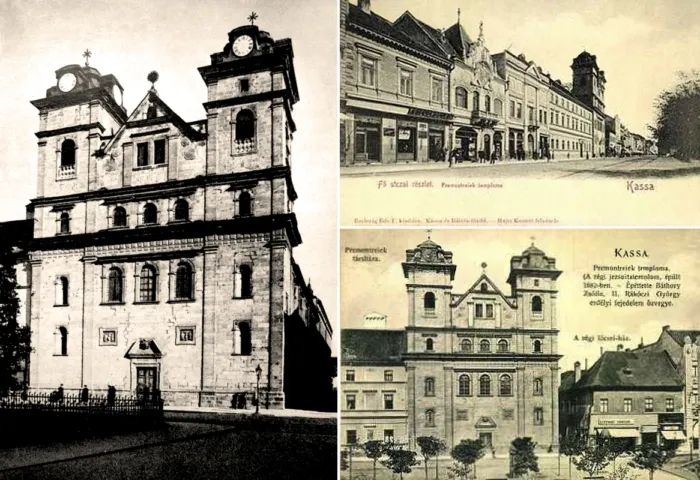
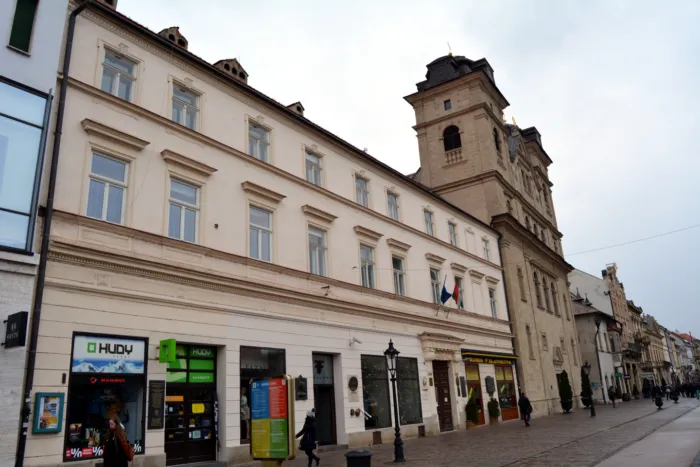
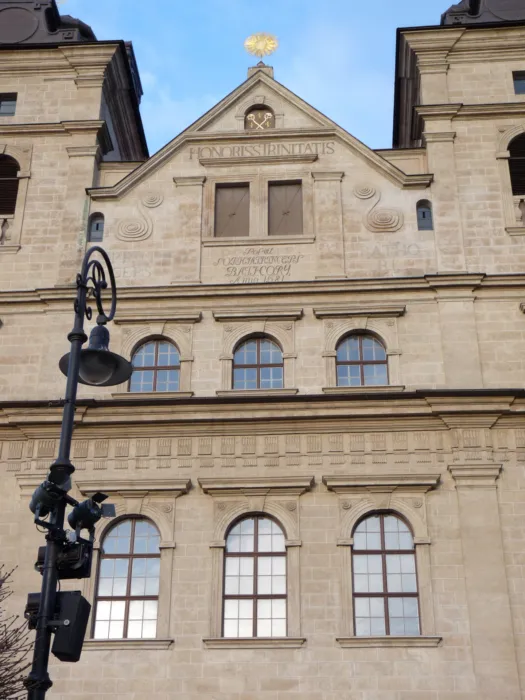
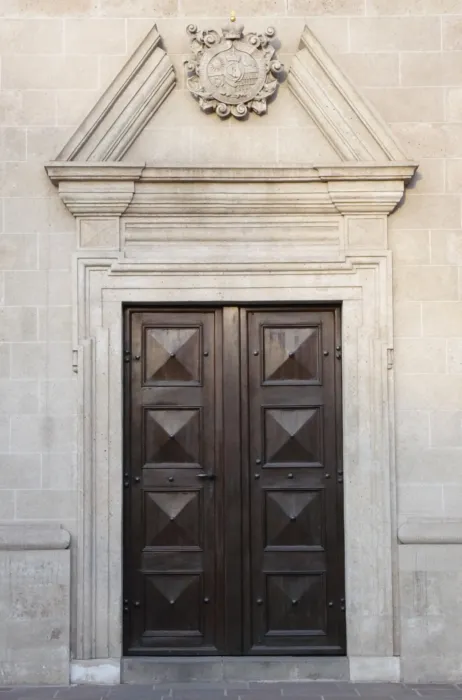
The site of today's church and convent was the site of the Royal House (Curia Regia) in the 15th century, and was occupied by King Matthias Hunyadi in 1460 and 1478, and King John of Szapolyai in 1528. From 1554, it was the house of the captains-general of Upper Hungary, the seat of the royal chamber. István Bocskai, Gábor Bethlen, and György I. Rákóczi also lived there. At the beginning of the re-catholicization, at the beginning of the 17th century, it was the residence and chapel of the Jesuit missionaries. On the night of September 6, 1619, bloody events occurred. The henchmen of the Transylvanian prince György I. Rákóczi tortured to death three missionary priests from Košice. The martyrs István Pongrácz, Menyhért Grodecz, and Márko Körösi were later canonized. ; Zsófia Báthory (1629-1680), wife of Prince George II Rákóczi, re-converted to Catholicism with her son in April 1661 after the death of her husband. She became a zealous follower of both the Catholic religion and the Jesuit order. Her son, Ferenc I Rákóczi, elected Prince of Transylvania, and Ilona Zrínyi's husband, was pardoned by the ruler, Emperor Leopold I, for his participation in the Wesselényi conspiracy, through the powerful intercession of the Jesuits. ; In return for the pardon, immeasurable burdens were imposed on the Rákóczi estates. With the exception of Munkács and a few castles - which were given as a dowry to Ilona Zrínyi - most of the towns and castles were garrisoned by imperial troops. In addition to all this, the Princess, driven by her gratitude and religious conviction, had a church dedicated to the “Holy Trinity” built for the Order of St. Ignatius of Loyola, modeled on the famous Roman “II Gesu”, and she also took on all the costs. The church was built together with the former converted convent and college of the Jesuits, within whose walls a Jesuit school and then a university (1657) operated. Between the two towers, the name and memory of the builder, Zsófia Báthory, was immortalized in a Latin inscription. Above the entrance gate, the combined coat of arms of the Báthory and Rákóczi families can be seen. ; The most valuable work of art in the church, a crucifix carved from ivory, was placed on the main altar. A total of six chapels were created under the arcades of the church, three of which were dedicated to the Jesuit saints St. Ignatius of Loyola, St. Francis Xavier and St. Alajos Gonzaga. In the chapel of St. Ignatius of Loyola, one of the fundamental principles of the Spiritual Exercises can be read on the altarpiece. On the right side of the church, there are six finely carved wooden high priest's chairs, and on the left, a tombstone carved from lime wood, commemorating the death of Ferenc I Rákóczi, with the crowned figure of the prince. On its inner field is the coat of arms of the Rákóczi family, and the edge of the tablet is decorated with reliefs of military insignia and equipment. The Hungarian translation of the Latin inscription surrounding the coat of arms is: “His Majesty Ferenc Rákóczi, by the grace of God, Prince of Transylvania, Lord of the Hungarian Parts (Partium), Lord of the Székelys, Hereditary Lord and Hereditary Count of Sáros County, died a pious death in the year of the Lord 1676 on July 8, in the 31st year of his life.” ; The body of Ferenc Rákóczi I had a tumultuous journey before it found its final resting place in the crypt of the church under construction. The unexpected death caused immense concern to Princess Ilona Zrínyi, who was unexpectedly widowed. In addition to having her guardianship rights recognized, she also had to manage the estates, and until her son came of age, even if not personally, she had to fulfill the obligations arising from the position of chieftain, and last but not least, she had to arrange for a funeral befitting her deceased husband's rank. Giving a dignified funeral and preparing the funeral ceremony was time-consuming and cost a lot of money. She borrowed money to cover the fabric needed for the mourning clothes of the estate officials, had candles and cloth brought in, and had mourning banners made. The eulogy had to be written, and the ornate funeral, the "castrum doloris" planned. Invitations to the funeral were also prepared for relatives, the Upper Hungarian nobility, and national dignitaries. However, the funeral had to be postponed, as the estates, including Zboró near the border, were threatened by troops rising from both Transylvania and Poland. ; The body had to be kept in the “cold store” of the Makovica castle towering above Zboró, as they did not dare to expose the funeral procession and its entourage to the march of the armies. By the summer of 1677, he managed to get the Protestant nobility of Sáros County to provide an adequate armed escort to secure the funeral carriage’s journey to Košice. Péter Kazinczy, the family’s loyal man and legal advisor, sent a worried letter to both princesses on August 4. Ilona Zrínyi and Zsófia Báthory decided together: to have the body of the elected prince of Transylvania, the chief of Sáros County, brought down with a strong armed escort, so that on August 18, 1677, more than a year after his death, they could finally give him the last rites in the consecrated crypt of the parish church that was still under construction. ; Barely four years later, on June 14, 1680, Zsófia Báthory, widow of George II. Rákóczi, Prince of Transylvania, the last descendant of her glorious family, also died in Munkács Castle. Fate tested the difficult-natured princess. She was only 51 years old at the time of her death. His will, which was forged by his Jesuit confessor and confidant in order to place the Báthory treasures under the supervision of the Jesuits, caused a national scandal, in order to settle it peacefully, the ecclesiastical and secular dignitaries of the Viennese court were also forced to take a stand. Perhaps as a result of this, the granting of his last rites was also expected from him. The funeral ceremony - to which, due to his rank and authority, all secular and ecclesiastical dignitaries were invited - could only take place on March 16, 1681. He did not live to see the completion of the construction work of the Holy Trinity Church he founded. The eulogy was delivered by the Jesuit Father Kis, the text of which was printed in Nagyszombat the previous year, in 1680. He had close ties with his grandson, especially the later Grand Duke, who united the blood of the Rákóczi and Báthory families and carried on their name. Decades later, in his “Memoirs”, Ferenc II. Rákóczi remembered him as follows: “…he had a holy life… I remember his death as if it were a dream.” More than the terse remembrance, the fact that he kept the medallion he received from Zsófia Báthory with him until his death, which was found in his coffin when her ashes were exhumed, reveals more about their bond. ; The church, completed in 1681, is a colorful, true early Baroque creation, the interior of which was further transformed and embellished in the following century. During the Jesuit era, the church was the center of religious life in Košice, where the Congregations of Mary, the Societies of Christ Sweating Blood, the Sorrowful Virgin, and the Holy Cross, as well as the only Society of Saint Francis Xavier established here outside of Komárom, operated. After the Jesuit order was banned, the church was given to the Premontrean canons in 1811. ; The scene of today's main altarpiece, "The Holy Trinity Receives the Virgin Mary into Heaven", was painted in 1854 by József Pesky (1795-1862). The church's wall paintings date back to 1796 and were the work of Erazmus Schrött (1755-1804). What is interesting is that it was made in a traditional, Jesuit perspective, illusory style, and thanks to his frescoes, the ceiling without a chandelier opens almost to infinity. The painted altars of the side chapels, as well as the sophisticated woodcarving decorations of the pulpit, pews and other parts of the interior, are also valuable.