
Bratislava Castle
Building, structure
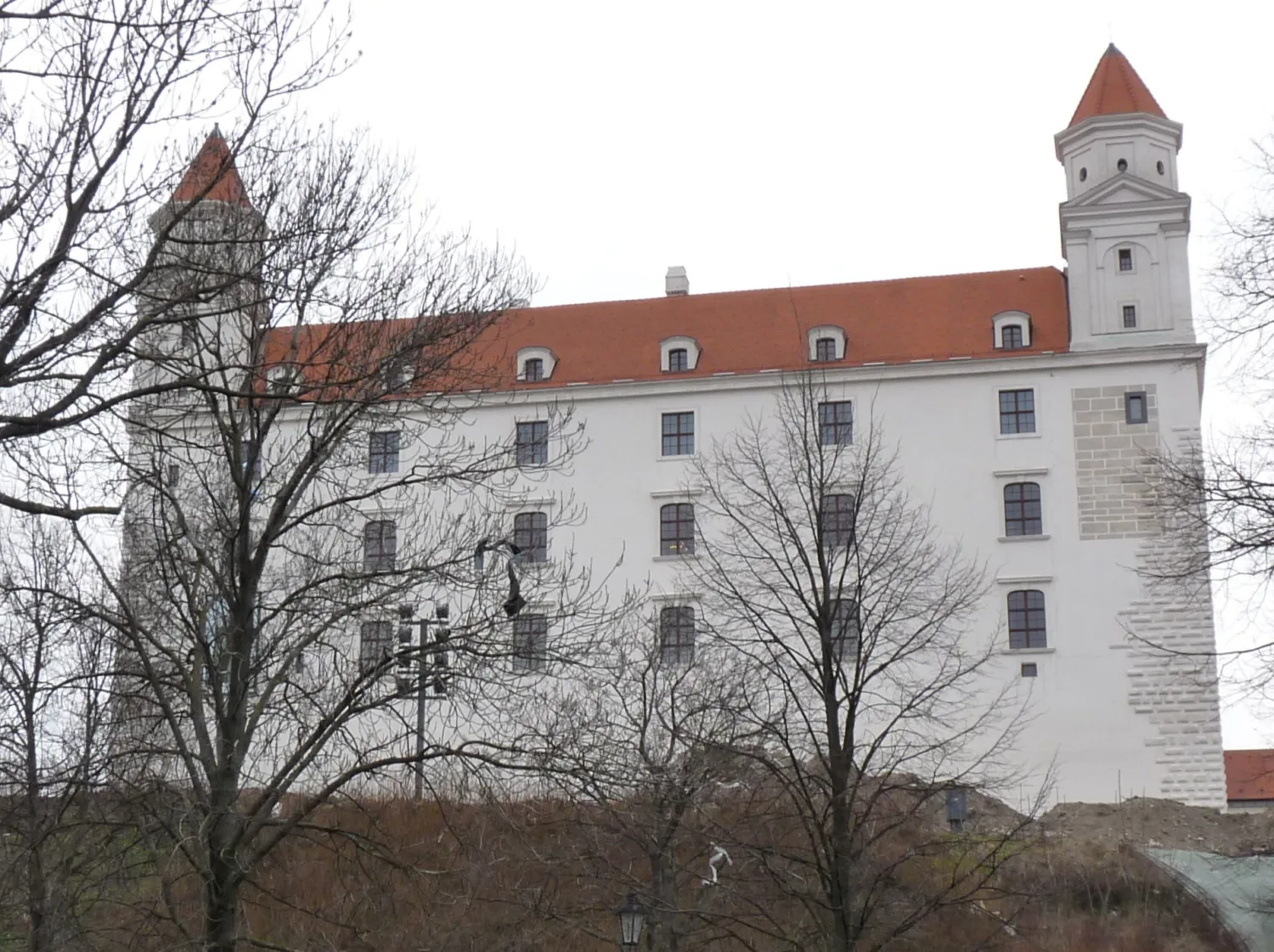
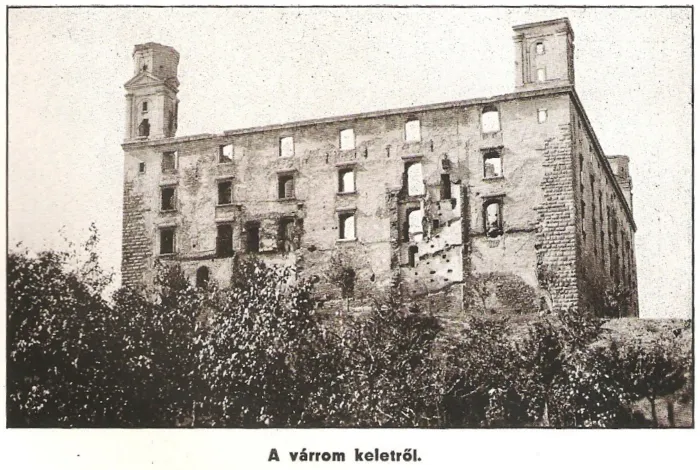
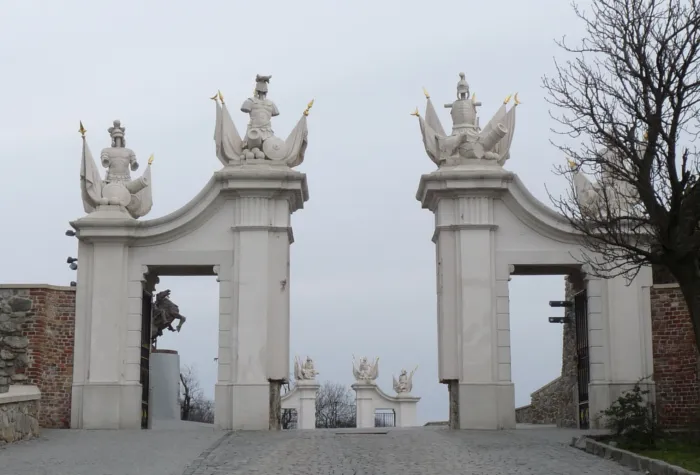
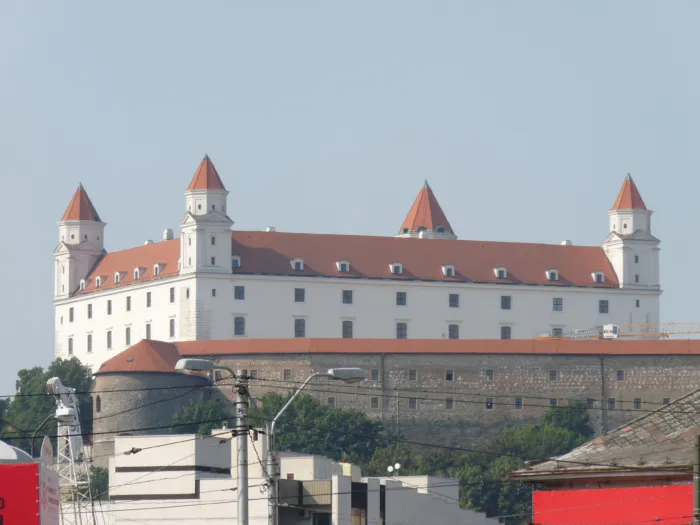
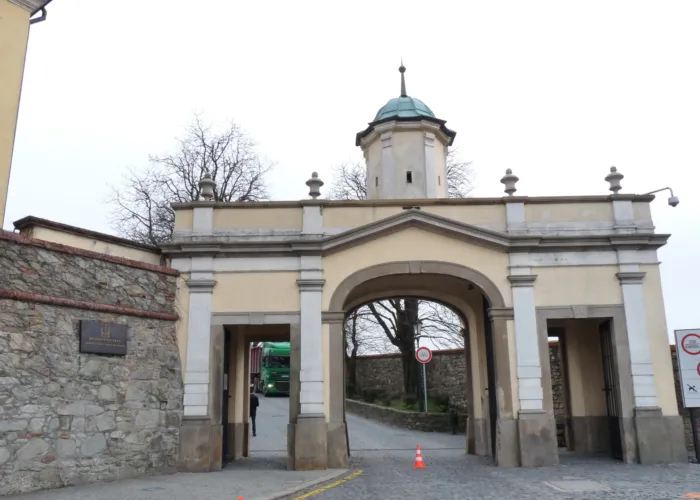
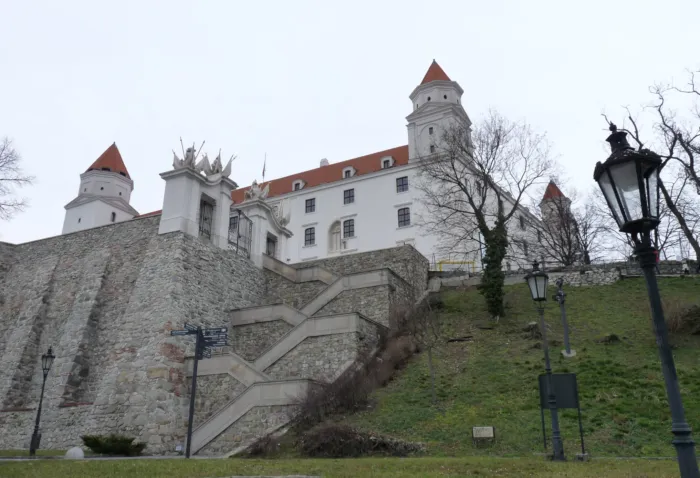
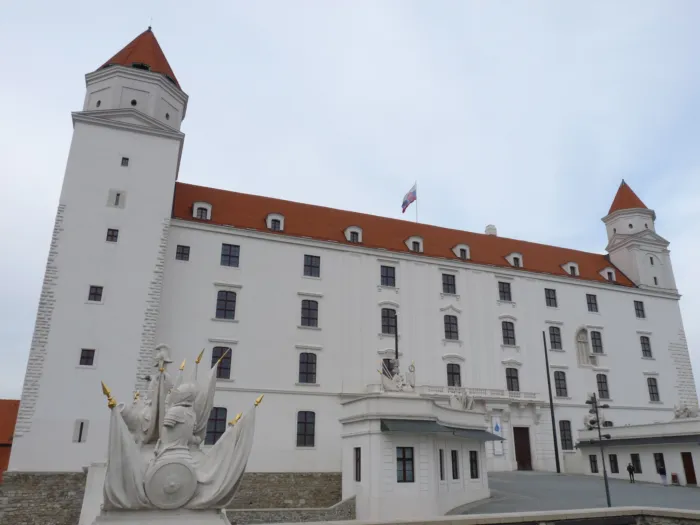
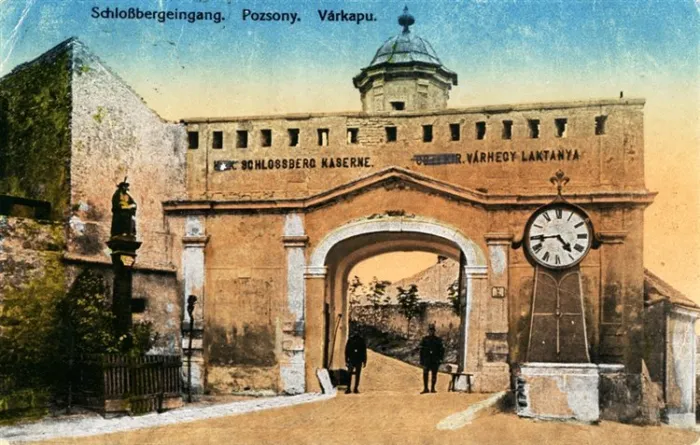
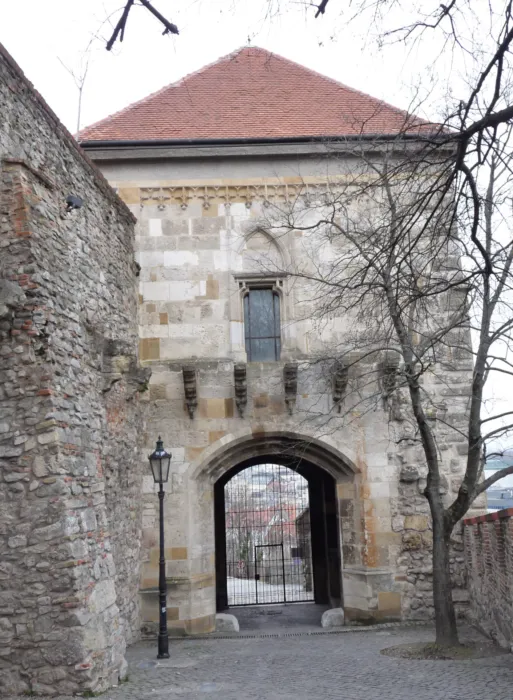
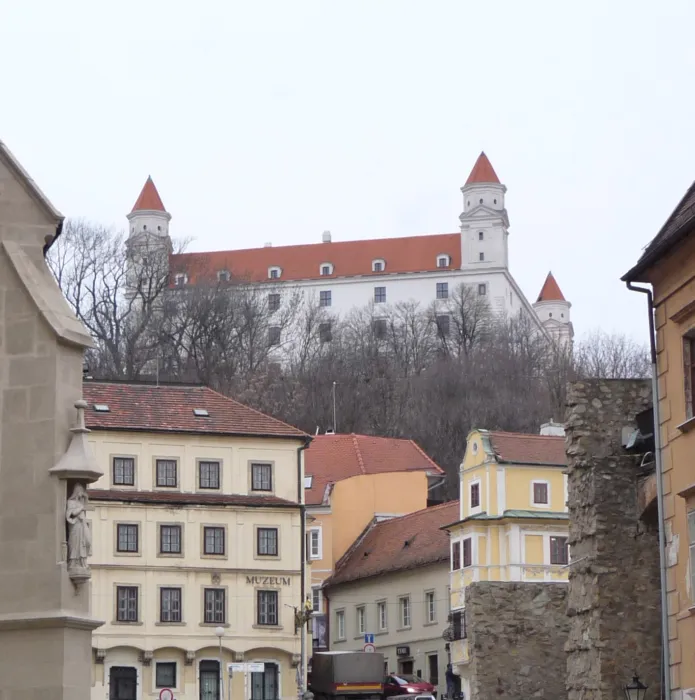
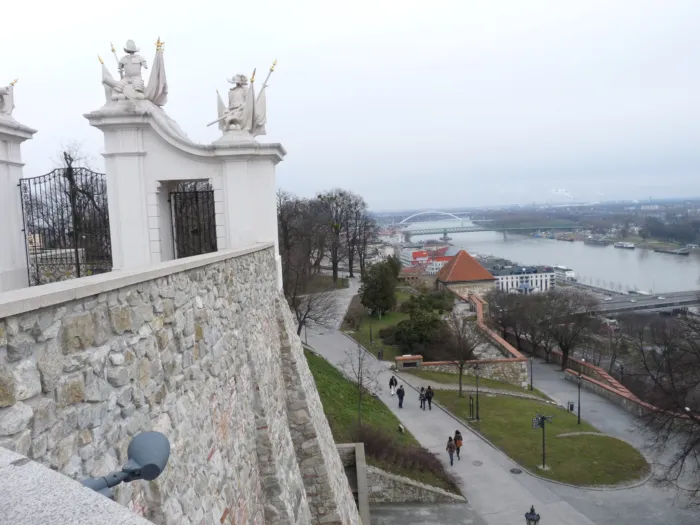
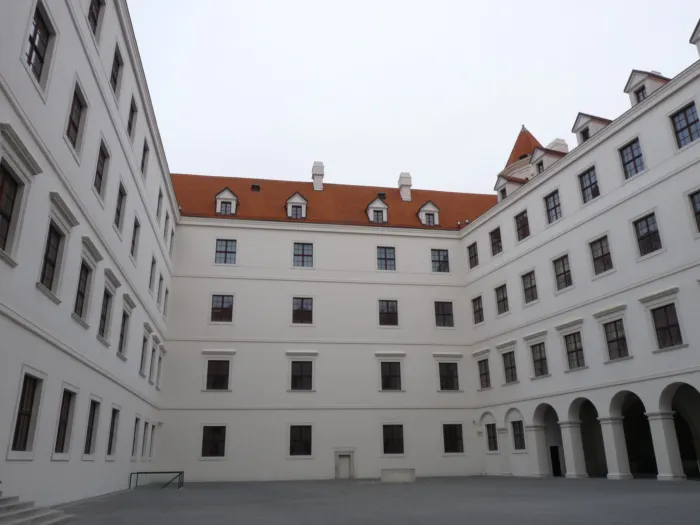
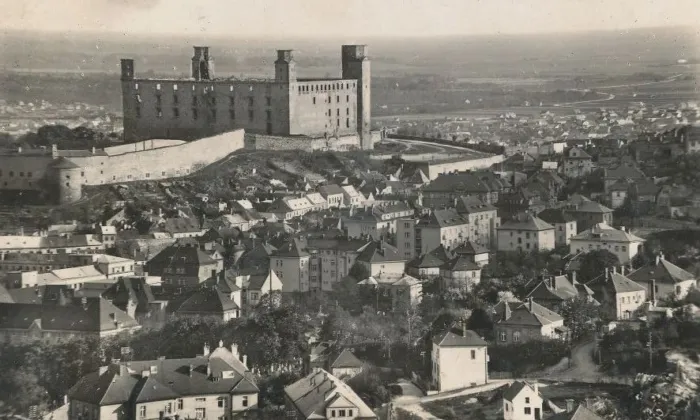
“Among the buildings of Bratislava, there are many that deserve special attention from an architectural and archaeological point of view. Its most famous monument is the castle, which stands on a hill rising on the western side of the city center. Part of it was already found here by the Hungarians during the conquest. Its construction can be attributed, if not to the Romans of Carnuntum, then certainly to the Moravian Slavs. The architecture of its oldest part dates back to the end of the 9th century, when the Romanesque style had already begun to spread in our country. Its oldest image, which can be seen in the miniature painting of the chronicle begun by the monk Mark in 1358, presents it in a form that we can still recognize today. ; The beautifully situated castle ruin is a four-towered, rectangular building that dominates the entire city. This form of castle construction is so unusual that it has hardly any equal in the Middle Ages. Dr. Abbot Tivadar Ortvay, the outstanding historian, has attributed the Roman origin of the castle tries to prove. Numerous finds found in the Bratislava County also confirm that the Bratislava area was a Roman colony. Since the castle site was suitable for the purposes of a military observation post, it seems certain that it played a role in the history of Roman warfare. The main tower initially stood free-standing and the square castrum was built around it. However, all these buildings were hardly permanent, monumental in nature, but only temporary, necessary and therefore their traces were lost over time. The base of the castle building has never been excavated. During the period of the migration of peoples, the Bratislava castle was of little importance. Its role only begins again under our King Stephen I, when the castle system was put into operation. The Frankish and Saxon craftsmen, invited and settled in large numbers by King St. Stephen, founded the city of Bratislava. The oldest part of the castle is the tower, in which the Hungarian Holy Crown was later kept. It is built on a huge rock and built of square stones. The castle consisted of two parts: the lower part and the citadel. In the middle of the 11th century, it must have been an extremely well-defended place, because Emperor Henry could not capture it even after a two-month siege. The fortress, which was located on a mountain almost 80 meters high, was protected from the south by the steep side of the mountain, and from the northwest the fortifications were even higher and thicker. Frederick Barbarossa spent Pentecost 1189 here. Saint Elizabeth of Hungary was betrothed here by Hermann of Thuringia in 1211. King Béla IV. The surviving charter from 1252 was issued in the Bratislava Castle. At that time, ten years after the Tatar invasion, the earthen dams, stone walls and wooden structures of the castle were replaced with solid stone. Although the Tatars avoided the city and the castle, they were very violent in the area. The Bratislava Castle went through difficult times during the wars of Ottokar of Bohemia and Csák Máté of Trenčín. In 1432 the Hussites destroyed the city. Sigismund strengthened the castle again, and King Matthias also had it built. The decorative gate at the top of the castle stairs, with its late Gothic decoration, is still a first-rate architectural masterpiece. ; We have the first engraved image of the castle from 1578, which shows it as a quadrangular building with a pointed roof, four towers. The long building was only two-storeyed at that time. The holy crown was first brought to the castle in 1552 and was kept here with greater or lesser interruptions for two and a half centuries. Frederick II, Duke of Saxony-Weimar, was imprisoned in this so-called crown tower from 1567 to 1571. In the 17th century, the castle saw the armies of Bocskay. Gábor Bethlen took it into his power together with the crown, but again It came into the hands of Ferdinand, and in 1635 it was restored at great expense under Pál Pálffy, Count of Bratislava. At that time the third floor was built. In 1674 Leopold I had the gate named after him built, and in 1712 Charles III had the so-called Vienna Gate built. ; At the end of the 17th century, on December 3, 1670, the Bratislava blood court was established under the presidency of Rottal, whose members included Bishop János Gubasóczi, Chamber President István Zichy and Ádám Forgách, as well as the judges of the royal court. The court sentenced 22 of the 300, mostly Protestant, nobles imprisoned in Košice and Prešov by the Levoča inquisitors to death, and sent the rest to galleys and prisons in Bohemia. In 1673 Ampringen came to Bratislava Castle and the German generals, mainly Kobb Wolf, they hunted for fugitives and those who were captured were executed under torture. After the Rákóczy era, the Bratislava castle saw quieter days, until in 1741 Maria Theresa was crowned queen and on September 11th the "vitam et sanguinem" was pronounced here. Between 1760 and 1765, Maria Theresa had the castle magnificently restored at an unheard-of cost of one million three hundred thousand forints, and she herself often lived here. This was when the Bratislava castle experienced its brightest days. From January 1, 1766, Prince Albert of Saxony, royal governor, lived here for 15 years with his wife Maria Christina, Maria Theresa's daughter. Bratislava became the real capital of Hungary. Then, under Joseph II, the castle was the premises of a seminary founded by Péter Pázmány. In 1802, A regiment of soldiers were stationed in the castle, and from there the rapid destruction of the palace, which had become a barracks, began. On May 28, 1811, a fire broke out in the castle. The flames spread very quickly and soon the entire huge building was in flames. The people in the castle, united with the townspeople, did everything they could to contain the fire, but due to the lack of water, they failed. Everything in the castle burned to ashes. What the fire spared was destroyed by the brutal cruelty. Rumor has it that the fire was caused by the carelessness or even revenge of the Italian soldiers stationed in the castle. Whatever the cause of the fire, it is a fact that one of the most outstanding monuments of our country was destroyed. After the fire, everything that was still usable was dragged out from the smoky walls and auctioned off. ; The large well in the castle's cellar, the bottom of which is said to have reached the waterline of the Danube, By order of King Sigismund, the castle captain of Rozgonyi began to carve into the rock of the mountain in 1436. The costs of the enormous work were covered by the legacy of a prisoner named Pankucher, who died in the castle. It is said that a wide corridor led from the cellar under the Danube, all the way to the interior of the Leányvár tower, located not far from the Austrian border. ; The Bratislava castle went through many transformations. Its exterior and interior changed almost every century. In the lowest part of the building there were the cellars, prisons, on the ground floor there were the pantries and a very valuable military arsenal, in which, along with many other antiques, the breastplate of Emperor Charles V, the armor of Matthias Hollós, as well as a multitude of Tatar, Hungarian and Turkish weapons were piled up. The upper rooms housed the living quarters of the royal family and their entourage. A wide, deep ditch ran in front of the castle facade, across which a drawbridge led into the interior of the building. In the past, three was the gate of the castle. In the actual castle palace, only the main walls and the four uncovered towers remain. On the side facing the Danube was the main entrance, with an ornate balcony resting above the gate. Inside the square building there is a spacious courtyard. Traces of the former halls, rooms and corridors can only be seen here and there among the increasingly blurred wall paintings. The aforementioned Count Pál Pálffy received the dignity of hereditary captain of Bratislava in 1651. He also acquired the Pálffy mansion in Bratislava and inaugurated it as a Hungarian majorate and seniorate. The aforementioned title, together with the seniorate benefit, is now enjoyed by Count István Pálffy, a real inner privy councilor, Count of Bratislava. ; It is very gratifying that the people of Bratislava are finally starting to seriously deal with the issue of restoring the castle and great recognition is due to the historian Dr. Tivadar Ortvay, who raised the issue of restoration and tries to create an atmosphere in this direction with both words and pen. ; The lord and owner of the castle is now the Hungarian Royal Treasury, and its beneficiary is the imperial and royal war treasury. ; The castle itself has not been inhabited since 1811. The military - a battalion of infantry - is stationed in the further, lower-lying outbuildings. Not far from the castle's southeastern tower, in a small wooden hut, a large cannon of an older structure can be seen. It usually only sounds once a year (if it sounds at all), when the ice on the Danube breaks. According to ancient custom, this is how the population of Csallóköz is warned that a flood is approaching. The castle and its surroundings therefore no longer have any military significance. The most neglected part of the city begins directly outside the walls. Mostly miserable shacks stand there. The To the east under the castle hill is the old ghetto, which is still almost exclusively a residential area for the poorer Jews. ; It is therefore to be hoped that the city of Bratislava, with the consent of the king and the support of the government, will finally be able to implement its plan to restore the castle, to arrange and beautify the castle hill and to provide it with a steam locomotive. Emil Kumlik correctly noted in his article in a capital newspaper that the main thing for the time being is that the city government can buy or rent the interior of the castle from the treasury. From an archaeological point of view, the proposal that the city - with the consent of the National Committee for Monuments - should remove the rubble from the interior of the ruin square as soon as possible and begin excavations to determine the date of the lowest part of the building will probably then be clarified, which church It stood in the middle of the old castle courtyard from the time of Saint Stephen until 1221, and then perhaps the darkness that still covers the question of the Roman origin of Bratislava Castle will be dispelled.” ; After Trianon, they wanted to demolish the entire complex. Finally, after World War II, they made it open to the public, and then they decided to restore it. In the 1960s, during the reconstruction of the castle complex, the entire upper part of the 19th century wall was demolished. The arches above the loopholes were removed to create a romantic medieval-style bastion pediment. For the masons, this was easier than restoring the original form, as loopholes widen inwards, and creating a brick arch over such a structure was undoubtedly an insurmountable difficulty in the second half of the 20th century. The wall and its loopholes, as examples of late 19th-century fortress architecture, are still awaiting worthy restoration today. ; The Bratislava Castle housed the permanent exhibitions of the Slovak National Museum (furniture exhibition, treasures of the ancient past of the Highlands) and the representative halls of the Slovak National Council. There was an exhibition of musical instruments in the Luginsland Bastion. The castle has been undergoing reconstruction work since 2009, after which new exhibitions are expected to open. In 2010, an equestrian statue of the Moravian prince Svatopluk I was unveiled in front of the entrance for political reasons, with the inscription "King of the Old Slovaks" on its pedestal. The statue was criticized artistically, and its erection was criticized both politically and historically.