
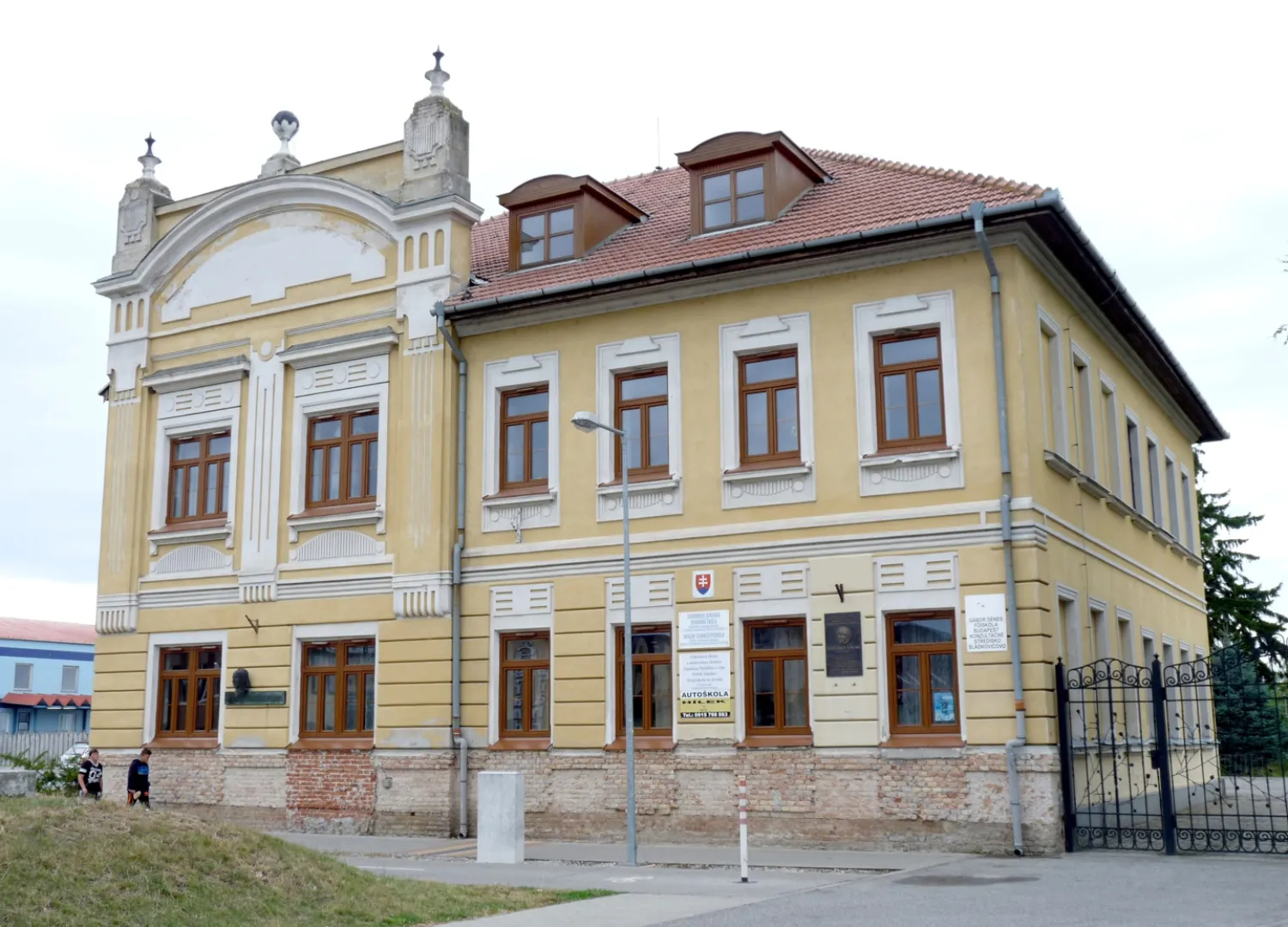
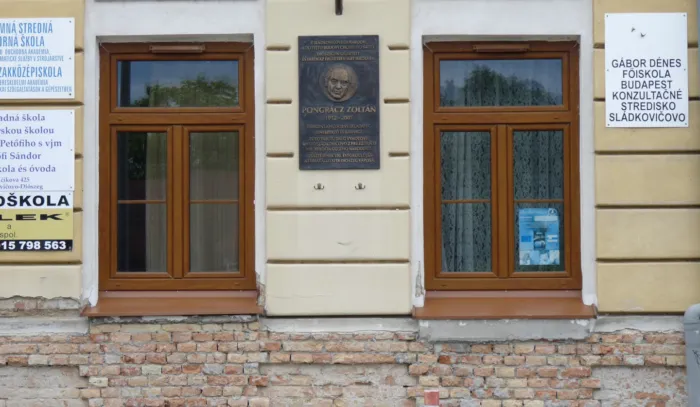
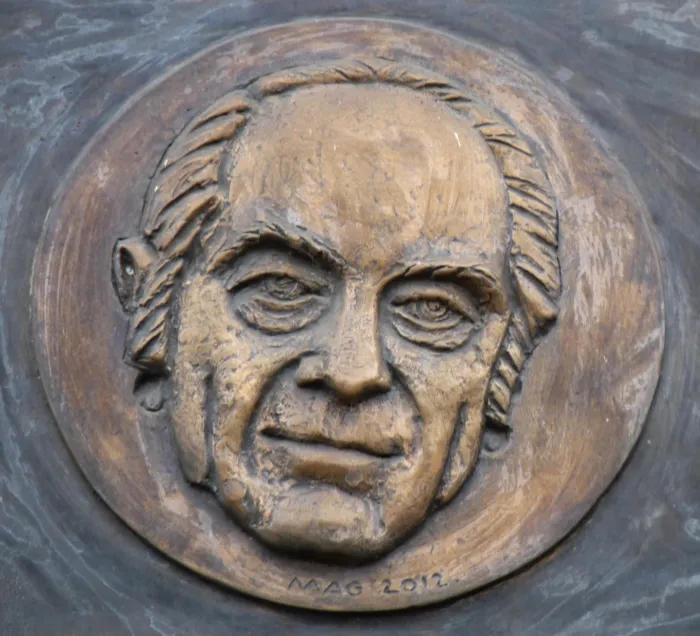
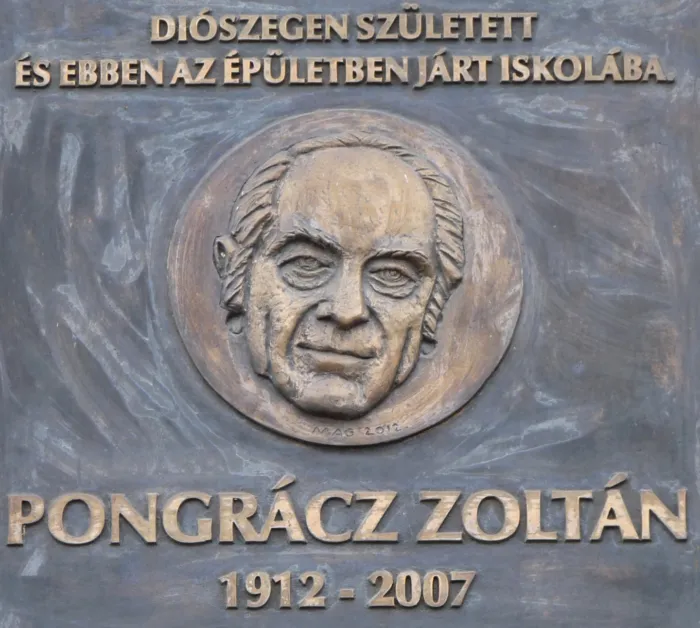
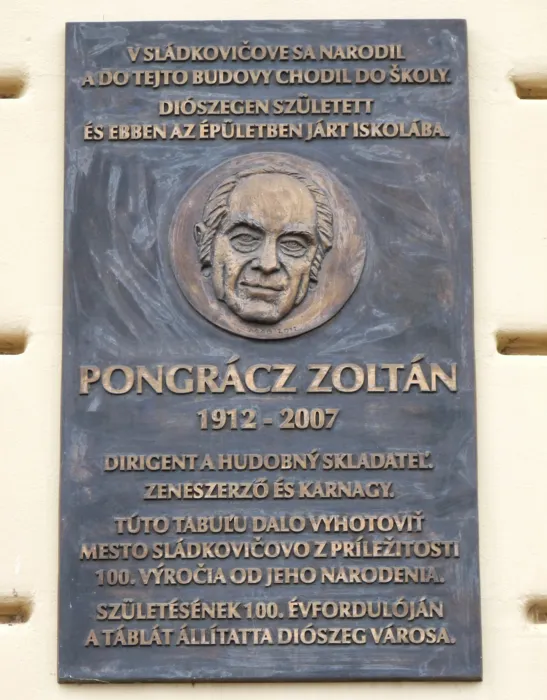
Zoltán Pongrácz's memorial plaque
Statue, monument, memorial plaque
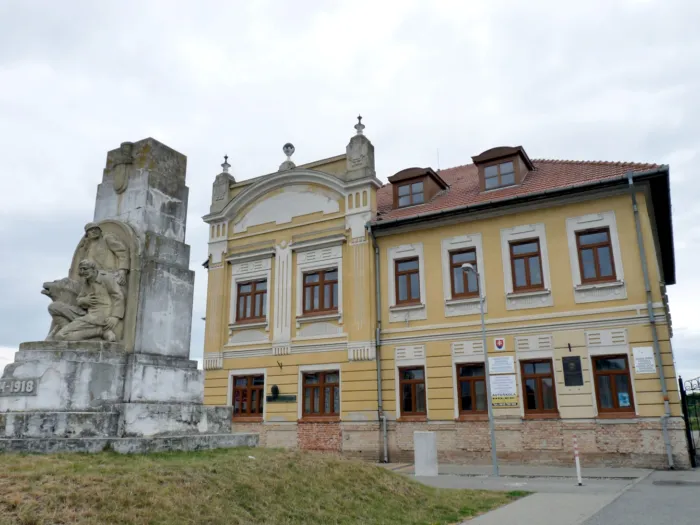
The memorial plaque of Zoltán Pongrácz was unveiled on the 100th anniversary of his birth, on March 3, 2012, on the wall of the school next to the war memorial. The memorial plaque, commissioned by the city of Diószeg, is the work of sculptor Gyula Mag. ; Zoltán Pongrácz was the very first figure of Hungarian electronic music, winner of several international awards, and the first professor of electronic music at the Academy of Music. The composer and conductor Zoltán Pongrácz was born in Diószeg on February 5, 1912. He studied composition at the Liszt Ferenc Academy of Music in Budapest between 1930 and 1935 as a student of Zoltán Kodály, then in Vienna he was a student of Rudolf Nilius and in Salzburg he was a student of Klemens Krauss as a conductor. He studied comparative musicology at the Humboldt University in Berlin and electronic music at the Royal Netherlands University in Utrecht as a student of G. M. Koenig. In 1940/4l he was a répétiteur at the Budapest Opera House, between 1943 and 1945 he was the conductor and music director of the Hungarian Radio, from 1954 to 1964 he was a teacher at the Zoltán Kodály Music Secondary School in Debrecen, and since 1975 he has been teaching electronic composition at the Liszt Ferenc Academy of Music in Budapest. He is a founding member of the International Association of Electroacoustic Music. He has been a member of the Hungarian Academy of Arts since 1992. ; He died in Budapest on April 3, 2007, at the age of 95. ; ; He wrote his first electronic work in 1966, which is also the first Hungarian electronic composition. He recorded the song Kryptothesiphon on tape. He was not only a pioneer in this field, as he subsequently opened the only private studio in the country, which became the Hungarian Radio's electroacoustic room in 1975. ; In 1972, he won a prize in Czechoslovakia in his category, with his portrait titled Maríphonia, which was inspired by his wife's voice and body, a method that remained characteristic of his entire later work. He gave his first concert in 1975, so strictly speaking, February 28 is the birthday of Hungarian disco. ; He fought to have electronic music included as an optional subject taught at the Academy. He eventually succeeded in carrying out his idea and taught the emerging youth for twenty years, and even wrote a textbook entitled Electronic Music in 1980. He died in 2007 at the age of 95, and the Radio's electroacoustic department closed the next day. Perhaps this shows the greatest role he played in the development and popularization of the Hungarian electronic music scene, but he also proved that electronic music is actually nothing more than a sub-section of serious works, operas, and orchestral works, much more art than is commonly believed. ; Awards, recognitions: Ferenc József Award (1939), Master's Degree GMEB-UNESCO (1988), French Euphonies d’or (1989), Meritorious Artist (1992), Officer's Cross of the Order of Merit of the Hungarian Republic (1992), Ferenc Erkel Award (1996), Vox electronica (Magyar Rádió, 2000) ; Main works: ; Operas - Odysseus and Nausicaa, The Last Station, ; Oratorios and cantatas - The Legend of the Turtle Scraper, Út omnes unum simt, Missa solemnis Buda expugnata, Kossuth cantata, Apollon Mosagetész. ; Orchestral and instrumental works - Symphony, Three orchestral etudes, Pastorale, Gamelan music, Three improvisations for percussion and piano, Three bagatelles for percussion, Hungarian antiquities ; Electroacoustic works - Mariphonia, Madrigal, Twelve circular ribbons, 144 voices, Bariszfera, Successive and polar contrasts, The story of a C-flat major chord. ; Electronics and instrumental music - Saxophone Concerto, Cimbalom Concerto, Praise of Folly, Satire for baritone solo and mixed choir, Approaching and Distant (electronic sound drama to the text of Gerhard Rühm). ; Books - Book of Folk Musicians, Modern Music, Modern Notation (1971), Electronic Music (1980)