
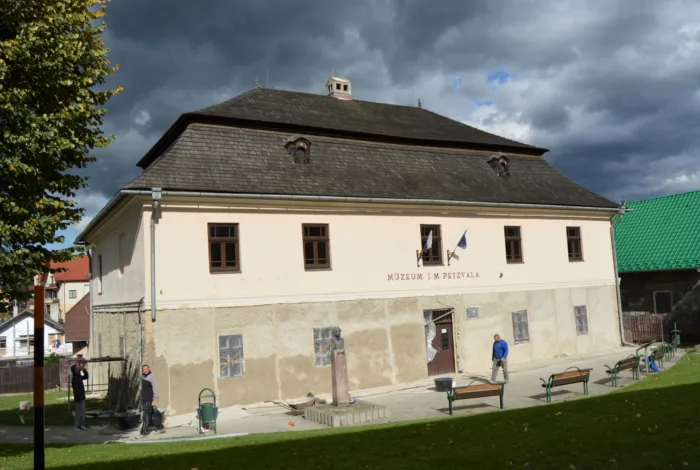
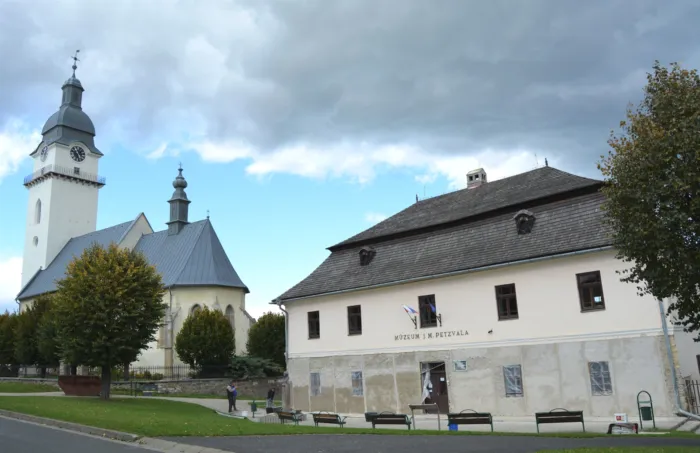
Birthplace and statue of József Petzvál
Building, structure
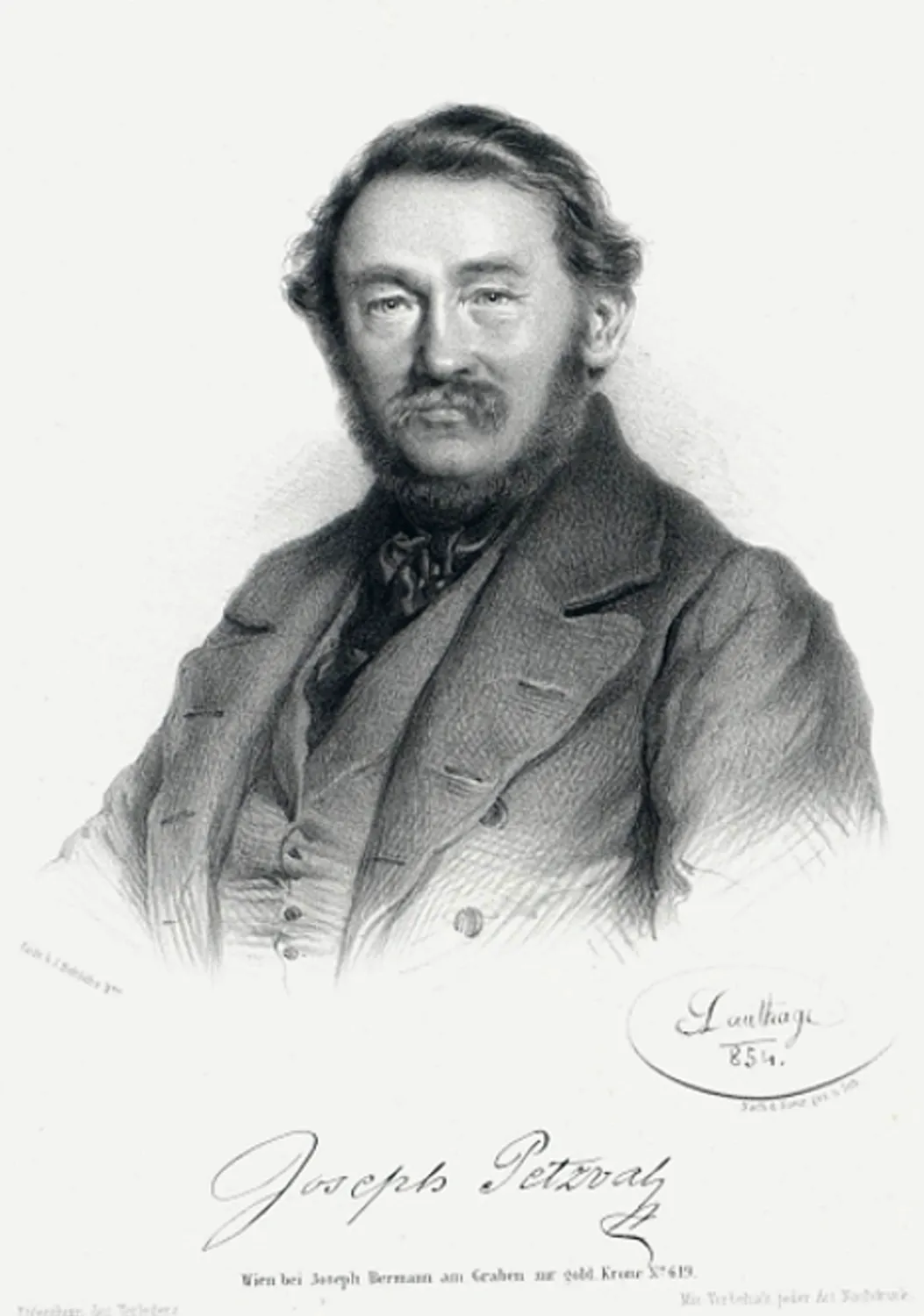
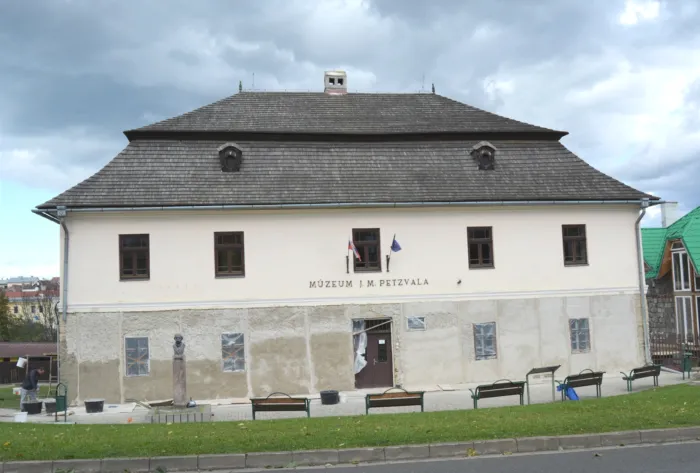
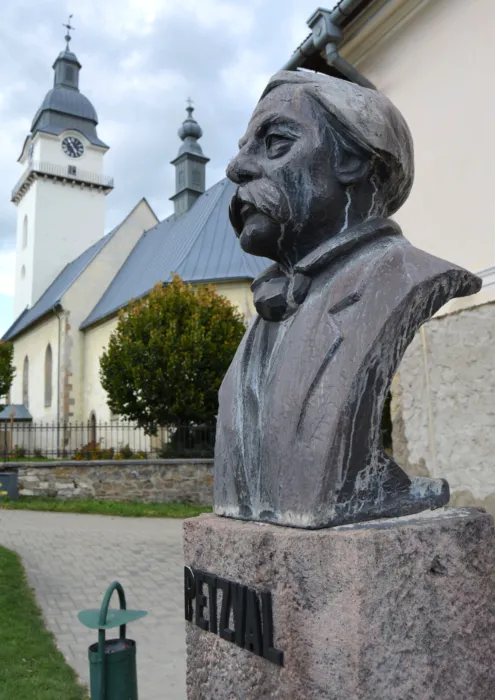
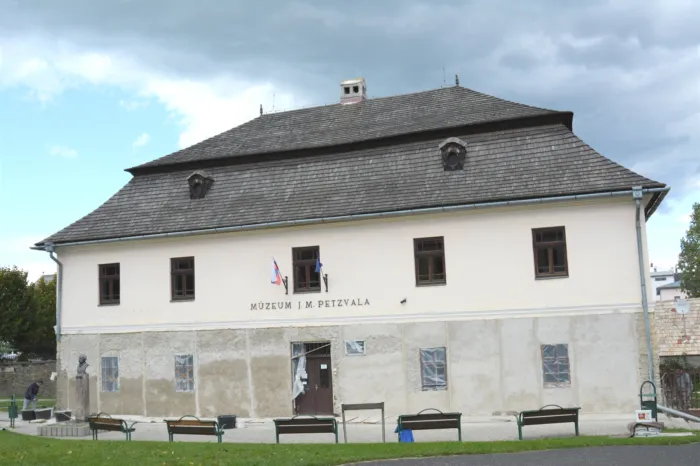
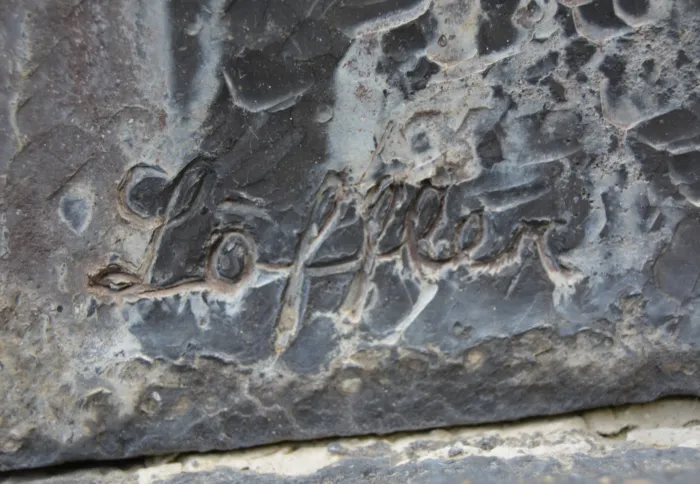
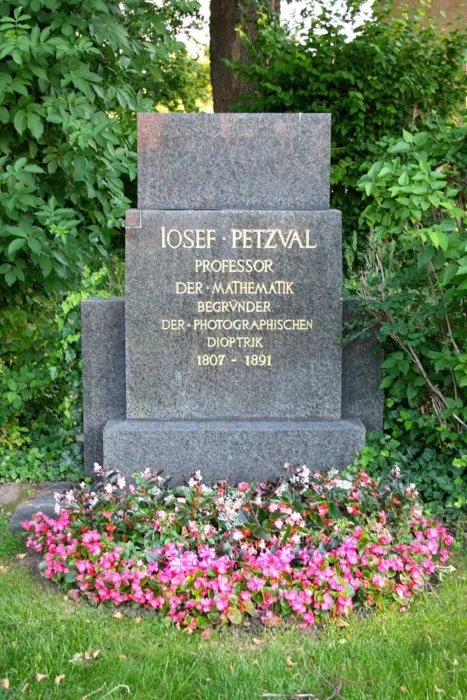
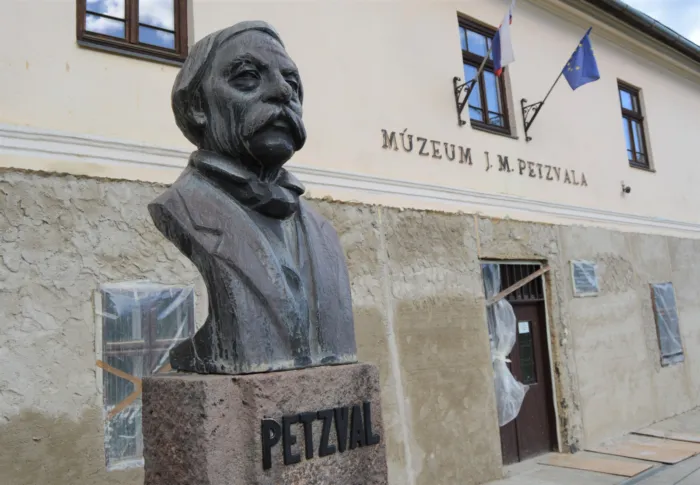
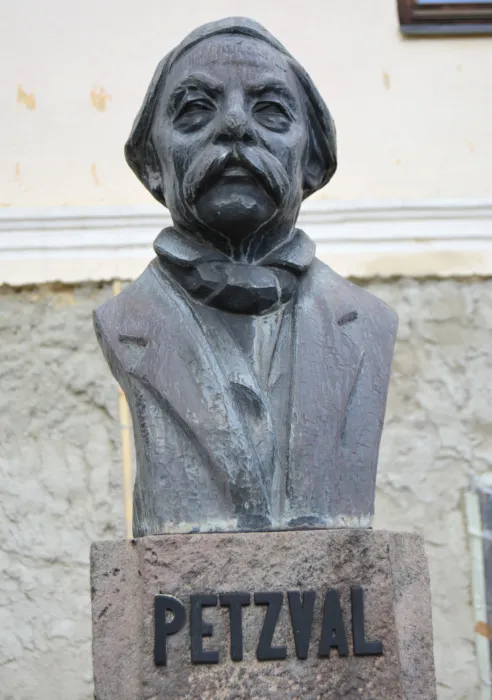
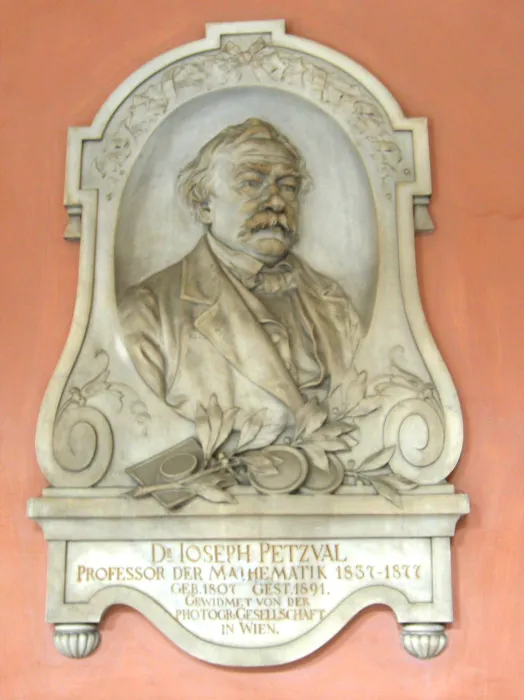
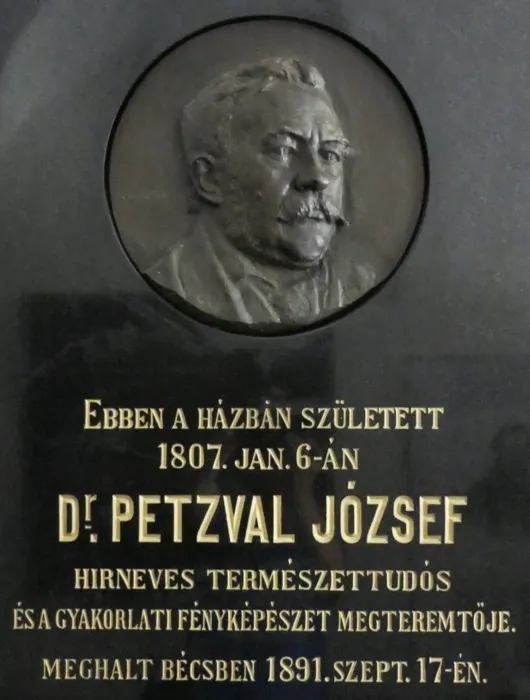
József Miksa Petzvál was an engineer, mathematician, and university professor. He achieved significant research results in the field of theoretical and practical photonics, and his inventions gave a huge boost to photography in the middle of the 19th century. In addition, he enriched ballistics, mechanics, and acoustics with numerous important results. ; At the age of 42, he was elected a member of the Austrian Academy of Sciences, and became an external member of the Hungarian Academy of Sciences in 1873. ; ; Life and memory: ; He was born into a German family from Szepesség on January 6, 1807, in Szepesbéla, which at that time belonged to the Kingdom of Hungary. Today, three nations – Hungarian, Slovak, and Austrian – compete to recognize the internationally renowned scientist-inventor as their son. As a result, his name can be found in various ways: Petzval or Petzvál József, Jozef Maximilián Petzval, Joseph Petzval, Josef Petzval, J. M. Petzval. We clearly consider him to be Hungarian – for no other reason than that Petzvál József declared himself Hungarian throughout his life. We quote from the letter written on the occasion of his election as an external member of the Hungarian Academy of Sciences: “… as a loyal son of our Hungarian homeland, the more so the honor of becoming a member of the sublime scientific institute, I am obliged to express my deepest gratitude.” ; His father, Ján Fridrich Petzval, was a descendant of a Moravian teaching family, an extremely talented, versatile man: he was an excellent musician and composer, and an excellent mechanic. From 1799 he worked as a teacher at the Evangelical elementary school in Spišské Béla and as an organist at the parish church. ; He elected his brother, mathematician and university professor Ottó Petzvál (1809-1883), a full member of the Hungarian Academy of Sciences in 1858. On this occasion, his work entitled Elemi székemtan, published in 1856, won the academy's grand prize. ; In 1810, the family moved to Késmárk, Petzvál completed elementary school here, and from 1818 continued his studies at the Piarist gymnasium in Podolin. In the autumn of 1819, the Petzval family had to leave Késmárk because the head of the family had a conflict with the keeper of the church tower. A few years later, the family lived in Levoča, where the father worked as a church choirmaster and city surveyor until his death in 1852. ; Petzvál – as before – was among the best in his class in Latin and religious studies at the Catholic gymnasium in Levoča. Archival documents reveal that he had problems with the Hungarian language, and mathematics was not one of his favorite subjects in elementary school. After completing his high school studies, from 1822 he attended the Faculty of Philosophy of the Royal Academy in Košice. Around this time, in addition to Latin, he spoke fluent Hungarian, Slovak, German and Czech, but also studied French and English. ; He began his studies in the engineering department of the Institutum Geometricum (Engineering Institute, the predecessor of today's Budapest University of Technology and Economics) in Pest in 1826, and two years later, in 1828, he obtained the certificate of engineering (Geometer Approbatus). ; Between 1828 and 1835, Petzvál worked as an engineer for the city of Pest in the construction department, where in 1830 he prepared a canalization plan to prevent the city from flooding. He was involved in the regulation of the Danube and the Rákos stream, and the canalization of Lipótváros. Although he successfully averted one flood (the one before 1838), he encountered difficulties because he exceeded the available budget. ; In addition to his engineering work, he further educated himself: in 1832 he obtained a doctorate in mathematics, and that same year he began his university teaching work. He taught mathematics, practical geometry and mechanics at the University of Pest, and was appointed a full professor of mathematics in 1835. In 1836, he was invited to teach higher mathematics at the University of Vienna, where he taught without interruption until his 70th birthday and his retirement. His lectures at the University of Vienna were not limited to quantity theory; he taught analytical mechanics, the mechanics of celestial bodies, ballistics, optics, and acoustics. ; He resigned his professorship on his seventieth birthday. On this occasion, Emperor Franz Joseph I awarded the scientist and inventor, whom he held in high esteem, the Knight's Cross of the Franz Joseph Order. ; He spent his last years in bitter solitude, turning away from the world, and barely contacting his old friends. He died on September 17, 1891, at his home in Kahlenberg. ; Before his death, he is said to have said: "I have brought light under my control. I hold it firmly in my hand, because there is too much darkness in the world." ; One of the great losses to scientific life is that his heirs, according to his will, who took care of him in his final years, were unable to assess the significance of the legacy he had left them, and as a result, most of Petzval's invaluable manuscripts were destroyed. ; Upon his death, the city of Vienna paid tribute to him by donating him a magnificent tomb. At the inauguration of his tomb, completed in 1905, the then mayor of Vienna, Karl Lueger, praised József Petzval as follows: "He was a great man and a great scientist, who brought light and glory to the University of Vienna, the Academy, but also to the city of Vienna itself, since he made Vienna the world center of photography." ; The memory of the world-famous scientist and inventor is held in high esteem by posterity. Since 1928, outstanding achievements in the field of scientific photography have been rewarded with the Petzvál Medal, established by the Austrian Ministry of Public Education. The Hungarian Acoustic and Film Technology Association established the Petzvál József Memorial Medal in 1962. Shortly after his death, a street was named after him in Vienna and Braunschweig, and since 1957, Petzvál József Street in Kelenföld, District 11, Budapest, has commemorated him. ; Slovakia issued a 200-crown silver commemorative coin for the 200th anniversary of his birth in 2007. A memorial museum was opened in his birthplace in Szepesbéla. On the right side of the ground floor foyer is a marble plaque: ; IN THIS HOUSE DR. WAS BORN ON JAN. 6, 1807. JÓZSEF PETZVAL, FAMOUS NATURAL SCIENTIST AND CREATOR OF PRACTICAL PHOTOGRAPHY. HE DIED IN VIENNA ON SEPTEMBER 17, 1891. In front of the building is a bronze bust of Petzval standing on a limestone pedestal, created by Béla Löffler. ; The marble relief of József Petzval (work of Anton Brenek) was erected in 1901 by the Wiener Photographische Gesellschaft – of which he was a founder from 1861 and an honorary member from 1877 – in the Pantheon of the University of Vienna. ; The asteroid No. 3716, discovered by the Czech astronomer Antonín Mrkos on October 2, 1980, was named after him. A crater on the Moon bears the name of Petzval (diameter 150 km, coordinates: 63°S, 113°W)