
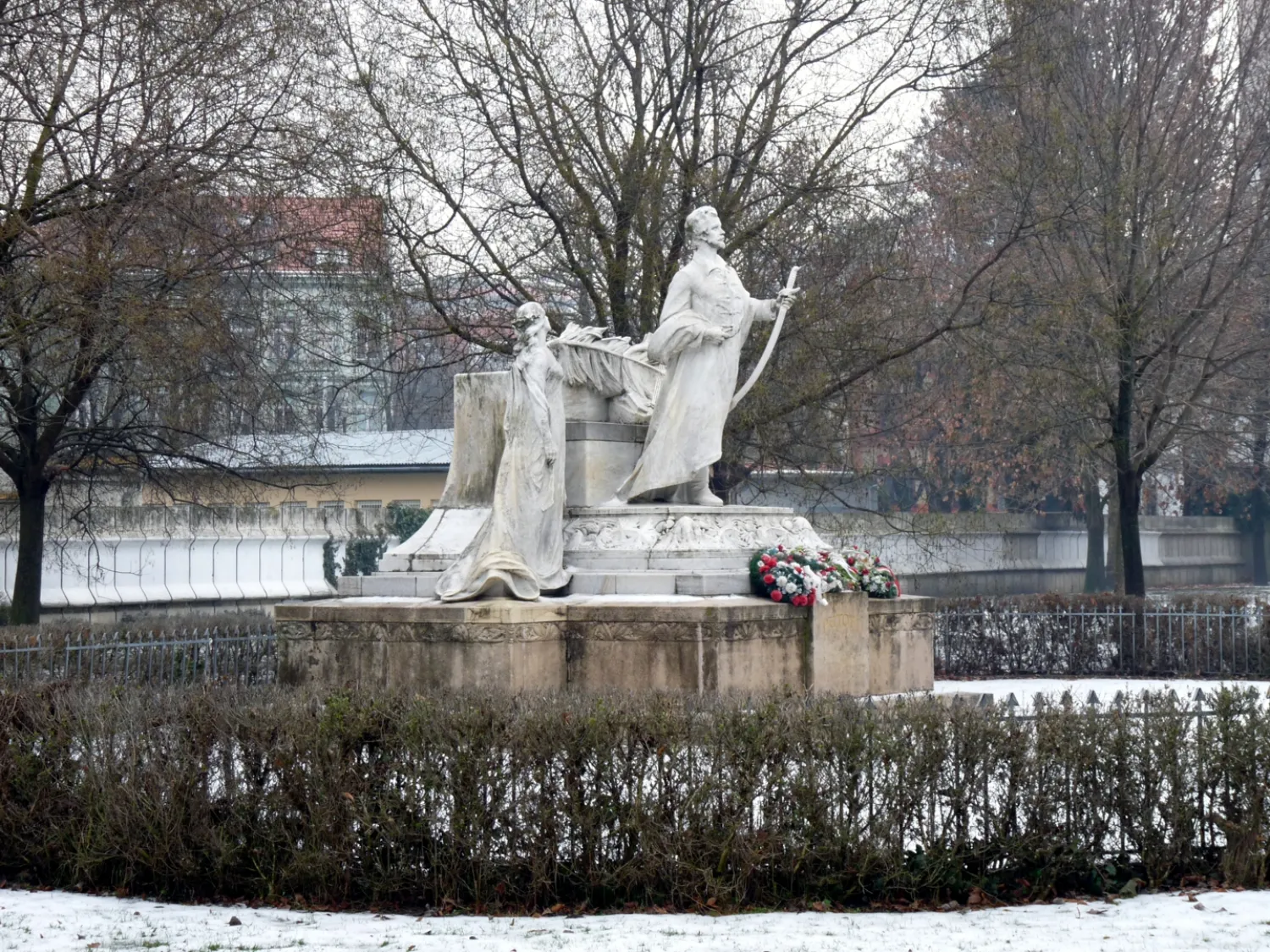
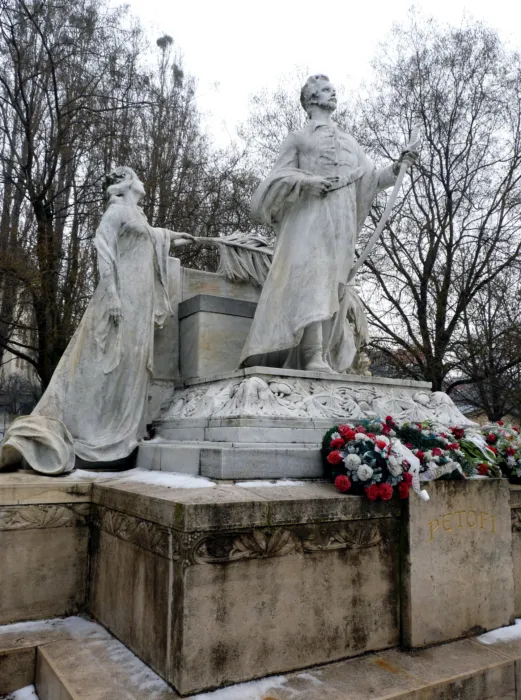
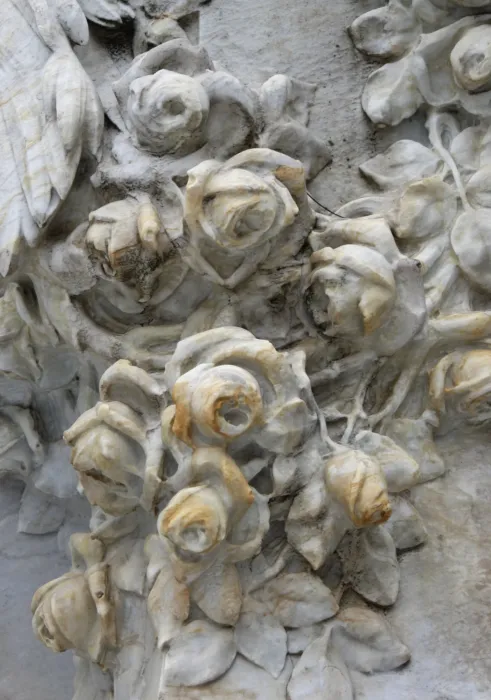
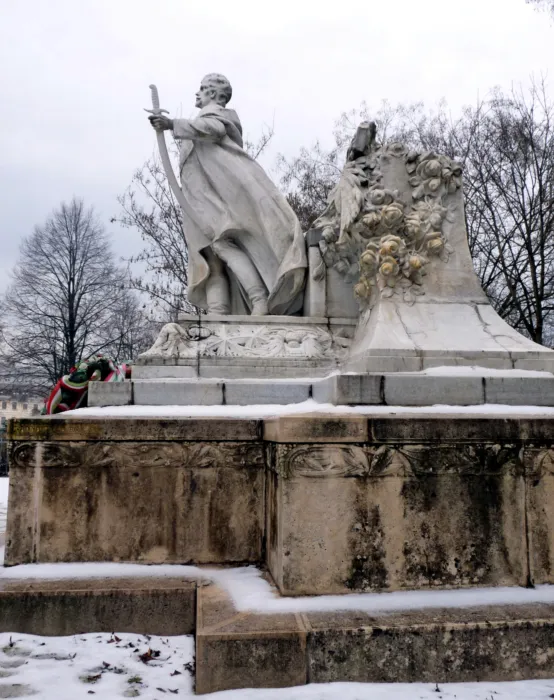
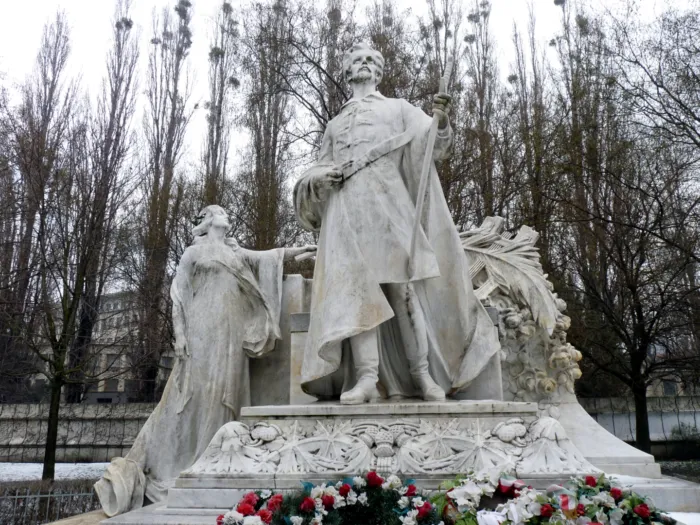
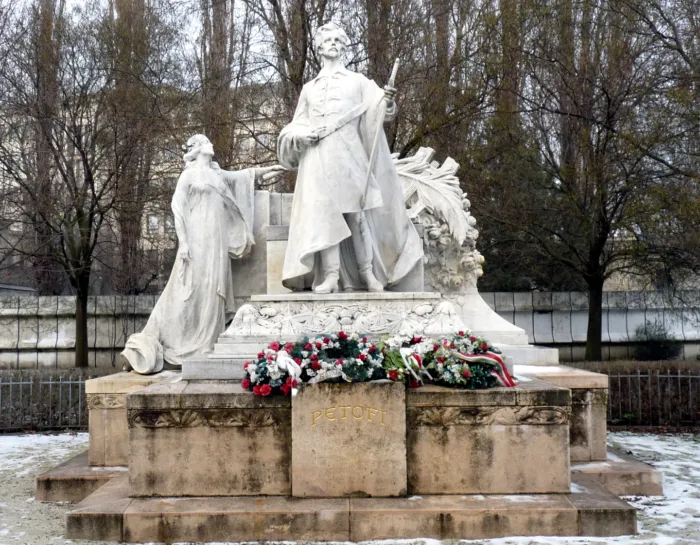
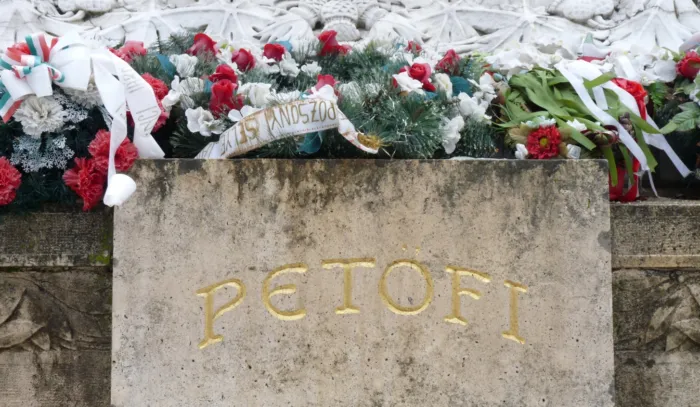
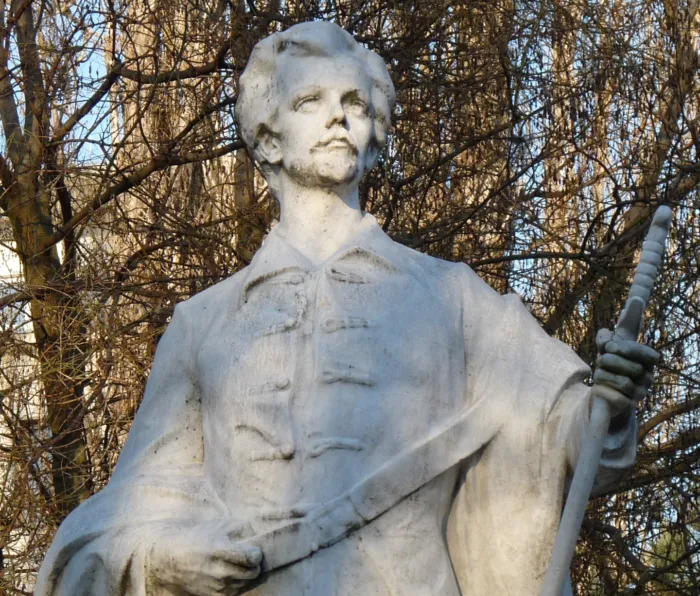
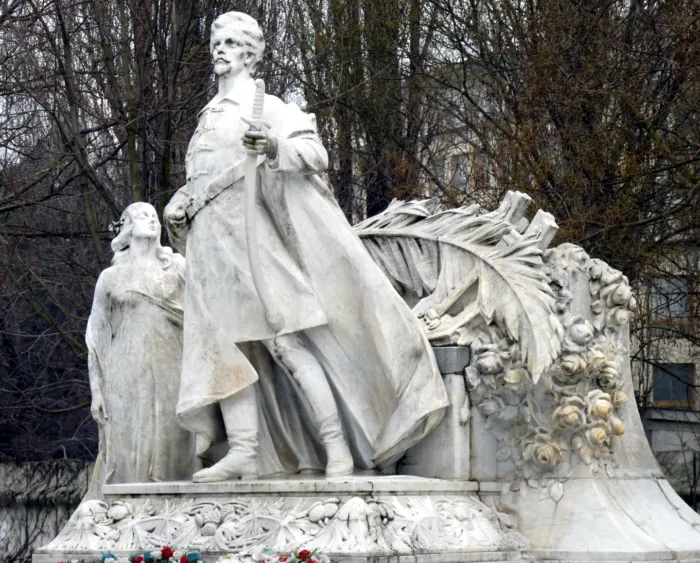
Statue of Sándor Petőfi in the Medicus Garden
Statue, monument, memorial plaque
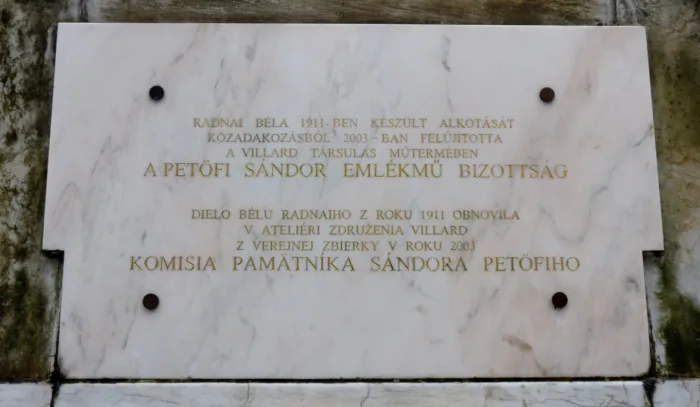
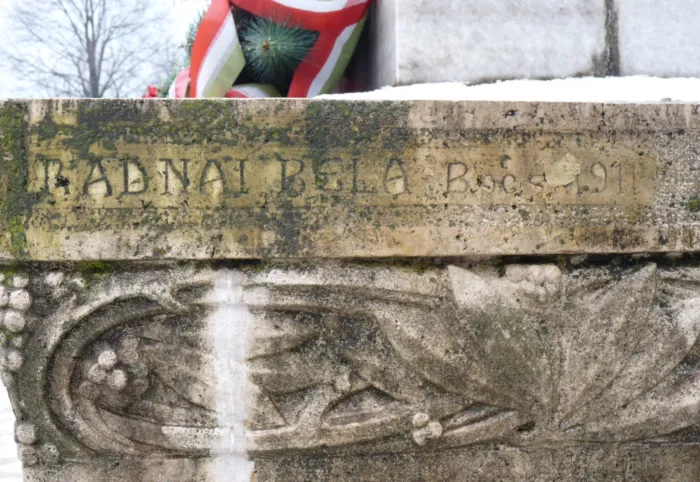
The statue of Petőfi, erected by Béla Radnai in 1911 with donations from the city's citizens, could stand in the central square of Bratislava for barely ten years at the time. After Trianon, it was demolished, "exiled" to storage, and only in the 1950s (since there is no reliable data on when the poet's statue was erected) was it re-erected in the park in Ligetfalu after several decades of adversity, but by then it was in an uninhabited, unprotected place, where it had been mutilated countless times. The Hungarians of Bratislava, more or less tolerated by the authorities, were able to commemorate the events of March 15 here until 2002. ; In 2002, the committee responsible for the relocation of the Petőfi monument was formed. The political tailwind greatly strengthened the fact that the Hungarian bourgeois government was able to establish better relations with the center-right cabinet of Dzurinda in the early years than before, the reconstruction of the Danube bridge connecting Esztergom with Párkány brought Bratislava and Budapest “closer” to each other for a while, and Pál Csáky was the vice-president of the Slovak government of Hungarian nationality. Thanks to this circumstance, Bratislava also supported the cultural “project” with money – just as the Hungarian Ministry of National Cultural Heritage and the Office for Hungarians Abroad also contributed to the costs –, but millions of dollars were also collected for the huge restoration bill from the selfless support of the city’s Hungarian citizens and the Hungarians of the Highlands. The helpfulness of the Minister of Culture of the Slovak government, Rudolf Chmel, who was educated and had good connections with Hungarian literature, should also be mentioned; On March 15, 2003, around the renovated Petőfi statue erected in the Medicus Garden, we could commemorate the anniversary of the Hungarian Revolution and War of Independence at its inauguration ceremony. The approximately two thousand people who gathered celebrated not only the 155th anniversary of the revolution and not only the 180th anniversary of the poet's birth, but also the worthy "turning of fate" of the statue. Thanks to public donations and support from the Slovak and Hungarian governments, Petőfi's statue was restored and erected again in Bratislava, where a large number of well-known Slovak public figures were present at the bilingual ceremony. This had never been the case before. ; Pál Csáky, Deputy Prime Minister of the Slovak government, the ceremonial speaker of the event, spoke about how the message of March "offers them the inner support of self-esteem". Our history teaches us that only those who have embraced their own values, the knowledge and the set of values that they received from their predecessors and passed on, have been successful as individuals and as a community. "Neither an individual nor a community can be hit by a greater blow than division, than the loss of faith in ourselves. The legacy of 1848-1849 protects us from this loss of value and still gives us strength for our daily struggles. It still reminds us of the obligatory commandment: to embrace ourselves," said Csáky. He recalled how vividly the nation believed in the dark Bach era following the Enlightenment and even after that that Petőfi had not died, that he was alive and would return one day. "Even in the most difficult times, deep in the souls, there lived the need for wonder, the certainty that the idea of Hungarian freedom is immortal, that like a hidden stream, it resurfaces again and again in times of historical trials and twists of fate to fulfill its truth. And whoever believes, whoever is able to believe in himself, his faith will be fulfilled," Csáky emphasized, recalling that for decades only a handful of people in Bratislava dared to believe that the often desecrated Petőfi statue would return to its rightful place. "Behold, it has returned, the dream has come true." ; Péter Kiss, Minister of the Chancellery of the Hungarian Government, recalled: in 1848, we Hungarians "joined the most progressive aspirations of Europe at that time, we committed ourselves to the eternal values of freedom, human and national dignity." As he said: "This year's Ides of March here in Bratislava is not only a sublimely inspiring common celebration of Hungarians, but also of multicultural Slovakia. Soon, we can be members of a unified Europe at the same time and together", so we must prepare for this new kind of common existence, which will hopefully open up very favorable conditions for the Slovak and Hungarian people, such perspectives, cross-border relations that "not so long ago we did not even dare to dream of" - the Hungarian politician said in his speech. ; Rudolf Chmel, Slovak Minister of Culture, literary historian, an expert researcher of Hungarian-Slovak relations, and former Czechoslovak ambassador to Budapest, similarly spoke about the reconstruction of the unity of the already common European civic culture, in which our task will be to "mitigate the conflicts" that still exist between Western and Eastern cultures, and we must work to ensure that within the framework of the new Central European dialogue, the spirit of "not contempt, marginalization, or cultural dominance" but the idea of cultural cohesion, coexistence, and cooperation is the determining factor. ; According to Peter Ciernik, Mayor of Bratislava Old Town, the Petőfi statue in Bratislava is also a message towards a common Europe. We had a common past, and now in a uniting Europe, our common future is within reach. In the once trilingual Bratislava, a symbol of the coexistence of nations, this statue now points forward, indicating that it wants to be the harbinger of a common Europe. ; The Petőfi statue has been regularly attacked since its inauguration. The sword hilt was first broken in October 2003, causing 20,000 crowns in damage at the time. In April 2007, unknown perpetrators cut off the hands of the statues representing the poet and his muse, and wreaths placed at the statue a few weeks earlier in honor of March 15 were used to form a double cross, the Slovak national symbol, which is often used by extremist groups as a provocation.