
Statue of Alexander Petőfi
Statue, monument, memorial plaque
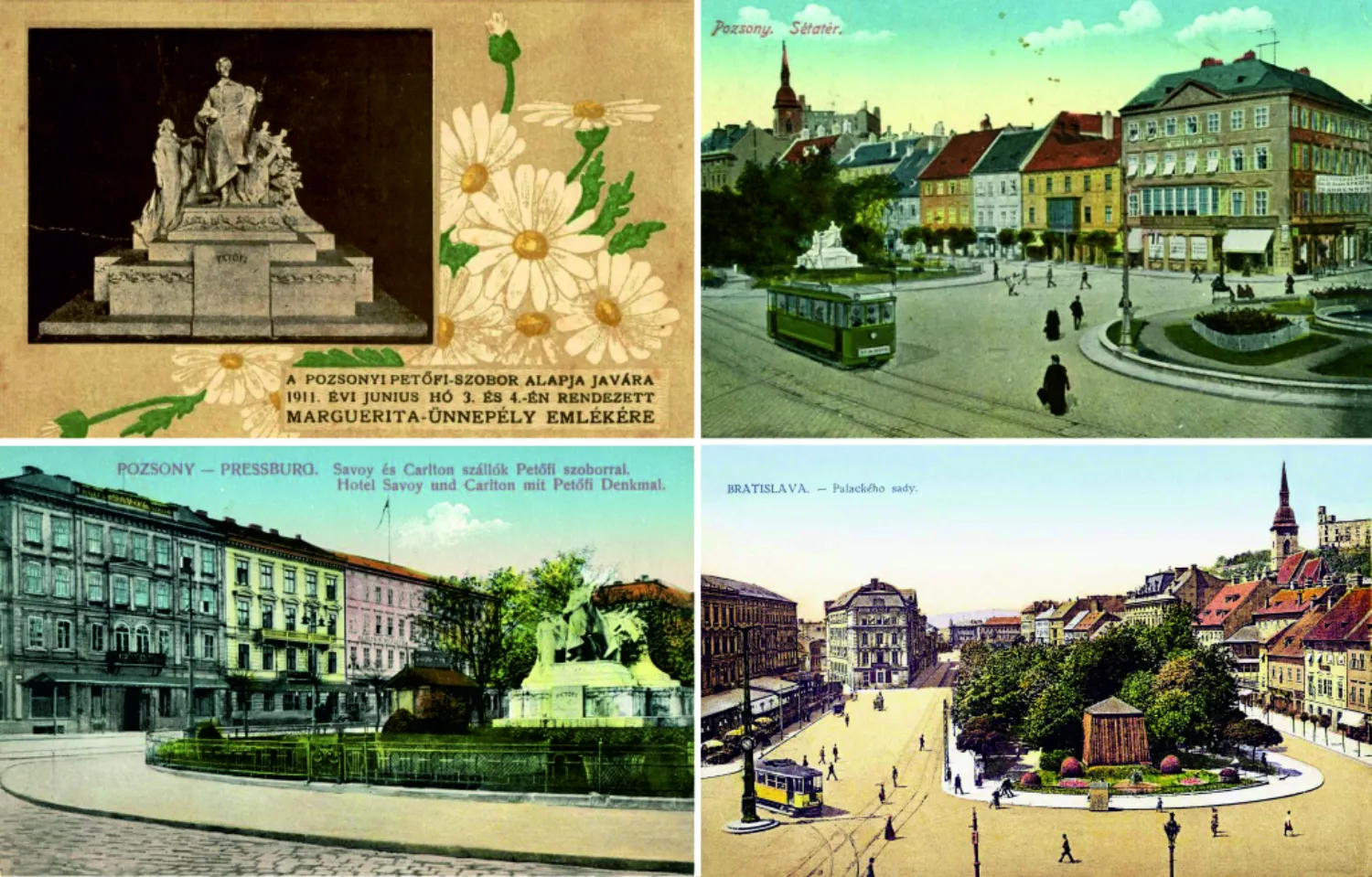
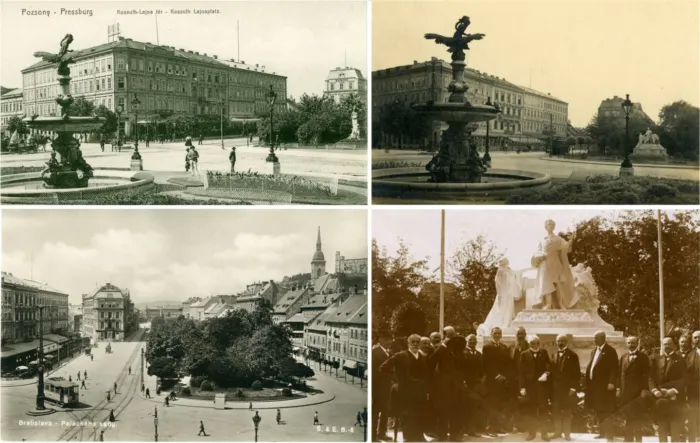
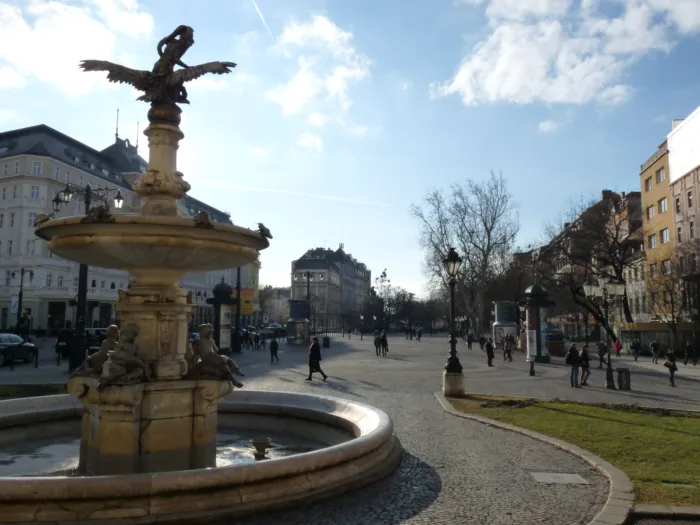
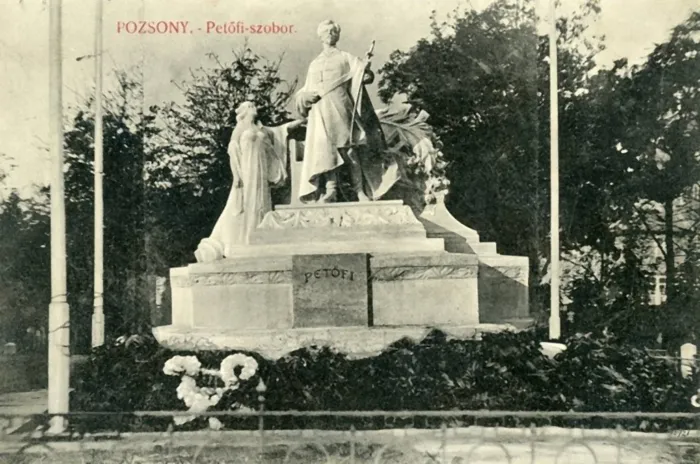
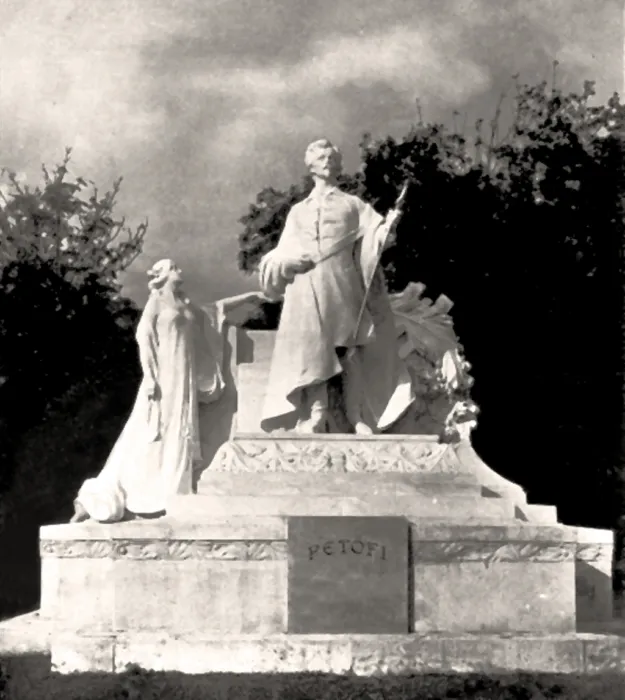
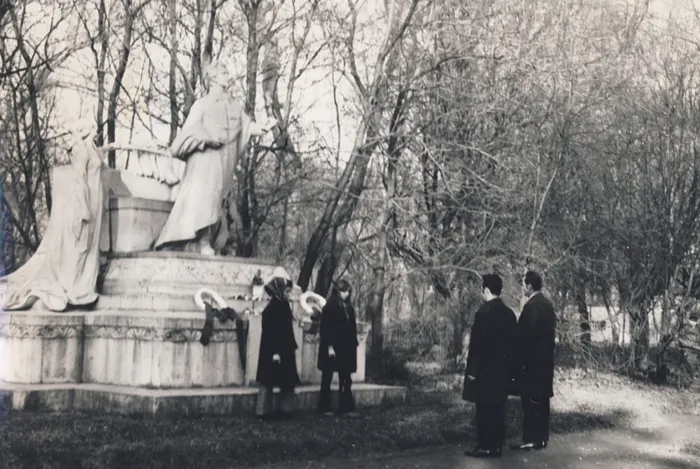
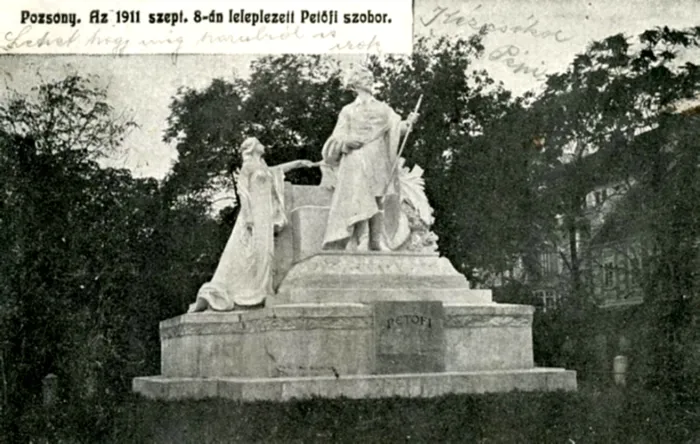
Around 1899, the Bratislava Newspaper Writers' Association proposed the erection of a statue of Petőfi. Their idea was greatly supported by the city's residents. The task was entrusted to the star sculptor of the time, János Fadrusz, who at that time already had an equestrian statue of Maria Theresa made of Carrara marble on the banks of the Danube. The sculptor accepted the task at cost, but his health began to deteriorate rapidly, and before the work could begin, Petőfi died in 1903 at the original location: ; On August 14, 1904, we can read the following in the columns of the Vasárnapi újság: ; “The glory of the greatest Hungarian lyric poet will soon be proclaimed by a third monumental sculpture, and it will be in Bratislava, where he spent part of his struggling youth. Petőfi earned his living here by copying the parliamentary diary. The public of the city collected the considerable sum necessary for the erection of the sculpture in a relatively short time, and the sculpture committee was in the fortunate position in the coming days of being able to ask the judging committee, which included several outstanding Budapest sculptors, to give a verdict on the fate of 37 entries. The judges awarded the first prize to Béla Radnai (Bratislava, May 23, 1873 - Budapest, November 21, 1923), a sculptor born in Bratislava, and according to the terms of the competition, he was also entrusted with the creation of the statue. Thus, János Fadrusz will be succeeded by an artist who whom the city of Bratislava can also look up to as its son. The sculpture depicts the great poet on a not high, but rather an elongated pedestal, as he rests his lute on the top of the pedestal and grasps a sword in his hand to encourage his compatriots to heroic resistance in the approaching danger. On the pedestal, one step below, a charming female figure, the Muse, stands, casting a pleading look at Petőfi, asking him not to risk her precious life. The sculpture conveys the idea beautifully and is very pleasing in its lines. Radnai, who recently achieved success with the Lenau family statue, demonstrates no ordinary talent with this new work. The judges awarded the second prize to Miklós Ligeti (Buda, May 19, 1871 - Budapest, December 10, 1944). His entry is presented alongside the sculpture intended for export, so that the public could easily compare the two works of art. "; The people of Bratislava raised the funds for the erection of the Petőfi statue by collecting money; 14,410 crowns were collected on the Marguerite Festival on June 3, 1911, which was considered a huge sum. The statue was erected in the most prestigious place in the city, the former Kossuth Lajos Square. (The square originally housed the statue of Bratislava's famous composer Johann Nepomuk Hummel, which was moved to the "small Promenade", next to today's Redut, and after several relocations, it can be seen in front of the German embassy building.) The statue was unveiled on September 8, 1911, in a grand ceremony. According to contemporary documents, delegates from the Petőfi Society also came from Budapest to the inauguration of the statue, led by Ferenc Herczeg, a great writer of the time. The ceremonial speech was given by Mayor Tivadar Brolly, and Petőfi's former friend József Kolmár was also present. After the statue's inauguration, a banquet with a hundred tables was held at the Zöldfa Hotel for the distinguished participants. Radnai married his second wife, Margit Kurucz, shortly before the statue's inauguration, so the ceremony was one of the stops on their honeymoon. ; The statue stood in its intended location for only ten years, in 1921 it was boarded up and then placed in one of the stables of the Grassalkovich Palace. Then everyone forgot about it for a while. After several years, the local left-wing youth, members of the Sarló, discovered its hiding place and started a movement to have the statue re-erected. The young people saw in Petőfi not only the great poet of Hungary, but also of the Danubian peoples, who, in their interpretation, fought for the freedom of all of them. They succeeded, and managed to place the statue back in the public square. However, it was no longer possible to erect it in its old location, so in 1957 it was placed on the other side of the Danube, in Ligetfalu, in a park named after the Slovak poet Janko Kráľ. After the establishment of the independent Slovak Republic, it was vandalized several times. During the Slovak nationalism typical of the nineties, its sword was regularly broken. Finally, the statue was placed in the more closed Medikus Garden, close to the city center.