
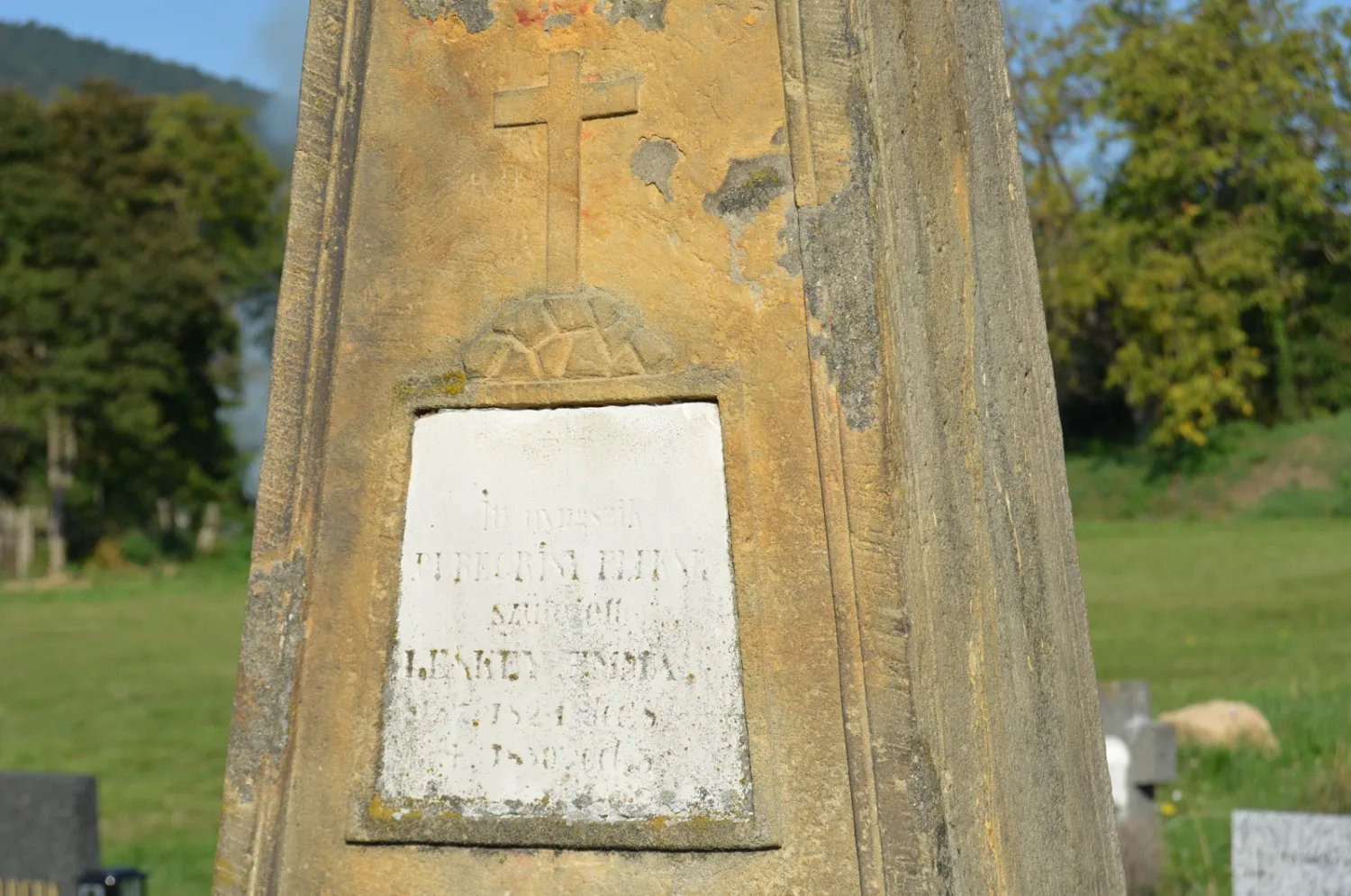
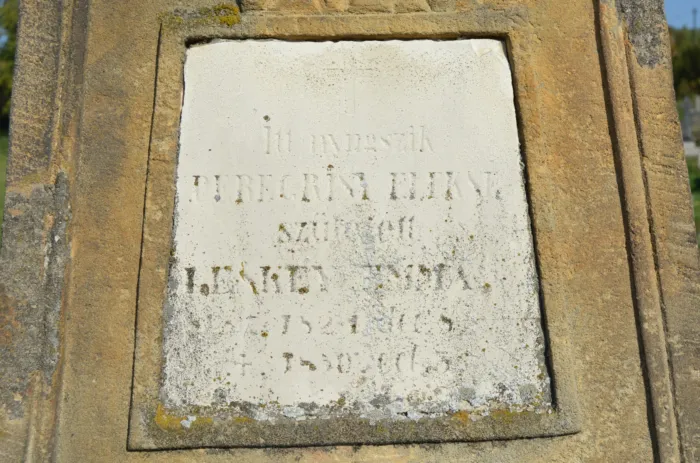
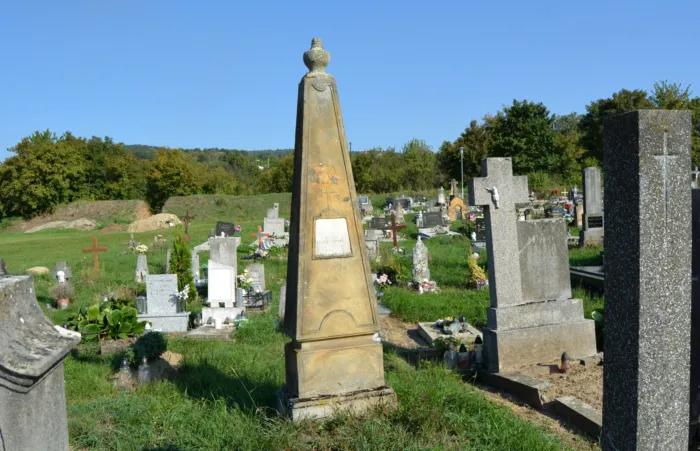
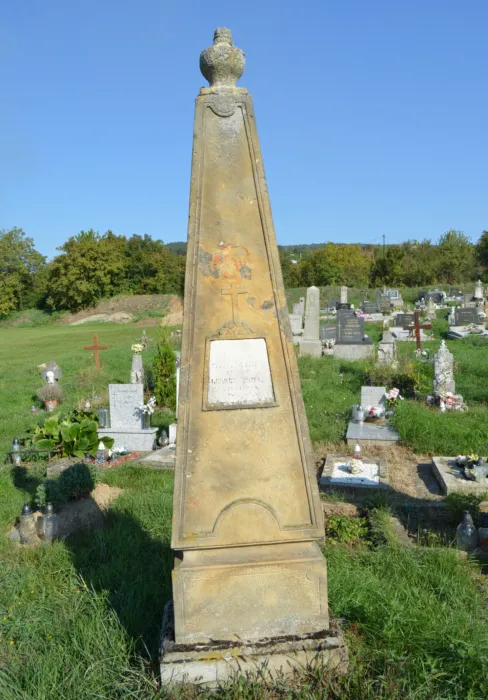
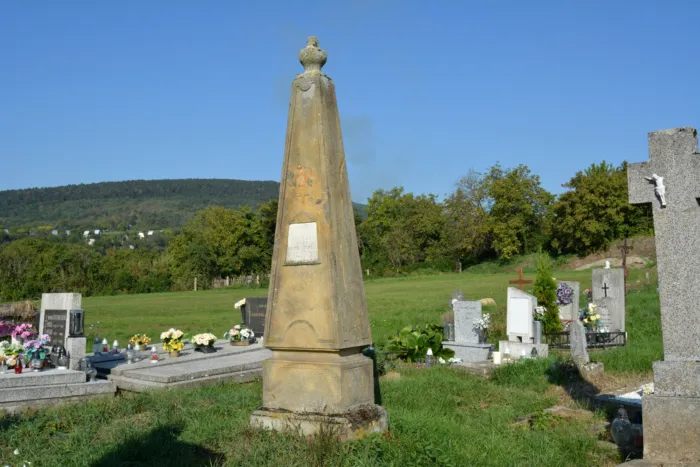
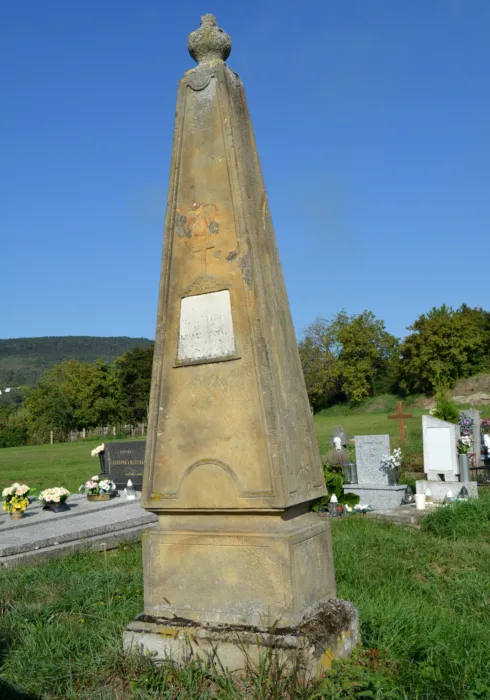
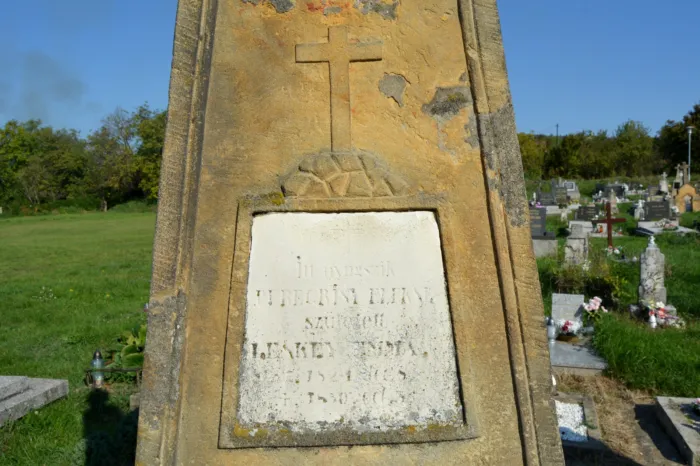
The grave of Emma Lenkey, Peregrinyné, in Csejt
Cemeteries, tombstones, graves
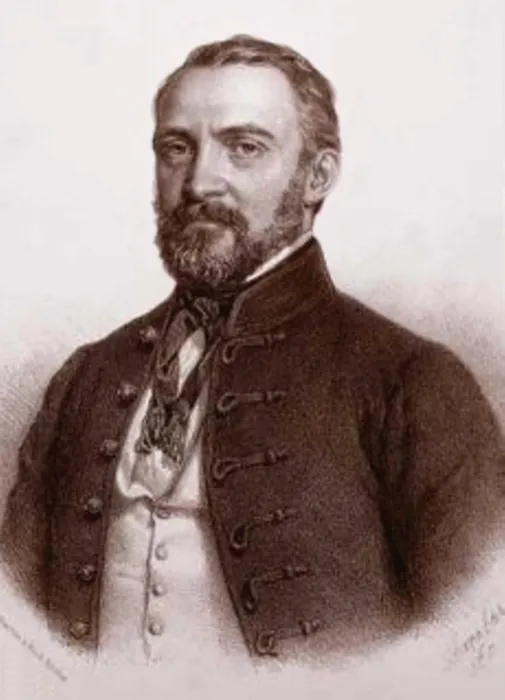
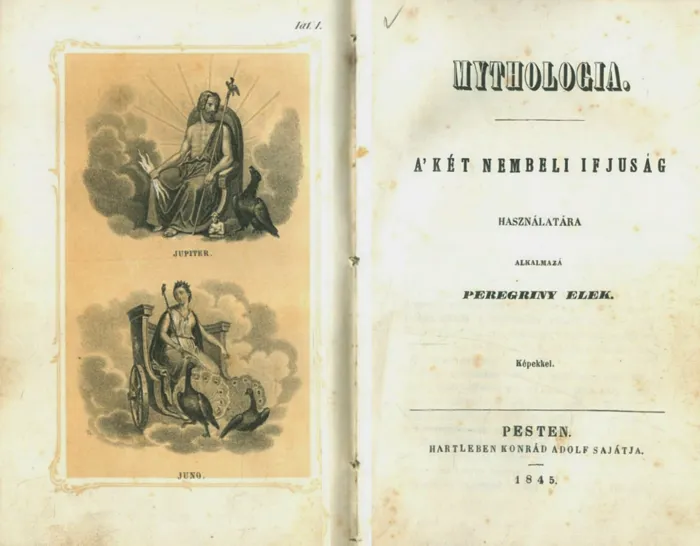
Emma Lenkey of Lenkei and Zádorfalvi was born in Vienna in 1824. Her father, Lajos Lenkey, was an infantry captain, and her mother, Marianna Wolf, was a woman from Vienna. She was a niece of, among others, General János Lenkey (the 14th martyr of Arad), who was one of the defendants in the trial of the martyrs of Arad, but the proceedings against him were terminated due to his mental illness. She died of a mental breakdown in the prison of the Arad castle on February 9, 1850. ; Emma Lenkey married Dr. Elek Peregriny, ministerial advisor, private tutor, academician, in Buda, with whom they lived in the former County Hall building on Úri Street in Buda, which building came into the possession of the Lenkey family in 1828. ; Since Peregriny actively participated - as an official - in the 1848 revolution, after the defeat of the War of Independence he had to flee together with the Lenkeys from Haynau's revenge. He rented land from Count Andrássy and retired to Csejte to farm. Emma, his wife, was already terminally ill at the time. The 26-year-old young woman's body was ravaged by pneumonia. On the way, she died in the car on the outskirts of Csejte, in front of her husband and three daughters. Her grave can still be seen in the Csejte cemetery. ; ; Emma Lenkey's husband, Dr. Elek Peregriny (Gálszécs, Zemplén County, February 12, 1812 - Budapest, April 3, 1885) was a doctor of philosophy, teacher, writer, and corresponding member of the Hungarian Academy of Sciences. ; His father, the nobleman György Peregriny of Polish origin, was a doctor, the chief physician of Máramaros County, who moved his residence to Máramarossziget. Elek Peregriny also completed his secondary school studies there. In 1827, he entered the pious order of teachers, spent two years in Kecskemét, then left the order. He completed his higher education in Bratislava and Pest. In 1833, he became a tutor at the house of Count Károly Andrássy, he educated Count Gyula Andrássy for three years, and then traveled in Germany and Italy. Upon his return, in 1837, he was invited again to be a tutor at the house of Baron Alajos Mednyánszky. In 1840, he became a doctor of philosophy. In 1842, he traveled in England, France, Germany, Switzerland, part of Italy and London, and upon his return, he became a tutor at Count György Károlyi. In 1844 he was appointed a book reviewer, and on September 3 of that year he was elected a corresponding member of the Hungarian Academy of Sciences. Having lost his office as an auditor in 1848, he lived as a tenant in Csejté (Nytra County). He made the science of education and teaching the subject of his special diligence, became thoroughly acquainted with the abundant literature of foreign, especially German, pedagogy, began his useful literary work and, by translating Campe's Discovery of America, strove to master the art of teaching suited to the temperament of children. In 1848 he was appointed a teacher of education at the Royal Hungarian University, and in 1849 he was appointed a councilor to the Minister of Public Education. In 1857 he opened a boys' education institute in Pest, which he transferred to Buda in 1861. In 1866 he also began working as a private teacher at the university. He was a member of the Faculty of Philosophy of the University of Pest and the Encyclopedic Society of the Rhineland. He was a member of the board of directors of the Pest State Teacher Training Institute, and for several years he was the chairman of the educational department of the kindergarten association. His son-in-law Béla Neÿ was an architect, and his grandson Ákos Neÿ was a railway engineer-director. ; His articles were in the Hírnök (1837-41, etc., and Századunk 1838, No. 3. Review of my journey), in the Athenaeum (1838-39, 1941, educational articles), in the Hírnök (1841, No. 5. Opinion in the Pesti Hirlap on the matter of the society for disseminating useful knowledge planned by Pál Almási Balogh), in the Tudománytár (Uj folyam XI. 1842. On teaching systems, especially humanism and realism), in the Magyar Szépirodalmi Szemle (1847, No. 24-26. Mythologia), and he was also a collaborator of the Universal Hungarian Encyclopedia. ; ; Works: ; ; - Campe, Henr. Joachim, The Discovery of America. An entertaining reading book for children and young people. Pest, 1836. Three parts (Columbus. Cortez. Pizarro. New edition. Pest, 1850.). ; - Hall of pictures taken from life. For the cultivation of young hearts. Bratislava, 1837. ; - The history of the Hungarians. For the use of youth. Buda, 1838. (Rev. Our century, no. 64, 2nd extended edition. Nagy-Szombat, 1840., 3rd and 4th edition. Pest, 5th edition. 1861., 6th edition. 1863., U. ott. Rev. Critical Pages, no. 25, 1862.). ; - Mine. For the training of youth. Buda and Pest, 1840-1845. eight booklets in two volumes, with stone and woodcuts. (Also under this title: The little collector for the training of youth. He won the Gorove Prize of the Academy of Sciences.) ; - Natural history with notes on art. Applied to the use of young students ... Published by Olmiczer József. Buda, 1842. (Reprinted from Athenaeum 1843, 2nd edition. Pest, 1844.). ; - Farmer János, or the friend of the village. Pest, 1843. ; - New ABC, or who wants to read in Hungarian and German? In Hungarian and German. With four colored pictures. Ibid., 1844. ; - Mythologia. For the use of young people of both sexes. With pictures. Ibid., 1845. 2nd expanded edition with 165 pictures. Ibid., 1857. ; - Description of the nature of the country of animals, plants and minerals in questions and answers for students. Ibid., 1845. ; - Reading book. For city and village children. Ibid., 1846. ; - Natural history. For the teaching of youth and for home use. Ibid., 1847. 16 plates with colored drawings. (New edition. U. ott, 1852.) ; - Reading book. For the fourth elementary class. Buda, 1847. ; - History of Hungary for the use of the lower gymnasium. Pest, 1863. (2nd edition. Ibid., 1866.) ; - General education. U. ott, 1864. ; - Epitome historiae sacrae, ad usum tironum linguae latinae. Auct. C. F. Lhomond. Adapted for the use of Hungarian youth. Ibid., 1865. ; - Roman and Greek mythology. With pictures. 2nd edition. Ibid., 1870. (Rev. Orsz. Tanáregylet Közlönye, V. 1871-72. 246., 568. p.). ; - Outline of the four-year history of the state teacher training colleges of the Buda royal palace. Budapest, 1874.