
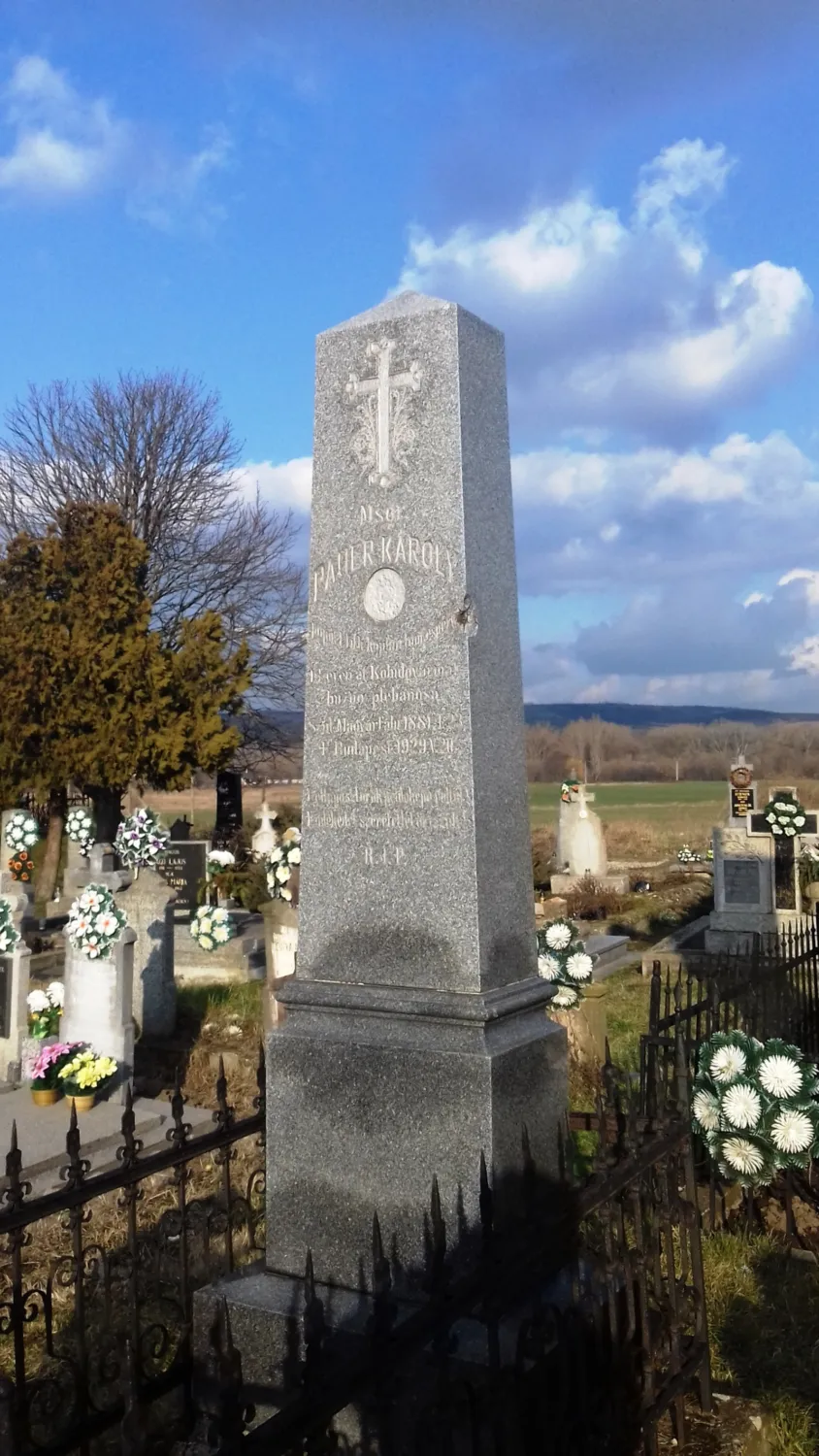
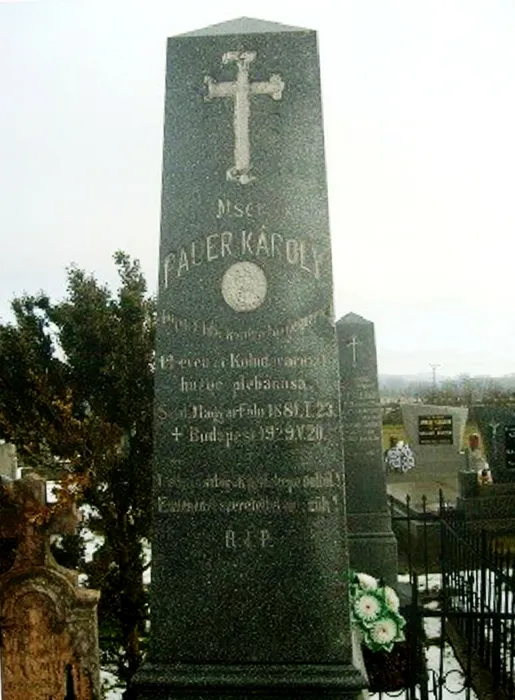
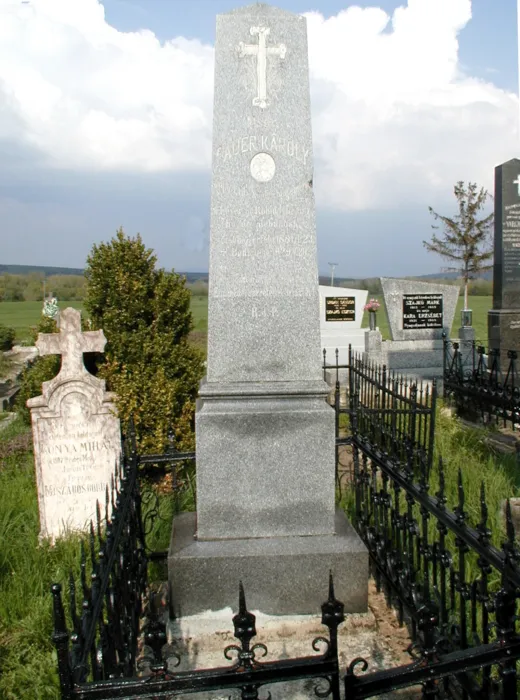
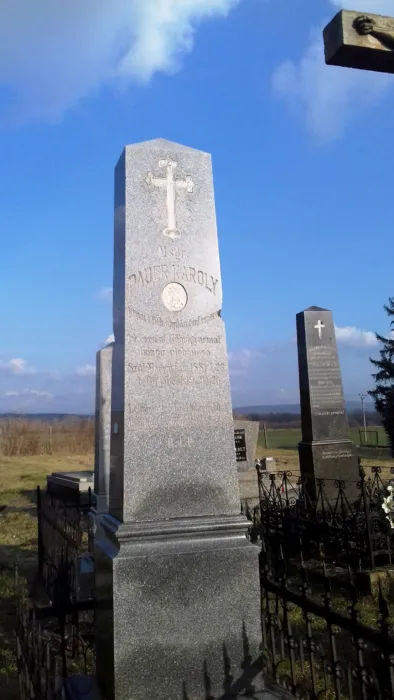
Tomb of Károly Pauer
Cemeteries, tombstones, graves
Károly Pauer (parish priest in Kőhidgyarmat 1915 – 1929) was born on 23 Jan. 1881 in Magyarfalu. ; ; He was the administrator of the village church for fourteen years, and during the First World War he alleviated the pain of those in need as a camp priest, for which the authorities awarded him with crosses of merit. He actively participated in the work of national Catholic organizations, he was the deputy deacon of the Párkány Parish. He was a school board member in his village, he also played a significant role in the founding of the credit cooperative, and he led it competently. He also found time to support war loan subscriptions. In October 1917, he held a meeting for the “Catholic autonomy” in Kőhidgyarmat, which was again advocated by Count Apponyi. During his service here, the external walls of the church were renovated, and in 1923 a large-scale bell dedication ceremony was held. After the exterior walls of the church had been renovated, preparations were made to paint the interior of the church. The parish priest Károly Pauer collected the rent from the church grounds for six years, from which he donated 25,000 crowns for the purpose of painting. He wanted to perform his silver mass in the beautiful, renovated church, but when he learned that the Virgin Mary altar had burned down during the works, he was taken to the Vaszary Kolos Hospital in Esztergom on May 17, 1929 with a severe bilious attack. He was then transferred to the Korányi Clinic in Budapest, but the surgery performed there could not save his life either. On May 20, he completed his earthly life in Budapest as a papal secretary and chaplain. A rectangular, pointed arched, gray marble obelisk, with a three-lobed cross at the top, preserves his good memory in the Kistata cemetery. Pauer was the editor and later the editor-in-chief of the Catholic-oriented political and social weekly Esztergom, which was launched at the end of 1895. In addition to editing the newspaper, he also wrote books. Zsigmond Móricz mentioned his literary activities.