
Nitra Castle
Building, structure
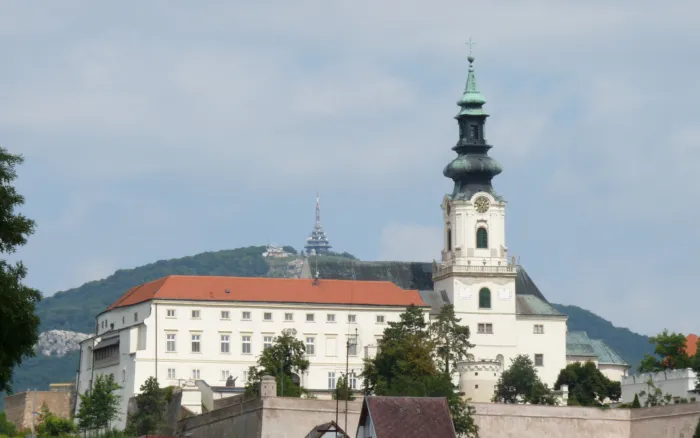
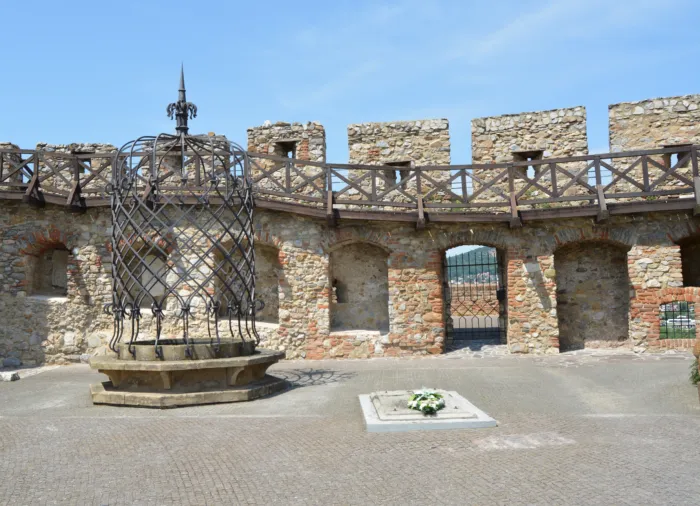
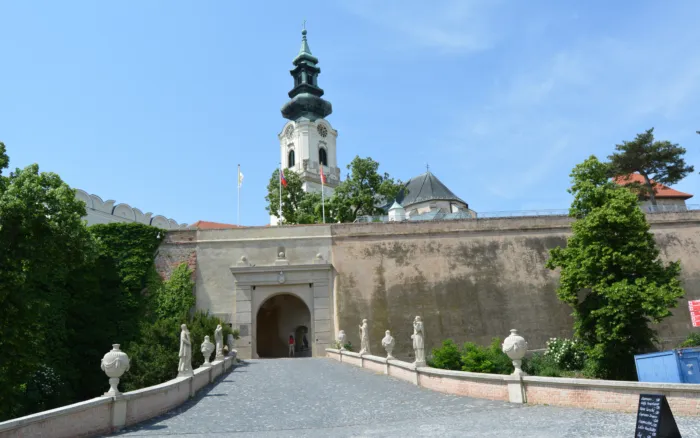
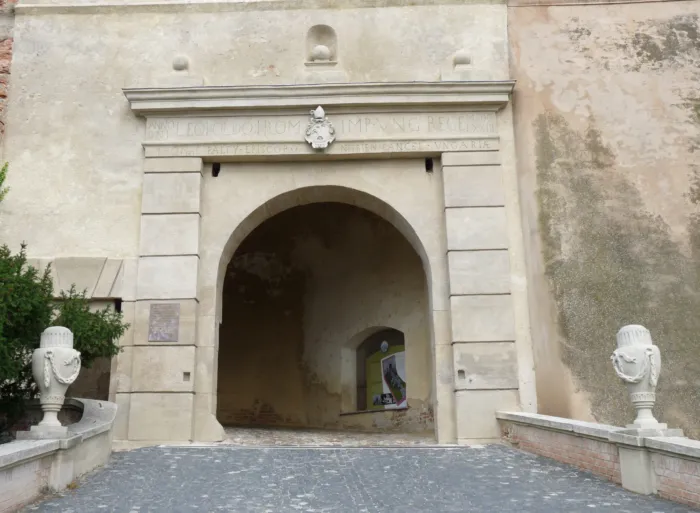
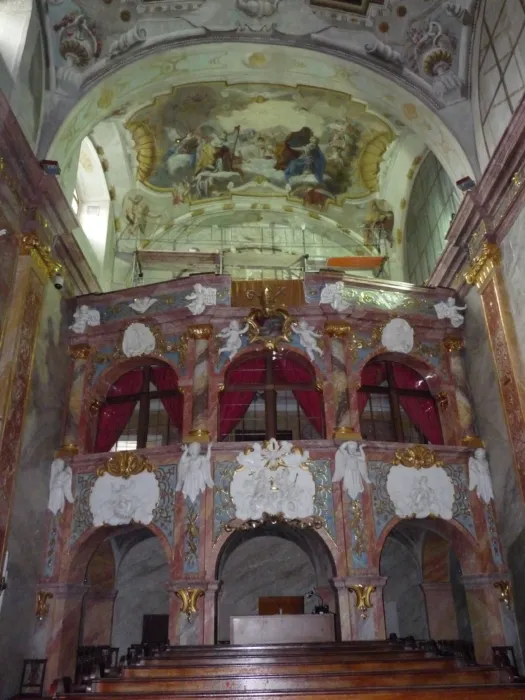
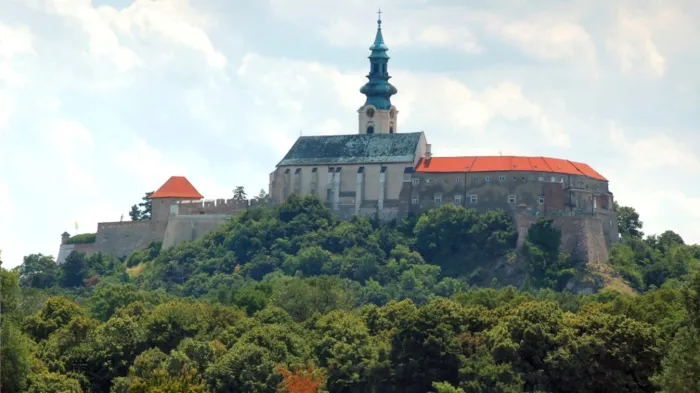
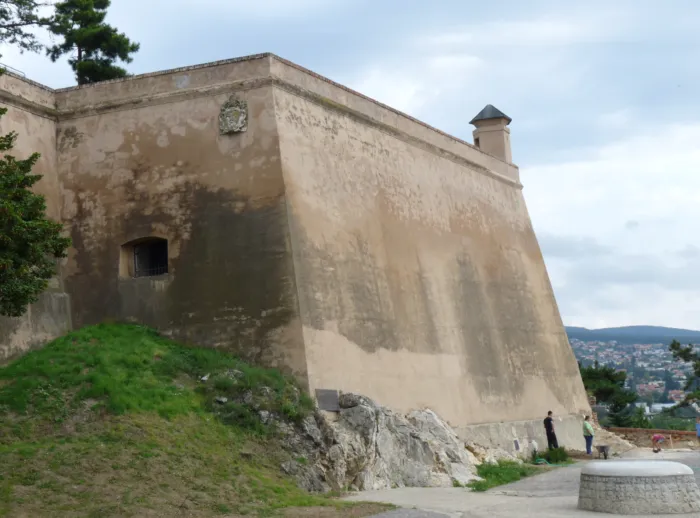
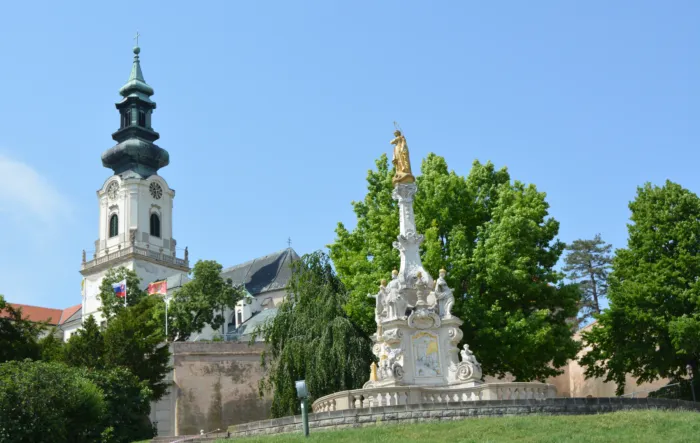
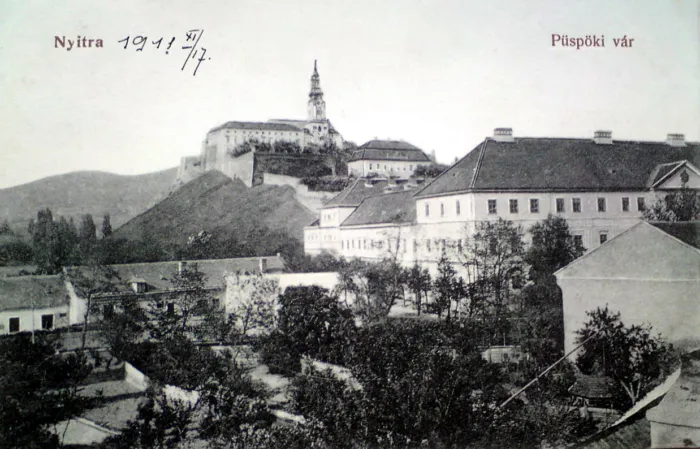
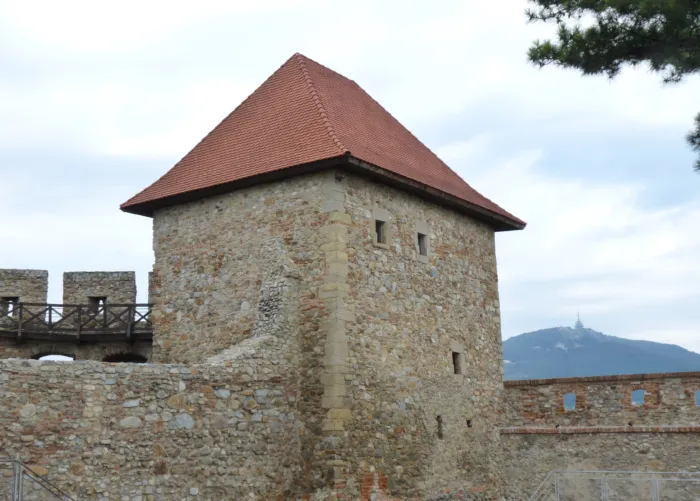
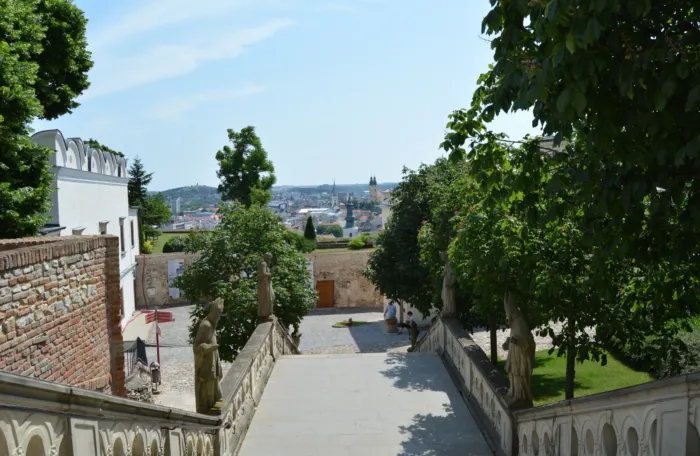
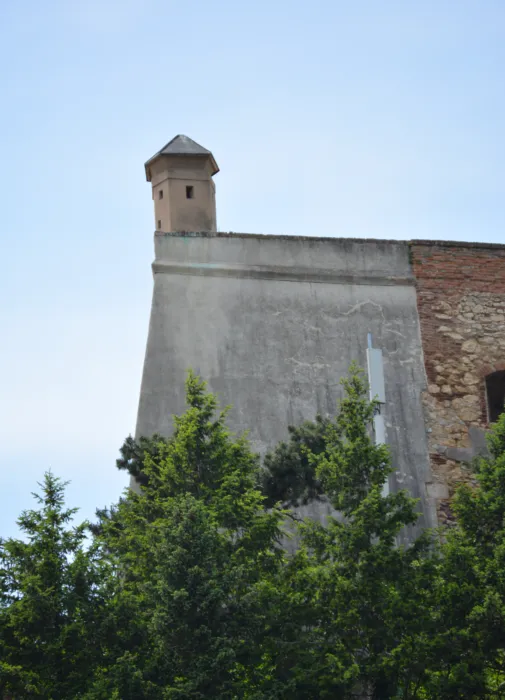
"Nytra is a city with a regular council, and after Bratislava, together with Selmeczbánya, it is the most populous and important city of the western uplands. It lies at the foot of the Zobor Hill, where the Nitra Valley, expanding into a wide plain, merges with the Small Plain, which also includes the southern part of Nitra County, i.e. on the border between the plain and the Carpathians, whose location marked its importance in ancient Hungary and is also a natural factor in its most recent development. Its population has been growing rapidly in recent years. The external expansion and beautification of the city are parallel to the growth of the population. ; Zobor Hill descends steeply above the plain, on whose rich alluvial soil the Nitra River emerges from the valley. Barely a kilometer south of Zobor, a much lower, but almost isolated cone rises from the plain, to which a further south, a narrow, even lower, pebbly ridge joins it, like small rock benches and island blocks emerging from the former inland sea. The aforementioned cone is the Castle Hill in Nitra, on which a castle was built, which is still impressive in its remains today and played a notable role throughout our history until the Rákóczy War of Independence. The castle was the core of the city of Nitra. The city consisted of three parts: the castle, the castle base and the suburb surrounded by a secondary defensive line, that is, only a palisade, a similar part of the city called Palánk existed in almost every major fortified place in our country. The old palisade line had long since been breached by the expanding new city. ; The Nitra flows around the Castle Hill from the north and east, leaving the entire city to the right. The city was built partly on the riverbank, partly on a ridge connected to the Castle Hill by a low and narrow embankment, towards the flatland, from which the The Kálvária Hill rises more prominently, surpassing the Castle Hill in height. ; The Castle Hill rises sixty meters above the plain, its absolute height above sea level is 190 meters. With its strong walls, hanging courtyards and soaring church tower, it dominates the entire city and its far-reaching surroundings. ; The castle, since the end of the 13th century, has always been a bishop's estate, bearing the name of bishop's castle, and today it is occupied exclusively by the bishop's court, the chapter and the buildings and apartments of those belonging to the church. The county seat stands directly under the hill, from where two winding roads lead up to the castle, which, according to the chronicles, was a significant stronghold as a princely seat even during the short-lived Moravian-Slavic rule. ; With the fall of Nitra, which also cost the life of the Slavic leader Zobor, who was hanged here according to tradition, the entire western uplands It fell into the hands of the conquering Hungarians. The castle was recently fortified by St. Stephen, and it was a royal castle for three centuries. The church dedicated to St. Emerán was allegedly built by Queen Gisella, but this cannot be proven by documents. The tower on the eastern promontory of the castle is considered to be Vazul's prison. The conspirator Prince Vazul was imprisoned here by St. Stephen, and the court conspirator had the Italian conspirators torture him with the terrible cruelty of the torture, blinding and deafening him. ; The entrance to the castle gate is flanked on both sides by roughly carved statues of saints. The castle's perimeter walls with their parapets and the gate entrance are in complete order. According to the inscription on the stone tablet above the gate, it was rebuilt two hundred years ago. Its restorer was Count Tamás Pálffy, Bishop of Nitra, Chancellor of Hungary, whose We also see his coat of arms on the walls. In 1673, during the reign of Leopold I, its restoration was completed. Under the gate, according to old custom, a bishop's hussar stands guard. Since it is a castle church, everyone can freely enter the cathedral, only the bishop's garden and the parapet line are closed. ; After entering the gate, a staircase on the right leads to the church. On the protrusions of the balustrade of the staircase, there are also statues of saints, but they are of primitive carving. The church itself is all the more venerable and interesting, an architectural unique in Hungary. Its structure clearly shows its reconstruction in different periods. It consists of two naves, which are built one above the other. The first naves, which the entrance leads to (it has a gate only on the side, from the south), is a crypt building. Its floor covers the bodies of the most notable bishops of Nitra, and the ashes that mark the tombstones were inserted into the church wall. This lower nave is quite simple. Stairs lead up from here to the other nave, which with its Baroque style indicates a recent construction or at least a reconstruction. This is a church intended for regular divine services, in the two-story sanctuary of which the high altar, the bishop's throne and the canons' stalls stand. These are also Baroque carvings. ; Outside the gallery, down in the nave, there is a smaller organ on the side, which is used for regular divine services. The wall painting of the vault also bears the character of the work of a previous century. ; The oldest of the legible tombstones in the lower nave is from the 16th century, but there is also an older, blurred, illegible tombstone with a majuscule border inscription, probably from the 15th century. Three beautiful tombstones come to mind: that of Pál Bornemissza, the former bishop of Transylvania, and that of Ferdinand II and Maximilian of his secretary and chancellor from 1579, of István Fehérkövy, later Archbishop of Esztergom from 1588 and of Zakariás Mossóczy from 1687. ; Built to the cathedral, to the east of it stands the large, more recently transformed bishop's palace, from the plain of which there is a magnificent view of the city, the bird's-eye view of which is most clearly visible from here, and of the Nitra valley. ; The castle has seen several Hungarian kings and leaders in their distress within its walls. In 1074, it was besieged by the armies of Emperor Henry, who had been summoned by King Solomon against his brothers. A century and a half later, an attack by the Tatar hordes on the cliff was defeated. King Béla IV, in recognition, but also out of gratitude, because the castle had accompanied him on his escape route, made Nitra a free royal city in 1248. This privilege was only maintained for a short time the city enjoyed. During the war with Stephen V, the Czech Ottokar captured the castle in 1271. However, Ottokar was soon forced to return it to the possession of the Hungarian king. At the end of the 13th century, Nyitra ceased to be a royal castle and passed into the hands of the bishop. However, Máté Csák, who was able to hold the bank of the Váh until his death against Charles Robert, also captured the castle of Nyitra. King Matthias also had to launch a siege against the castle. The Polish king Casimir, who was invited by János Vitéz and his companions, wanted to set foot in Nyitra, but after Matthias surrounded the castle, the inhabitants voluntarily surrendered to him and Casimir was forced to flee at night. The Turks raided as far as Nyitra several times, but could not take the castle under their control. On the other hand, with Turkish help, he took Rhédei, Bocskay Stephen's leader in 1605, and then again by Gábor Bethlen, who besieged it, but then strengthened it even more. We mentioned above that Bishop Tamás Pálffy had it rebuilt. But it had already begun to lose its former importance and was taken over by Érsekujvár, which was located on the Vienna road and played a major role in the Turkish war. During the Rákóczy War of Independence, the castle surrendered to Bercsényi, but in 1708 Gáspár Révay, Ferencz Rákóczy's leader, returned it to the king. From then on, it is no longer listed as a castle. However, since there was no occasion to destroy it, its owners, the bishops of Nitra, maintained it in its castle form and as such it is one of the most interesting monuments of Hungary.